Sildenafil is a widely used medicine for erectile dysfunction (ED). It belongs to a group of medicines called phosphodiesterase type 5 (PDE5) inhibitors and works by increasing blood flow to the penis during sexual stimulation.
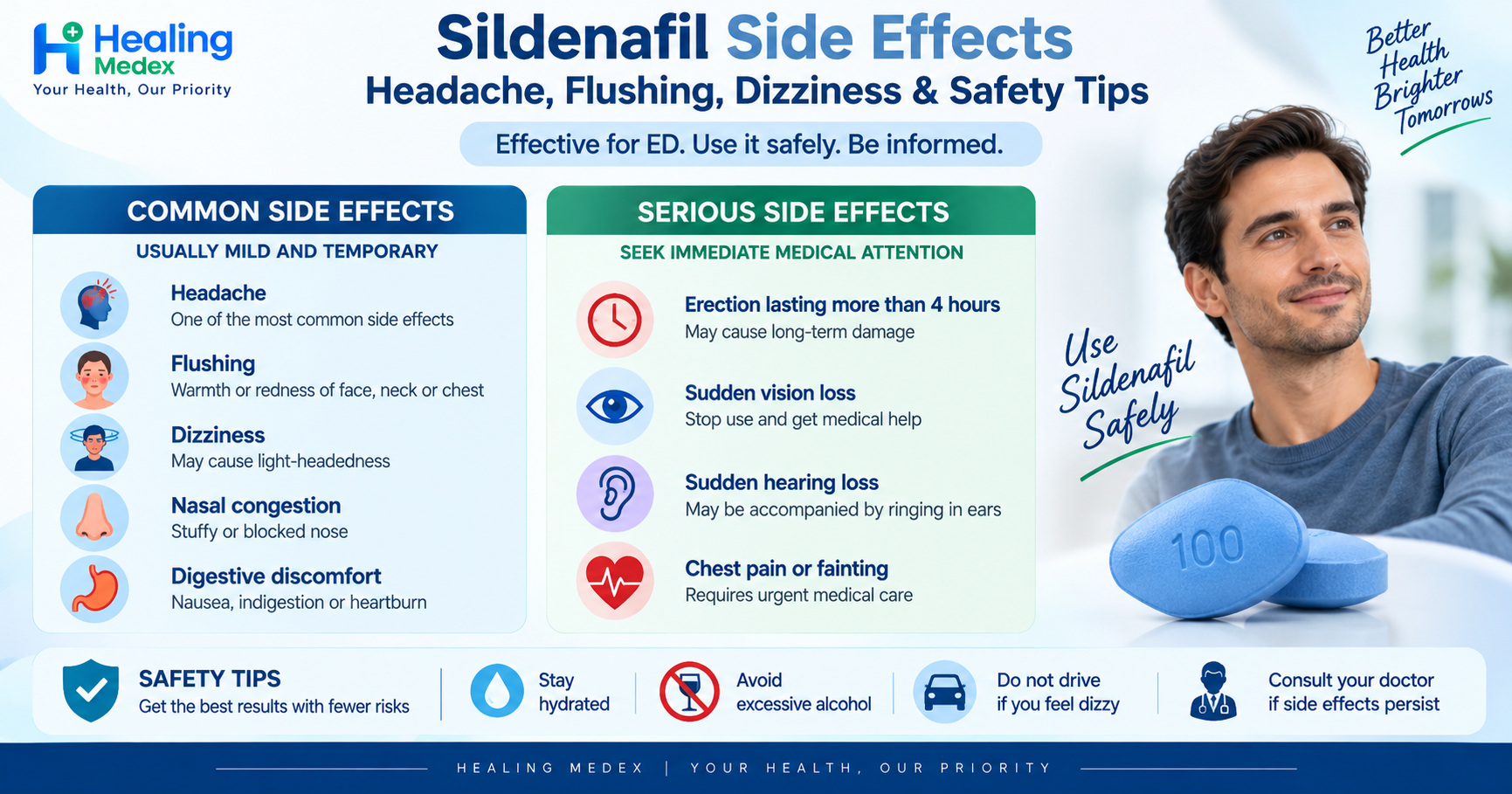
While sildenafil is effective for many men, it can also cause side effects. Headache, flushing, dizziness, nasal congestion and digestive discomfort are among the effects people may experience. Most common side effects are temporary, but certain symptoms require prompt medical attention.
Understanding what to expect and how to use sildenafil safely can help reduce unnecessary risks.
Why Does Sildenafil Cause Side Effects?
Sildenafil works by inhibiting the PDE5 enzyme. This helps blood vessels relax and allows more blood to reach the penis when a man is sexually stimulated.
However, sildenafil can also affect blood vessels elsewhere in the body. The widening of these blood vessels can contribute to symptoms such as:
Headache
Facial flushing
Dizziness or light-headedness
Nasal congestion
Digestive discomfort
The severity of these effects varies from person to person.
1. Headache After Taking Sildenafil
Headache is one of the commonly reported side effects of sildenafil.
Sildenafil causes blood vessels to relax and widen. Changes in blood flow can contribute to headache in some people.
What Can You Do?
If you develop a mild headache after taking sildenafil:
Rest in a comfortable environment.
Stay adequately hydrated.
Avoid drinking excessive amounts of alcohol.
Speak with a pharmacist or doctor about a suitable pain reliever if necessary.
Do not increase or reduce your sildenafil dose on your own simply because you develop headaches.
If headaches are severe, happen repeatedly or do not improve, discuss them with your healthcare provider.
2. Flushing and Feeling Warm
Another common sildenafil side effect is flushing, which can cause warmth or redness of the face, neck or upper chest. MedlinePlus lists flushing among sildenafil’s known side effects.
Flushing occurs because sildenafil can widen blood vessels near the surface of the skin.
For most people, mild flushing is temporary and disappears as the medicine’s effect wears off.
Tips for Managing Flushing
You may find it helpful to:
Keep the room comfortably cool.
Drink enough water.
Avoid excessive alcohol.
Avoid very hot showers or environments if they worsen your symptoms.
Talk with a healthcare professional if flushing is persistent or particularly uncomfortable.
3. Dizziness or Light-Headedness
Sildenafil can sometimes cause dizziness or light-headedness.
Because sildenafil can lower blood pressure, some people may notice dizziness, particularly when standing suddenly.
What Should You Do If You Feel Dizzy?
If dizziness occurs:
Sit or lie down until you feel better.
Stand up gradually rather than suddenly.
Stay hydrated.
Avoid driving, cycling or operating machinery while you remain dizzy.
The NHS specifically advises avoiding driving, cycling or using machinery if sildenafil causes dizziness or blurred vision.
Severe dizziness, fainting or dizziness accompanied by chest pain requires medical evaluation.
Other Common Sildenafil Side Effects
Headache, flushing and dizziness are not the only possible effects.
Depending on the individual, sildenafil may also cause:
Stuffy or blocked nose
Nausea
Indigestion or heartburn
Diarrhoea
Temporary visual disturbances
Increased sensitivity to light
Not everyone taking sildenafil will experience side effects.
If a side effect continues, becomes troublesome or appears unusual, contact your doctor or pharmacist.
Serious Sildenafil Side Effects You Should Not Ignore
Although serious reactions are uncommon, it is important to recognise symptoms requiring urgent medical attention.
An Erection Lasting More Than 4 Hours
A prolonged or painful erection lasting more than four hours is known as priapism and requires urgent medical treatment. Without treatment, prolonged erections may damage penile tissue.
Sudden Vision Loss
Rare cases of sudden loss of vision have been reported among people taking sildenafil and similar medicines.
Seek immediate medical advice if you experience sudden loss of vision and do not take another ED dose until you have been medically evaluated.
Sudden Hearing Loss
Sudden reduction or loss of hearing, sometimes accompanied by ringing in the ears or dizziness, also requires immediate medical attention.
Chest Pain or Fainting
Chest pain, severe dizziness, fainting, severe shortness of breath or an irregular heartbeat should not simply be assumed to be normal sildenafil side effects.
Seek urgent medical care.
Sildenafil and Nitrates: An Important Safety Warning
One of the most important sildenafil safety precautions involves nitrate medicines.
Sildenafil should not be taken with nitrates used for chest pain, such as:
Nitroglycerin
Isosorbide mononitrate
Isosorbide dinitrate
Combining sildenafil with nitrates can cause a potentially dangerous reduction in blood pressure. Recreational substances known as “poppers”, which may contain amyl or butyl nitrites, should also not be combined with sildenafil.
Always tell healthcare professionals that you have taken sildenafil if you require emergency treatment for a heart problem.
Who Should Speak With a Doctor Before Taking Sildenafil?
Medical assessment is particularly important if you have or have previously experienced:
Heart attack or stroke
Very low blood pressure
Uncontrolled high blood pressure
Kidney disease
Liver disease
Certain inherited or serious eye conditions
Sickle cell disease
Multiple myeloma
Leukaemia
Previous prolonged erections
Structural abnormalities of the penis
Your healthcare provider should also know about all medicines, supplements and herbal products you use, because some can interact with sildenafil.
Sildenafil Safety Tips
Using sildenafil responsibly can reduce the likelihood of avoidable problems.
1. Follow the Recommended Dose
Take sildenafil exactly as directed by your doctor, pharmacist or medicine instructions.
For erectile dysfunction, sildenafil is generally taken when needed before sexual activity and should not be taken more frequently than instructed. MedlinePlus advises that sildenafil for ED usually should not be taken more than once every 24 hours.
Taking more sildenafil does not guarantee a better erection and may increase side effects.
2. Avoid Excessive Alcohol
Drinking large amounts of alcohol can make it more difficult to achieve an erection and may contribute to dizziness or other unwanted effects.
Keeping alcohol consumption low is the safer approach when using sildenafil.
3. Be Careful With Other ED Medicines
Do not combine sildenafil with tadalafil, vardenafil, avanafil or other ED treatments unless specifically instructed by a healthcare professional.
Combining treatments can increase the risk of adverse effects such as dangerously low blood pressure.
4. Tell Your Doctor About Other Medicines
Some antibiotics, antifungal medicines, HIV medicines, blood-pressure treatments, prostate medicines, seizure medicines and other drugs can interact with sildenafil.
Always provide your doctor or pharmacist with a complete medication list before using sildenafil.
5. Do Not Ignore Persistent Side Effects
A mild headache or flushing episode may resolve without treatment.
However, if side effects repeatedly interfere with your normal activities, talk with your healthcare provider rather than continually trying to tolerate them.
A different dose or another ED treatment may be more appropriate.
Does Sildenafil Cause Side Effects in Everyone?
No.
Some men experience no noticeable side effects, while others may experience headache, flushing, nasal congestion or dizziness.
Individual response can depend on factors including:
Sildenafil dose
Other medicines
Existing health conditions
Alcohol consumption
Individual sensitivity to the medicine
Never increase the dose simply because the expected effect is not achieved.
Frequently Asked Questions
1. Is headache normal after taking sildenafil?
Headache is a commonly reported sildenafil side effect. It is usually temporary, but frequent or severe headaches should be discussed with a healthcare professional.
2. Why does sildenafil make my face red?
Sildenafil relaxes blood vessels. Increased blood flow close to the skin can result in warmth and facial flushing.
3. Can sildenafil make you dizzy?
Yes. Dizziness or light-headedness can occur. Avoid driving or operating machinery until the dizziness has completely resolved.
4. Can I drink alcohol with sildenafil?
Excessive alcohol is best avoided. Alcohol can make getting an erection more difficult and may contribute to unwanted symptoms.
5. When should I seek emergency help after taking sildenafil?
Seek urgent medical care for symptoms such as:
Chest pain
Fainting
Severe difficulty breathing
Sudden loss of vision
Sudden loss of hearing
A painful or prolonged erection lasting more than four hours
Signs of a severe allergic reaction
These should not be treated as ordinary sildenafil side effects.
Final Thoughts
Headache, flushing and dizziness are among the recognised side effects of sildenafil, and for many people these effects are mild and temporary.
The key to safer sildenafil use is taking the medicine exactly as directed, avoiding dangerous drug combinations — particularly nitrates — and informing your healthcare provider about your medical conditions and other medicines.
If sildenafil repeatedly causes troublesome side effects, do not simply increase, decrease or combine doses yourself. Speak with a healthcare professional about whether your treatment needs to be adjusted.