Erectile dysfunction (ED) is the persistent difficulty in getting or maintaining an erection firm enough for sexual activity. Although medicines such as sildenafil or tadalafil are commonly used to treat ED, lifestyle changes — particularly regular physical activity — may also support erectile health.
For many men, aerobic exercise such as brisk walking, jogging, swimming or cycling is one of the most useful forms of exercise for erectile dysfunction. Research suggests that regular aerobic activity can improve erectile function, particularly in men whose ED is associated with cardiovascular risk factors, obesity, inactivity or poor circulation.
The NHS also recommends regular exercise as one of the lifestyle measures that may help people experiencing erectile dysfunction.
This UK guide explains which exercises may help, why exercise can affect erections and how to build a practical exercise routine.
Why Can Exercise Help Erectile Dysfunction?
An erection depends heavily on healthy blood circulation.
During sexual stimulation, blood vessels supplying the penis widen so that more blood can enter erectile tissue. Conditions that affect blood vessel function — including high blood pressure, diabetes, high cholesterol, obesity and cardiovascular disease — can therefore contribute to ED.
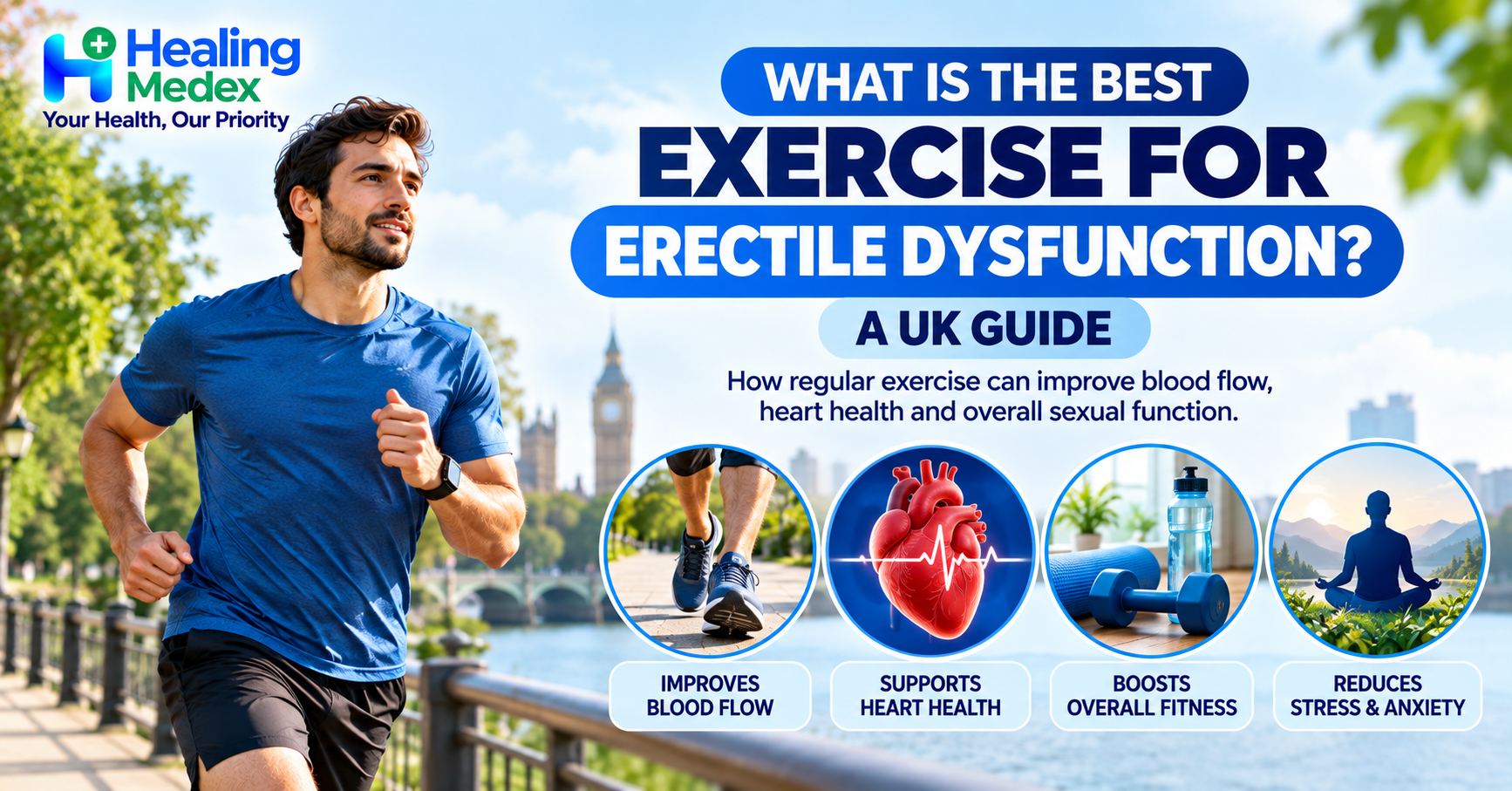
Exercise may support erectile function because regular physical activity can help:
support healthy blood circulation
lower blood pressure
improve insulin sensitivity
reduce stress and anxiety
improve overall cardiovascular health
Erectile dysfunction and cardiovascular disease also share several risk factors, including physical inactivity, obesity, smoking and metabolic problems. NICE has previously highlighted lifestyle modification, including exercise and weight management, as important for men with erectile dysfunction.
What Is the Best Exercise for Erectile Dysfunction?
1. Aerobic Exercise
Aerobic exercise currently has some of the strongest research evidence for improving erectile function.
Examples include:
brisk walking
jogging
swimming
cycling
using an elliptical trainer
dancing
rowing
climbing stairs
A 2023 systematic review and meta-analysis involving 11 randomised controlled trials found that regular aerobic exercise significantly improved erectile-function scores compared with control groups. The improvement tended to be greater among men who had more severe ED at the beginning of the studies.
Aerobic exercise may help partly because it improves the health of the heart and blood vessels — the same circulatory system required for normal erections.
2. Brisk Walking
You do not necessarily need a gym membership or an intensive training programme.
Brisk walking is one of the simplest exercises to start with.
A brisk walk should generally increase your heart rate and breathing while still allowing you to hold a conversation.
For example, you could try:
a 20–30 minute brisk walk
walking during your lunch break
walking rather than driving for short journeys
taking stairs instead of lifts
gradually increasing your walking pace or distance
UK guidance recommends that adults aim for at least 150 minutes of moderate-intensity physical activity each week.
For many people, this can be achieved with approximately 30 minutes of activity on five days of the week.
3. Pelvic Floor Exercises
Pelvic floor muscles support the bladder and bowel and also play a role in sexual function.
Strengthening these muscles may be useful for some men with erectile difficulties, although the evidence for aerobic exercise is currently stronger overall.
How to Identify Your Pelvic Floor Muscles
Imagine that you are trying to:
stop yourself passing wind, and
stop the flow of urine.
The muscles that tighten are part of your pelvic floor.
You should not routinely practise pelvic floor exercises by repeatedly stopping urine flow while urinating, because this may interfere with normal bladder emptying.
A Simple Pelvic Floor Routine
Once you have identified the correct muscles:
Tighten your pelvic floor muscles.
Hold the contraction for several seconds.
Relax completely.
Repeat several times.
Gradually increase the duration and number of contractions as your muscles become stronger.
Avoid tightening your buttocks, thighs or abdominal muscles excessively.
If you are uncertain whether you are performing pelvic floor exercises correctly, a physiotherapist specialising in men's pelvic health may be able to provide guidance.
4. Strength Training
Resistance exercise can also contribute to overall cardiovascular and metabolic health.
Examples include:
squats
lunges
press-ups
resistance-band exercises
weight training
bodyweight exercises
UK physical activity recommendations encourage adults to perform muscle-strengthening activities on at least two days each week, alongside aerobic activity.
Strength training does not directly guarantee stronger erections, but it can contribute to healthier weight, muscle mass and cardiovascular health — factors that may indirectly support sexual health.
5. Swimming
Swimming is another useful aerobic exercise, especially for people who find running uncomfortable.
It can:
exercise multiple muscle groups
provide relatively low-impact activity
The most important factor is consistency rather than choosing one particular type of cardio.
If swimming is an activity you enjoy enough to continue regularly, it can be a good option.
6. Jogging or Running
Running can improve cardiovascular fitness relatively quickly, but beginners do not need to start with vigorous exercise.
A gradual approach may involve:
Week 1: brisk walking
Week 2: walking with short jogging intervals
Week 3 onward: gradually increase jogging time if comfortable
People with existing cardiovascular conditions, severe obesity, joint problems or long periods of inactivity should consider speaking with a healthcare professional before beginning vigorous exercise.
7. Cycling — With One Important Consideration
Cycling is excellent cardiovascular exercise, but prolonged pressure from a bicycle saddle can sometimes cause temporary numbness or discomfort around the perineum.
The NHS specifically advises men experiencing ED who cycle for more than approximately three hours per week to consider taking a break from cycling for a period of time.
People who cycle regularly may also consider:
ensuring the bicycle fits correctly
adjusting saddle height and position
periodically standing on the pedals
taking regular breaks
using an appropriately fitted saddle
Cycling itself should not automatically be considered harmful to erectile function, but persistent genital numbness should not be ignored.
How Much Exercise Should You Do for Erectile Dysfunction?
There is no universally prescribed ED-specific exercise dose.
However, UK physical-activity guidance provides a useful general target.
Adults should aim for approximately:
150 minutes of moderate-intensity aerobic activity each week
or an equivalent amount of more vigorous activity, depending on health and fitness.
Muscle-strengthening exercise should generally be performed on at least two days per week.
A simple routine could therefore look like:
Monday: 30-minute brisk walk
Tuesday: strength training
Wednesday: 30-minute brisk walk
Thursday: rest or gentle activity
Friday: 30-minute brisk walk
Saturday: strength training + short walk
Sunday: 30–60 minutes of walking, swimming or another aerobic activity
You do not need to follow this exact schedule. The best programme is one you can maintain consistently.
How Intense Should Exercise Be?
For moderate-intensity exercise, you should generally:
feel warmer
breathe faster
notice an increased heart rate
still be able to hold a conversation
If you are completely new to exercise, starting with five or ten minutes and gradually increasing your activity can be more realistic than immediately attempting long workouts. The British Heart Foundation similarly recommends gradually building towards the 150-minute weekly target.
How Long Does Exercise Take to Improve Erectile Function?
Exercise is not an immediate treatment in the same way that medicines such as sildenafil can produce an effect within hours.
Improvements associated with lifestyle changes generally develop gradually.
The amount of improvement can also depend on why ED is occurring.
Exercise may be particularly useful when erectile problems are associated with factors such as:
inactivity
excess body weight
poor cardiovascular fitness
stress
Someone with ED caused by nerve injury, major hormonal abnormalities, certain medicines or previous pelvic surgery may require additional treatment.
Can Exercise Cure Erectile Dysfunction?
Exercise should not be described as a guaranteed cure.
For some men, improving fitness and cardiovascular health may substantially improve erections. For others, exercise may improve general health but not completely resolve ED.
The underlying cause matters.
ED can be associated with conditions including:
obesity
neurological disorders
medication side effects
anxiety or depression
relationship or psychological factors
previous pelvic surgery
Persistent erectile dysfunction therefore deserves medical assessment rather than simply increasing exercise.
Is Exercise Better Than Sildenafil or Tadalafil?
Exercise and ED medicines perform different roles.
Exercise works more gradually by supporting cardiovascular and metabolic health.
Some men therefore benefit from both:
Lifestyle improvement + appropriate medical treatment
rather than treating them as competing approaches.
Prescription and availability rules differ between medicines and countries, so people in the UK should follow the advice of a UK-registered doctor or pharmacist.
Does Exercise Increase Testosterone?
Regular exercise can support overall metabolic and hormonal health, but it should not be promoted as a guaranteed way of substantially increasing testosterone.
Resistance training and maintaining a healthy body weight may be particularly beneficial for general hormonal health.
However, men with symptoms potentially associated with testosterone deficiency — such as persistent low libido, fatigue or reduced spontaneous erections — should not rely on exercise alone.
A healthcare professional can determine whether hormone testing is appropriate.
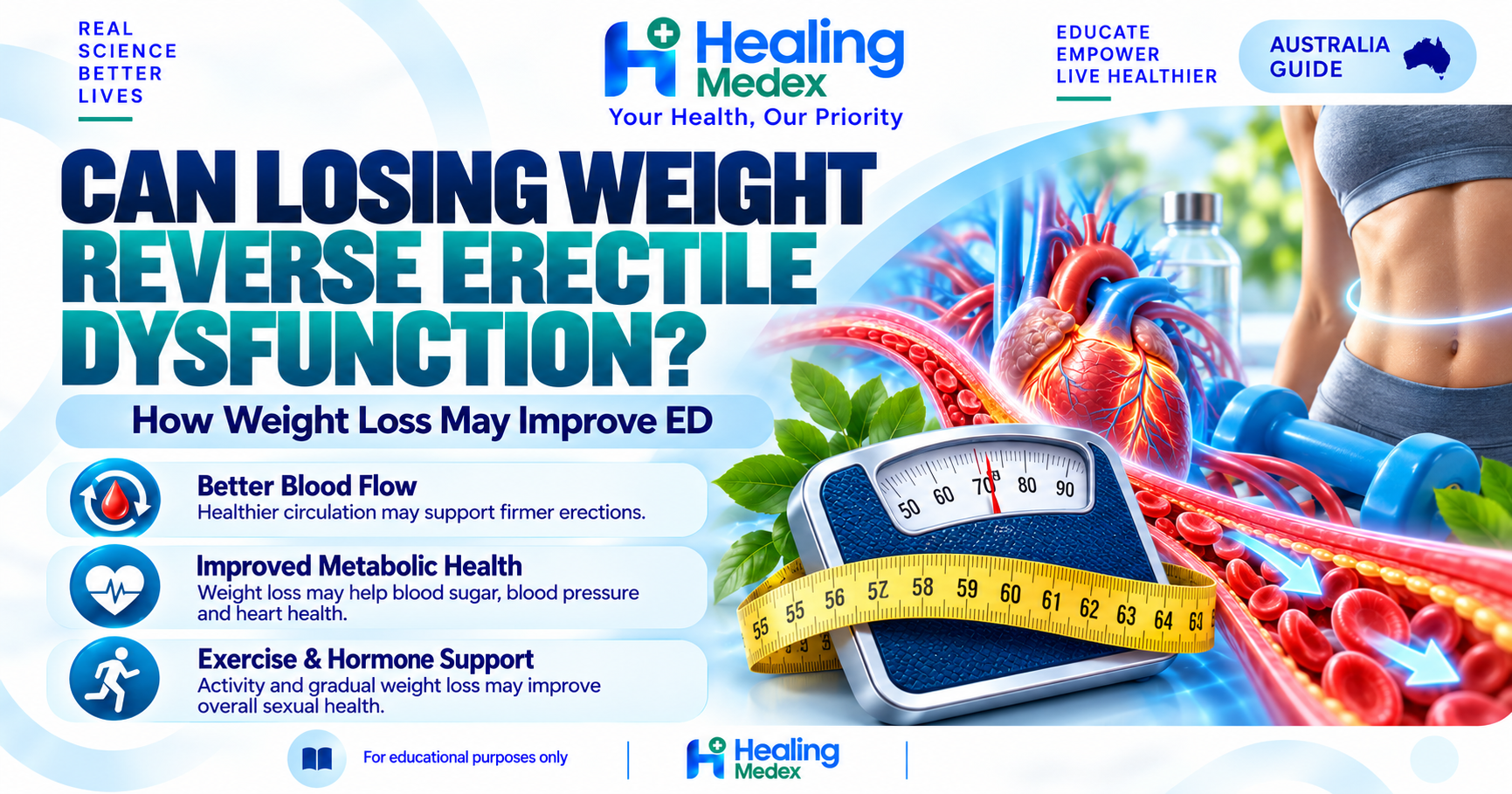
Can Losing Weight Help Erectile Dysfunction?
For men who are overweight or obese, gradual and sustainable weight loss may improve several risk factors associated with ED, including:
blood glucose control
Physical activity is therefore particularly valuable when combined with a balanced diet and other healthy lifestyle changes.
The NHS specifically includes weight loss where appropriate, regular exercise, healthy eating, smoking cessation and reduced alcohol consumption among lifestyle measures that may help erectile dysfunction.
What Other Lifestyle Changes Can Help?
Exercise works best as part of broader cardiovascular health management.
Consider:
Stop smoking
Smoking can damage blood vessels and reduce circulation.
Maintain a healthy weight
Excess body weight is associated with diabetes, cardiovascular disease and other ED risk factors.
Eat a balanced diet
A diet rich in vegetables, fruit, wholegrains, pulses, nuts and other minimally processed foods can support cardiovascular health.
Limit alcohol
The NHS advises not drinking more than 14 units of alcohol per week on a regular basis.
Manage stress
Stress and anxiety can contribute to erection problems even when circulation and hormone levels are normal.
Get adequate sleep
Poor sleep can affect mood, metabolic health and overall wellbeing.
When Should You See a GP About Erectile Dysfunction?
Occasional erection difficulties are common.
However, the NHS recommends seeing a GP or attending a sexual health clinic when erection problems keep happening.
This matters because ED can sometimes be associated with an underlying health condition.
A healthcare professional may assess factors such as:
medicines
hormone symptoms
mental health
lifestyle factors
Treatment can then be tailored to the underlying cause.
Should You Speak to a Doctor Before Starting Exercise?
Most people can safely begin light or moderate physical activity.
However, speak with a GP or another appropriate healthcare professional before significantly increasing your exercise intensity if you:
experience chest pain
become unusually breathless during activity
have recently had a heart attack or heart procedure
experience fainting or unexplained dizziness
have significant mobility limitations
have another medical condition that may affect exercise safety
People with cardiovascular conditions may need an individually adapted exercise programme.
So, What Is the Best Exercise for Erectile Dysfunction?
For most men, regular aerobic exercise is the strongest general choice, particularly:
brisk walking
jogging
swimming
cycling where comfortable
rowing
other activities that steadily increase heart rate and breathing
Research from randomised trials supports aerobic exercise as a potentially useful non-drug strategy for improving erectile function.
Adding strength training twice weekly and considering pelvic floor exercises can make the programme more comprehensive.
A practical target for many adults is:
150 minutes of moderate-intensity aerobic activity each week + muscle-strengthening exercise at least twice weekly.
But exercise should not replace medical evaluation when erectile dysfunction is persistent.
Key Takeaway
The best exercise for erectile dysfunction is not one specific movement or gym routine.
For most men, the most useful approach is consistent cardiovascular exercise — particularly brisk walking or another form of moderate aerobic activity.
Exercise may help improve circulation, cardiovascular fitness, weight, stress and several other factors linked with erectile health. It can therefore form an important part of ED management alongside appropriate medical investigation and treatment.
If erectile problems repeatedly occur, arrange an assessment with a GP or sexual health clinic rather than relying on exercise alone.
Medical Disclaimer
This article is for general educational purposes only and does not replace advice from a qualified doctor or pharmacist. Medical guidance, approved medicines and prescribing rules differ between countries. Always follow the advice of a healthcare professional licensed in your country of residence.