Introduction
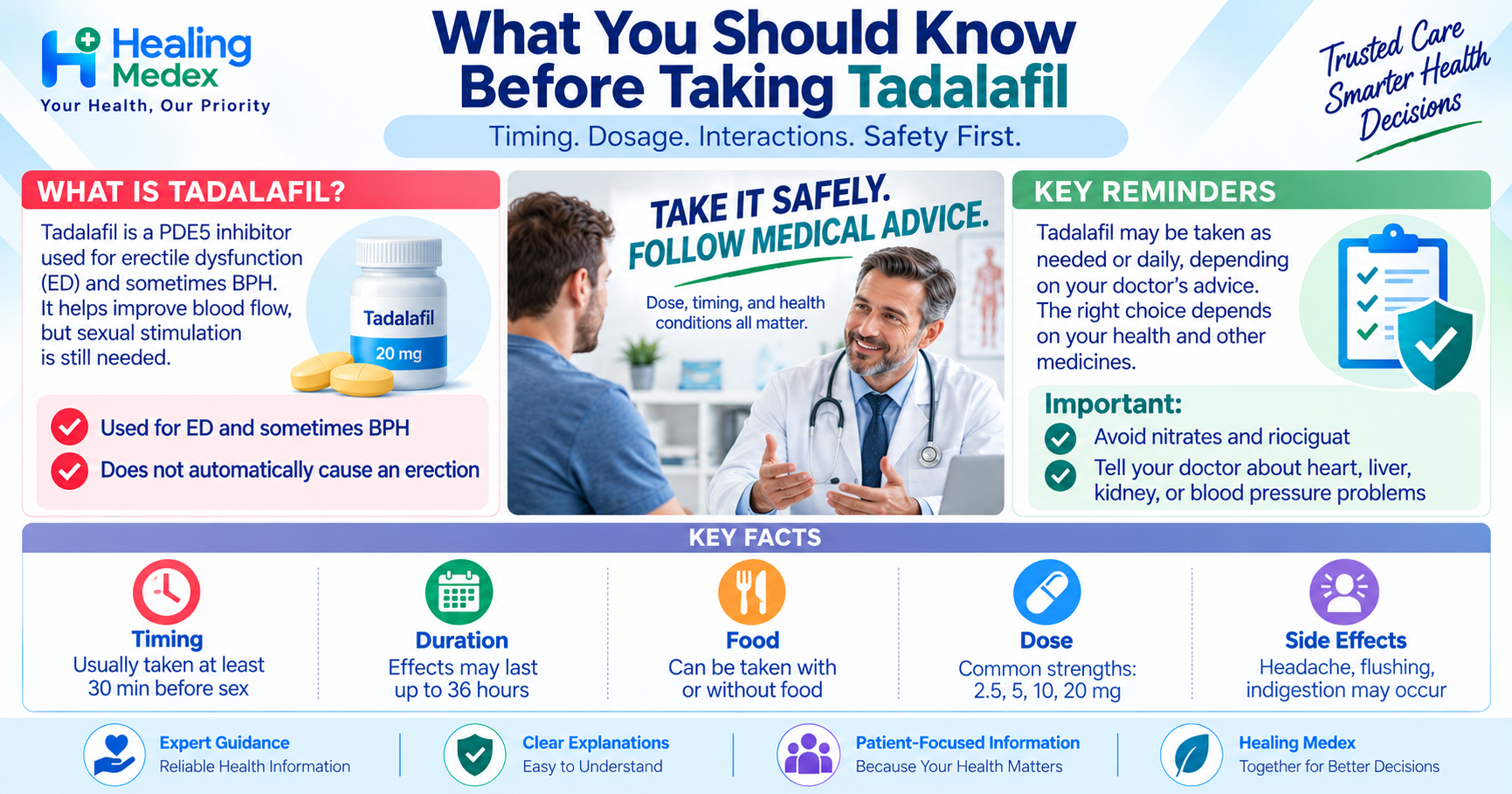
Tadalafil is a widely prescribed medicine used to treat erectile dysfunction (ED) in men. It is known for its long-lasting effects, flexible dosing options, and ability to improve erectile function by supporting blood flow to the penis.
However, before taking tadalafil, it is important to understand how it works, how long it takes to become effective, which dosage may be appropriate, and what precautions should be considered.
Some men take tadalafil occasionally before sexual activity, while others use a lower dose every day. Although both approaches can be effective, choosing the correct treatment depends on individual health conditions, other medications, and a healthcare professional's recommendations.
In this Healing Medex guide, we explain the most important things you should know before taking tadalafil, including its benefits, timing, dosage, possible side effects, and safety considerations.
1. What Is Tadalafil?
It is commonly prescribed for:
ED and BPH together: Tadalafil may help men experiencing both conditions.
Tadalafil is the active ingredient in the brand-name medication Cialis. It is also available in generic formulations.
One reason tadalafil is frequently discussed as an ED treatment is that its effects may last for up to 36 hours, providing a longer period of responsiveness to sexual stimulation.
However, this does not mean that an erection will last continuously for 36 hours.
2. How Does Tadalafil Work?
To understand tadalafil, it helps to know what happens during a normal erection.
When a man becomes sexually aroused, the body releases nitric oxide, which activates a chemical pathway involving cyclic guanosine monophosphate (cGMP).
This chemical helps relax smooth muscle tissue and allows blood vessels in the penis to widen, increasing blood flow.
An enzyme called PDE5 breaks down cGMP.
Tadalafil temporarily inhibits PDE5, allowing cGMP to remain active longer and supporting the blood-flow changes needed for an erection.
Important: Tadalafil does not automatically produce an erection. Sexual stimulation is still necessary.
It also does not directly increase testosterone levels, create sexual desire, or permanently cure erectile dysfunction.
3. How Long Before Sexual Activity Should You Take Tadalafil?
One of the most common questions about tadalafil is how long it takes to start working.
For men taking tadalafil as needed, it is generally recommended to take the prescribed dose at least 30 minutes before anticipated sexual activity.
Some men may notice an effect within approximately 30 minutes, while others may need more time.
The response can vary depending on individual factors, including overall health and the severity of erectile dysfunction.
How long do the effects last?
Tadalafil can improve erectile function for up to 36 hours after taking a dose.
This longer window may offer greater flexibility compared with shorter-acting ED medicines.
However, the effects gradually decrease over time, and an erection still requires sexual arousal.
Taking additional tablets because the medicine does not work immediately can increase the risk of side effects.
DailyMed+1
4. What Is the Right Tadalafil Dosage?
Tadalafil is available in different strengths, including 2.5 mg, 5 mg, 10 mg, and 20 mg.
The appropriate dosage depends on whether the medicine is prescribed for occasional use, daily ED treatment, or BPH symptoms.
Strength | Common prescribing approach |
|---|---|
Starting dose for once-daily ED treatment | |
Daily ED treatment or BPH; sometimes as-needed ED treatment | |
Typical starting dose for ED when taken as needed | |
Higher as-needed ED dose when prescribed |
For occasional ED treatment, the usual starting dose is 10 mg. A healthcare professional may adjust it to 5 mg or 20 mg depending on effectiveness and tolerability.
For daily ED treatment, the usual starting dose is 2.5 mg, which may be increased to 5 mg.
The commonly recommended daily dose for BPH is 5 mg.
These are standard adult prescribing approaches, not individualized dosing instructions. Kidney or liver disease and interacting medications may require different doses.
Never increase your tadalafil dosage without medical advice, and do not take as-needed tadalafil more than once a day.
5. Daily Tadalafil vs As-Needed Tadalafil: What's the Difference?
Tadalafil can be prescribed in two main ways.
Daily tadalafil
This approach may be suitable for men who prefer greater spontaneity or who also need treatment for BPH symptoms.
As-needed tadalafil
As-needed tadalafil is taken before anticipated sexual activity rather than every day.
The usual prescribed starting dose is 10 mg, although a doctor may adjust it.
Key differences
Daily tadalafil | As-needed tadalafil |
|---|---|
Taken every day | Taken before anticipated sexual activity |
Usually 2.5–5 mg | Usually 5–20 mg |
Does not require timing each dose around sexual activity | Requires advance planning |
May also treat BPH symptoms at 5 mg | Primarily used for ED |
Neither option is automatically better for everyone.
A healthcare professional can help determine which treatment schedule is more appropriate based on sexual activity patterns, medical history, and treatment goals.
6. Can You Take Tadalafil With Food?
Yes. Tadalafil can generally be taken with or without food.
Unlike some other ED medications, its absorption is not significantly affected by meals.
This means that taking tadalafil after breakfast, lunch, or dinner does not usually require a dosing adjustment.
However, it is important to follow the instructions supplied with the specific medication.
What about alcohol?
Alcohol requires more caution.
Drinking large amounts of alcohol while taking tadalafil may increase the risk of:
Dizziness
Headache
Lower blood pressure
Increased heart rate
Feeling faint
Excessive alcohol consumption may also make achieving or maintaining an erection more difficult.
Avoid heavy drinking while using tadalafil, and discuss alcohol use with your healthcare provider.
7. What Should You Tell Your Doctor Before Taking Tadalafil?
Although tadalafil is effective for many men, it is not suitable for everyone.
Before starting treatment, tell your healthcare professional if you have a history of:
Heart disease, heart attack, or stroke
Low blood pressure or uncontrolled high blood pressure
Severe kidney or liver problems
Significant vision problems, particularly previous non-arteritic anterior ischemic optic neuropathy (NAION)
Blood disorders such as sickle cell disease, leukemia, or multiple myeloma
Conditions that increase the risk of prolonged erections
Penile curvature or anatomical abnormalities
A healthcare professional may also assess whether sexual activity itself is safe for someone with a cardiovascular condition.
This is particularly important because erectile dysfunction can sometimes be associated with underlying cardiovascular or metabolic health problems.
A medical evaluation can help identify whether other conditions require attention.
8. Which Medicines Should Not Be Combined With Tadalafil?
Tadalafil can interact with several medications. Some combinations can be dangerous.
Nitrate medications
Combining these medicines can cause a potentially life-threatening drop in blood pressure.
Recreational nitrites, sometimes called poppers, also present a serious risk.
Riociguat
Tadalafil must not be combined with riociguat, a medicine used for certain forms of pulmonary hypertension.
Alpha-blockers and blood pressure medicines
Other ED medications
Do not combine tadalafil with sildenafil, vardenafil, avanafil, or other PDE5 inhibitors unless a specialist specifically directs you to do so.
Other interactions
Some antifungal medicines, antibiotics, and HIV treatments can affect tadalafil levels in the body.
Always inform your healthcare provider about prescription medicines, over-the-counter products, and supplements you use.
Emergency precaution: If chest pain occurs after taking tadalafil, seek emergency medical care. Do not self-administer nitroglycerin or other nitrates. Tell emergency personnel when you last took tadalafil. Nitrates are generally avoided for at least 48 hours after tadalafil and, if medically essential, require close medical supervision.
9. What Are the Common Side Effects of Tadalafil?
Like most prescription medicines, tadalafil can cause side effects.
Many are mild and temporary, but some require medical attention.
Common side effects
Headache
Facial flushing
Indigestion
Nasal congestion
Back pain
Muscle aches
Pain in the arms or legs
These effects do not occur in everyone.
If side effects are persistent, severe, or interfere with daily activities, contact a healthcare professional.
Serious side effects
Rare but important reactions include:
Prolonged erection: An erection lasting more than four hours is a medical emergency because it can cause permanent tissue damage.
Sudden vision loss: Stop taking tadalafil and seek immediate medical attention if sudden vision changes or loss occur.
Sudden hearing loss: Seek urgent medical care if you experience unexpected hearing loss, particularly with dizziness or ringing in the ears.
Chest pain or fainting: Seek immediate medical attention, particularly if accompanied by breathing difficulties or other concerning symptoms.
Recognizing these warning signs is an important part of using tadalafil safely.
10. Does Tadalafil Work for Everyone With Erectile Dysfunction?
Tadalafil can be effective for many men, but it does not guarantee successful erections in every situation.
Erectile dysfunction can have several underlying causes, including:
Nerve damage
Hormonal conditions
Anxiety and stress
Depression
Medication-related side effects
Lifestyle factors such as smoking or excessive alcohol consumption
Tadalafil primarily supports the physical blood-flow response involved in an erection.
If psychological factors, relationship concerns, or certain underlying health conditions contribute to ED, additional treatment may be beneficial.
For example, someone experiencing significant performance anxiety may still have difficulty maintaining an erection despite taking tadalafil.
In such situations, medical evaluation, psychological support, lifestyle changes, or a combination of treatments may improve outcomes.
A poor response to tadalafil should not automatically lead to taking a higher dose.
11. What Should You Do If Tadalafil Does Not Work?
If tadalafil does not provide the expected results, avoid assuming the medicine is ineffective after one attempt.
Several factors may influence its performance.
These include insufficient time before sexual activity, a lack of sexual stimulation, an unsuitable prescribed dose, or underlying medical and psychological conditions.
Consider discussing the following with your healthcare professional:
Whether the medication was taken correctly
Whether enough time was allowed for it to work
Whether the prescribed dosage is appropriate
Whether another medicine may be contributing to ED
Whether cardiovascular, metabolic, or hormonal conditions require assessment
Do not take an extra tablet to compensate for an unsuccessful attempt.
Your doctor may recommend a different treatment schedule or assess other causes of erectile dysfunction.
12. Does Tadalafil Increase Testosterone or Sexual Desire?
Tadalafil is not a testosterone replacement medication.
It does not directly increase testosterone production or act as a treatment for low sexual desire.
Its primary effect is to support the blood-flow mechanism required for an erection.
A man with low testosterone may experience reduced libido, fatigue, or other symptoms that tadalafil does not directly address.
If low testosterone is suspected, a healthcare professional may recommend appropriate testing.
Tadalafil and testosterone treatment serve different purposes and should not be considered interchangeable.
13. Can Tadalafil Be Taken Long Term?
Some men use tadalafil for extended periods under medical supervision.
For individuals who respond well and have no significant contraindications, long-term treatment may be an appropriate option.
However, periodic medical reviews are important.
These appointments may help assess:
Whether the medication remains effective
Whether side effects have developed
Whether new medications create interaction risks
Whether cardiovascular health has changed
Whether the dosage remains suitable
Men taking daily tadalafil should not assume that the same treatment plan will remain appropriate indefinitely without review.
14. Lifestyle Habits That May Support Tadalafil Treatment
Medication is only one part of erectile dysfunction management.
Several lifestyle changes may improve overall cardiovascular health and erectile function.
Regular exercise: Physical activity supports circulation, cardiovascular fitness, and metabolic health.
Balanced nutrition: Eating a diet rich in vegetables, fruits, whole grains, healthy fats, and lean protein may support long-term vascular health.
Healthy weight management: Excess body weight is associated with several conditions that contribute to ED.
Better sleep: Adequate sleep supports physical and psychological well-being.
Smoking cessation: Smoking damages blood vessels and can contribute to circulation problems.
Stress management: Reducing persistent stress and addressing performance anxiety may improve sexual confidence and overall well-being.
These measures can complement medical treatment, although they do not replace prescribed therapy when it is needed.
15. Frequently Asked Questions About Tadalafil
Can I take tadalafil every day?
How quickly does tadalafil start working?
Can I take tadalafil on an empty stomach?
Yes. Tadalafil may be taken with or without food.
Does tadalafil work for 36 hours?
Tadalafil may improve the ability to achieve an erection for up to 36 hours, but it does not cause a continuous erection during that period.
Is tadalafil 20 mg stronger than 10 mg?
A 20 mg tablet contains twice the amount of tadalafil as a 10 mg tablet, but it is not necessarily the right choice for every patient. Higher doses can increase the risk of side effects and should be used only when prescribed.
Can tadalafil be taken with sildenafil?
Combining tadalafil with sildenafil is not routinely recommended because the combination can increase adverse effects, including low blood pressure. Do not combine them without specialist medical guidance.
Can younger men take tadalafil?
Tadalafil may be prescribed to adults aged 18 and older when clinically appropriate. Younger adults experiencing ED should also be evaluated for possible physical or psychological causes.
Is tadalafil a permanent cure for erectile dysfunction?
No. Tadalafil treats symptoms by supporting erectile function while the medication is active. It does not permanently correct every underlying cause of ED.
Key Takeaways: What You Should Know Before Taking Tadalafil
Tadalafil is a PDE5 inhibitor commonly prescribed for erectile dysfunction and BPH.
As-needed tadalafil is generally taken at least 30 minutes before sexual activity.
Its erectile-function benefits may last up to 36 hours.
Common strengths include 2.5 mg, 5 mg, 10 mg, and 20 mg.
Daily and as-needed dosing schedules are different and should not be combined independently.
Tadalafil requires sexual stimulation to help produce an erection.
It can generally be taken with or without food, but heavy alcohol consumption increases certain risks.
Nitrate medications and riociguat must not be combined with tadalafil.
Headache, flushing, indigestion, and muscle pain are possible side effects; certain rare reactions require emergency care.
Medical evaluation is important before starting treatment, especially for men with heart disease, low blood pressure, or other health conditions.
Conclusion
Its long duration of action and availability in both daily and as-needed dosing schedules make it a flexible option for many patients.
However, understanding the correct dosage, timing, side effects, and potential drug interactions is essential before beginning treatment.
Tadalafil does not work automatically, and it does not address every underlying cause of erectile dysfunction.
For men experiencing persistent ED, consulting a qualified healthcare professional can help identify contributing factors and determine whether tadalafil or another treatment approach is appropriate.
At Healing Medex, we believe that understanding your medication is an important step toward making informed decisions about men's health.
Medical Disclaimer
This article is published by Healing Medex for general educational and informational purposes only. It is not intended to replace professional medical advice, diagnosis, or treatment. Tadalafil is a prescription medicine and should be used only under the guidance of a qualified healthcare professional. Do not start, stop, combine, or change the dosage of any medication without medical advice. Seek immediate medical care for severe adverse reactions, chest pain, sudden vision or hearing loss, or an erection lasting longer than four hours.