Sildenafil is a widely used medicine for treating erectile dysfunction (ED). It belongs to a group of medicines called phosphodiesterase type 5 (PDE5) inhibitors and works by increasing blood flow to the penis during sexual stimulation.
Although sildenafil is suitable for many adults with erectile dysfunction, it is not safe for everyone. Certain medicines and medical conditions can make sildenafil unsafe, while other situations require a doctor to assess the risks and possibly adjust the dose.
Understanding sildenafil contraindications and precautions can help reduce the risk of potentially serious side effects.
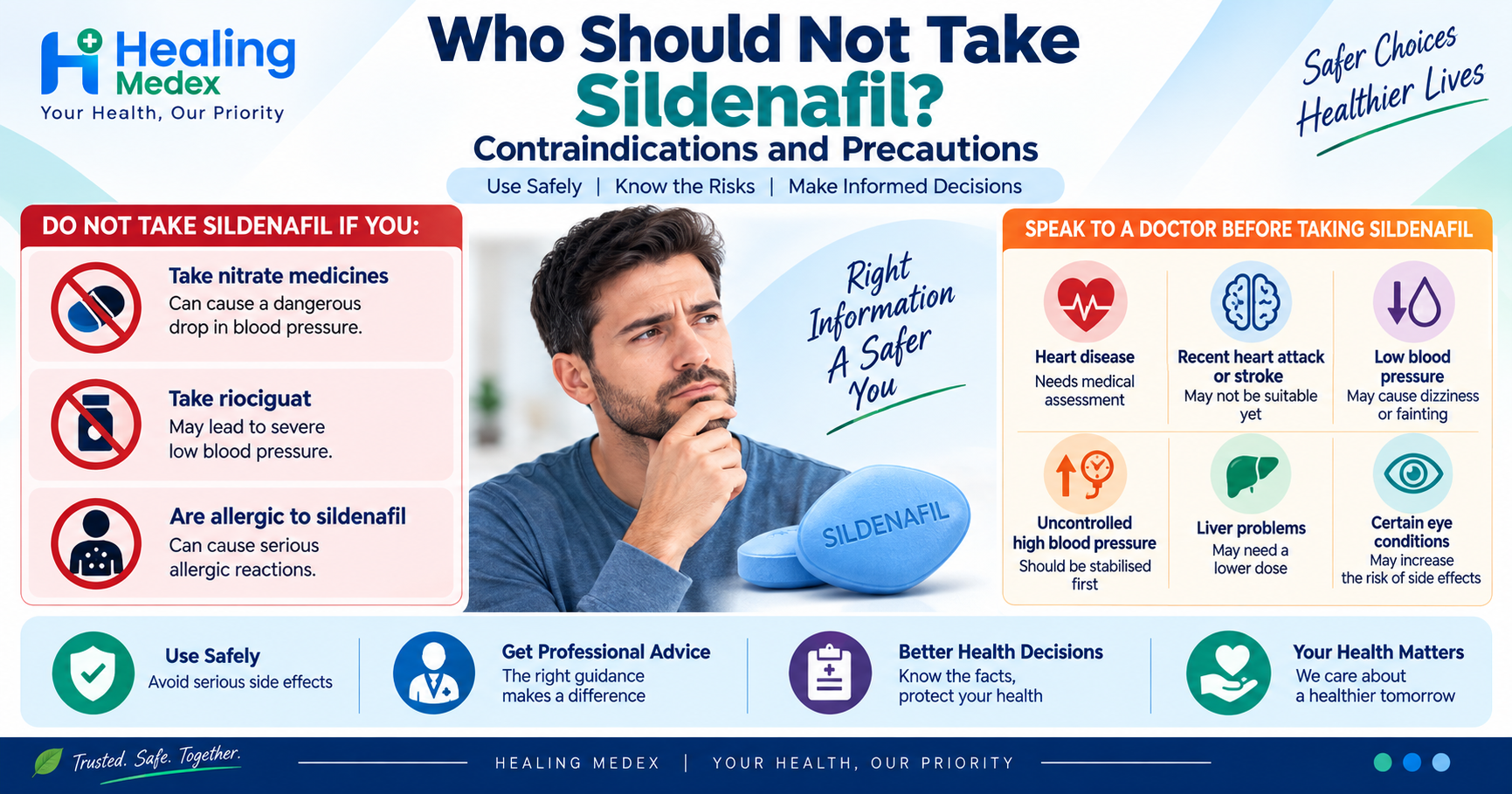
Who Should Not Take Sildenafil?
Some situations are considered strong contraindications to sildenafil. People in these groups should generally not take the medicine unless specifically instructed otherwise by an appropriate healthcare professional.
1. People Taking Nitrate Medicines
Sildenafil should not be taken with nitrate medicines, which are commonly prescribed for angina and other heart conditions.
Examples include:
Nitroglycerin (glyceryl trinitrate or GTN)
Isosorbide mononitrate
Isosorbide dinitrate
Both sildenafil and nitrates widen blood vessels and lower blood pressure. Taking them together can cause a dangerous and potentially life-threatening fall in blood pressure.
People using recreational nitrate-containing substances such as amyl nitrite or butyl nitrite (“poppers”) should also avoid sildenafil.
If you develop chest pain after taking sildenafil, tell emergency medical professionals when you last took sildenafil so they can choose an appropriate treatment.
2. People Taking Riociguat
Sildenafil should not be combined with riociguat, a medicine used to treat certain forms of pulmonary hypertension.
Both medicines affect blood-vessel signalling and can produce excessive reductions in blood pressure when used together. PDE5 inhibitors such as sildenafil should therefore not be used together with riociguat.
3. People Allergic to Sildenafil
Anyone who has previously experienced a serious allergic reaction to sildenafil or one of the ingredients in the medicine should not take it again without medical advice.
Signs of a severe allergic reaction can include:
Swelling of the lips, tongue or throat
Difficulty breathing or swallowing
Severe rash or hives
Facial swelling
Severe allergic reactions require urgent medical treatment.
Who Should Speak to a Doctor Before Taking Sildenafil?
Several health conditions are not necessarily absolute contraindications, but they may increase the risks associated with sildenafil.
A doctor may recommend additional monitoring, a lower dose or another ED treatment.
Heart Disease
Sexual activity increases the workload on the cardiovascular system. For this reason, people with significant heart disease should have their cardiovascular health assessed before using sildenafil.
Tell your doctor if you have:
Angina
Heart failure
Irregular heartbeat
Previous heart attack
Previous heart surgery
Other significant cardiovascular disease
People who have been advised to avoid sexual activity for medical reasons should not use sildenafil for erectile dysfunction until their doctor says sexual activity is safe.
Recent Heart Attack or Stroke
People who have recently experienced a heart attack or stroke should obtain medical advice before using sildenafil.
The NHS lists a recent heart attack or stroke among the circumstances in which sildenafil may not be suitable.
Your doctor will consider factors such as cardiovascular stability, current medications and overall health before deciding whether sildenafil is appropriate.
Low Blood Pressure
Sildenafil can cause a temporary reduction in blood pressure.
People who already have low blood pressure (hypotension) may therefore be more likely to experience symptoms such as:
Dizziness
Light-headedness
Weakness
Fainting
Medical assessment is recommended before sildenafil is used in this situation.
Uncontrolled High Blood Pressure
People with severely or poorly controlled high blood pressure should also discuss sildenafil with their healthcare provider.
The underlying cardiovascular condition may need to be stabilised before erectile dysfunction treatment is started.
Liver Problems
The liver helps process sildenafil.
People with significant liver impairment may clear the medicine from their body more slowly, potentially increasing sildenafil exposure and the risk of side effects.
Tell your doctor about any liver disease before starting sildenafil. Depending on your health and other medicines, the prescriber may consider a different dosage or treatment strategy.
Kidney Problems
People with kidney disease should also inform their healthcare provider before using sildenafil.
Certain degrees of kidney impairment can affect how medicines are handled by the body and may influence the most appropriate sildenafil dose.
Do not change your dose without medical guidance.
Previous Serious Vision Problems
Sildenafil requires particular caution in people who have experienced non-arteritic anterior ischemic optic neuropathy (NAION), a condition involving reduced blood flow to the optic nerve.
The NHS specifically advises people who have previously experienced this type of vision loss to discuss sildenafil with a healthcare professional.
Anyone taking sildenafil who experiences a sudden decrease or loss of vision should stop sexual activity and seek urgent medical attention. Do not take another dose until you have received medical advice.
Conditions That Increase the Risk of Priapism
Priapism is a prolonged erection that can become painful and damage penile tissue if it is not treated promptly.
Extra caution may be required in people with blood disorders such as:
Sickle cell anaemia
Multiple myeloma
Leukaemia
These conditions can increase susceptibility to prolonged erections.
An erection that is painful or lasts more than four hours requires urgent medical care.
Penis Deformities and Peyronie’s Disease
People with structural abnormalities of the penis, including Peyronie’s disease, angulation or fibrosis, should discuss ED treatment with a doctor before taking sildenafil.
These conditions can increase the risk of complications associated with prolonged erections.
Sildenafil and Alpha-Blockers
Alpha-blockers may be prescribed for:
Because both alpha-blockers and sildenafil can lower blood pressure, taking them together may increase the possibility of dizziness, light-headedness or fainting.
Patients taking blood-pressure or prostate medicines should give their doctor or pharmacist a complete medication list before beginning sildenafil.
Other Medicines That May Interact With Sildenafil
Sildenafil can interact with several other medicines.
Tell your doctor or pharmacist if you take medicines such as:
Medicines for pulmonary hypertension
Some seizure medicines
St John’s Wort
Some medicines may increase or decrease sildenafil concentrations in the body, potentially changing its effectiveness or increasing side effects.
Never combine sildenafil with another ED medicine unless your healthcare provider specifically recommends it.
Sildenafil and Alcohol
Alcohol is not an absolute contraindication to sildenafil, but drinking excessive amounts can make erectile dysfunction worse and may increase symptoms such as dizziness or light-headedness.
Keeping alcohol intake moderate may help reduce these problems.
When Should You Seek Emergency Medical Help?
Most sildenafil side effects are temporary, but some symptoms require immediate medical attention.
Seek urgent medical care if you experience:
Chest pain
Fainting
Severe difficulty breathing
Sudden loss or major reduction of vision
Sudden hearing loss
Severe allergic reaction
A painful erection
An erection lasting longer than four hours
Sudden hearing loss may sometimes occur with ringing in the ears or dizziness. These symptoms require prompt medical assessment.
Questions to Ask Before Taking Sildenafil
Before starting sildenafil, tell your doctor or pharmacist about all prescription medicines, over-the-counter medicines, vitamins, supplements and recreational substances you use.
Important questions include:
Do I take any nitrate medicine?
Do I take riociguat?
Do I have significant heart disease?
Have I recently had a heart attack or stroke?
Is my blood pressure unusually low or uncontrolled?
Do I have kidney or liver disease?
Have I previously experienced serious vision loss?
Do I have sickle cell anaemia, leukaemia or multiple myeloma?
Do I have Peyronie’s disease or another penile abnormality?
Am I taking another erectile dysfunction medicine?
Providing this information allows your healthcare professional to determine whether sildenafil is appropriate for you.
Frequently Asked Questions
1. Can people with high blood pressure take sildenafil?
Some people with well-controlled high blood pressure can use sildenafil, but it depends on their cardiovascular health and the medicines they take.
Because sildenafil can lower blood pressure and interact with some cardiovascular medicines, discuss its use with a healthcare professional first.
2. Can you take sildenafil if you have heart disease?
It depends on the type and severity of heart disease.
People taking nitrates must not combine them with sildenafil. People with unstable or significant cardiovascular disease may also be advised to avoid sexual activity or ED medicines until their heart condition has been medically assessed.
3. Who absolutely should not take sildenafil?
Important contraindications include people taking nitrate medicines, people using nitrate-containing recreational drugs, people taking riociguat, and people with a serious allergy to sildenafil or its ingredients.
4. Can sildenafil be taken with another ED medicine?
Do not combine sildenafil with medicines such as tadalafil, vardenafil or other erectile dysfunction treatments unless specifically directed by a healthcare professional.
Combining ED medicines may increase adverse effects, particularly low blood pressure.
5. What happens if sildenafil lowers blood pressure too much?
A significant fall in blood pressure may cause dizziness, weakness, fainting or other cardiovascular symptoms.
The greatest concern is combining sildenafil with nitrates, which can produce a potentially dangerous decrease in blood pressure.
Final Thoughts
Sildenafil is an effective erectile dysfunction treatment for many men, but medical history and current medications determine whether it can be used safely.
Sildenafil should not be combined with nitrates or riociguat, and people with certain cardiovascular conditions, low blood pressure, liver or kidney problems, previous serious vision problems, blood disorders or penile abnormalities should discuss treatment with a healthcare professional before using it.
Never start sildenafil based solely on another person’s experience or change your prescribed dose on your own. A doctor or pharmacist can review your medicines and health conditions and determine whether sildenafil is an appropriate option.