Sildenafil is one of the most commonly used medicines for erectile dysfunction (ED). It belongs to a group of medicines called phosphodiesterase type 5 (PDE5) inhibitors, which help increase blood flow to the penis during sexual stimulation.
For many men, sildenafil can make it easier to achieve and maintain an erection. However, some men find that sildenafil does not work as well as expected — or appears not to work at all.
This does not necessarily mean sildenafil is unsuitable for you. Factors such as when you take the tablet, what you eat, alcohol consumption, sexual stimulation, the dose being used, other medicines, psychological factors and the underlying cause of erectile dysfunction can all influence how well sildenafil works.
Understanding these factors can help determine what to discuss with your healthcare provider.
How Does Sildenafil Work?
Sildenafil works by blocking the enzyme PDE5.
During sexual stimulation, nitric oxide is released in penile tissue. This increases levels of cyclic guanosine monophosphate (cGMP), which relaxes smooth muscle and allows more blood to enter the penis.
Sildenafil slows the breakdown of cGMP, helping this natural process work more effectively.
However, sildenafil does not directly cause an erection. Sexual stimulation is still necessary for the medicine to work. FDA patient information specifically notes that taking sildenafil alone does not automatically produce an erection.
Why Is Sildenafil Not Working?
There are several possible explanations.
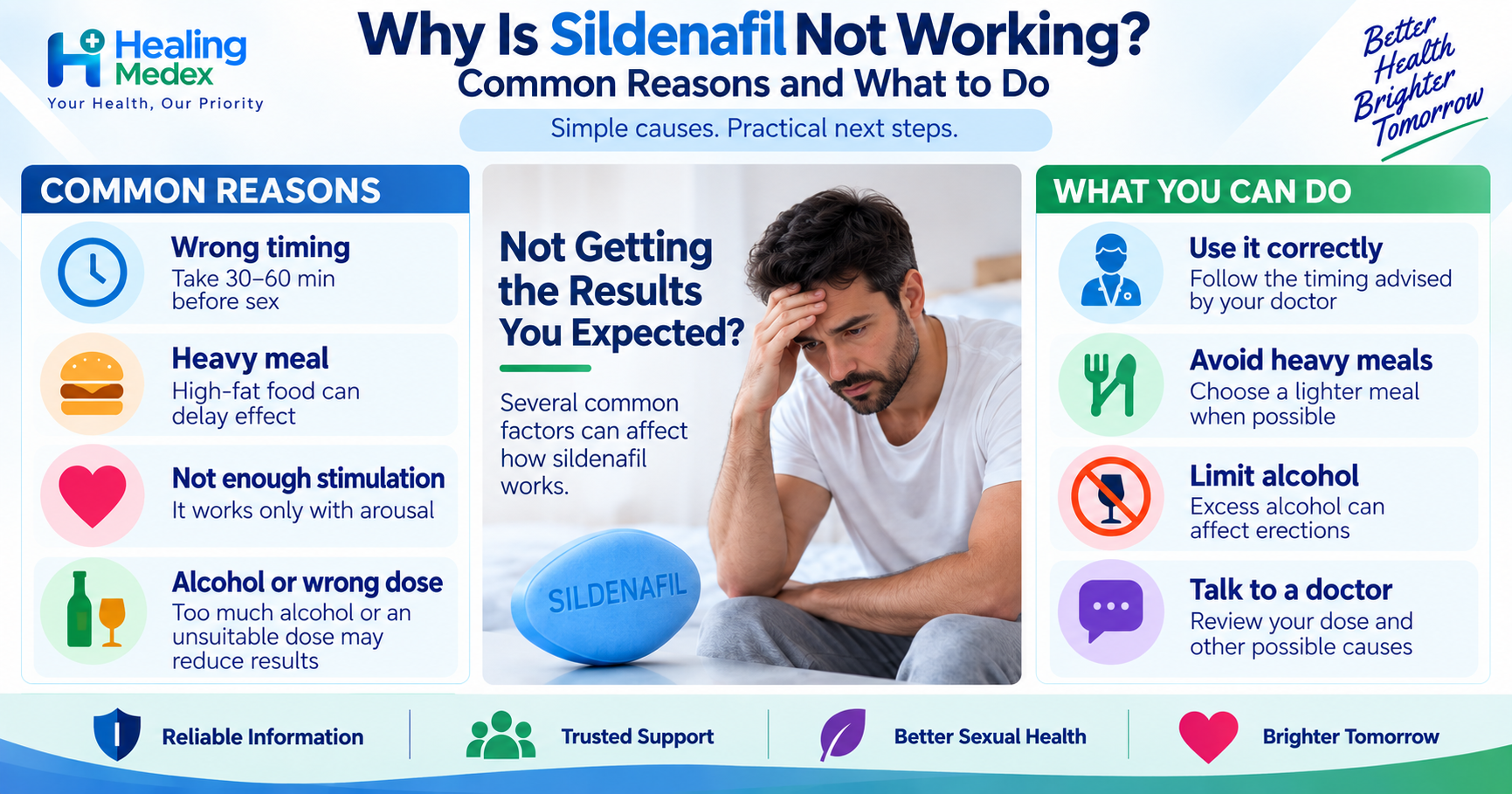
1. You Are Not Giving Sildenafil Enough Time to Work
One of the most common problems is taking sildenafil immediately before sexual activity and expecting an instant response.
For most patients, sildenafil is typically taken approximately one hour before sexual activity, although prescribing information indicates that it may be taken between approximately 30 minutes and four hours before sex.
Taking the medicine only a few minutes before attempting sexual activity may therefore result in an inadequate response.
2. You Took Sildenafil After a Heavy Meal
Sildenafil can be taken with or without food. However, a large or high-fat meal can delay how quickly it is absorbed.
Clinical pharmacology data have shown that taking sildenafil after a high-fat meal can delay the time required to reach peak blood concentrations.
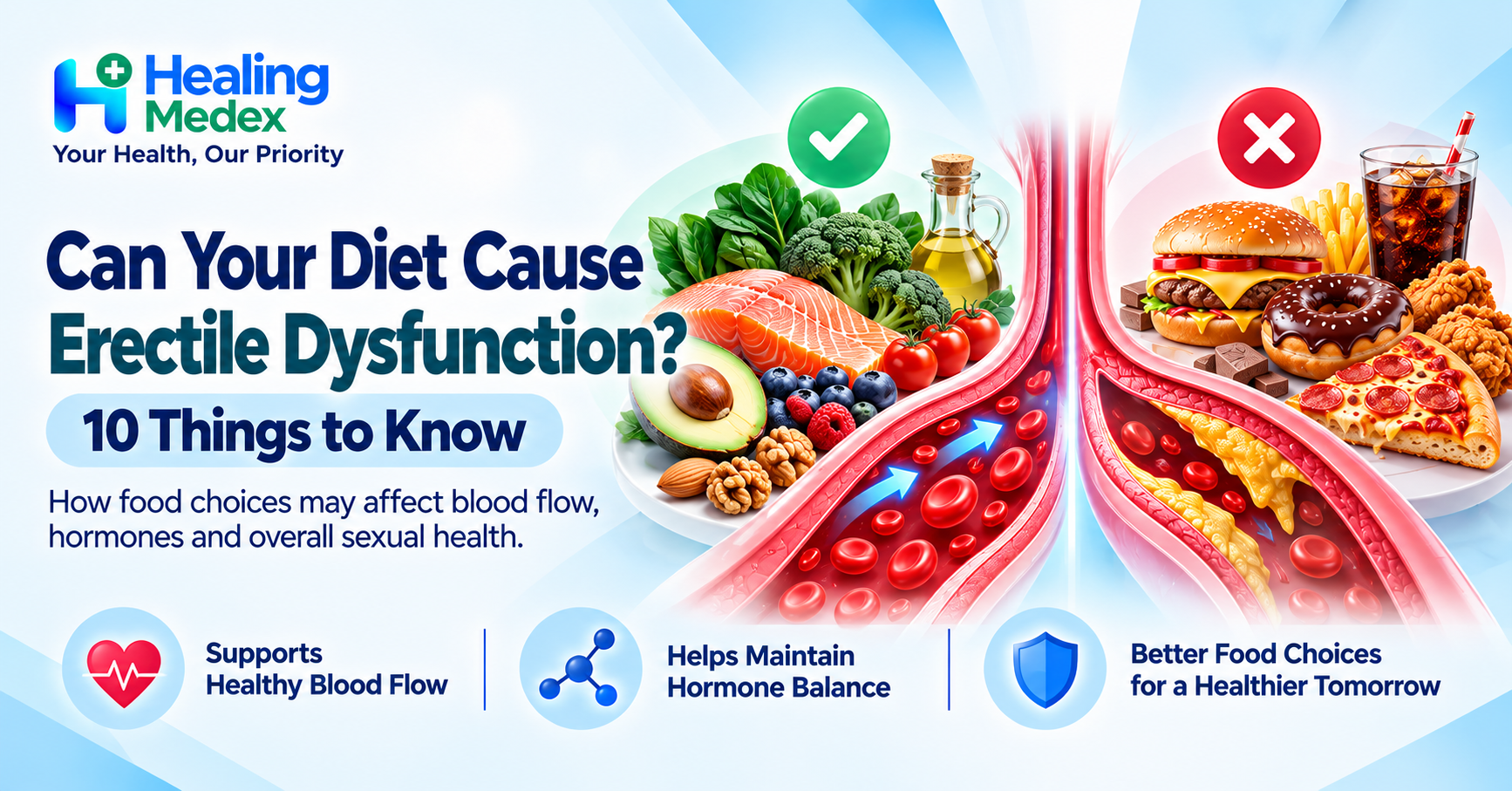
Foods such as:
burgers
fried foods
pizza
creamy meals
large portions of fatty meat
may therefore make sildenafil take longer to work.
If you have experienced inconsistent results, discuss with your healthcare provider whether taking sildenafil away from a heavy meal may be appropriate.
3. There Was Not Enough Sexual Stimulation
Another common misunderstanding is that sildenafil should automatically cause an erection.
It does not.
Sildenafil supports the body’s natural erectile response during sexual arousal. Without sufficient sexual stimulation, the biological signals required to produce an erection may not be strong enough.
This means taking sildenafil and simply waiting for an erection may not produce the expected effect.
4. You Drank Too Much Alcohol
Small amounts of alcohol may not necessarily prevent sildenafil from working, but excessive alcohol can interfere with erections.
Alcohol can reduce sexual responsiveness and make it more difficult to achieve or maintain an erection. The NHS therefore advises avoiding excessive alcohol when using sildenafil for erectile dysfunction.
Heavy alcohol consumption may also increase certain sildenafil-related effects such as dizziness or low blood pressure.
Reducing alcohol intake may improve both erectile function and the response to ED treatment.
5. The Sildenafil Dose May Not Be Appropriate
Sildenafil is available in different strengths.
For erectile dysfunction, official prescribing information lists 50 mg as the usual recommended starting dose for most patients. Depending on effectiveness, tolerance, medical conditions and other medicines, a clinician may decrease the dose to 25 mg or increase it up to the recommended maximum of 100 mg.
If a lower dose provides an inadequate response, a healthcare provider may decide whether adjusting the dose is appropriate.
However, you should not increase your sildenafil dose yourself.
Taking more does not guarantee a better erection and may increase the likelihood of:
headache
flushing
dizziness
indigestion
nasal congestion
visual disturbances
low blood pressure
prolonged erection
The recommended maximum dosing frequency for sildenafil used for ED is once per day, and established prescribing information lists 100 mg as the maximum recommended dose.
6. You Have Only Tried Sildenafil Once
A poor response on one occasion does not always prove that sildenafil will never work.
Factors such as anxiety, food, timing, alcohol consumption and the circumstances surrounding sexual activity can vary considerably between attempts.
The American Urological Association notes that an inadequate initial response to a PDE5 inhibitor may sometimes be addressed through appropriate dose adjustment or changes in treatment strategy under clinician supervision.
If sildenafil repeatedly fails despite being used correctly, however, the underlying reason should be investigated.
7. Performance Anxiety May Be Affecting Your Erection
Erectile dysfunction is not always caused entirely by a blood-flow problem.
Psychological factors may include:
performance anxiety
stress
relationship difficulties
depression
fear of losing an erection
previous negative sexual experiences
excessive focus on sexual performance
Performance anxiety can create a cycle.
You worry that you will not achieve an erection → this increases anxiety → anxiety interferes with arousal → the erection becomes more difficult → anxiety increases further.
Even when sildenafil improves penile blood flow, severe anxiety may continue to interfere with sexual performance.
The NHS identifies stress, anxiety and depression among factors that can contribute to erection problems.
Counselling, psychological therapy or sex therapy may therefore be helpful for some men.
8. The Underlying Erectile Dysfunction May Be More Severe
Sildenafil relies on the body’s existing erectile mechanisms.
If blood flow or nerve function is significantly impaired, sildenafil may provide less improvement.
Underlying conditions associated with erectile dysfunction can include:
obesity
neurological disorders
hormonal problems
pelvic surgery
prostate cancer treatment
nerve damage
Diabetes in particular can affect both penile blood vessels and nerves, making ED more difficult to treat in some men.
The AUA guideline notes that men with diabetes or those who have undergone prostate surgery can have more severe erectile dysfunction and may respond differently to PDE5 inhibitor therapy.
9. Low Testosterone or Low Sexual Desire Could Be Contributing
Sildenafil improves the erectile blood-flow response, but it does not directly increase sexual desire.
If testosterone levels are significantly low, symptoms may include:
reduced libido
low energy
fewer spontaneous erections
reduced sexual interest
difficulty maintaining erections
Hormonal problems are among the recognised possible causes of persistent erectile dysfunction.
A doctor may recommend blood tests if symptoms suggest a hormonal problem.
Testosterone treatment should not be started simply because sildenafil is not working; hormone testing and medical assessment are necessary first.
10. Another Medicine Could Be Contributing to Erectile Dysfunction
Some medicines may contribute to erection problems.
Depending on the individual, these may include certain:
blood pressure medicines
hormonal treatments
prostate medicines
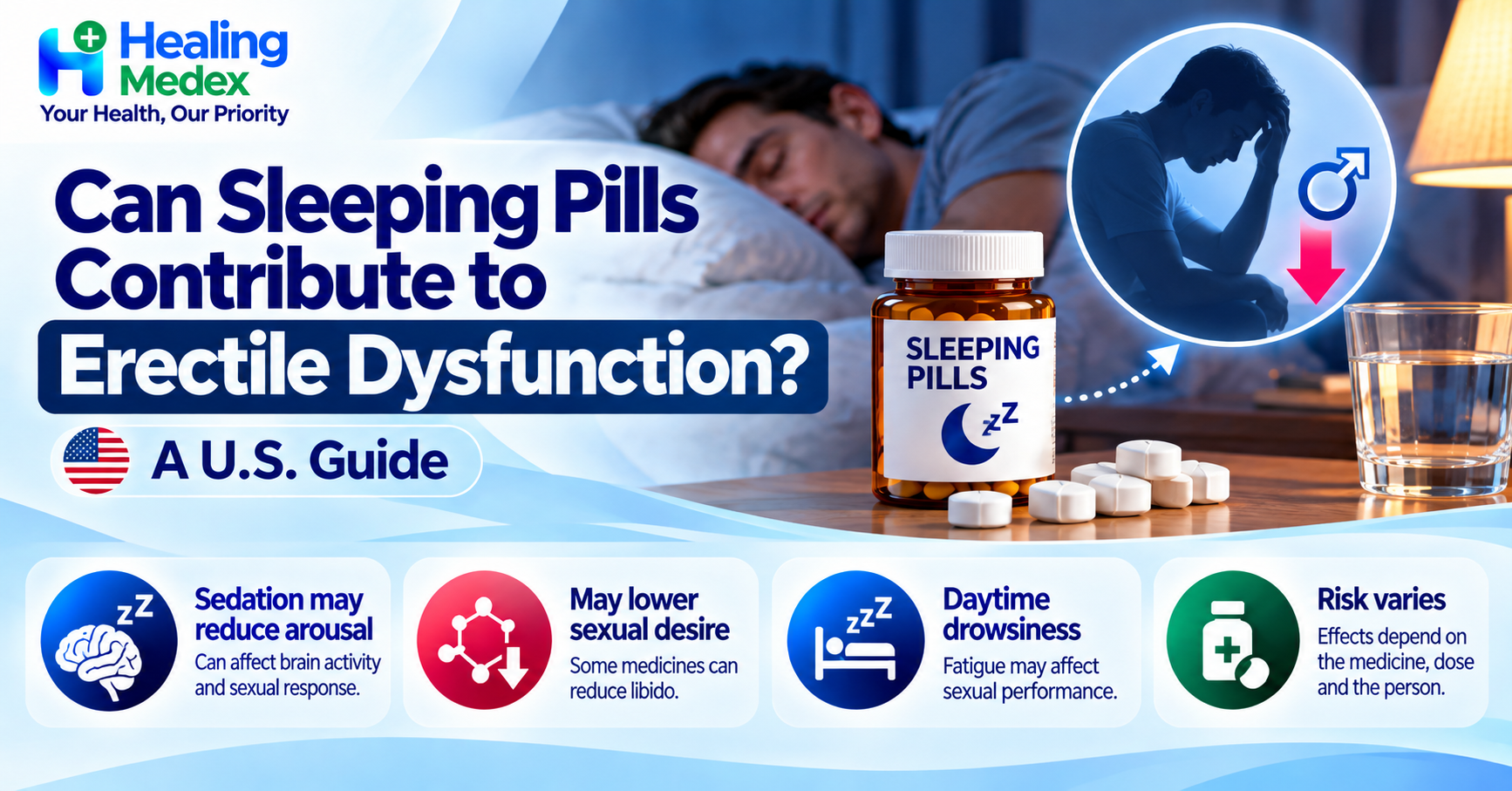
sedatives
Other medicines can also alter sildenafil levels or increase its adverse effects.
Do not stop a prescribed medicine because you think it is causing ED. Instead, discuss the problem with your healthcare provider, who can determine whether medication changes are appropriate.
11. Smoking and Poor Cardiovascular Health May Reduce Treatment Response
An erection depends heavily on healthy blood vessels.
Smoking damages blood vessels and can reduce nitric oxide activity, while conditions such as high cholesterol, diabetes and hypertension may impair circulation.
Improving cardiovascular health may therefore improve erectile function as well as overall health.
Lifestyle measures that may help include:
stopping smoking
maintaining a healthy body weight
exercising regularly
managing diabetes
controlling blood pressure
controlling cholesterol
limiting excessive alcohol
getting adequate sleep
The NHS recommends measures including exercise, weight management, smoking cessation, a healthy diet and reducing stress as part of managing erectile dysfunction.
12. The Sildenafil Product May Not Come From a Reliable Source
Medicine quality is particularly important when purchasing erectile dysfunction treatments online.
Counterfeit or unregulated sildenafil products may contain:
too little active ingredient
too much active ingredient
another medicine entirely
contaminants
inconsistent doses
The NHS warns that medicines purchased from unregulated online sources may be counterfeit and their ingredients can vary.
Use medicines only from appropriately licensed and regulated pharmacies and follow the requirements that apply in your country.
What Should You Do If Sildenafil Is Not Working?
If sildenafil appears ineffective, consider the circumstances in which you have been using it.
Check how you are taking it
Use sildenafil exactly as prescribed.
For many patients this means taking it approximately one hour before anticipated sexual activity and allowing sufficient time for the medicine to be absorbed.
Avoid very heavy meals around the dose
Although sildenafil can be taken with food, a high-fat meal can delay absorption.
Limit excessive alcohol
Too much alcohol can interfere with the ability to achieve an erection even when sildenafil has been taken correctly.
Remember that sexual stimulation is necessary
Sildenafil helps the physiological response to arousal. It does not create sexual desire or automatically trigger an erection.
Talk to your doctor about the dose
If your current prescribed dose is ineffective, do not simply take extra tablets.
Your healthcare provider can determine whether adjusting the dose is safe based on factors such as:
your age
other medicines
blood pressure
kidney function
liver function
cardiovascular health
side effects
Investigate the underlying cause of ED
Persistent ED may sometimes be an early sign of another health condition.
Conditions such as diabetes, high blood pressure, high cholesterol, hormonal abnormalities and cardiovascular disease should therefore be considered when erectile problems continue.
What If Sildenafil Still Does Not Work?
Sildenafil is not the only erectile dysfunction treatment available.
Depending on your diagnosis and medical history, a healthcare professional may consider alternatives such as other PDE5 inhibitors, including:
Other options may include:
vacuum erection devices
psychological or sex therapy
treatment of testosterone deficiency when medically confirmed
injectable ED medicines
urethral treatments
penile implants in selected severe cases
The appropriate option depends on why erectile dysfunction is occurring.
Switching medicines repeatedly without identifying the underlying problem is not always the best approach.
Can You Take More Sildenafil If It Does Not Work?
You should not increase the dose without medical advice.
Current sildenafil prescribing information recommends a maximum dose of 100 mg for erectile dysfunction and a maximum dosing frequency of once daily.
Taking doses above the medically recommended amount may increase adverse effects without guaranteeing improved erectile function.
If 100 mg sildenafil has repeatedly failed despite correct use, a clinician should evaluate why rather than simply increasing the dose further.
Sildenafil and Nitrates: An Important Safety Warning
Sildenafil should not be used with nitrate medicines used for conditions such as angina.
Examples can include:
nitroglycerin/glyceryl trinitrate
isosorbide mononitrate
isosorbide dinitrate
Combining nitrates with sildenafil can cause a potentially dangerous fall in blood pressure. This interaction is listed as a contraindication in sildenafil prescribing information.
People using alpha-blockers or certain blood-pressure medicines should also discuss sildenafil use with their clinician because additional precautions or dose adjustments may be necessary.
When Should You See a Doctor?
Speak with a doctor if:
sildenafil repeatedly does not work
ED occurs frequently
your erections have suddenly become weaker
your sexual desire has significantly decreased
you have diabetes, cardiovascular disease or other chronic conditions
you experience troublesome sildenafil side effects
you are unsure whether sildenafil is safe with your other medicines
Persistent erectile dysfunction deserves medical evaluation because ED can sometimes be associated with conditions such as diabetes or cardiovascular disease.
When Is Emergency Medical Care Needed?
Seek urgent medical attention if you develop:
an erection lasting longer than four hours
severe chest pain
fainting
sudden loss or major reduction of vision
sudden loss or reduction of hearing
symptoms of a severe allergic reaction
Sildenafil prescribing information specifically warns that an erection lasting more than four hours requires emergency treatment.
Frequently Asked Questions
1. Why does sildenafil work sometimes but not others?
Differences in meal timing, alcohol intake, sexual stimulation, stress, anxiety and the severity of ED can all affect the response. Taking sildenafil after a large fatty meal may also delay its effect.
2. How long should sildenafil take to work?
For most patients, sildenafil is taken around one hour before sexual activity. It may be used approximately 30 minutes to four hours before sex according to prescribing information.
3. Does sildenafil work better on an empty stomach?
Sildenafil can be taken with or without food. However, a high-fat meal can delay its absorption and therefore delay its effect.
4. Does sildenafil work without sexual stimulation?
No. Sexual stimulation is required. Sildenafil enhances the natural erectile response rather than automatically producing an erection.
5. Can stress stop sildenafil from working?
Yes. Stress and performance anxiety may interfere with arousal and erections even when penile blood flow is being supported by sildenafil.
6. Can I take two sildenafil tablets if one does not work?
Do not take additional tablets unless specifically instructed by your healthcare provider. Sildenafil used for ED should not be taken more than once per day, and the recommended maximum dose is 100 mg.
7. Is 200 mg sildenafil better if 100 mg does not work?
Taking more sildenafil does not necessarily produce better results and can increase adverse effects. Standard prescribing guidance lists 100 mg as the maximum recommended dose for ED. If 100 mg is ineffective, seek medical advice rather than increasing the dose yourself.
8. What should I do if sildenafil never works?
Speak with a healthcare professional. Your doctor may review how you are taking sildenafil, investigate conditions contributing to ED and discuss other treatment options.
Final Thoughts
Sildenafil can be an effective treatment for erectile dysfunction, but several factors determine how well it works.
Taking the medicine at the wrong time, eating a heavy meal, drinking excessive alcohol, insufficient sexual stimulation, performance anxiety, an unsuitable dose or an underlying medical condition can all contribute to disappointing results.
If sildenafil repeatedly fails despite being used correctly, do not simply increase the dose on your own. A medical assessment can help identify whether the problem is related to medication use, cardiovascular health, diabetes, hormones, psychological factors or another cause.
Identifying and treating the underlying reason for erectile dysfunction often provides a better long-term strategy than repeatedly changing the sildenafil dose.