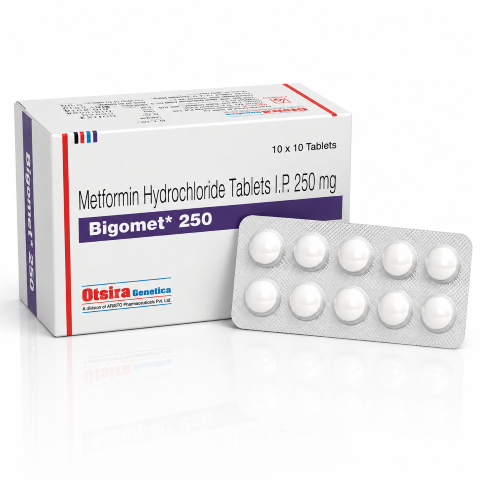
Bigomet 250 MG Tablet
$0.02 / unit
Available Options
| Pack Size | Price | Price / Unit | Quantity | Action |
|---|---|---|---|---|
| 180 Tablets | $3.78 | $0.02/unit | ||
| 150 Tablets | $3.15 | $0.02/unit | ||
| 120 Tablets | $2.52 | $0.02/unit | ||
| 90 Tablets | $1.89 | $0.02/unit | ||
| 60 Tablets | $1.26 | $0.02/unit | ||
| 30 Tablets | $0.63 | $0.02/unit |
Product Description
What Is This Medicine?
BIGOMET 250 MG TABLET contains Metformin Hydrochloride 250 mg , an oral antidiabetic medicine belonging to the biguanide class. Metformin helps control blood-glucose levels mainly by: reducing glucose production by the liver decreasing intestinal absorption of glucose improving the body's sensitivity to insulin helping body tissues use glucose more effectively improving overall glycemic control Bigomet 250 mg is primarily used for the management of type 2
- diabetes mellitus .
This medicine is commonly used for:
- type 2
- diabetes mellitus controlling high blood-glucose levels reducing fasting blood glucose improving overall glycemic control lowering HbA1c
- diabetes not adequately controlled by diet and exercise alone combination treatment with other antidiabetic medicines when prescribed polycystic ovary syndrome (PCOS) in selected patients when prescribed Current Indian product information also notes the use of Bigomet/metformin for PCOS . Important: Bigomet should be used as part of an appropriate
- diabetes-management program involving diet, exercise, weight management, and regular blood-glucose monitoring
What Should I Tell My Health Care Provider Before I Take This Medicine?
They need to know if you have any of these conditions: allergy to metformin or any ingredient in Bigomet
- kidney disease or reduced kidney function
- liver disease severe heart problems diabetic ketoacidosis history of lactic acidosis severe dehydration severe infection breathing problems or conditions causing reduced oxygen levels excessive alcohol consumption if you are fasting or eating substantially less than usual if you are undergoing major surgery if you are having an X-ray or scan involving iodinated contrast if you take insulin if you take other
- diabetes medicines if you are pregnant or planning pregnancy if you are
- breastfeeding Kidney function is particularly important because metformin is eliminated primarily through the kidneys. Tell your healthcare professional about all prescription medicines, nonprescription medicines, vitamins, herbal preparations, and supplements you use.
How Should I Use This Medicine?
Take Bigomet 250 mg Tablet exactly as prescribed by your healthcare professional . For appropriate use: take the tablet with food swallow it with water take it at approximately the same time each day take only the prescribed dose continue your recommended diabetic diet maintain regular physical activity monitor your blood glucose as instructed do not increase or decrease the dose yourself do not stop treatment without medical advice Current Indian product guidance recommends taking Bigomet with food to reduce gastrointestinal effects such as
- nausea and abdominal discomfort. Important: 250 mg is the strength of each tablet. Your healthcare professional determines the appropriate daily dose according to your blood-glucose levels, kidney function, other medicines, and response to treatment.
What If I Miss A Dose?
If you miss a dose of Bigomet: take it when you remember unless it is nearly time for your next dose if the next dose is near, skip the missed dose continue with your normal dosing schedule do not take two doses together to compensate for a missed tablet Take Bigomet regularly for optimal blood-glucose control.
What May Interact With This Medicine?
Metformin may interact clinically with: insulin sulfonylureas such as glimepiride, gliclazide, and glipizide other antidiabetic medicines certain diuretics corticosteroids medicines that may affect kidney function some blood-pressure medicines medicines that alter blood-glucose levels iodinated contrast agents used during certain imaging procedures excessive alcohol Combining Bigomet with insulin or certain other antidiabetic medicines may increase the risk of hypoglycemia . Iodinated contrast procedures Because Bigomet contains metformin, treatment may need to be temporarily stopped around certain imaging procedures involving iodinated contrast , depending on kidney function and other clinical factors. Always tell the radiology or medical team that you take metformin before undergoing a contrast-enhanced scan.
What Should I Watch For While Using This Medicine?
Your healthcare professional may monitor your: fasting blood glucose post-meal blood glucose HbA1c kidney function/eGFR body weight vitamin B12 levels during long-term treatment when appropriate Regular blood-glucose monitoring, diet, and exercise remain important during treatment with Bigomet. Kidney function Metformin is eliminated largely through the kidneys. If kidney function becomes significantly impaired, metformin can accumulate in the body and increase the risk of serious adverse effects. Your healthcare professional may therefore check kidney function before and periodically during treatment. Lactic acidosis warning Metformin can rarely cause lactic acidosis , a serious medical emergency. Seek urgent medical attention if you develop: severe weakness unusual or extreme tiredness persistent
- nausea or
- vomiting severe abdominal discomfort rapid or difficult breathing unusual muscle pain
- dizziness or light-headedness feeling unusually cold severe
- drowsiness confusion The risk can increase in situations such as significant kidney impairment, severe dehydration, serious infection, reduced oxygen supply to tissues, or excessive alcohol consumption.
What Side Effects May I Notice From This Medicine?
Common side effects may include:
- nausea diarrhea
- vomiting abdominal discomfort stomach pain decreased appetite
- headache Gastrointestinal symptoms are among the commonly reported adverse effects of metformin/Bigomet. Taking Bigomet with food can help reduce stomach-related side effects. Side effects that you should report promptly: symptoms suggesting lactic acidosis severe or persistent
- vomiting severe diarrhea significant dehydration severe weakness unusual breathing difficulty severe abdominal pain severe allergic reaction swelling of the face, lips, tongue, or throat difficulty breathing or swallowing What about low blood sugar? Metformin used alone generally has a low risk of causing significant hypoglycemia . However, low blood sugar may occur when Bigomet is combined with: insulin sulfonylureas other medicines capable of causing hypoglycemia inadequate food intake in susceptible patients Symptoms of low blood sugar can include: sweating shaking or trembling intense hunger
- dizziness weakness confusion
- headache rapid heartbeat blurred vision Follow your healthcare professional's individualized plan for managing hypoglycemia. Vitamin B12 and long-term treatment Long-term metformin treatment can reduce vitamin B12 levels in some patients. Tell your healthcare professional if you develop: unusual tiredness weakness numbness or tingling pale skin sore or red tongue symptoms suggestive of anemia symptoms suggestive of peripheral neuropathy Your healthcare professional may check vitamin B12 levels when clinically appropriate. What happens if I take too much? Taking substantially more Bigomet than prescribed can be dangerous and may increase the risk of lactic acidosis . Seek urgent medical attention after a significant overdose, particularly if you develop: severe
- nausea or
- vomiting abdominal pain unusual weakness rapid or difficult breathing severe
- drowsiness confusion feeling unusually cold Do not take additional Bigomet tablets to compensate for a high blood-glucose reading or a high-carbohydrate meal. What happens if I suddenly stop taking this medicine? Do not stop Bigomet simply because your blood-glucose readings have improved. Stopping treatment without medical advice may cause: blood glucose to rise HbA1c to increase worsening
- diabetes control Poorly controlled
- diabetes over time can increase the risk of complications affecting the: kidneys eyes nerves heart blood vessels Current product guidance advises patients not to stop Bigomet unless their healthcare professional recommends doing so. Diet and lifestyle while taking Bigomet Bigomet works best as part of a complete
- diabetes-management program. Follow your healthcare professional's recommendations regarding: balanced carbohydrate intake appropriate portion sizes limiting excessive refined sugars regular physical activity maintaining an appropriate body weight regular blood-glucose monitoring HbA1c testing routine kidney monitoring routine eye examinations appropriate foot care Diet and regular exercise remain important components of treatment while taking Bigomet. Avoid excessive alcohol consumption , as alcohol can increase the risk of serious metformin-related adverse effects. Surgery, severe illness, and contrast scans Tell your healthcare professional that you take Bigomet before: major surgery prolonged fasting treatment for a severe infection periods of significant dehydration certain imaging procedures involving iodinated contrast Your healthcare professional may recommend temporarily withholding metformin in certain circumstances and will advise when it is appropriate to restart treatment.
Where Should I Keep My Medicine?
Current Indian product information specifies: Store below 25°C. Keep Bigomet: in its original blister packaging below 25°C protected from excessive heat protected from moisture away from direct sunlight securely out of the reach of children Do not use tablets after their expiration date or if the blister packaging has been damaged.