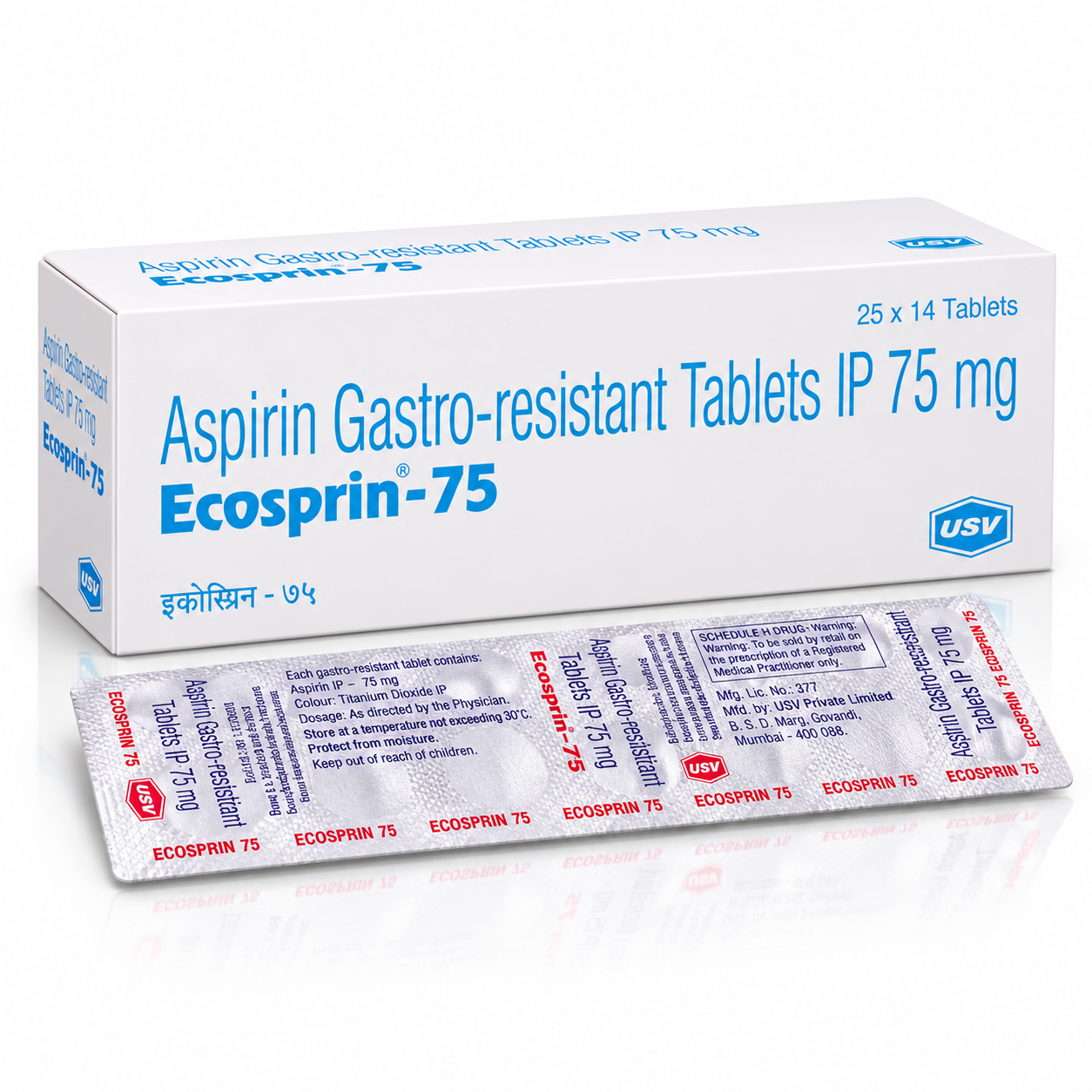
Ecosprin 75 MG Tablet
$0.01 / unit
Available Options
| Pack Size | Price | Price / Unit | Quantity | Action |
|---|---|---|---|---|
| 84 Tablets | $0.72 | $0.01/unit | ||
| 70 Tablets | $0.60 | $0.01/unit | ||
| 56 Tablets | $0.48 | $0.01/unit | ||
| 42 Tablets | $0.36 | $0.01/unit | ||
| 28 Tablets | $0.24 | $0.01/unit | ||
| 14 Tablets | $0.12 | $0.01/unit |
Product Description
Ecosprin 75 MG Tablet
Brand Name: Ecosprin 75 MG Tablet
Generic Name: Aspirin (Acetylsalicylic Acid)
Strength: 75 mg
Dosage Form: Enteric-Coated Oral Tablet
Therapeutic Class: Antiplatelet Medicine / Salicylate / Non-Steroidal Anti-Inflammatory Drug (NSAID)
Manufacturer / Marketer: USV Private Limited
Pack Size: 1 × 14 Tablets
Country of Origin: India
Prescription Status: Prescription Medicine
What is this medicine?
ECOSPRIN 75 MG TABLET contains Aspirin 75 mg, also known as acetylsalicylic acid.
At this low dose, aspirin primarily works as an antiplatelet medicine.
Platelets are small blood components that help form clots to stop bleeding. However, excessive platelet aggregation inside arteries can contribute to heart attacks and certain strokes.
Ecosprin 75 reduces the ability of platelets to stick together, helping reduce the formation of harmful arterial blood clots.
How does Ecosprin 75 work?
Aspirin irreversibly inhibits the cyclooxygenase-1 enzyme (COX-1) inside platelets.
This reduces the production of thromboxane A2, a substance involved in platelet activation and aggregation.
As a result, platelets become less able to form clots.
Main Effects
1. Reduces Platelet Aggregation
Ecosprin 75 reduces platelet clumping and helps prevent certain harmful blood clots.
2. Helps Prevent Recurrent Heart Attacks
In patients with established coronary artery disease, aspirin can reduce the risk of further clot-related cardiovascular events.
3. Helps Prevent Certain Ischaemic Strokes
Aspirin may be prescribed following an ischaemic stroke or transient ischaemic attack (TIA), depending on the clinical circumstances.
4. Supports Treatment After Coronary Procedures
It may be used following angioplasty or coronary stent placement, sometimes alongside another antiplatelet medicine.
5. Helps Manage Certain Cardiovascular Conditions
Low-dose aspirin is used as part of secondary prevention for selected patients with atherosclerotic cardiovascular disease.
Medical Uses
Ecosprin 75 MG Tablet may be prescribed for:
Secondary prevention after myocardial infarction (heart attack)
Coronary artery disease
Secondary prevention after certain ischaemic strokes
Transient ischaemic attack (TIA)
Selected patients with stable angina
Selected patients with acute coronary syndrome, as part of the appropriate treatment plan
Antiplatelet treatment after coronary angioplasty or stent placement
Certain cases of peripheral arterial disease
Prevention of recurrent cardiovascular events in patients with established atherosclerotic disease
Prevention of pre-eclampsia in selected high-risk pregnancies, when prescribed by an obstetrician
Important: Aspirin does not treat every type of stroke. It can be harmful in patients with active bleeding in the brain.
For suspected stroke, emergency assessment and appropriate imaging are required before aspirin treatment is started.
Is Ecosprin 75 a Blood Thinner?
Ecosprin 75 is commonly called a blood thinner, but technically it is an antiplatelet medicine.
It prevents platelets from aggregating but does not work in the same way as anticoagulants such as warfarin, apixaban or rivaroxaban.
Is Ecosprin 75 a Painkiller?
Aspirin can relieve pain at higher doses, but 75 mg is primarily an antiplatelet dose.
Ecosprin 75 should not be used as an ordinary painkiller for headaches, toothache or fever.
Primary vs Secondary Cardiovascular Prevention
Secondary prevention: Aspirin is commonly prescribed to patients who have already experienced certain cardiovascular events or have established vascular disease.
Primary prevention: Starting aspirin in people without established cardiovascular disease requires an individual assessment of cardiovascular benefits against bleeding risk. It is not routinely recommended for everyone.
The NHS identifies low-dose aspirin as a medicine used to prevent blood clots and reduce the risk of certain heart attacks and strokes.
What should I tell my health care provider before I take this medicine?
Tell your healthcare provider if you have any of these conditions:
Allergy to aspirin
Allergy to salicylates
Allergy to ibuprofen, naproxen or other NSAIDs
Previous aspirin-induced asthma
Previous serious allergic reactions
Stomach ulcers
Previous gastrointestinal bleeding
Active gastrointestinal bleeding
History of bleeding in the brain
Bleeding or blood-clotting disorders
Haemophilia
Low platelet count
Anaemia
Uncontrolled high blood pressure
Heart failure
Kidney disease
Liver disease
Asthma
Nasal polyps
Frequent nosebleeds
Gout
Heavy alcohol consumption
Planned surgery
Planned dental procedures
Pregnancy or plans to become pregnant
Breastfeeding
Current use of anticoagulant medicines
Current use of other antiplatelet medicines
Current use of other NSAIDs
Current use of corticosteroids
Inform your healthcare professional about all prescription medicines, over-the-counter medicines, vitamins, supplements and herbal products you take.
Important Contraindications
Ecosprin 75 may be contraindicated in patients with:
Known serious aspirin hypersensitivity
Previous severe aspirin-related bronchospasm or anaphylaxis
Active gastrointestinal bleeding
Certain active peptic ulcers
Active intracranial bleeding
Certain severe bleeding disorders
Patients with severe heart, kidney or liver problems may require a different treatment, depending on the clinical circumstances.
Important Bleeding Precaution
Aspirin affects platelet function and can increase bleeding risk.
This may cause:
Easy bruising
Nosebleeds
Bleeding gums
Prolonged bleeding after cuts
Gastrointestinal bleeding
Rare intracranial bleeding
Important Stomach and Intestinal Precaution
Even low-dose aspirin can cause stomach irritation, ulcers and gastrointestinal bleeding.
The risk may increase in older adults and in patients with previous ulcers or who take other medicines that increase bleeding.
Important Asthma Precaution
Some patients have aspirin-exacerbated respiratory disease.
Taking aspirin may trigger:
Wheezing
Shortness of breath
Nasal symptoms
Bronchospasm
Patients with previous aspirin-related asthma symptoms should not take Ecosprin without specialist assessment.
Important Kidney Precaution
Patients with kidney disease or dehydration may be more vulnerable to aspirin-related adverse effects.
A healthcare professional should assess the suitability of treatment.
Pregnancy Precautions
Low-dose aspirin may be prescribed during pregnancy for selected medical indications, including reducing the risk of pre-eclampsia in certain high-risk patients.
It should only be used under obstetric supervision, with the correct dose and treatment schedule.
Do not independently start or discontinue prescribed low-dose aspirin during pregnancy.
Breastfeeding Precautions
Low-dose aspirin may be used during breastfeeding in selected circumstances when the expected benefits justify the potential risks.
The healthcare professional should assess the treatment and any infant-related precautions.
Important Children's Precaution
Aspirin should not be given to children or teenagers for viral illnesses unless specifically directed by a specialist because of the risk of Reye's syndrome, a rare but serious condition affecting the brain and liver.
The NHS lists aspirin allergy, previous ulcers, asthma, bleeding conditions and certain kidney, liver or heart disorders among important precautions.
How should I use this medicine?
Take Ecosprin 75 MG Tablet exactly as prescribed by your healthcare professional.
Swallow the enteric-coated tablet whole with water.
Do not crush, chew or break the tablet during routine administration.
Take it at approximately the same time each day.
It is often taken with or after food to reduce stomach discomfort.
Do not increase or decrease the prescribed dose.
Avoid taking additional aspirin-containing products without advice.
Avoid excessive alcohol consumption.
Report unusual bruising or bleeding.
Inform your healthcare professional before surgery or dental procedures.
Do not stop prescribed cardiovascular treatment independently.
Why is Ecosprin Enteric-Coated?
Enteric coating is designed to delay the release of aspirin until it passes beyond the acidic stomach environment.
This may reduce direct stomach irritation in some patients.
However, enteric coating does not eliminate the risk of stomach ulcers or gastrointestinal bleeding.
The tablet should therefore be swallowed whole.
Dosage Information
Strength per Tablet: Aspirin 75 mg.
Usual Adult Dose for Antiplatelet Treatment: Often 75 mg once daily.
Dose Frequency: Usually once daily.
For Secondary Prevention After Heart Attack: Low-dose aspirin may be continued long-term when prescribed.
For Secondary Prevention After Certain Ischaemic Strokes: A low-dose aspirin regimen may be used according to the neurologist's or physician's treatment plan.
After Coronary Stenting: Ecosprin may be prescribed alongside another antiplatelet medicine, with the duration and combination determined by the cardiologist.
For High-Risk Pregnancy: Dose, timing and duration must be determined by the obstetrician. Different clinical guidelines and circumstances may require a different aspirin dose.
Maximum Recommended Dose: Do not exceed the prescribed antiplatelet dose. Higher doses do not automatically improve cardiovascular protection and may increase bleeding risk.
Onset of Action: Aspirin inhibits platelets after absorption, but enteric-coated formulations may have a slower and less predictable onset than immediate-release aspirin.
Duration of Antiplatelet Effect: Aspirin's irreversible effect on affected platelets lasts for the remainder of their lifespan, generally about 7–10 days.
Route of Administration: Oral.
Treatment Duration: Often long-term for secondary cardiovascular prevention, depending on the condition.
Overdosage: Excessive aspirin may cause nausea, vomiting, ringing in the ears, sweating, rapid breathing, confusion, seizures and potentially dangerous salicylate poisoning.
Seek urgent medical attention if an overdose is suspected.
Important Emergency Distinction: Ecosprin 75 enteric-coated tablets are not the preferred preparation for rapid treatment of a suspected heart attack. Call emergency medical services and follow their instructions.
The NHS describes 75 mg once daily as a usual low-dose aspirin schedule for appropriate patients.
What if I miss a dose?
Take the missed tablet when remembered unless the next scheduled dose is nearly due.
If the next dose is approaching, skip the missed dose.
Do not take two tablets together.
Do not increase the next day's dose.
Continue the normal schedule.
Contact your healthcare professional if several doses have been missed.
Important: If Ecosprin 75 has been prescribed after a recent heart attack, ischaemic stroke or coronary stent placement, seek medical advice promptly if treatment has been interrupted.
What may interact with this medicine?
Potentially important medicines and substances include:
Warfarin
Apixaban
Rivaroxaban
Dabigatran
Heparin
Clopidogrel
Ticagrelor
Prasugrel
Ibuprofen
Naproxen
Diclofenac
Other NSAIDs
Prednisolone
Other corticosteroids
Sertraline
Fluoxetine
Escitalopram
Duloxetine
Other SSRIs and SNRIs
Methotrexate
Valproate
Certain blood pressure medicines
Diuretics
Certain herbal products associated with bleeding
Alcohol
Important Drug Interaction Considerations
Anticoagulants: Warfarin, apixaban, rivaroxaban and other anticoagulants may substantially increase the risk of bleeding when combined with aspirin.
Other Antiplatelet Medicines: Aspirin is sometimes intentionally combined with clopidogrel, ticagrelor or prasugrel after heart attacks or certain coronary interventions. Such combinations require specialist supervision.
Ibuprofen: Ibuprofen can interfere with aspirin's antiplatelet effect in certain dosing circumstances and may also increase gastrointestinal bleeding risk.
Other NSAIDs: Diclofenac, naproxen and similar medicines may increase gastrointestinal bleeding and kidney-related complications.
Corticosteroids: Corticosteroids may increase gastrointestinal ulcer and bleeding risk.
SSRIs and SNRIs: Antidepressants such as sertraline, fluoxetine and duloxetine can increase bleeding risk when used with aspirin.
Methotrexate: Aspirin can reduce methotrexate elimination and increase toxicity, particularly with high-dose methotrexate or kidney impairment.
Blood Pressure Medicines and Diuretics: NSAIDs may affect kidney function or blood pressure control in susceptible patients, although the risk varies with aspirin dose and treatment circumstances.
Alcohol: Excessive alcohol consumption may increase gastrointestinal irritation and bleeding risk.
Important: Do not independently discontinue anticoagulant or antiplatelet medicines. Some combinations are intentionally prescribed for specific cardiovascular conditions.
The NHS identifies anticoagulants, NSAIDs, corticosteroids, certain antidepressants and methotrexate among medicines requiring attention when aspirin is used.
What should I watch for while using this medicine?
Seek immediate medical attention if you experience:
Vomiting blood
Black, tarry stools
Severe stomach pain
Uncontrolled bleeding
Sudden severe headache
Sudden weakness affecting one side of the body
Difficulty speaking
Sudden vision changes
Chest pain
Severe breathing difficulty
Swelling of the face, lips or tongue
Fainting or loss of consciousness
While taking Ecosprin 75:
Watch for unusual bruising or bleeding.
Report persistent stomach discomfort.
Avoid taking additional NSAIDs without medical advice.
Inform your doctor before surgery or dental procedures.
Follow your prescribed antiplatelet treatment plan.
Monitor blood pressure if recommended.
Avoid excessive alcohol consumption.
Report blood in urine or stools.
Do not discontinue aspirin independently.
Important Warning: Gastrointestinal Bleeding
Aspirin may cause stomach or intestinal bleeding, even at low doses.
Warning symptoms include:
Black stools
Vomiting blood
Vomit resembling coffee grounds
Persistent severe abdominal pain
Unexplained weakness or dizziness
These symptoms require urgent medical assessment.
Important Warning: Intracranial Bleeding
Aspirin can increase the risk of bleeding in the brain.
A sudden severe headache, confusion, weakness affecting one side of the body or difficulty speaking requires emergency evaluation.
Important Warning: Aspirin-Induced Asthma
Some individuals develop serious breathing difficulties after taking aspirin.
Patients who experience wheezing, chest tightness or breathing difficulty after aspirin should seek urgent medical attention.
Important Warning: Increased Bleeding During Surgery
Aspirin's antiplatelet effects can persist for several days after the last dose.
Inform the surgeon or dentist about aspirin treatment.
Do not stop prescribed aspirin before surgery without specific instructions from the treating healthcare team.
Important Warning: Enteric Coating Does Not Eliminate Bleeding Risk
Ecosprin 75 is an enteric-coated preparation, but gastrointestinal bleeding remains possible.
Patients with a history of ulcers may need additional assessment or stomach-protective treatment.
Important Warning: Primary Prevention
Daily low-dose aspirin is not suitable for everyone.
In individuals without established cardiovascular disease, the risk of bleeding may outweigh the potential benefit.
Treatment should follow an individual assessment by a qualified healthcare professional.
What side effects may I notice from this medicine?
Side effects that should be reported immediately:
Serious gastrointestinal bleeding
Vomiting blood
Black or bloody stools
Severe allergic reactions
Difficulty breathing
Swelling of the face, lips or throat
Severe unexplained bruising
Blood in urine
Uncontrolled bleeding
Sudden severe headache
Signs of stroke or intracranial bleeding
Severe stomach pain
Symptoms of salicylate toxicity
Side effects that usually do not require immediate medical attention:
Mild stomach discomfort
Heartburn
Indigestion
Nausea
Mild abdominal pain
Easy bruising
Minor bleeding from cuts
Occasional mild nosebleeds
Persistent or unexplained bleeding should be assessed even if it initially appears minor.
Important: The NHS identifies indigestion and increased bleeding tendency as common effects, with gastrointestinal bleeding and serious allergic reactions among the more serious potential complications.
Where should I keep my medicine?
Keep out of the reach of children.
Store in a cool, dry place according to the original packaging.
Protect from excessive heat and moisture.
Keep tablets in their original blister strip.
Protect from direct sunlight.
Do not use after the expiry date.
Do not use tablets from damaged packaging.
Dispose of expired or unused medicine according to your pharmacist's instructions.
Storage Note: The exact numerical storage temperature should be confirmed from the original USV product strip or carton before publishing product-specific storage instructions.
Manufacturer Details
Field | Information |
|---|---|
Brand Name | Ecosprin 75 MG Tablet |
Generic Name | Aspirin / Acetylsalicylic Acid |
Strength | 75 mg |
Dosage Form | Enteric-Coated Oral Tablet |
Therapeutic Class | Antiplatelet Medicine |
Primary Indication | Secondary Prevention of Certain Cardiovascular Events |
Additional Uses | Selected Ischaemic Stroke, TIA and Coronary Artery Disease Regimens |
Other Clinical Use | Prevention of Pre-Eclampsia in Selected High-Risk Pregnancies Under Medical Supervision |
Manufacturer / Marketer | USV Private Limited |
Licensed Manufacturing Facility | Verify Original Product Carton |
Prescription Status | Prescription Medicine |
Storage | Follow Original Product Label |
Route of Administration | Oral |
Pack Size | 1 × 14 Tablets |
Historical Pack Variants | 1 × 10 and 1 × 30 Tablets |
Country of Origin | India |
Usual Adult Antiplatelet Dose | 75 mg Once Daily, as Prescribed |
Treatment Duration | Often Long-Term |
Major Safety Concerns | Gastrointestinal Bleeding, Intracranial Bleeding, Aspirin Allergy and Drug Interactions |