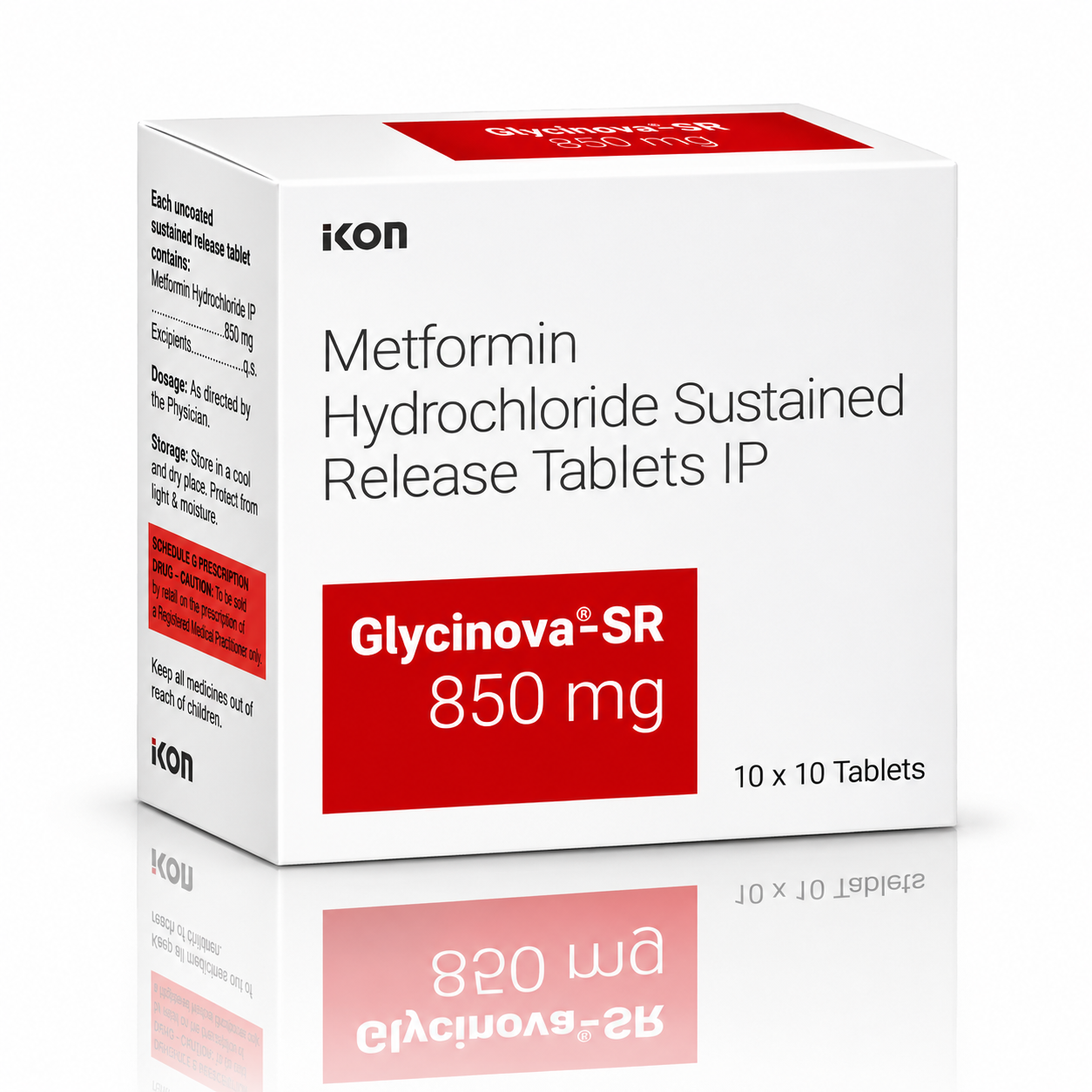
Glycinova-SR 850 MG Tablet
Starting at just $0.08

$0.07 / unit
| Pack Size | Price | Price / Unit | Quantity | Action |
|---|---|---|---|---|
| 180 Tablets | $12.78 | $0.07/unit | ||
| 150 Tablets | $10.65 | $0.07/unit | ||
| 120 Tablets | $8.52 | $0.07/unit | ||
| 90 Tablets | $6.39 | $0.07/unit | ||
| 60 Tablets | $4.26 | $0.07/unit | ||
| 30 Tablets | $2.13 | $0.07/unit |
Brand Name: Glyciphage 850 mg Tablet
Generic Name: Metformin Hydrochloride
Strength: 850 mg
Dosage Form: Oral Uncoated Tablet
Therapeutic Class: Oral Antidiabetic Agent / Biguanide
Manufacturer/Marketer: Franco-Indian Pharmaceuticals Pvt. Ltd.
Pack Size: Strip of 10 Tablets
Country of Origin: India
METFORMIN HYDROCHLORIDE is an oral antidiabetic medicine used to manage type 2 diabetes mellitus. It belongs to a group of medicines called biguanides.
Glyciphage 850 mg Tablet contains Metformin Hydrochloride 850 mg, which helps reduce elevated blood glucose levels by improving the body's response to insulin and reducing glucose production in the liver.
Metformin does not directly stimulate the pancreas to release insulin, unlike sulfonylurea medicines such as glimepiride and gliclazide.
Therefore, metformin alone generally has a low risk of causing hypoglycemia.
Type 2 Diabetes Mellitus: Helps improve blood glucose control in adults with type 2 diabetes.
Hyperglycemia: Reduces elevated blood sugar levels.
Insulin Resistance: Improves the body's response to naturally produced insulin.
Inadequate Glycemic Control: May be prescribed when diet and physical activity alone do not adequately manage blood glucose.
Combination Diabetes Therapy: May be used alongside other oral antidiabetic medicines or insulin when medically appropriate.
Long-Term Diabetes Management: Helps maintain blood glucose levels within individualized treatment targets.
Improvement in HbA1c: Helps reduce glycated hemoglobin levels when used consistently.
Polycystic Ovary Syndrome (PCOS): Metformin is sometimes prescribed off-label for selected patients with PCOS, particularly when metabolic abnormalities are present.
Reduction of Diabetes-Related Complications: Appropriate long-term blood glucose control may reduce the risk of complications affecting the eyes, kidneys, and nerves.
The use of metformin for PCOS depends on individual circumstances and local treatment recommendations. PCOS should not be presented as a primary approved indication for Glyciphage 850 mg Tablet without product-specific authorization.
1. Reduces Glucose Production in the Liver: Metformin decreases excessive glucose production by the liver, helping reduce blood glucose levels.
2. Improves Insulin Sensitivity: It helps muscles and other body tissues respond more effectively to insulin.
3. Supports Glucose Utilization: It promotes more efficient use of glucose by insulin-sensitive tissues.
4. Influences Intestinal Glucose Metabolism: Metformin also affects glucose handling within the digestive tract.
5. Improves Overall Glycemic Control: These mechanisms help reduce fasting blood glucose and contribute to better long-term diabetes management.
Glyciphage 850 mg Tablet may help improve glucose control when used with an appropriate diet, regular physical activity, and medical monitoring.
Metformin is widely used in type 2 diabetes treatment because it improves insulin sensitivity, lowers blood glucose, and has a relatively low risk of causing hypoglycemia when used alone.
It is generally weight-neutral and may be associated with modest weight reduction in some patients.
Important: Glyciphage 850 mg Tablet contains only Metformin Hydrochloride 850 mg. It does not contain glimepiride, gliclazide, or other antidiabetic ingredients.
This product is a conventional immediate-release tablet and is different from Glyciphage SR 850 mg Tablet.
Glyciphage 850 mg Tablet is not indicated for diabetic ketoacidosis and is not a substitute for insulin in patients with type 1 diabetes.
It helps control diabetes but does not cure the underlying condition.
This medicine is intended for oral use only.
They need to know if you have any of these conditions:
kidney disease or impaired kidney function
severe kidney failure or dialysis treatment
liver disease or abnormal liver function tests
type 1 diabetes
diabetic ketoacidosis
metabolic acidosis
previous history of lactic acidosis
heart failure or other serious cardiovascular conditions
recent heart attack
severe respiratory disease or conditions causing inadequate oxygen supply
dehydration or persistent vomiting
severe diarrhea
serious infections or recent hospitalization
vitamin B12 deficiency
anemia or unexplained fatigue
excessive alcohol consumption
poor nutritional intake or prolonged fasting
significant gastrointestinal disorders
upcoming surgery
scheduled imaging procedures involving iodinated contrast
currently taking insulin or other antidiabetic medicines
currently taking another metformin-containing medicine
history of allergic reactions to metformin
unusual reactions to medicines, foods, dyes, or preservatives
pregnant or planning to become pregnant
breast-feeding
Important: Metformin is contraindicated in patients with severe kidney impairment or metabolic acidosis.
Your healthcare provider should assess kidney function before starting treatment.
This medicine is for oral use only.
Take Glyciphage 850 mg Tablet exactly as prescribed by your healthcare provider.
Swallow the tablet with a glass of water.
Glyciphage 850 mg is a conventional immediate-release metformin tablet and is generally taken with meals to reduce gastrointestinal discomfort.
Take the medicine according to your prescribed dosing schedule.
Immediate-release metformin may be prescribed once, twice, or three times daily depending on the dose, treatment response, and clinical circumstances.
A common initial regimen for appropriate adults is 850 mg once daily with a meal, although many patients begin with a lower dose for better gastrointestinal tolerability.
Your healthcare provider will determine the appropriate schedule.
Take the medicine at approximately the same time each day.
Do not increase the dose or take the medicine more frequently than prescribed.
Each Glyciphage 850 mg Tablet contains:
Metformin Hydrochloride 850 mg
The appropriate dose depends on:
fasting blood glucose levels
post-meal blood glucose levels
HbA1c
kidney function
previous diabetes treatment
gastrointestinal tolerance
individual response to metformin
Your healthcare provider may increase the dose gradually to improve blood glucose control while reducing digestive side effects.
Do not switch between Glyciphage 500 mg, Glyciphage 850 mg, and Glyciphage SR formulations without medical advice.
Take the tablet with food as prescribed.
Taking metformin with meals may help reduce nausea, abdominal discomfort, and diarrhea.
Maintain regular meal timings and follow your recommended diabetes management plan.
Avoid excessive alcohol consumption because it increases the risk of metformin-associated lactic acidosis.
Monitor your blood glucose as advised by your healthcare provider.
Your healthcare professional may recommend checking fasting blood glucose, postprandial blood glucose, and HbA1c.
Continue following your recommended diet and physical activity plan.
Your healthcare provider may temporarily stop metformin during:
major surgery
prolonged fasting
severe vomiting or diarrhea
significant dehydration
serious infections
certain imaging procedures involving iodinated contrast
Do not change your usual treatment without medical guidance, except when urgent symptoms require stopping treatment and seeking immediate assessment.
Overdosage: Taking excessive metformin may cause severe gastrointestinal symptoms and potentially life-threatening lactic acidosis. If an overdose is suspected, seek emergency medical attention immediately.
NOTE: This medicine is only for you. Do not share this medicine with others.
If you miss a dose of Glyciphage 850 mg Tablet, take it with food when you remember, provided it is not almost time for your next scheduled dose.
If your next dose is approaching, skip the missed dose.
Continue taking the medicine according to your regular schedule.
Do not take two doses together to make up for a missed dose.
Taking excessive metformin can increase the risk of gastrointestinal side effects and serious metabolic complications.
If you frequently miss doses or are uncertain about your treatment schedule, consult your healthcare provider or pharmacist.
Potential interactions include:
insulin
sulfonylureas such as glimepiride, gliclazide, and glipizide
other metformin-containing medicines
carbonic anhydrase inhibitors such as topiramate and acetazolamide
cimetidine
dolutegravir
ranolazine
medicines affecting renal transport of metformin
iodinated contrast agents used during imaging procedures
corticosteroids such as prednisone and prednisolone
diuretics such as furosemide and hydrochlorothiazide
certain blood pressure medicines
beta-2 agonists such as salbutamol
thyroid hormone medicines
certain hormonal medicines
phenytoin
nicotinic acid
alcohol
medicines that may impair kidney function
Insulin and Sulfonylureas: Metformin alone rarely causes hypoglycemia, but combining it with insulin or insulin-releasing medicines can increase the risk of low blood sugar.
Carbonic Anhydrase Inhibitors: Medicines such as topiramate and acetazolamide may increase the risk of metabolic acidosis when combined with metformin.
Cimetidine: May reduce the elimination of metformin through the kidneys, increasing metformin concentrations.
Dolutegravir: May increase metformin exposure by affecting renal transport mechanisms.
Ranolazine: May increase metformin concentrations, and dosage limitations or adjustments may be required.
Iodinated Contrast Agents: Metformin may need to be withheld temporarily around certain contrast imaging procedures, depending on kidney function and other medical risk factors.
Corticosteroids: May increase blood glucose and reduce the overall effectiveness of diabetes treatment.
Diuretics: May contribute to dehydration or kidney function changes in susceptible patients.
Thyroid Hormone Medicines: Changes in thyroid hormone treatment may affect blood glucose control.
Alcohol: Excessive alcohol consumption increases the risk of metformin-associated lactic acidosis.
This list may not describe all possible interactions.
Inform your healthcare provider about all prescription medicines, over-the-counter medicines, herbal products, and nutritional supplements you use.
Use Glyciphage 850 mg Tablet regularly as directed by your healthcare provider.
This medicine helps manage blood glucose levels in people with type 2 diabetes.
Your healthcare provider may monitor fasting blood glucose, post-meal glucose, HbA1c, kidney function, and other relevant health indicators.
Lactic Acidosis: Metformin can rarely cause a serious and potentially life-threatening buildup of lactic acid in the bloodstream.
Symptoms may include:
unusual weakness or extreme tiredness
muscle pain
difficulty breathing
abdominal discomfort
nausea or vomiting
unusual sleepiness
dizziness
feeling unusually cold
slow or irregular heartbeat
Stop taking the medicine and seek emergency medical attention if lactic acidosis is suspected.
Kidney Function: Metformin is eliminated primarily through the kidneys.
Kidney function should be assessed before starting treatment and monitored periodically during therapy.
Metformin is contraindicated when the estimated glomerular filtration rate (eGFR) is below 30 mL/min/1.73 m².
Starting metformin treatment is generally not recommended when eGFR is between 30 and 45 mL/min/1.73 m².
Patients whose kidney function declines during treatment may require dose adjustment or discontinuation.
Vitamin B12 Deficiency: Long-term metformin use may reduce vitamin B12 absorption.
Your healthcare provider may recommend periodic vitamin B12 testing, particularly if you develop anemia, numbness, tingling, or unexplained fatigue.
Gastrointestinal Side Effects: Nausea, diarrhea, abdominal discomfort, and bloating are common, particularly during the early stages of treatment.
Taking Glyciphage 850 mg Tablet with meals and adjusting the dose gradually under medical supervision may improve tolerability.
Hypoglycemia: Metformin alone generally has a low risk of causing low blood sugar.
However, hypoglycemia may occur when it is combined with insulin or sulfonylureas.
Symptoms may include sweating, shaking, dizziness, hunger, confusion, and rapid heartbeat.
If your blood glucose falls below 70 mg/dL and you are awake and able to swallow, consume approximately 15 grams of fast-acting carbohydrate and recheck after 15 minutes. Repeat if necessary.
Severe hypoglycemia involving unconsciousness, seizures, or inability to swallow requires emergency medical treatment.
Dehydration: Severe vomiting, diarrhea, fever, or inadequate fluid intake may increase the risk of kidney dysfunction and lactic acidosis.
Contact your healthcare provider for advice about temporarily withholding metformin during significant dehydration or serious illness.
Liver Function: Patients with significant liver disease may have an increased risk of lactic acidosis and require medical evaluation.
Alcohol Consumption: Avoid excessive alcohol intake because it may increase the risk of serious metabolic complications.
Surgery and Imaging Procedures: Inform healthcare professionals that you take metformin before surgery or procedures involving iodinated contrast.
Weight Changes: Metformin is generally weight-neutral or may be associated with modest weight reduction in some individuals.
Pregnancy and Breast-feeding: Metformin may be used in selected circumstances during pregnancy or breastfeeding following individualized medical assessment. Do not start, stop, or change treatment without medical advice.
Driving and Machinery: Metformin alone does not usually impair driving. However, caution is required when taking other diabetes medicines that can cause hypoglycemia.
Immediate-Release Formulation: Glyciphage 850 mg Tablet is a conventional immediate-release formulation. It is different from Glyciphage SR 850 mg, which is formulated to release metformin more gradually.
Formulation Differences: Glyciphage 850 mg Tablet should not be substituted for other strengths or formulations without medical guidance.
Important: Effective diabetes management requires regular monitoring, appropriate nutrition, physical activity, and adherence to the prescribed treatment plan.
symptoms of lactic acidosis, including severe weakness, muscle pain, abdominal pain, or difficulty breathing
persistent vomiting or severe diarrhea causing dehydration
allergic reactions such as rash, itching, hives, or swelling of the face, lips, tongue, or throat
difficulty breathing or severe allergic reactions
severe dizziness or fainting
unusual drowsiness or confusion
severe or persistent abdominal pain
significantly reduced urination
signs of serious kidney problems
yellowing of the skin or eyes
dark urine or other signs of liver problems
severe weakness associated with metabolic disturbances
severe hypoglycemia when used with other glucose-lowering medicines
persistent numbness or tingling suggesting vitamin B12 deficiency
unusual tiredness accompanied by unexplained anemia
nausea
mild vomiting
diarrhea
abdominal discomfort
bloating
indigestion
flatulence
reduced appetite
changes in taste
metallic taste
mild stomach irritation
temporary changes in bowel movements
mild headache
mild abdominal fullness
temporary gastrointestinal discomfort
Gastrointestinal symptoms are particularly common during the early stages of metformin treatment and may improve as the body adjusts.
Because Glyciphage 850 mg is an immediate-release formulation, some patients may experience more gastrointestinal discomfort than with a sustained-release metformin product.
If persistent gastrointestinal symptoms interfere with treatment, consult your healthcare provider. A dosage adjustment or alternative formulation may be considered.
The frequency and severity of side effects depend on dosage, kidney function, other medicines, and individual response.
This list may not describe all possible side effects.
Keep out of the reach of children.
Store Glyciphage 850 mg Tablet in a cool, dry place according to the temperature instructions printed on the product packaging.
Protect from excessive heat, moisture, and direct sunlight.
Keep the tablets in their original blister packaging until use.
Avoid storing the medicine in bathrooms or areas exposed to excessive humidity.
Do not freeze.
Keep the medicine in a secure location to prevent accidental ingestion.
Do not use tablets if the packaging is damaged or the medicine has changed noticeably in appearance.
Do not use the medicine after its expiration date.
Dispose of unused or expired tablets according to local pharmaceutical disposal guidelines.
Storage Note: Confirm the exact temperature limit from the current Franco-Indian Pharmaceuticals product packaging before publication.
Field | Information |
|---|---|
Brand Name | Glyciphage 850 mg Tablet |
Alternative Brand Presentation | Glyciphage 850 |
Generic Name | Metformin Hydrochloride |
Strength | 850 mg |
Dosage Form | Oral Uncoated Tablet |
Release Formulation | Immediate Release / Conventional Release |
Pack Size | Strip of 10 Tablets |
Therapeutic Class | Oral Antidiabetic Agent / Biguanide |
Primary Indication | Type 2 Diabetes Mellitus |
Additional Use | Management of Hyperglycemia and Improvement of Glycemic Control |
Active Ingredient | Metformin Hydrochloride I.P. 850 mg |
Manufacturer/Marketer | Franco-Indian Pharmaceuticals Pvt. Ltd. |
Associated Manufacturing Entity | Franco-Indian Remedies Pvt. Ltd.; confirm current pack |
Prescription Status | Prescription Only Medicine |
Route of Administration | Oral |
Recommended Administration | With meals, according to the prescribed schedule |
Storage | Follow product labeling; protect from excessive heat and moisture |
Country of Origin | India |
Starting at just $0.08
Starting at just $0.15
Starting at just $0.18
Starting at just $0.38
Starting at just $0.05