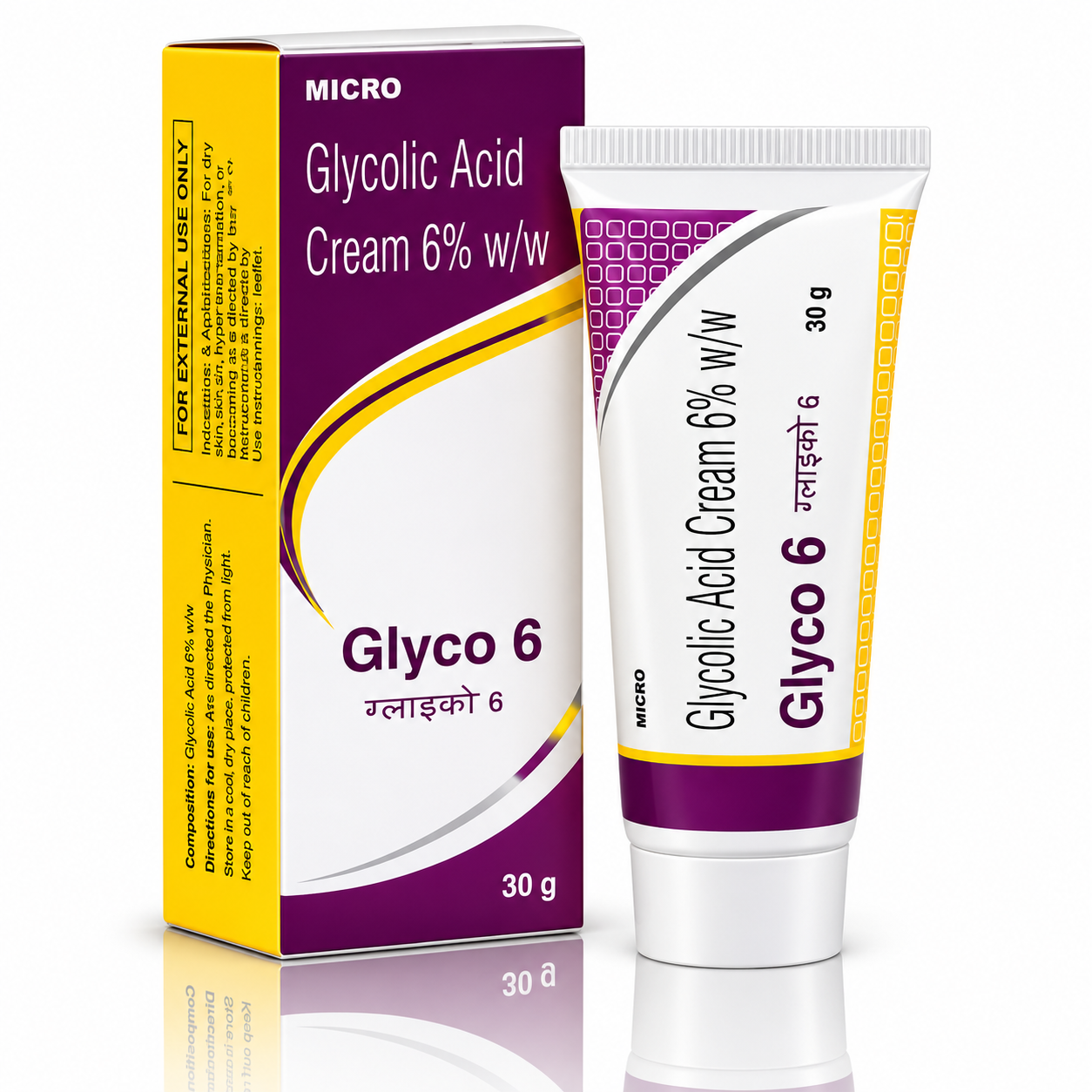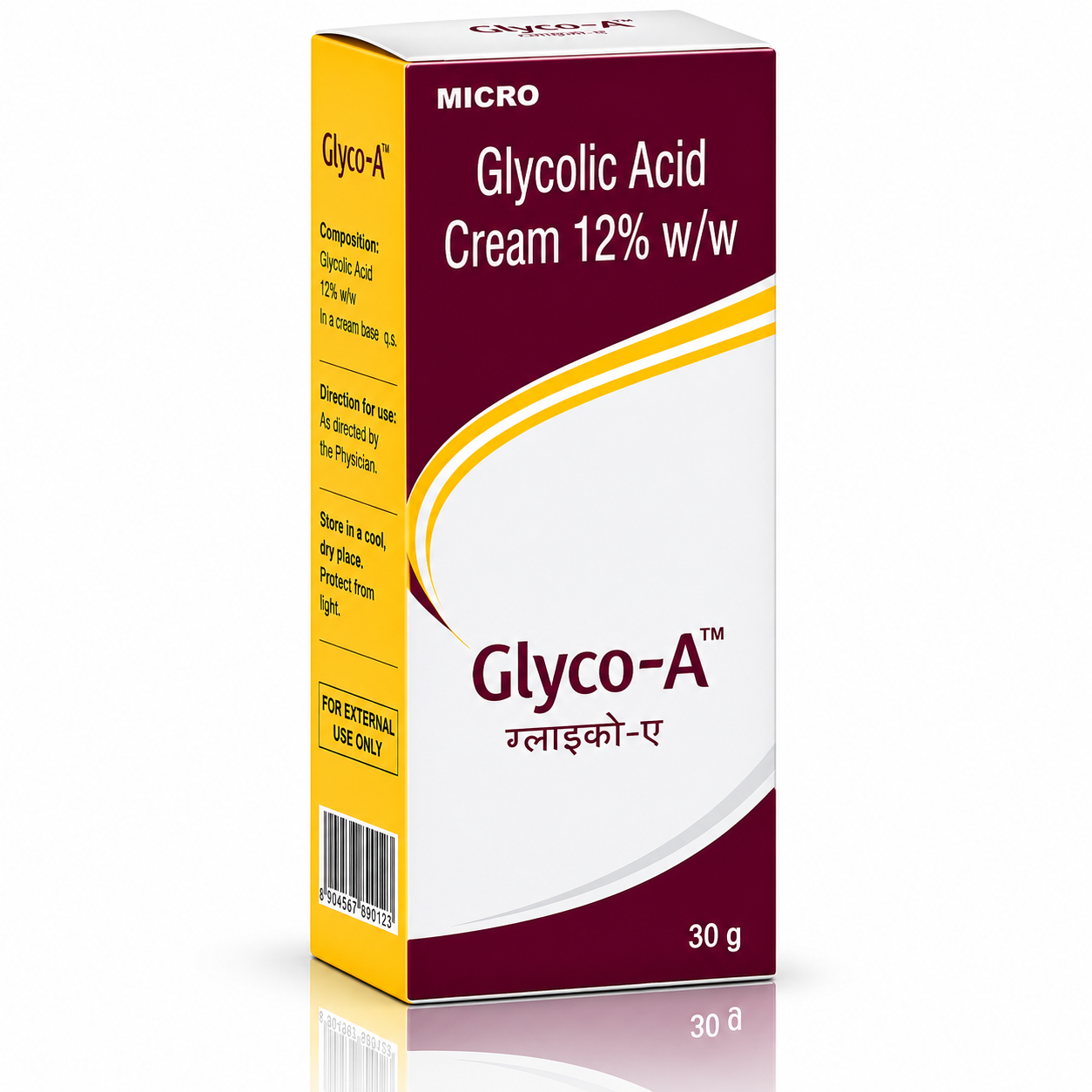
Glyco-A 12% Cream (30 GM)
Starting at just $4.38
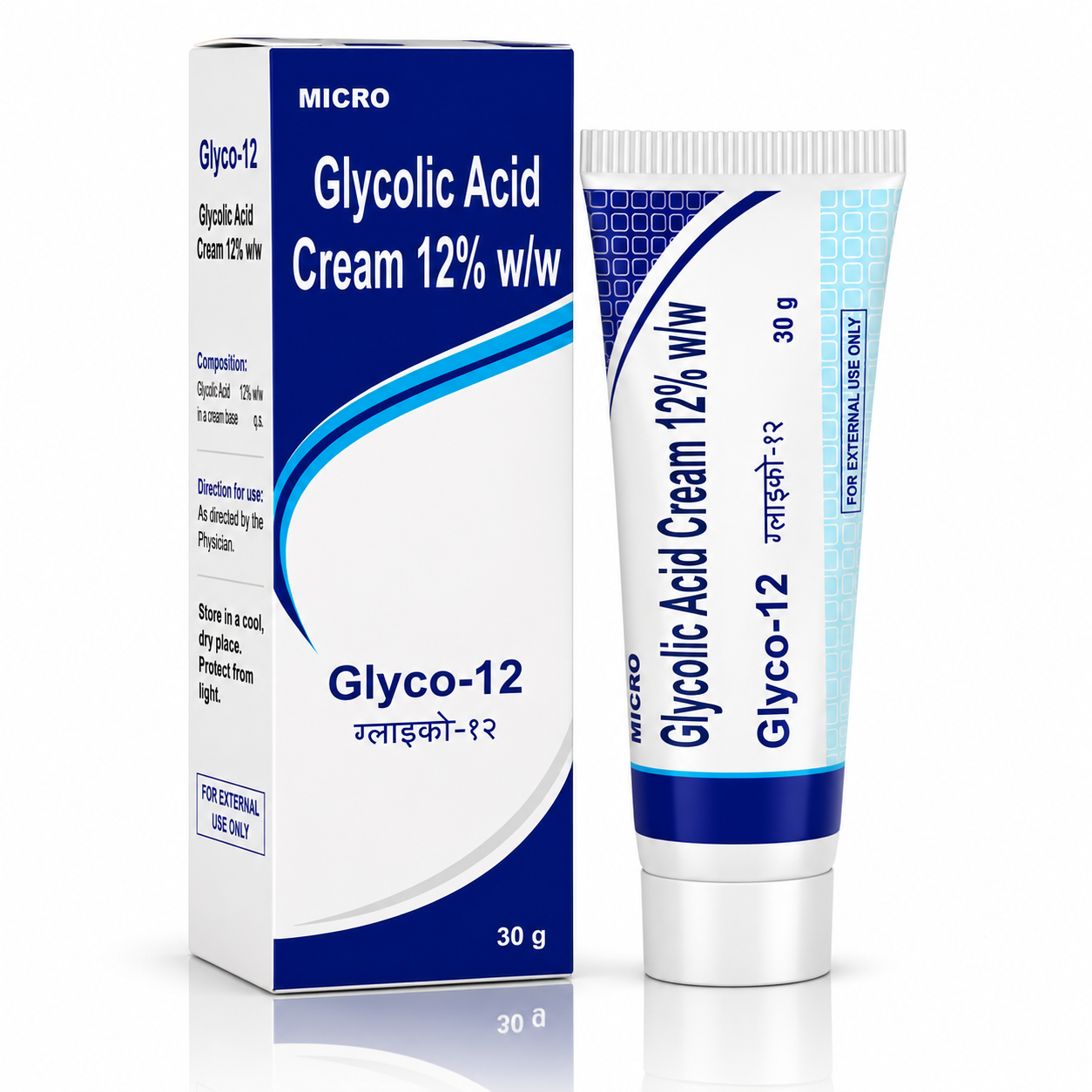
$6.78 / unit
| Pack Size | Price | Price / Unit | Quantity | Action |
|---|---|---|---|---|
| 10 Cream | $67.80 | $6.78/unit | ||
| 8 Cream | $54.24 | $6.78/unit | ||
| 6 Cream | $40.68 | $6.78/unit | ||
| 4 Cream | $27.12 | $6.78/unit | ||
| 2 Cream | $13.56 | $6.78/unit | ||
| 1 Cream | $6.78 | $6.78/unit |
Brand Name: Glyco 12% Cream
Alternative Brand Name: Glyco-12 Cream
Generic Name: Glycolic Acid
Strength: 12% w/w
Dosage Form: Topical Cream
Therapeutic Class: Alpha-Hydroxy Acid (AHA) / Topical Exfoliating and Keratolytic Agent
Manufacturer/Marketer: Micro Labs Limited
Pack Size: 30 gm Tube
Country of Origin: India
GLYCOLIC ACID is an alpha-hydroxy acid (AHA) commonly used in dermatological and cosmetic preparations to exfoliate the skin and improve surface texture.
Glyco 12% Cream contains Glycolic Acid 12% w/w, formulated for topical application.
Glycolic acid works by reducing cohesion between dead skin cells in the outermost layer of the skin, allowing these cells to shed more easily.
This exfoliating action helps improve the appearance of rough skin, uneven texture, superficial pigmentation, and clogged pores.
Hyperpigmentation: May improve the appearance of certain superficial dark spots and uneven pigmentation.
Melasma: May be used as part of a dermatologist-directed treatment plan, although it is not a standalone cure.
Acne-Prone Skin: Helps remove accumulated dead skin cells that may contribute to clogged pores.
Blackheads and Whiteheads: Its exfoliating effects may help improve comedonal acne.
Post-Acne Marks: May gradually improve certain superficial post-inflammatory pigmentation marks.
Uneven Skin Tone: Helps promote a more even-looking skin surface.
Rough Skin Texture: Can help smooth areas with accumulated dead skin cells.
Dull-Looking Skin: Exfoliation may improve the appearance of skin brightness.
Photoaging: May help improve some superficial signs of sun-related skin aging.
Fine Lines: Repeated use of glycolic acid preparations may improve the appearance of fine surface lines.
Keratosis Pilaris: May be recommended for rough, small follicular bumps in selected patients.
General Exfoliation: Promotes shedding of dead surface skin cells.
These are potential ingredient-level uses; they should not all be presented as formally approved indications for the specific Glyco-12 product.
1. Exfoliates Dead Skin Cells: Glycolic acid helps loosen the bonds between dead skin cells, encouraging their removal from the skin surface.
2. Supports Epidermal Renewal: By increasing surface exfoliation, it promotes the appearance of smoother, fresher skin.
3. Improves Skin Texture: Glycolic acid may reduce the appearance of roughness and uneven surface texture.
4. Helps Manage Comedones: Its exfoliating action may reduce the buildup of dead skin cells within pores, helping manage blackheads and whiteheads.
5. Improves Superficial Pigmentation: Regular, appropriately supervised use may gradually improve certain pigmentation irregularities.
6. Supports Photoaging Care: Glycolic acid has been studied for improvements in superficial signs of photoaging, including roughness and fine lines.
Glycolic acid improves the appearance of the skin primarily through exfoliation.
It does not permanently change a person's natural skin color.
It may help some superficial dark marks fade over time, but deeper pigmentation or melasma often requires additional medical treatment.
Results vary according to the skin condition, concentration, application frequency, and individual skin tolerance.
Important: Glyco 12% Cream is a relatively strong glycolic acid preparation compared with many everyday cosmetic exfoliants.
Excessive application may cause significant irritation, chemical burns, or worsening pigmentation.
This medicine is intended for external use only.
Tell your dermatologist or healthcare professional if you have any of these conditions:
sensitive or highly reactive skin
previous allergic reactions to glycolic acid
allergy to other alpha-hydroxy acids
contact dermatitis
eczema or atopic dermatitis
psoriasis affecting the treatment area
rosacea
severely dry skin
damaged or compromised skin barrier
open wounds or cuts
active skin infections
severe inflammatory acne
active sunburn
frequent skin irritation
history of chemical burns
melasma or persistent hyperpigmentation
history of post-inflammatory hyperpigmentation
tendency to develop dark marks after irritation
recent chemical peeling procedures
recent laser resurfacing or microneedling
current use of tretinoin, adapalene, or tazarotene
current use of benzoyl peroxide or salicylic acid
use of other glycolic acid products
use of prescription pigmentation treatments
known reactions to fragrances or preservatives
unusually sensitive or sun-damaged skin
pregnant or planning to become pregnant
breast-feeding
Important: Glycolic acid 12% may cause irritation, especially when applied to sensitive skin or combined with other exfoliating or prescription acne treatments.
Inform your dermatologist about all skincare products, facial cleansers, serums, and medicated creams you currently use.
Glyco 12% Cream is for external use only.
Apply the cream exactly as directed by your dermatologist or according to the product instructions.
1. Wash the treatment area using a mild, non-exfoliating cleanser.
2. Rinse thoroughly and gently pat the skin dry.
3. Allow the skin to dry completely before applying the cream.
4. Apply a small amount in a thin layer to the recommended area.
5. Spread gently without aggressive rubbing.
6. Avoid direct contact with the eyes, lips, nostrils, and other sensitive areas.
7. Wash your hands after application, unless the hands are the treated area.
The manufacturer's retailer guidance commonly recommends applying Glyco-12 every other evening during the first two weeks, followed by daily use if the skin tolerates the product.
However, this schedule may be too frequent for some people, particularly those with sensitive skin.
A dermatologist may recommend a less frequent schedule, especially during the initial treatment period.
Do not increase application frequency without medical advice.
Cleanse the skin gently and allow it to dry.
Apply a thin layer of Glyco 12% Cream to the prescribed areas.
Follow your dermatologist's recommendations regarding moisturizer and other topical treatments.
Avoid using additional exfoliating products during the same routine unless medically advised.
A dermatologist may recommend starting with a lower-strength glycolic acid preparation instead of 12%.
If this product is prescribed, begin cautiously according to the recommended schedule.
Discontinue use and seek advice if persistent burning, swelling, or significant redness occurs.
Use only on the areas recommended by your dermatologist.
Avoid applying directly over open, broken, or severely inflamed acne lesions.
Do not assume that glycolic acid alone can treat all forms of acne.
Apply only according to the prescribed plan.
Do not use excessive amounts or leave thick layers on the skin in an attempt to accelerate results.
Irritation may worsen dark marks, particularly in individuals prone to post-inflammatory hyperpigmentation.
Use a broad-spectrum sunscreen with SPF 30 or higher during the day.
Glycolic acid may increase sensitivity to sunlight.
Avoid excessive sun exposure and use protective clothing when necessary.
Do not apply to broken or severely irritated skin.
Do not use on the eyelids or inside the nose or mouth.
Avoid waxing treated areas without dermatologist guidance.
Do not combine with strong exfoliating acids without medical advice.
Do not use more frequently than directed.
Do not apply immediately after shaving or abrasive exfoliation if the skin is irritated.
Accidental Eye Contact: Rinse immediately with plenty of clean water. Seek medical attention if pain, redness, or visual symptoms persist.
Accidental Ingestion: Contact a healthcare professional or poison control center if swallowed.
Overuse: Excessive application may cause redness, peeling, burning, and chemical irritation. Stop using the product and seek medical advice if a significant reaction develops.
NOTE: This medicine is intended for personal use. Do not share it with others.
The gradual application schedule is supported by the Tata 1mg product directions.
If you miss an application, continue your normal skincare schedule at the next recommended time.
Do not apply a double quantity to compensate for the missed application.
Do not increase the frequency of use.
Using more cream than recommended may increase the risk of irritation, peeling, and skin-barrier damage.
If your skin becomes red, dry, or irritated, contact your dermatologist before restarting treatment.
Glyco 12% Cream is applied topically and is not expected to cause significant systemic drug interactions when used as directed.
However, combining glycolic acid with other potentially irritating skincare ingredients may increase dryness, redness, peeling, or skin-barrier damage.
Potential interactions or additive irritation may occur with:
tretinoin
adapalene
tazarotene
topical retinol
prescription retinoids
salicylic acid
lactic acid
mandelic acid
other alpha-hydroxy acids
strong chemical peeling solutions
benzoyl peroxide
hydroquinone-containing creams
azelaic acid
topical acne treatments
alcohol-based toners
astringent skincare products
abrasive facial scrubs
exfoliating cleansing brushes
highly fragranced products
skin-lightening combinations containing multiple active ingredients
depilatory creams
waxing or other skin-hair-removal procedures
products containing high concentrations of L-ascorbic acid
Tretinoin and Other Retinoids: Combining glycolic acid with topical retinoids may increase irritation, peeling, dryness, and photosensitivity. A dermatologist may recommend using the products on alternating nights.
Salicylic Acid: Combining multiple exfoliating acids may lead to excessive exfoliation and skin irritation.
Benzoyl Peroxide: Concurrent use may worsen dryness and redness in some patients.
Hydroquinone: These ingredients are sometimes used together in dermatologist-supervised pigmentation treatment, but the combination can increase irritation.
Azelaic Acid: May be included in acne or pigmentation routines, but irritation can occur when combined with glycolic acid.
Strong Vitamin C Serums: Certain acidic vitamin C products may increase stinging when applied alongside glycolic acid.
Alcohol-Based Toners: May increase skin dryness and compromise the skin barrier.
Physical Exfoliants: Scrubs and exfoliating brushes may increase irritation when used with Glyco 12% Cream.
Waxing: Exfoliating acids may increase skin sensitivity. Ask your dermatologist how long to stop treatment before and after waxing.
Sunscreen: Sunscreen does not interfere with glycolic acid treatment and is strongly recommended to protect against UV-related damage and pigmentation.
This list may not describe all possible topical interactions.
Inform your dermatologist about all prescription creams, facial cleansers, serums, exfoliants, and other skincare products you use.
Use Glyco 12% Cream only according to the manufacturer's instructions or your dermatologist's recommendations.
Because the product contains 12% glycolic acid, it may cause greater irritation than lower-strength glycolic acid preparations.
Skin Irritation: Mild tingling may occur during the initial applications. However, persistent burning, intense redness, or significant discomfort should not be ignored.
Chemical Burns: Excessive application, prolonged exposure, or use on damaged skin may cause chemical irritation or burns.
Skin Peeling: Glycolic acid increases exfoliation. Mild flaking may occur, but excessive peeling may indicate overuse.
Skin Barrier Damage: Using multiple exfoliating products can damage the protective skin barrier, leading to dryness, redness, and sensitivity.
Photosensitivity: Glycolic acid may increase the skin's sensitivity to ultraviolet radiation. Daily sunscreen is important throughout treatment and for a period after stopping use.
Hyperpigmentation: Although glycolic acid may improve certain dark marks, excessive irritation can worsen pigmentation, especially in individuals prone to post-inflammatory hyperpigmentation.
Melasma: Melasma may worsen with sun exposure or skin inflammation. Use Glyco 12% Cream only as part of an appropriate dermatologist-directed treatment plan.
Acne: Glycolic acid can help manage certain comedones but may not adequately treat inflammatory or cystic acne on its own.
Acne Scars: Glycolic acid may improve superficial texture irregularities but does not reliably remove deep or depressed acne scars.
Rosacea: Individuals with rosacea may experience increased redness, stinging, or flare-ups.
Eczema: Avoid applying to active eczema or severely inflamed skin unless specifically instructed by a dermatologist.
Sensitive Skin: People with sensitive skin should be especially cautious with a 12% glycolic acid preparation.
Application Frequency: Increasing frequency does not necessarily improve results and may increase skin damage.
Eye Protection: Avoid contact with the eyes, eyelids, lips, and mucous membranes.
After Dermatological Procedures: Do not use immediately after chemical peels, laser treatments, microneedling, or similar procedures unless approved by your dermatologist.
Pregnancy and Breast-feeding: Topical glycolic acid generally has limited systemic absorption when applied to small areas of intact skin. However, patients who are pregnant or breastfeeding should discuss use of this 12% formulation with their healthcare professional. Avoid applying it to areas that could come into direct contact with a nursing infant.
Children: Use in children should be based on the product's labeling and professional medical advice.
Long-Term Use: Monitor your skin's response. If persistent irritation develops, your dermatologist may recommend a lower concentration or less frequent use.
Important: Glyco 12% Cream is an exfoliating topical preparation. Consistent use with appropriate sun protection may improve certain superficial skin concerns, but excessive application can worsen the skin's condition.
severe allergic reactions
swelling of the face, lips, tongue, or throat
difficulty breathing or widespread hives
severe skin burning
painful redness or inflammation
blistering or chemical burns
significant swelling of the treated area
severe skin peeling
persistent or worsening skin irritation
severe allergic contact dermatitis
painful cracks or open sores
signs of secondary skin infection
unexpected worsening of pigmentation
severe eye pain or persistent irritation after accidental exposure
significant skin discoloration following inflammation
mild stinging
temporary tingling
mild skin redness
dryness
mild peeling
skin flaking
temporary itching
skin tightness
minor irritation
mild sensitivity
temporary roughness
occasional small acne breakouts
temporary discomfort after application
Not everyone will experience these effects.
The likelihood of irritation depends on the skin's sensitivity, frequency of application, other skincare products, and the condition of the skin barrier.
Persistent or worsening irritation should not be considered a necessary part of treatment.
This list may not describe all possible side effects.
Keep out of the reach of children.
Store Glyco 12% Cream below 30°C (86°F), according to available product information.
Protect from excessive heat, moisture, and direct sunlight.
Keep the tube tightly closed after each use.
Store in its original packaging.
Avoid leaving the cream in a hot vehicle or exposed to prolonged direct sunlight.
Do not freeze unless the manufacturer specifically permits it.
Avoid contaminating the tube opening.
Do not use the product if its color, smell, or texture changes significantly.
Do not use after the expiration date printed on the packaging.
Dispose of expired or damaged products according to local waste-disposal guidance.
Storage Note: Follow the instructions printed on the current Micro Labs product packaging if they differ from online retail information.
Field | Information |
|---|---|
Brand Name | Glyco 12% Cream |
Alternative Brand Name | Glyco-12 Cream |
Generic Name | Glycolic Acid |
Strength | 12% w/w |
Dosage Form | Topical Cream |
Pack Size | 30 gm |
Packaging Type | Tube |
Therapeutic Class | Alpha-Hydroxy Acid / Exfoliating and Keratolytic Agent |
Active Ingredient | Glycolic Acid 12% w/w |
Primary Use | Topical Exfoliation and Improvement in Skin Texture |
Additional Uses | Selected Acne, Superficial Pigmentation, and Photoaging Concerns |
Manufacturer/Marketer | Micro Labs Limited |
Listed Manufacturing Facility | Micro Labs Limited, Mamring Namthang Road, South Sikkim, India |
Marketer Address | 27, Race Course Road, Bengaluru – 560001, India |
Prescription Status | Follow applicable local pharmacy requirements and product labeling |
Route of Administration | Topical / External Use Only |
Recommended Administration | Thin layer to clean, dry skin according to dermatologist's instructions |
Application Frequency | Start gradually; adjust according to skin tolerance and product labeling |
Storage | Store below 30°C; protect from heat and sunlight |
Country of Origin | India |
Starting at just $4.38
Starting at just $4.64
Starting at just $8.40
Starting at just $3.14
Starting at just $4.11