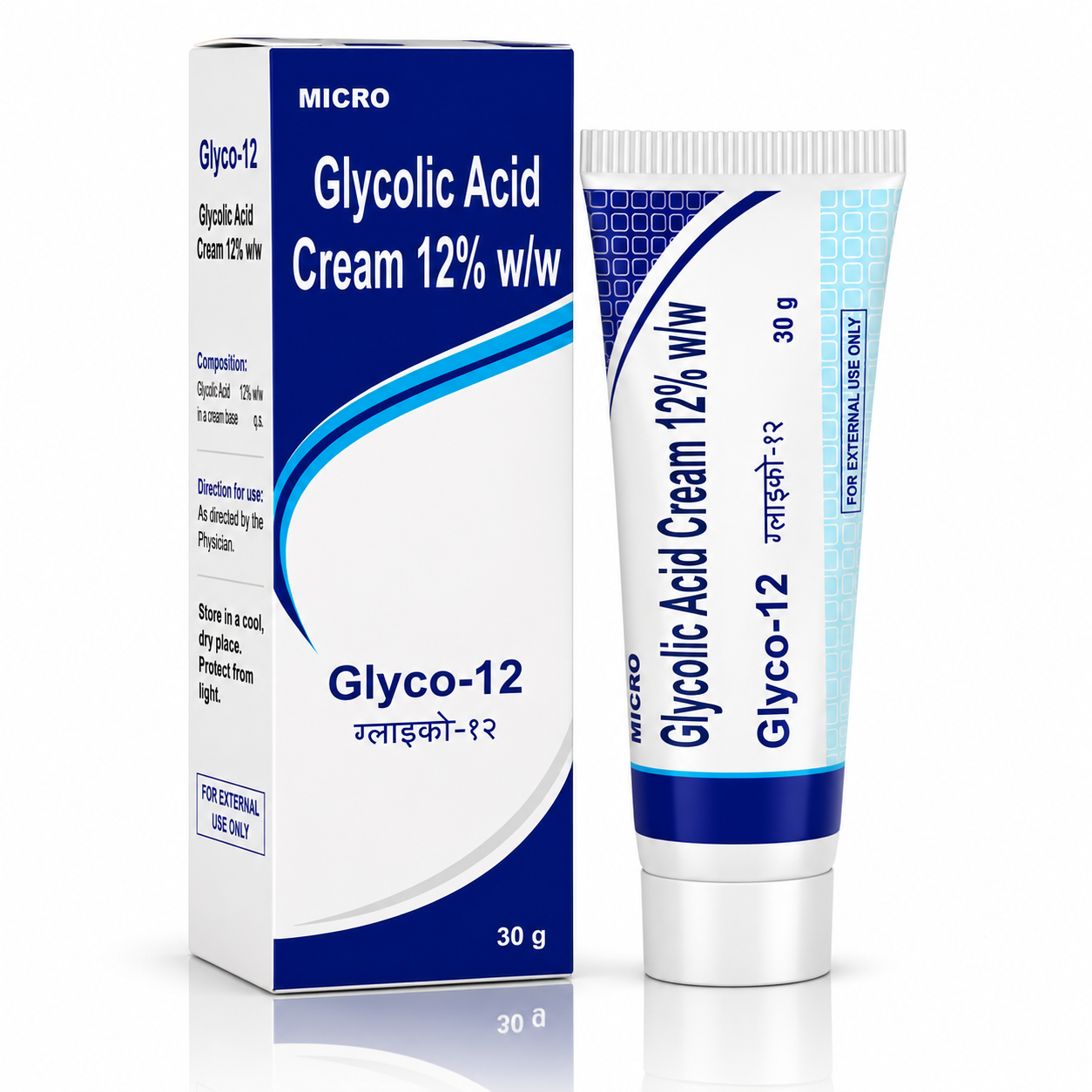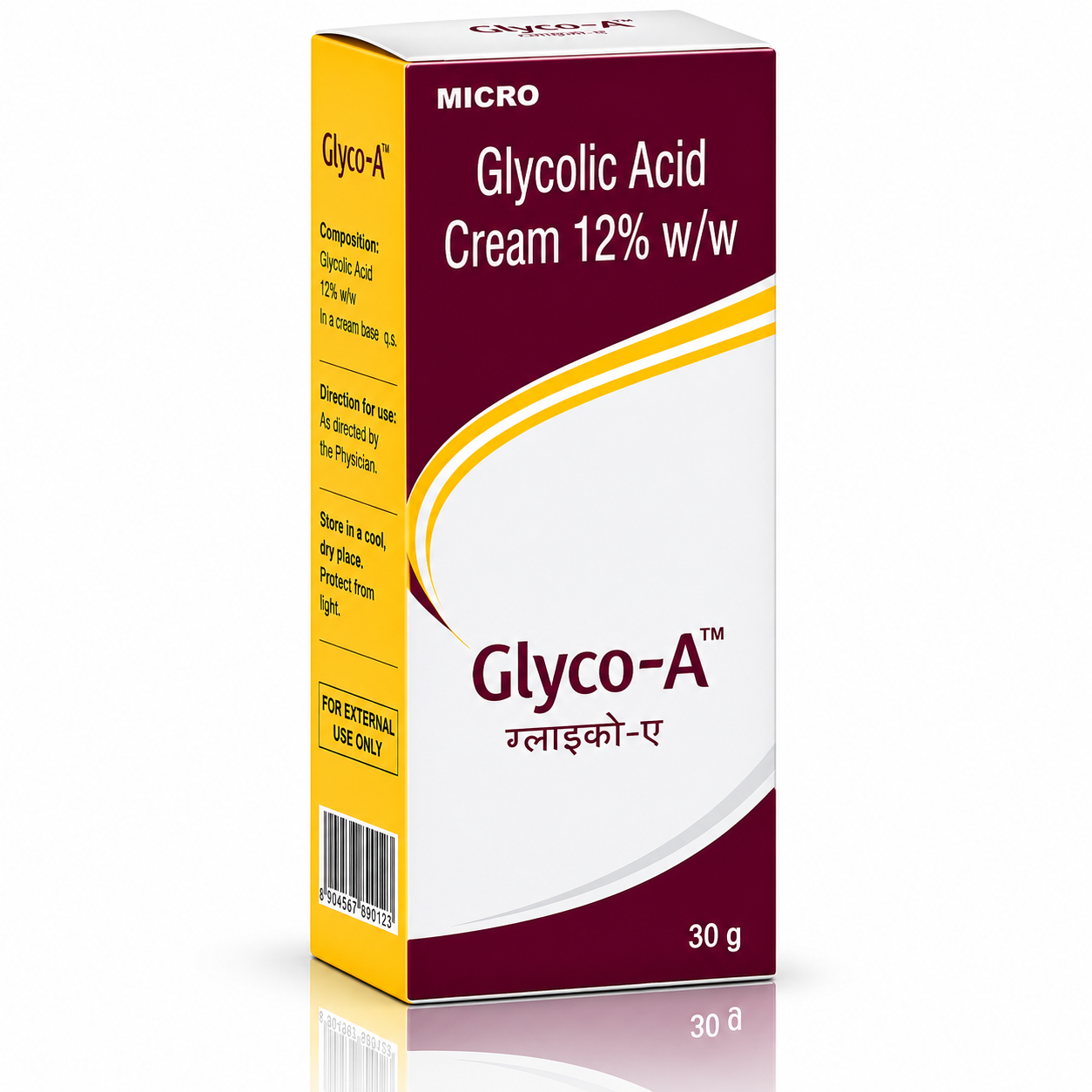
Glyco-A 12% Cream (30 GM)
Starting at just $4.38
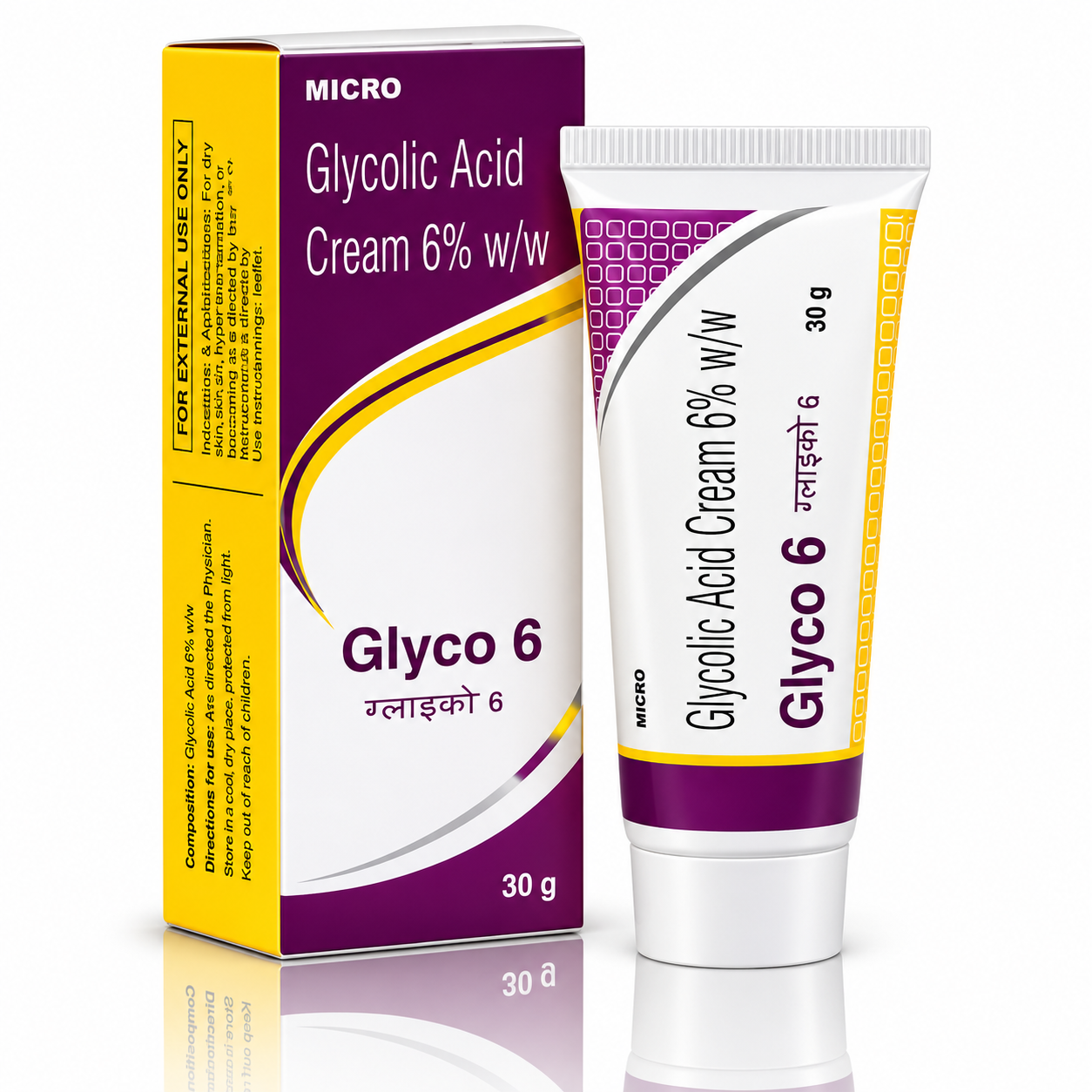
$4.64 / unit
| Pack Size | Price | Price / Unit | Quantity | Action |
|---|---|---|---|---|
| 10 Cream | $46.40 | $4.64/unit | ||
| 8 Cream | $37.12 | $4.64/unit | ||
| 6 Cream | $27.84 | $4.64/unit | ||
| 4 Cream | $18.56 | $4.64/unit | ||
| 2 Cream | $9.28 | $4.64/unit | ||
| 1 Cream | $4.64 | $4.64/unit |
Brand Name: Glyco 6% Cream
Alternative Brand Name: Glyco-6 Cream
Generic Name: Glycolic Acid
Strength: 6% w/w
Dosage Form: Topical Cream
Therapeutic Class: Alpha-Hydroxy Acid (AHA) / Topical Exfoliating and Keratolytic Agent
Manufacturer/Marketer: Micro Labs Limited
Pack Size: 30 gm Tube
Country of Origin: India
GLYCOLIC ACID is an alpha-hydroxy acid (AHA) commonly used in dermatological and cosmetic skincare preparations to exfoliate dead skin cells and improve the appearance of the skin.
Glyco 6% Cream contains Glycolic Acid 6% w/w, formulated for topical application.
Glycolic acid works by weakening the connections between dead skin cells in the outermost layer of the skin, allowing them to shed more easily.
This exfoliating action may help improve rough texture, dullness, superficial pigmentation, and clogged pores.
The 6% formulation provides a lower glycolic acid concentration than Glyco 12% Cream, although it can still cause irritation, particularly in people with sensitive skin.
Hyperpigmentation: May improve the appearance of certain superficial dark spots and uneven pigmentation.
Post-Acne Marks: Can help gradually reduce the appearance of some dark marks left after acne.
Comedonal Acne: May help reduce the buildup of dead skin cells associated with blackheads and whiteheads.
Uneven Skin Tone: Helps improve the appearance of dull or uneven-looking skin.
Rough Skin Texture: Promotes exfoliation of accumulated dead surface skin cells.
Dull-Looking Skin: May improve skin radiance by removing surface buildup.
Melasma: May be included in a dermatologist-directed treatment plan, although it is not a standalone cure.
Photoaging: May improve certain superficial signs of sun-related aging.
Fine Lines: Continued appropriate use may improve the appearance of very fine surface lines.
Keratosis Pilaris: May help soften rough, follicular bumps in selected patients.
Dry, Flaky Skin: May help remove accumulated surface scaling, although moisturizing treatment may also be necessary.
General Skin Exfoliation: Encourages shedding of dead cells to support smoother skin.
These are potential uses of glycolic acid. Not every use is necessarily an approved indication for the specific Glyco-6 formulation.
1. Exfoliates Dead Skin Cells: Glycolic acid helps loosen the bonds that hold dead skin cells together.
2. Promotes Surface Skin Renewal: It supports the removal of older surface cells, improving the appearance of smoother skin.
3. Improves Skin Texture: By reducing surface cell buildup, glycolic acid may help improve roughness and uneven texture.
4. Helps Manage Clogged Pores: Exfoliation may reduce the accumulation of dead skin cells that contribute to blackheads and whiteheads.
5. Supports Superficial Pigmentation Care: Appropriate use may gradually improve some superficial dark marks.
6. Improves the Appearance of Photoaging: Glycolic acid has been studied for improvements in skin roughness, fine lines, and certain other superficial aging concerns.
Glycolic acid improves the appearance of skin brightness primarily through exfoliation.
It does not permanently change a person's natural skin color.
The product may help improve uneven-looking skin tone, but deeper pigmentation often requires additional dermatologist-directed treatment.
Results depend on the skin condition, concentration, application frequency, sun exposure, and individual skin tolerance.
Glyco 6% Cream contains a lower concentration of glycolic acid than Glyco 12% Cream.
The 6% formulation may be more suitable for patients who need a lower-strength exfoliating product, although tolerability varies.
Glyco 12% Cream provides a higher acid concentration and may be associated with a greater risk of irritation if used incorrectly.
Neither formulation is guaranteed to treat pigmentation or acne.
Important: Glyco 6% Cream is a leave-on topical preparation, not a facial cleanser that must routinely be rinsed off after application.
This medicine is intended for external use only.
Tell your dermatologist or healthcare professional if you have any of these conditions:
sensitive or highly reactive skin
previous allergic reactions to glycolic acid
allergy to other alpha-hydroxy acids
contact dermatitis
eczema or atopic dermatitis
psoriasis affecting the treatment area
rosacea
severely dry skin
damaged or compromised skin barrier
open wounds, cuts, or abrasions
active skin infections
severe inflammatory acne
active sunburn
frequent redness or skin irritation
history of chemical burns
melasma or persistent pigmentation disorders
history of post-inflammatory hyperpigmentation
tendency to develop dark marks after irritation
recent chemical peeling procedures
recent laser resurfacing or microneedling
current use of tretinoin, adapalene, or tazarotene
current use of benzoyl peroxide
current use of salicylic acid or other exfoliating acids
use of other glycolic acid products
use of prescription pigmentation treatments
reactions to fragrances or preservatives
unusually sensitive or sun-damaged skin
pregnant or planning to become pregnant
breast-feeding
Important: Even at 6%, glycolic acid may cause burning, dryness, redness, or peeling in susceptible individuals.
Inform your dermatologist about all prescription creams, facial cleansers, serums, exfoliants, and other skincare products you currently use.
Glyco 6% Cream is for external use only.
Apply the cream according to the instructions on the packaging or as directed by your dermatologist.
1. Wash the treatment area using a mild, non-exfoliating cleanser.
2. Rinse thoroughly with clean water.
3. Gently pat the skin dry using a soft towel.
4. Allow the skin to dry completely before applying the cream.
5. Take a small amount of Glyco 6% Cream.
6. Apply a thin layer to the recommended treatment area.
7. Spread gently without vigorous rubbing.
8. Avoid direct contact with the eyes, lips, nostrils, and other sensitive areas.
9. Wash your hands after application unless the hands are being treated.
Glyco 6% Cream is commonly recommended for evening use.
However, the ideal frequency depends on individual skin sensitivity and the dermatologist's treatment plan.
For individuals beginning glycolic acid treatment, a cautious approach may involve using the cream on two or three nonconsecutive evenings per week, then increasing frequency only if the skin tolerates it.
Some product guidance describes once-daily evening application, but daily use may not be appropriate for every patient.
Do not increase the frequency without medical advice.
Cleanse the skin gently using a mild cleanser.
Allow the skin to dry.
Apply a thin layer of Glyco 6% Cream to the recommended area.
Follow your dermatologist's instructions about moisturizer and other treatments.
Avoid combining the cream with strong exfoliating products during the same routine unless specifically advised.
Apply only to areas recommended by your dermatologist.
Avoid broken skin, open acne lesions, or severely inflamed areas.
The cream may help manage some comedones and post-acne marks but should not replace prescribed acne medicines when those are needed.
Apply according to the treatment plan.
Do not use excessive quantities in an attempt to obtain faster brightening results.
Skin irritation can worsen pigmentation in susceptible individuals.
Consider a small-area tolerance test before applying the product more widely.
Introduce the cream gradually.
Discontinue use and consult your healthcare provider if persistent redness, burning, or significant irritation develops.
Use a broad-spectrum sunscreen with SPF 30 or higher during the day.
Glycolic acid may increase sensitivity to sunlight.
Limit unnecessary direct sun exposure and use protective clothing when appropriate.
Do not apply to broken or severely irritated skin.
Do not use on the eyelids or mucous membranes.
Do not apply immediately after shaving if the skin is irritated.
Avoid waxing or abrasive exfoliation without dermatologist guidance.
Do not combine with high-strength exfoliating acids unless medically advised.
Do not use more frequently than directed.
Do not apply thick layers to accelerate results.
Accidental Eye Contact: Rinse immediately with plenty of clean water. Seek medical attention if irritation or visual symptoms persist.
Accidental Ingestion: Contact a healthcare professional or poison control center if swallowed.
Overuse: Excessive application may cause burning, redness, excessive peeling, or chemical irritation. Stop using the product and seek medical advice if a significant reaction occurs.
NOTE: This medicine is intended for individual use. Do not share it with others.
Apollo Pharmacy identifies evening application as a typical schedule, while other pharmacy guidance recommends gradual introduction to reduce irritation.
If you miss an application of Glyco 6% Cream, continue your usual skincare schedule at the next recommended time.
Do not apply a double amount to compensate for the missed application.
Do not increase the frequency of use.
Applying more cream than recommended may increase skin dryness, redness, peeling, and irritation.
If your skin becomes irritated, consult your dermatologist before restarting treatment.
Glyco 6% Cream is applied topically and is not expected to cause significant systemic medicine interactions when used as directed.
However, combining glycolic acid with other active skincare ingredients may increase irritation, peeling, dryness, or skin-barrier damage.
Potential interactions or additive irritation may occur with:
tretinoin
adapalene
tazarotene
topical retinol
other prescription retinoids
salicylic acid
lactic acid
mandelic acid
other alpha-hydroxy acids
strong chemical peeling solutions
benzoyl peroxide
hydroquinone-containing creams
azelaic acid
topical acne medicines
alcohol-based toners
astringent skincare products
abrasive facial scrubs
exfoliating brushes
heavily fragranced products
skin-brightening combinations containing multiple active ingredients
depilatory creams
waxing and other hair-removal procedures
high-strength acidic vitamin C serums
Tretinoin and Other Retinoids: Concurrent use may increase redness, dryness, peeling, and irritation. A dermatologist may recommend alternating treatment nights.
Salicylic Acid: Combining multiple exfoliating acids may cause excessive exfoliation and skin sensitivity.
Benzoyl Peroxide: May increase dryness and irritation when used alongside glycolic acid.
Hydroquinone: Sometimes used in dermatologist-supervised pigmentation treatment, but the combination may increase irritation.
Azelaic Acid: Can be used in some acne or pigmentation routines; however, combining active treatments may increase stinging or redness.
Vitamin C Serums: Highly acidic vitamin C preparations may increase discomfort when applied alongside glycolic acid.
Alcohol-Based Toners: May worsen dryness and skin-barrier irritation.
Physical Exfoliants: Abrasive scrubs and brushes may increase the likelihood of excessive exfoliation.
Waxing: Glycolic acid may make treated skin more vulnerable to irritation or injury from hair-removal procedures.
Sunscreen: Sunscreen is recommended during treatment because alpha-hydroxy acids can increase UV sensitivity.
This list may not describe all possible interactions.
Inform your dermatologist about all prescription skincare products, over-the-counter creams, serums, cleansers, exfoliants, and other treatments you use.
Use Glyco 6% Cream as directed by your dermatologist or according to the manufacturer's instructions.
Although Glyco 6% Cream contains a lower concentration of glycolic acid than Glyco 12% Cream, it may still cause irritation when used excessively or combined with other active skincare products.
Skin Irritation: Mild tingling may occur after application. However, persistent burning, significant redness, or painful irritation should not be ignored.
Chemical Burns: Excessive use, application to damaged skin, or combining multiple exfoliating products may cause chemical irritation or superficial burns.
Skin Peeling: Glycolic acid promotes exfoliation. Mild flaking may occur, but excessive peeling may indicate overuse.
Skin Barrier Protection: Using too many exfoliating products can damage the protective skin barrier, causing dryness, tightness, and sensitivity.
Photosensitivity: Glycolic acid may increase skin sensitivity to sunlight. Use broad-spectrum sunscreen daily and minimize unnecessary UV exposure.
Hyperpigmentation: Although glycolic acid may improve superficial dark marks, inflammation or excessive irritation can worsen pigmentation in susceptible individuals.
Post-Inflammatory Hyperpigmentation: People who develop dark marks after irritation should be especially cautious and avoid aggressive exfoliation.
Melasma: Melasma may worsen with sun exposure and inflammation. Glyco 6% Cream should not replace dermatologist-directed treatment.
Acne-Prone Skin: Glycolic acid may help reduce the buildup of dead skin cells contributing to clogged pores. However, it may not adequately treat severe inflammatory or cystic acne.
Acne Scars: The cream may improve superficial discoloration and texture, but it is unlikely to eliminate deep or depressed acne scars.
Sensitive Skin: Individuals with sensitive skin may require less frequent application or a lower-strength exfoliating product.
Rosacea and Eczema: Patients with these conditions may experience increased redness, stinging, or irritation.
Skin Dryness: Apply an appropriate moisturizer if recommended. Persistent dryness may require reducing application frequency.
Application Frequency: Using more cream or applying it more often does not necessarily produce faster results.
Eye Protection: Avoid the eyes, eyelids, lips, and mucous membranes.
After Dermatological Procedures: Do not use immediately after chemical peels, laser treatments, waxing, or microneedling unless your dermatologist approves.
Pregnancy and Breast-feeding: Topical glycolic acid generally has limited systemic absorption when used on small areas of intact skin. However, consult your healthcare provider before using this formulation during pregnancy or breastfeeding. Avoid application to areas that may come into direct contact with a nursing infant.
Children: Use in children should follow product labeling and professional medical advice.
Long-Term Use: Monitor your skin's response. Persistent irritation may require less frequent application or an alternative treatment.
Treatment Expectations: Improvements in skin texture and superficial pigmentation may take several weeks, and results vary between individuals.
Important: Glyco 6% Cream is an exfoliating topical preparation. Appropriate use, gentle skincare, moisturizing, and consistent sun protection are essential to reduce irritation and support treatment results.
severe allergic reactions
swelling of the face, lips, tongue, or throat
difficulty breathing or widespread hives
severe or persistent skin burning
painful redness or inflammation
blistering or suspected chemical burns
significant swelling of the treated area
severe skin peeling
persistent or worsening skin irritation
severe allergic contact dermatitis
painful cracks or open sores
signs of secondary skin infection
unexpected worsening of pigmentation after inflammation
severe eye pain following accidental exposure
persistent eye irritation or visual changes
significant skin discoloration associated with irritation
mild stinging
temporary tingling
mild redness
skin dryness
mild peeling
skin flaking
temporary itching
skin tightness
minor irritation
temporary sensitivity
mild skin roughness
occasional small acne breakouts
temporary discomfort after application
mild irritation around sensitive facial areas
Not everyone will experience these side effects.
The likelihood of irritation depends on individual skin sensitivity, frequency of application, the condition of the skin barrier, and the use of other skincare products.
Although 6% glycolic acid is a lower concentration than 12%, irritation can still occur.
Discontinue use and seek medical advice if significant burning, blistering, swelling, or persistent discomfort develops.
This list may not describe all possible side effects.
Keep out of the reach of children.
Store Glyco 6% Cream in a cool, dry place according to the instructions printed on the original packaging.
Protect the product from excessive heat, moisture, and direct sunlight.
Keep the tube tightly closed after each use.
Store the cream in its original packaging.
Avoid leaving the product in a hot vehicle or exposing it to prolonged sunlight.
Do not freeze unless the manufacturer specifically permits it.
Avoid contaminating the tube opening.
Do not use the product if its color, smell, texture, or consistency changes significantly.
Do not use after the expiration date printed on the packaging.
Do not use the tube if it is leaking, damaged, or improperly sealed.
Dispose of expired or damaged products according to local waste-disposal guidance.
Storage Note: Available pharmacy guidance recommends keeping Glyco 6% Cream in a cool, dry place. The exact temperature limit should be verified from the current Micro Labs packaging.
Field | Information |
|---|---|
Brand Name | Glyco 6% Cream |
Alternative Brand Name | Glyco-6 Cream |
Generic Name | Glycolic Acid |
Strength | 6% w/w |
Dosage Form | Topical Cream |
Pack Size | 30 gm |
Packaging Type | Tube |
Therapeutic Class | Alpha-Hydroxy Acid / Topical Exfoliating and Keratolytic Agent |
Active Ingredient | Glycolic Acid 6% w/w |
Primary Use | Topical Exfoliation and Improvement in Skin Texture |
Additional Uses | Selected Superficial Pigmentation, Comedonal Acne, and Photoaging Concerns |
Manufacturer/Marketer | Micro Labs Limited |
Marketer Address | 27, Race Course Road, Bengaluru – 560001, Karnataka, India |
Prescription Status | Follow applicable local pharmacy requirements and product labeling |
Route of Administration | Topical / External Use Only |
Recommended Administration | Apply a thin layer to clean, dry skin as directed |
Application Frequency | Usually evening application; begin gradually according to skin tolerance |
Storage | Cool, dry place; protect from excessive heat and sunlight |
Country of Origin | India |
Starting at just $4.38
Starting at just $6.78
Starting at just $8.40
Starting at just $3.14
Starting at just $4.11