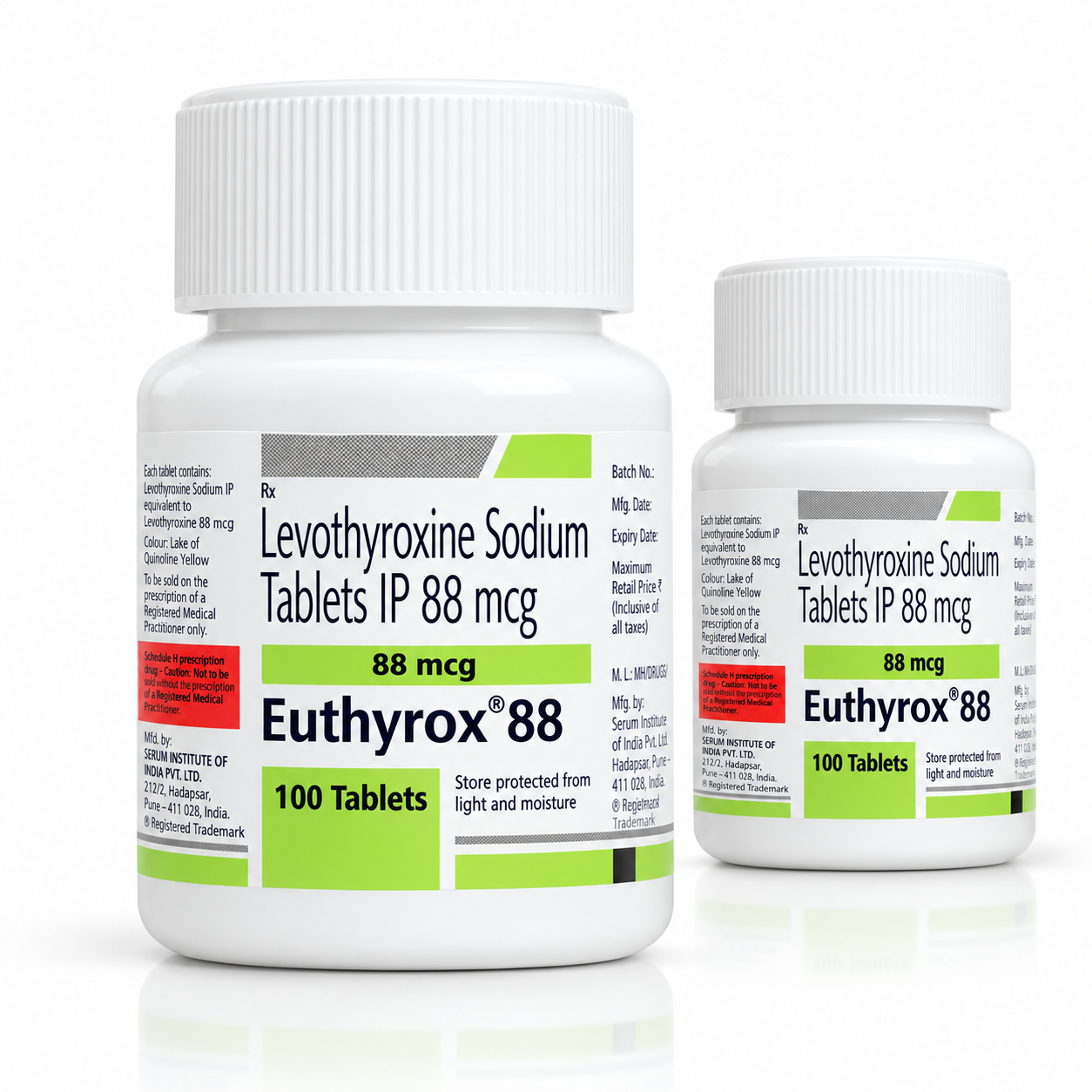
Euthyrox 88 MCG Tablet
Starting at just $0.04
$1.10 / unit
| Pack Size | Price | Price / Unit | Quantity | Action |
|---|---|---|---|---|
| 600 tablets | $660.00 | $1.10/unit | ||
| 500 tablets | $550.00 | $1.10/unit | ||
| 400 tablets | $440.00 | $1.10/unit | ||
| 300 tablets | $330.00 | $1.10/unit | ||
| 200 tablets | $220.00 | $1.10/unit | ||
| 100 tablets | $110.00 | $1.10/unit |
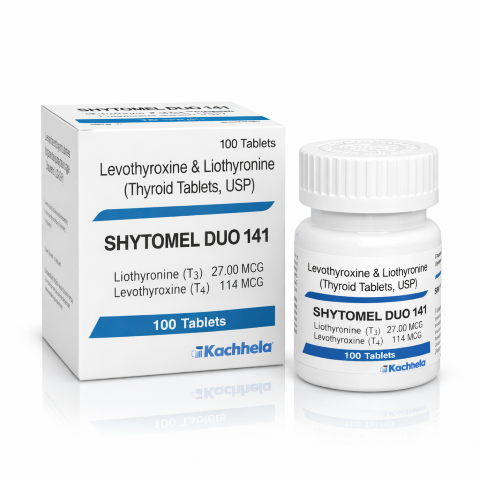
SHYTOMEL DUO 141 MCG TABLET is a prescription thyroid hormone replacement medicine containing a combination of two synthetic thyroid hormones:
Levothyroxine (T4) – 27 mcg
Liothyronine (T3) – 114 mcg
Total stated strength – 141 mcg
Available product information identifies Shytomel Duo 141 as a combination of levothyroxine and liothyronine, generally supplied in bottles containing 100 tablets and associated with Kachhela Medex Pvt. Ltd.
Levothyroxine is the synthetic form of thyroxine (T4), while liothyronine is the synthetic form of triiodothyronine (T3). These hormones replace or supplement thyroid hormones normally produced by the thyroid gland and help regulate metabolism, energy production, body temperature, cardiovascular function and many other body processes.
This medicine is commonly used for:
hypothyroidism (underactive thyroid)
thyroid hormone replacement therapy
low thyroid hormone levels
selected patients requiring combined T4 and T3 therapy
persistent hypothyroid symptoms when combination therapy is considered appropriate
maintaining adequate thyroid hormone levels under specialist supervision
Important: Shytomel Duo 141 is a high-strength T3/T4 combination. Because liothyronine (T3) is potent and faster acting than T4, it should be taken only in the dose specifically prescribed and monitored by a healthcare professional.
They need to know if you have any of these conditions:
allergy to levothyroxine
allergy to liothyronine
allergy to any ingredient in the tablet
untreated overactive thyroid or thyrotoxicosis
untreated adrenal insufficiency
pituitary gland disorder
heart disease
coronary artery disease
previous heart attack
angina or chest pain
abnormal or irregular heartbeat
high blood pressure
diabetes
osteoporosis or low bone density
blood-clotting problems
long-standing or severe hypothyroidism
difficulty tolerating thyroid hormone medicines
if you take anticoagulants or blood thinners
if you take medicines for diabetes
if you take calcium or iron supplements
pregnant or planning to become pregnant
breast-feeding
Tell your healthcare provider about all thyroid medicines, prescription medicines, vitamins, herbal products and supplements you use.
People with cardiovascular disease and older adults may require particularly careful dosing because excessive thyroid hormone can increase heart rate and cardiac workload.
Take SHYTOMEL DUO 141 MCG TABLET exactly as prescribed by your healthcare provider or endocrinologist.
For thyroid hormone replacement therapy:
Take the prescribed dose with water.
Take the medicine consistently at approximately the same time each day.
Follow your doctor's instructions regarding taking it in relation to meals.
Maintain a consistent routine from day to day.
Do not increase or decrease the dose yourself.
Attend scheduled thyroid-function blood tests.
The dose of thyroid hormone therapy is individualized according to thyroid blood tests, clinical response, age, cardiovascular health and other medical conditions. Available Shytomel Duo 141 information likewise states that dosing should be individualized according to thyroid hormone levels.
Certain foods, medicines and supplements can interfere with absorption of the levothyroxine (T4) component, so your healthcare provider may advise separating their administration.
Because Shytomel Duo also contains liothyronine (T3), excessive dosing can produce symptoms of thyroid-hormone excess relatively quickly.
Do not stop the medicine or change the dose without medical advice.
NOTE: Combination T4/T3 therapy is not appropriate for every patient with hypothyroidism and should be used under specialist supervision.
If you miss a dose of Shytomel Duo 141, follow the instructions provided by your healthcare professional.
If you remember relatively soon after the scheduled dose, take it according to your prescribed regimen.
If it is close to the time of your next dose, skip the missed dose unless your doctor has specifically instructed otherwise.
Do not take two doses together to compensate for a missed dose unless specifically directed by your healthcare provider.
Because this product contains both T4 and the faster-acting T3 hormone, avoid making your own dose adjustments.
Tell your healthcare provider if you take:
calcium supplements
iron supplements
antacids containing aluminum or magnesium
sucralfate
cholestyramine
colestipol
certain cholesterol-lowering medicines
proton-pump inhibitors or medicines affecting stomach acidity
anticoagulants such as warfarin
insulin
oral diabetes medicines
digoxin
amiodarone
beta-blockers
certain antidepressants
seizure medicines
estrogen-containing medicines
oral contraceptives
corticosteroids
biotin supplements
other thyroid medicines
Calcium and iron supplements can reduce levothyroxine absorption when taken too close to thyroid hormone treatment. Your healthcare provider may recommend separating them by several hours.
Biotin supplements can interfere with some thyroid blood tests and may produce misleading laboratory results. Tell your doctor and laboratory personnel if you take biotin.
This list may not describe all possible interactions. Give your healthcare provider a complete list of all medicines and supplements you use.
Your healthcare provider may periodically monitor:
TSH
Free T4
T3
heart rate
blood pressure
body weight
symptoms of hypothyroidism
symptoms of excessive thyroid replacement
Watch for symptoms suggesting the thyroid hormone dose may be too high, including:
rapid heartbeat
palpitations
irregular heartbeat
chest pain
excessive sweating
tremor
nervousness
anxiety
irritability
difficulty sleeping
unexplained weight loss
diarrhea
increased appetite
heat intolerance
Symptoms suggesting that thyroid replacement may be insufficient can include:
unusual tiredness
feeling unusually cold
constipation
dry skin
unexplained weight gain
slowed thinking
low energy
Do not adjust your dose based on symptoms alone. Thyroid-function tests and clinical assessment are required to determine whether a dose change is appropriate.
Long-term excessive thyroid hormone exposure may increase the risk of abnormal heart rhythms and loss of bone mineral density.
Seek urgent medical attention for severe chest pain, fainting, significant shortness of breath or a very fast/irregular heartbeat.
Many adverse effects of levothyroxine/liothyronine therapy occur when the thyroid-hormone dose is higher than the body requires.
chest pain
rapid or irregular heartbeat
severe palpitations
fainting
severe shortness of breath
severe tremor
severe nervousness or agitation
significant muscle weakness
seizures
severe headache
severe diarrhea or vomiting
severe allergic reaction
swelling of the face, lips, tongue or throat
difficulty breathing
increased heart rate
mild palpitations
nervousness
anxiety
irritability
tremor
headache
difficulty sleeping
increased sweating
heat intolerance
increased appetite
diarrhea
stomach cramps
temporary changes in weight
muscle weakness or cramps
If these symptoms develop after starting treatment or following a dose change, contact your healthcare provider because your thyroid-hormone dose may need reassessment.
This list may not describe all possible side effects.
Keep SHYTOMEL DUO 141 MCG TABLETS out of the reach of children.
Available product information identifies Shytomel Duo 141 as being supplied in a bottle containing 100 tablets.
Keep the tablets:
in their original bottle/container
tightly closed after use
in a cool, dry place
protected from excessive heat
protected from moisture
away from direct sunlight
One available product listing specifies storage below 25°C; however, follow the storage temperature printed on your actual Shytomel Duo bottle/carton if it differs.
Do not transfer the tablets unnecessarily into an unsuitable container.
Do not use tablets that have changed significantly in colour, appearance or condition.
Do not use Shytomel Duo 141 mcg Tablets after the expiration date printed on the bottle or outer packaging.
Starting at just $0.04
Starting at just $0.04
Starting at just $0.03
Starting at just $0.02
Starting at just $0.36