Boldenone is an anabolic-androgenic steroid (AAS) structurally related to testosterone. Boldenone undecylenate has primarily been used in veterinary medicine rather than as a standard human medical treatment. Despite this, non-medical use has occurred among some bodybuilders and athletes seeking increased muscle mass and performance.
One important concern with boldenone and other anabolic steroids is their potential effect on cholesterol levels and cardiovascular health.
Research specifically studying boldenone in humans is limited. Therefore, much of what is known about its cardiovascular risks comes from research involving anabolic-androgenic steroids as a broader group. Current evidence indicates that supraphysiological AAS exposure can adversely affect cholesterol, blood pressure, blood vessels and the structure and function of the heart.
Understanding these effects is particularly important because cholesterol abnormalities may develop without obvious symptoms.
What Is Boldenone?
Boldenone is a synthetic androgen related to testosterone. One commonly encountered form is boldenone undecylenate, a long-acting ester generally administered by injection.
Boldenone has anabolic and androgenic activity through activation of androgen receptors. Although it has historically been associated with veterinary applications, it has also been used non-medically for physique and performance enhancement. Human clinical safety data for such use are limited.
This lack of high-quality human studies means it is not possible to precisely calculate how much cardiovascular risk comes from boldenone alone.
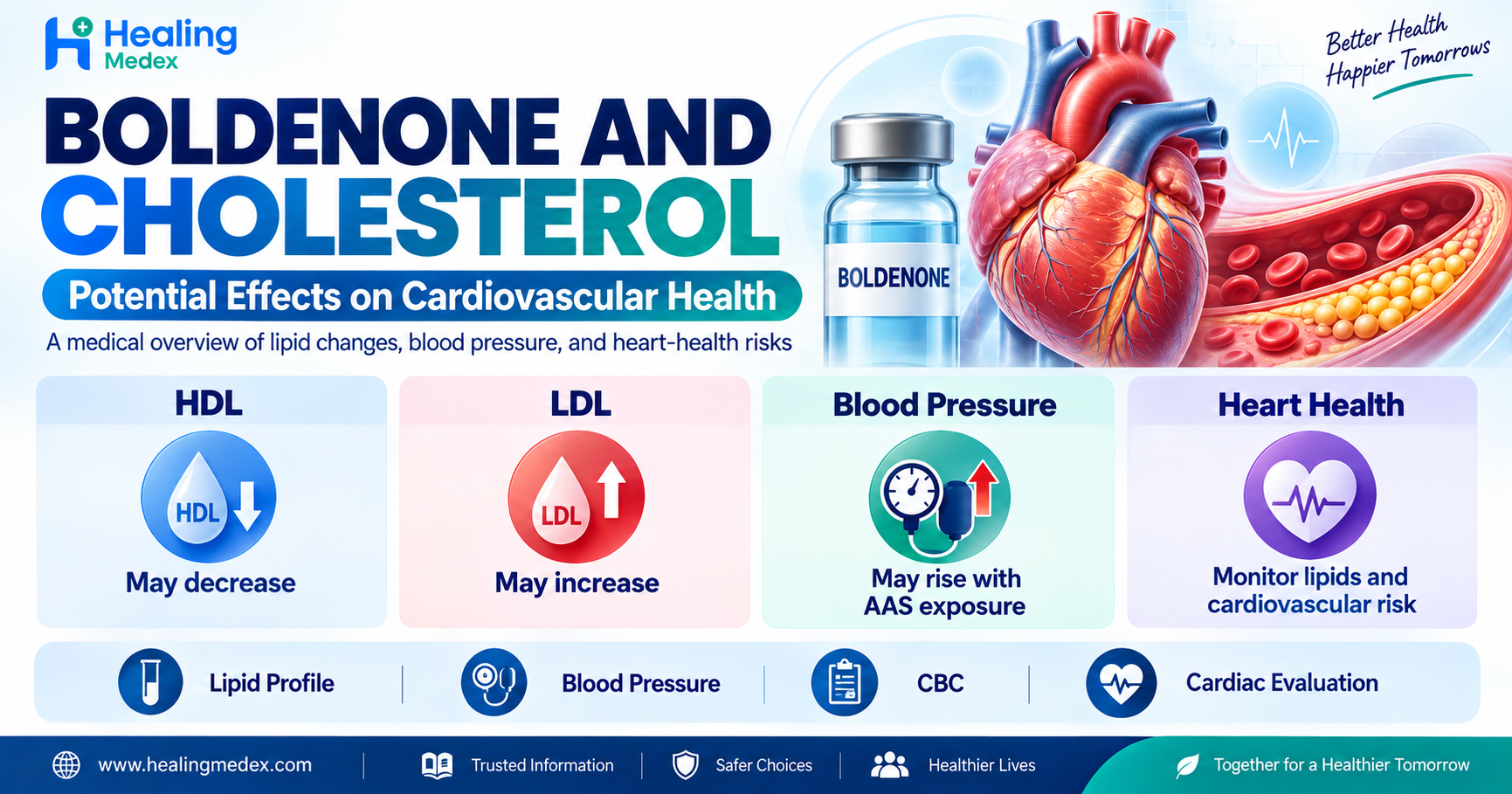
However, cardiovascular concerns associated with the broader AAS class include:
decreased HDL cholesterol
increased LDL cholesterol
increased blood pressure
endothelial dysfunction
increased red blood cell production
changes in heart structure
accelerated atherosclerosis
increased risk of cardiovascular events
These effects may become more important with prolonged exposure, high doses or simultaneous use of multiple anabolic steroids.
How Could Boldenone Affect Cholesterol?
Cholesterol travels through the bloodstream in particles known as lipoproteins.
Two commonly measured forms are LDL cholesterol and HDL cholesterol.
LDL is often called “bad cholesterol” because elevated concentrations contribute to cholesterol deposition inside artery walls.
HDL is commonly called “good cholesterol” because it participates in transporting cholesterol away from peripheral tissues.
Research involving anabolic-androgenic steroids consistently shows that supraphysiological androgen exposure can produce an unfavorable lipid profile. The exact response varies depending on the steroid, dose, duration of use, genetics, diet and other substances being taken.
1. HDL Cholesterol May Decrease
One of the most consistently reported lipid effects of anabolic steroids is a reduction in HDL cholesterol.
Low HDL is important because it often occurs together with other cardiovascular risk factors.
Some AAS research has reported substantial HDL reductions during steroid exposure. However, these figures should not automatically be applied specifically to boldenone because direct controlled human boldenone studies are lacking.
2. LDL Cholesterol May Increase
Anabolic steroid exposure has also been associated with increased LDL cholesterol.
A 2025 systematic review and meta-analysis examining AAS users found a statistically significant average increase in LDL cholesterol compared with control groups.
Higher LDL allows more cholesterol-containing particles to circulate in the bloodstream and potentially enter damaged arterial walls.
Again, this evidence concerns AAS exposure overall and should not be interpreted as a precise measurement of boldenone's individual effect.
3. The LDL-to-HDL Balance May Become Less Favorable
Cardiovascular risk cannot be understood from total cholesterol alone.
A combination of:
higher LDL + lower HDL
can create a more atherogenic lipid profile.
Over time, persistent unfavorable cholesterol levels may contribute to the development of atherosclerosis—the buildup of cholesterol-containing plaques within arteries.
Why Are Cholesterol Changes Important?
Atherosclerosis generally develops gradually.
Cholesterol particles accumulate beneath the inner lining of arteries, triggering inflammation and plaque formation. As plaques enlarge, arteries may narrow and become less flexible.
More importantly, some plaques can rupture.
A ruptured coronary artery plaque can trigger formation of a blood clot that blocks blood flow to the heart muscle, resulting in a heart attack.
Plaques affecting blood vessels supplying the brain can contribute to ischemic stroke.
Recent cardiovascular reviews therefore increasingly recognize non-medical AAS exposure as an important cardiovascular risk factor, particularly among younger individuals who may otherwise appear healthy.
Boldenone May Affect More Than Cholesterol
Cholesterol abnormalities are only one potential component of cardiovascular risk.
Increased Blood Pressure
AAS users have demonstrated higher blood pressure in multiple studies.
A 2025 meta-analysis found significant average increases in both systolic and diastolic blood pressure among AAS users compared with controls.
High blood pressure increases stress on artery walls and forces the heart to work harder.
When hypertension occurs together with high LDL and low HDL, cardiovascular risk may become greater.
Changes in Red Blood Cell Levels
Androgens can stimulate erythropoiesis—the production of red blood cells.
Excessive increases can result in erythrocytosis, reflected by an abnormally high hematocrit.
Higher hematocrit may increase blood viscosity and is another reason complete blood counts are commonly recommended when evaluating people exposed to supraphysiological androgens.
Endothelial Dysfunction
The endothelium is the thin layer of cells lining blood vessels.
Healthy endothelial cells help arteries relax and regulate blood flow.
Research suggests AAS exposure may interfere with endothelial function and normal nitric-oxide-mediated blood-vessel relaxation. These changes may contribute to hypertension and atherosclerosis.
Changes in Heart Structure
Long-term AAS exposure has also been associated with structural changes in the heart.
A 2025 systematic review and meta-analysis involving approximately 2,000 men found that AAS-using resistance-trained athletes showed greater left-ventricular wall thickness and mass as well as modestly impaired measures of cardiac function compared with non-users.
A newer 2026 systematic review has continued to examine duration-dependent cardiac changes associated with AAS exposure.
These findings concern anabolic steroids broadly rather than boldenone alone.
Can Boldenone Increase Heart-Attack Risk?
There is not enough high-quality human research to assign boldenone itself a specific heart-attack risk percentage.
However, the biological effects associated with supraphysiological anabolic-steroid exposure can create several conditions that favor cardiovascular disease:
AAS exposure → abnormal cholesterol + higher blood pressure + vascular dysfunction + possible hematologic changes + cardiac remodeling
Large observational and clinical studies have linked long-term AAS use with cardiovascular disease, accelerated atherosclerosis and adverse cardiac outcomes.
Therefore, a normal appearance or high level of physical fitness should not be assumed to indicate normal cardiovascular health.
Who May Be at Greater Risk?
Potential cardiovascular risk may be higher in people who already have:
elevated LDL cholesterol
low HDL cholesterol
obesity
smoking or nicotine exposure
family history of premature heart disease
existing cardiovascular disease
high hematocrit
kidney disease
sleep apnea
Risk may also increase with prolonged AAS exposure, high cumulative doses or simultaneous use of several performance-enhancing substances.
Because non-medical users commonly combine multiple drugs, determining which individual steroid caused a particular abnormality can be difficult.
What Tests Can Identify Cardiovascular Problems?
Someone who has used anabolic steroids should be open with their healthcare professional about the substances involved.
Clinical guidance for assessing AAS users recommends considering several measurements.
Lipid Profile
A lipid panel commonly includes:
total cholesterol
LDL cholesterol
HDL cholesterol
triglycerides
This helps identify an atherogenic cholesterol pattern.
Blood Pressure
Blood pressure should also be measured because hypertension can occur without symptoms.
Complete Blood Count
A complete blood count can identify increased hemoglobin or hematocrit associated with excessive red blood cell production.
Liver and Kidney Tests
Liver and kidney function may also be evaluated because AAS use can affect multiple organ systems.
Cardiac Evaluation
Depending on exposure history, symptoms and cardiovascular risk, clinicians may consider investigations such as an electrocardiogram or echocardiogram.
A 2025 cardiovascular review recommends considering lipid testing, complete blood count, liver testing, blood-pressure evaluation and echocardiography when assessing people using AAS.
The exact tests required should be individualized by a healthcare professional.
Do Cholesterol Levels Return to Normal After Stopping Anabolic Steroids?
Some lipid abnormalities may improve after anabolic steroids are discontinued.
Research suggests that reductions in HDL and elevations in LDL can be at least partly reversible in some users. However, recovery varies considerably between individuals.
Recovery can depend on factors such as:
duration of steroid exposure
cumulative dose
substances used
genetics
diet
body composition
smoking
underlying metabolic disease
Importantly, normalization of cholesterol does not necessarily prove that all cardiovascular effects have disappeared.
Some research suggests structural or vascular abnormalities associated with prolonged AAS exposure may persist after discontinuation.
Can Diet and Exercise Prevent Boldenone-Related Cholesterol Changes?
A heart-healthy lifestyle remains important.
This includes regular physical activity, avoiding smoking, maintaining an appropriate body weight and eating a diet rich in vegetables, fruits, whole grains, legumes, nuts and unsaturated fats while limiting trans fats and excessive saturated fat.
However, healthy eating and exercise should not be considered protection against the cardiovascular effects of anabolic steroids.
An individual may exercise intensively and appear extremely fit while still having high LDL, very low HDL, hypertension or structural cardiac changes.
Laboratory testing and medical assessment are therefore more informative than physical appearance alone.
Symptoms That Require Urgent Medical Attention
Cardiovascular disease can initially produce no symptoms.
However, emergency medical evaluation is needed for symptoms such as:
new or severe chest pain or pressure
sudden shortness of breath
unexplained fainting
severe or persistent palpitations
sudden weakness or numbness on one side
facial drooping
difficulty speaking
sudden severe dizziness
These symptoms can indicate serious cardiovascular or neurological conditions and should not be ignored.
Frequently Asked Questions
1. Does boldenone lower HDL cholesterol?
Direct controlled human studies specifically examining boldenone are limited. However, reduced HDL is a well-established effect associated with supraphysiological exposure to many anabolic-androgenic steroids. Therefore, lipid monitoring is particularly relevant in people who have used boldenone or other AAS.
2. Can boldenone increase LDL cholesterol?
Anabolic-androgenic steroids as a class have been associated with increased LDL cholesterol. There is insufficient human evidence to quantify precisely how much LDL would change with boldenone alone.
3. Is injectable boldenone safer for cholesterol than oral steroids?
Being injectable does not eliminate cardiovascular risk. Although different AAS can have different effects on liver metabolism and lipids, injectable anabolic steroids can still contribute to dyslipidemia, hypertension, cardiac remodeling and other cardiovascular complications.
4. Can someone have cardiovascular problems despite feeling healthy?
Yes. High LDL, low HDL, hypertension and early atherosclerosis frequently produce no symptoms.
Blood tests and medical assessment may identify abnormalities long before symptoms develop.
The Bottom Line
Boldenone is an anabolic-androgenic steroid for which high-quality human safety research is limited. Much of our understanding of its potential cardiovascular effects therefore comes from broader research involving anabolic steroids.
That research consistently raises concerns about lower HDL cholesterol, higher LDL cholesterol, elevated blood pressure, endothelial dysfunction, atherosclerosis and adverse changes in heart structure and function.
The cardiovascular consequences of steroid exposure can also accumulate over time and may not always produce immediate symptoms.
Anyone who has used boldenone or other anabolic steroids and is concerned about cardiovascular health should discuss their exposure openly with a qualified healthcare professional. A lipid profile, blood-pressure measurement, complete blood count and other cardiovascular investigations may be appropriate depending on the person's history and findings.