Stanozolol is a synthetic anabolic-androgenic steroid (AAS) historically known by the brand name Winstrol. It has been produced in both oral and injectable forms, which has led to a common assumption that the injectable version may be considerably safer because it does not need to pass through the digestive system first.
The reality is more complicated.
Although the route of administration can influence certain risks, both oral and injectable stanozolol can cause significant adverse effects. Stanozolol itself is a 17-alpha-alkylated anabolic steroid, a structural characteristic strongly associated with liver toxicity. Therefore, injecting stanozolol does not eliminate its potential effects on the liver.
Both forms may also negatively affect cholesterol, suppress natural testosterone production, produce androgen-related effects, and contribute to cardiovascular risk.
This article explains the major health differences between oral and injectable stanozolol and why neither formulation should be considered harmless.
What Is Stanozolol?
Stanozolol is a synthetic derivative of dihydrotestosterone (DHT). It has anabolic properties that promote protein synthesis and tissue growth while also producing androgenic effects.
It has had limited medical applications historically, but stanozolol is perhaps better known for non-medical use in bodybuilding and competitive sports.
Stanozolol has been available as:
Intramuscular injections
Despite the different routes of administration, the active drug is still stanozolol.
This distinction is important because some of the drug's major health effects result from its chemical structure rather than simply whether it is swallowed or injected.
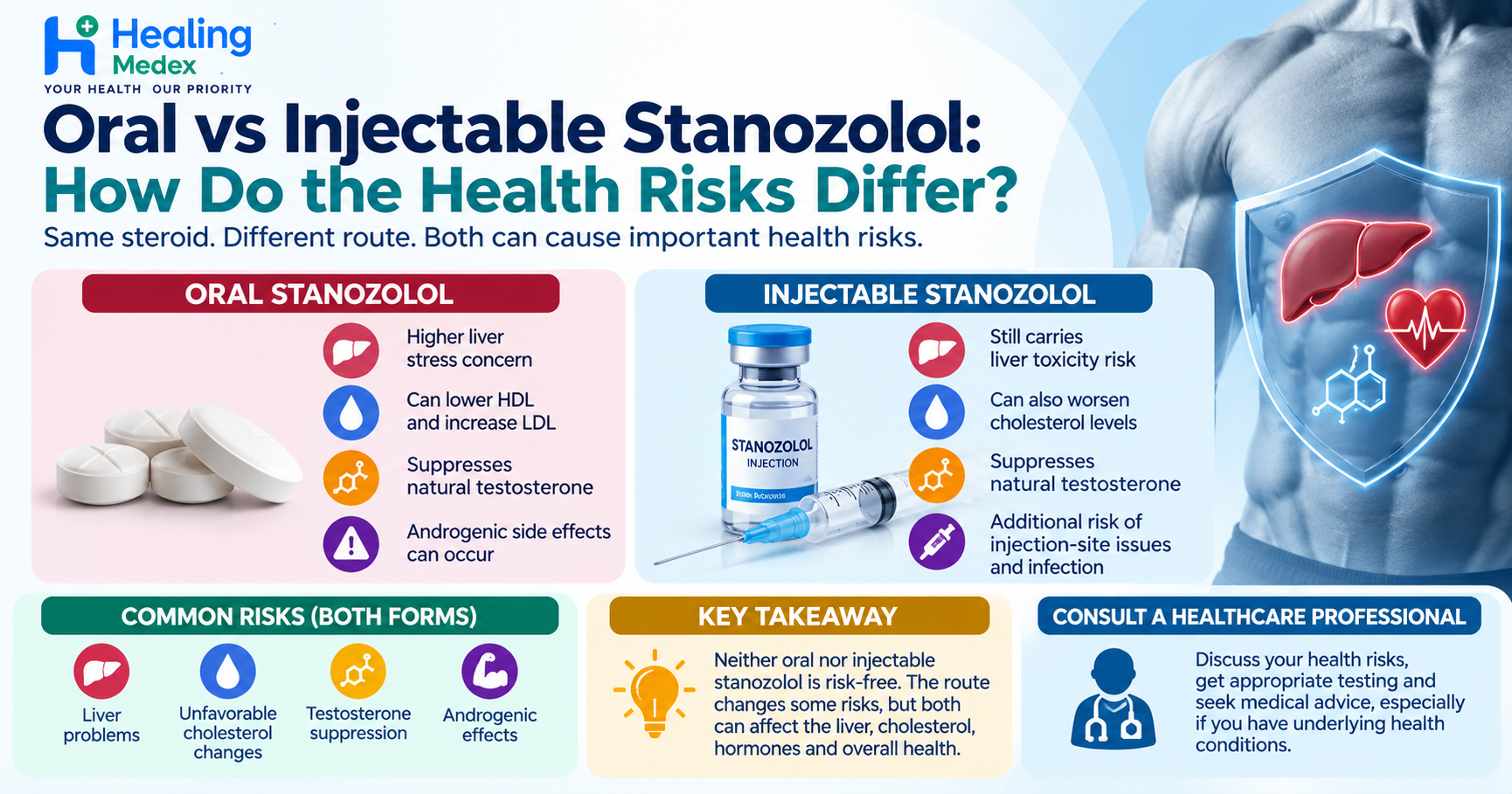
Oral vs Injectable Stanozolol at a Glance
Health consideration | Oral stanozolol | Injectable stanozolol |
|---|---|---|
Liver stress | Significant concern | Still a significant concern |
Cholestatic liver injury | Possible | Possible |
HDL cholesterol reduction | Can be substantial | Can also occur |
LDL cholesterol increase | Possible | Possible |
Testosterone suppression | Yes | Yes |
Fertility effects | Possible | Possible |
Injection-site complications | No | Yes |
Androgenic effects | Yes | Yes |
Cardiovascular concerns | Yes | Yes |
The exact magnitude of risk depends on factors such as exposure, individual susceptibility, other drugs being used, pre-existing medical conditions, and duration of use.
Importantly, there is limited modern head-to-head clinical research directly comparing equivalent oral and injectable stanozolol exposure, so claims that one version is universally safer should be viewed cautiously.
1. Oral Stanozolol Can Place Significant Stress on the Liver
Oral anabolic steroids often require chemical modification so that enough of the drug survives metabolism after being swallowed.
Stanozolol is a C-17α-alkylated androgen, a class of anabolic steroids strongly associated with liver injury.
Reported hepatic complications from this steroid class include:
Elevated liver enzymes
Cholestasis
Jaundice
Severe itching
Peliosis hepatis
Liver adenomas
Rarely, malignant liver tumors with long-term androgen exposure
One clinical trial using relatively low oral doses of stanozolol found temporary liver enzyme abnormalities in some participants.
More serious cases of stanozolol-associated liver injury have also been documented.
2. Injectable Stanozolol Is Not Free From Liver Toxicity
This is one of the most important differences to understand.
Stanozolol is different.
Injectable stanozolol remains chemically 17-alpha-alkylated, meaning the chemical feature associated with hepatotoxicity is still present.
Therefore, bypassing the stomach and first-pass absorption does not make injectable stanozolol harmless to the liver.
Cases involving severe cholestatic injury have been reported with both oral and parenteral stanozolol exposure.
Symptoms of significant liver injury can include:
Yellow skin or eyes
Dark urine
Pale stools
Persistent itching
Loss of appetite
Nausea
Unusual fatigue
Abdominal discomfort
These symptoms require medical evaluation.
3. Oral Stanozolol Can Produce Major Changes in Cholesterol
One of the better documented concerns with stanozolol involves its effects on blood lipids.
Oral stanozolol has repeatedly been associated with lower HDL cholesterol, often referred to as “good” cholesterol.
Studies have also reported increases in LDL cholesterol.
For example, research involving oral stanozolol has demonstrated marked reductions in HDL and increases in LDL in some participants.
This matters because an unfavorable LDL-to-HDL profile is associated with atherosclerotic cardiovascular disease over time.
The lipid effects of anabolic steroids become particularly concerning when combined with other cardiovascular risk factors such as:
Smoking
Obesity
Family history of premature heart disease
4. Injectable Stanozolol Can Also Worsen Cholesterol
Changing the route of administration does not necessarily prevent stanozolol from affecting cholesterol metabolism.
An older controlled study examining intramuscular stanozolol found that HDL cholesterol decreased while total cholesterol and LDL cholesterol increased following exposure.
Therefore, injectable stanozolol should not be viewed as cardiovascularly neutral simply because it is injected.
The evidence available does not support the idea that injectable stanozolol completely avoids the adverse lipid effects associated with the drug.
5. Both Forms Can Suppress Natural Testosterone Production
Like other anabolic-androgenic steroids, stanozolol can interfere with the body's hypothalamic-pituitary-gonadal (HPG) axis.
When external androgens are present, the brain may reduce signals involved in natural testosterone production.
This can lower:
Luteinizing hormone (LH)
Follicle-stimulating hormone (FSH)
Natural testicular testosterone production
Possible consequences include:
Low testosterone after discontinuation
Reduced libido
Fatigue
Mood changes
Reduced sperm production
Testicular shrinkage
Fertility problems
Injecting the drug does not prevent this hormonal suppression.
6. Injectable Stanozolol Adds Injection-Related Risks
Injectable stanozolol introduces risks that oral tablets do not.
Potential injection-related complications include:
Pain or swelling at the injection site
Local inflammation
Abscess formation
Bacterial infection
Tissue injury
Contamination from non-sterile products
Blood-borne infection if injection equipment is shared
Products obtained through unregulated markets create additional uncertainty because the actual concentration, sterility, or ingredients may not match the label.
These risks are separate from the systemic effects of stanozolol itself.
7. Both Forms May Affect Cardiovascular Health
The cardiovascular effects of anabolic steroids extend beyond cholesterol.
Long-term or high-exposure non-medical AAS use has been associated in research with problems involving:
Blood pressure
Endothelial function
Heart structure
Heart muscle function
Lipid abnormalities
Atherosclerotic cardiovascular risk
Stanozolol's particularly unfavorable influence on HDL and LDL makes cardiovascular health an important concern regardless of whether the drug is taken orally or injected.
Someone who already has high cholesterol, hypertension, diabetes, kidney disease or cardiovascular disease may have additional reasons for concern.
8. Both Forms Can Cause Androgenic Side Effects
Stanozolol is derived from DHT and can produce androgen-related adverse effects.
These may include:
Acne and oily skin
Androgen stimulation can increase activity in the sebaceous glands and contribute to acne.
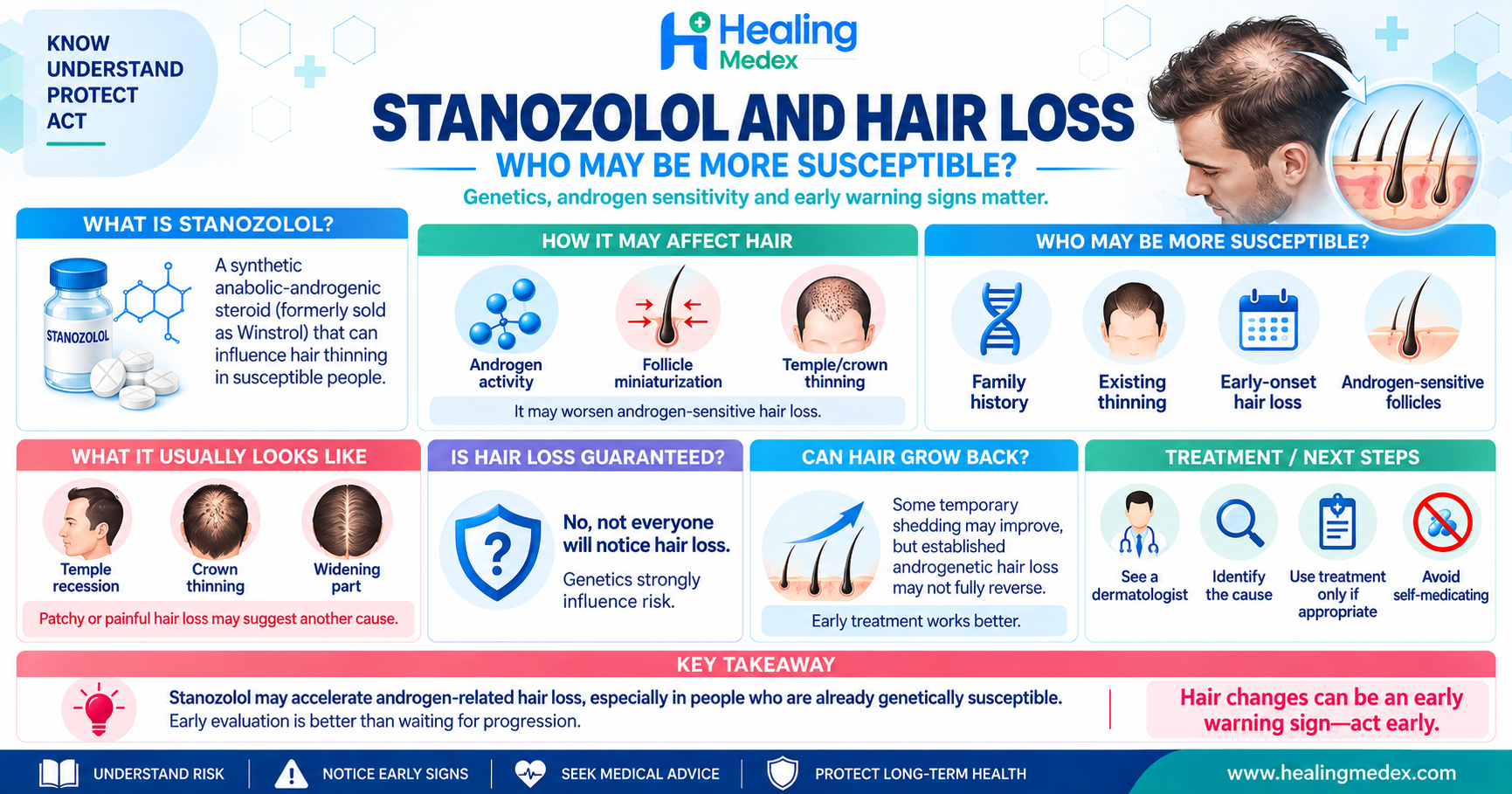
Scalp hair loss
People genetically susceptible to androgenetic alopecia may experience accelerated hair thinning.
Increased body or facial hair
Androgenic effects may increase hair growth in certain areas.
Effects in women
Women exposed to anabolic-androgenic steroids may experience virilizing effects such as:
Deeper voice
Increased facial or body hair
Menstrual changes
Acne
Clitoral enlargement
Some androgenic changes, particularly voice deepening, may not completely reverse after the drug is stopped.
These effects depend on the drug rather than simply its route of administration.
9. Kidney Problems Can Occur Secondary to Severe Liver Injury
Severe anabolic-steroid-induced cholestasis can occasionally have consequences beyond the liver.
Published cases involving stanozolol have described severe jaundice accompanied by renal dysfunction, with some patients requiring temporary dialysis.
This is uncommon, but it highlights why jaundice after anabolic steroid exposure should never be dismissed simply because liver enzyme elevations appear modest.
A person can have clinically important cholestatic liver injury even when ALT and AST elevations do not appear dramatic.
10. Injectable Does Not Automatically Mean Safer
The phrase “injectable steroids are safer for the liver” is an oversimplification.
It may apply to comparisons involving some injectable testosterone preparations versus certain oral 17-alpha-alkylated steroids, but it cannot automatically be applied to every anabolic steroid.
Injectable stanozolol is still stanozolol.
Because the drug retains its 17-alpha-alkylated structure, serious liver toxicity remains possible.
Injectable use also brings additional risks associated with injections themselves.
For this reason, the most accurate conclusion is not that oral stanozolol is dangerous while injectable stanozolol is safe. Instead:
The two formulations have somewhat different risk profiles, but both can produce important systemic health effects.
Is Oral Stanozolol Worse for the Liver Than Injectable Stanozolol?
However, there is insufficient high-quality modern evidence directly comparing equivalent doses and durations of oral versus injectable stanozolol to quantify exactly how much safer one route might be.
Importantly, medically documented liver injury has occurred with stanozolol, and reports have included both oral and parenteral exposure.
Therefore, it is inappropriate to assume that switching from tablets to injections eliminates liver risk.
Which Form Is Worse for Cholesterol?
Oral stanozolol has particularly strong evidence showing significant reductions in HDL cholesterol.
However, injectable stanozolol has also demonstrated unfavorable lipid changes.
One study involving a single intramuscular stanozolol injection reported a subsequent decrease in HDL along with increases in LDL and total cholesterol.
The available evidence therefore suggests that both formulations can negatively affect lipid health, although differences in dose, duration and study design make precise comparisons difficult.
What Health Monitoring May Be Important After Stanozolol Exposure?
People with current or previous anabolic steroid exposure should discuss appropriate medical evaluation with a healthcare professional.
Depending on the individual's history, a clinician may consider tests such as:
Liver evaluation
ALT
AST
ALP
GGT
Total and direct bilirubin
Cardiovascular and metabolic evaluation
Total cholesterol
LDL cholesterol
HDL cholesterol
Triglycerides
Blood pressure
Hormonal evaluation when appropriate
Total testosterone
LH
FSH
Estradiol
Additional testing may be appropriate depending on symptoms, duration of exposure, other substances used and underlying medical conditions.
Testing should be interpreted by a qualified healthcare professional rather than relying on a single abnormal laboratory value.
When Should Someone Seek Medical Attention?
Prompt medical assessment is particularly important if symptoms develop such as:
Yellow eyes or skin
Very dark urine
Persistent severe itching
Significant abdominal pain
Persistent vomiting
Unexplained severe fatigue
Chest pain
Shortness of breath
Fainting
Significant swelling
Fever, redness or worsening pain around an injection site
Jaundice following anabolic steroid exposure warrants medical attention even if the person otherwise feels reasonably well.
Oral vs Injectable Stanozolol: Key Takeaway
The route of administration changes some aspects of stanozolol's risk profile, but it does not remove the drug's major systemic risks.
Oral stanozolol is well documented to cause substantial changes in HDL and LDL cholesterol and carries significant potential for liver toxicity.
Injectable stanozolol eliminates the need to swallow the drug, but it does not eliminate liver toxicity, cholesterol changes, testosterone suppression or other androgen-related effects. It also creates additional risks related to injection technique, infection and product sterility.
Most importantly, stanozolol is structurally different from many injectable testosterone preparations. Its 17-alpha-alkylated structure remains present regardless of whether it is swallowed or injected, meaning injectable stanozolol should not be viewed as a liver-safe version of the drug.
Anyone experiencing symptoms or abnormal laboratory results after anabolic steroid use should seek medical assessment rather than attempting to manage the problem solely by changing formulations or adding other drugs.
Frequently Asked Questions
1. Is injectable stanozolol safer than oral stanozolol?
Not necessarily. Injectable administration may alter some aspects of drug exposure, but stanozolol itself remains a 17-alpha-alkylated anabolic steroid. Liver injury, cholesterol abnormalities and hormone suppression remain possible.
2. Does injectable Winstrol bypass the liver?
It avoids gastrointestinal absorption and first-pass administration in the usual sense, but this does not mean the liver is protected. The drug still enters the circulation and is metabolized, and hepatotoxicity has been reported with parenteral stanozolol.
3. Can stanozolol lower HDL cholesterol?
Yes. Reductions in HDL are among the most consistently documented metabolic effects of stanozolol. Clinical studies have reported substantial decreases in HDL during treatment.
4. Can stanozolol increase LDL cholesterol?
Yes. Several studies have reported increased LDL alongside decreases in HDL, resulting in a less favorable cardiovascular lipid profile.
5. Can stanozolol suppress testosterone?
Yes. As an anabolic-androgenic steroid, stanozolol can suppress the hormonal signals responsible for normal endogenous testosterone and sperm production.
6. Can liver damage improve after stopping stanozolol?
Some drug-induced liver abnormalities improve after exposure ends, but recovery from severe cholestatic injury can take weeks or months. Serious symptoms such as jaundice require medical evaluation rather than simply waiting for them to resolve.