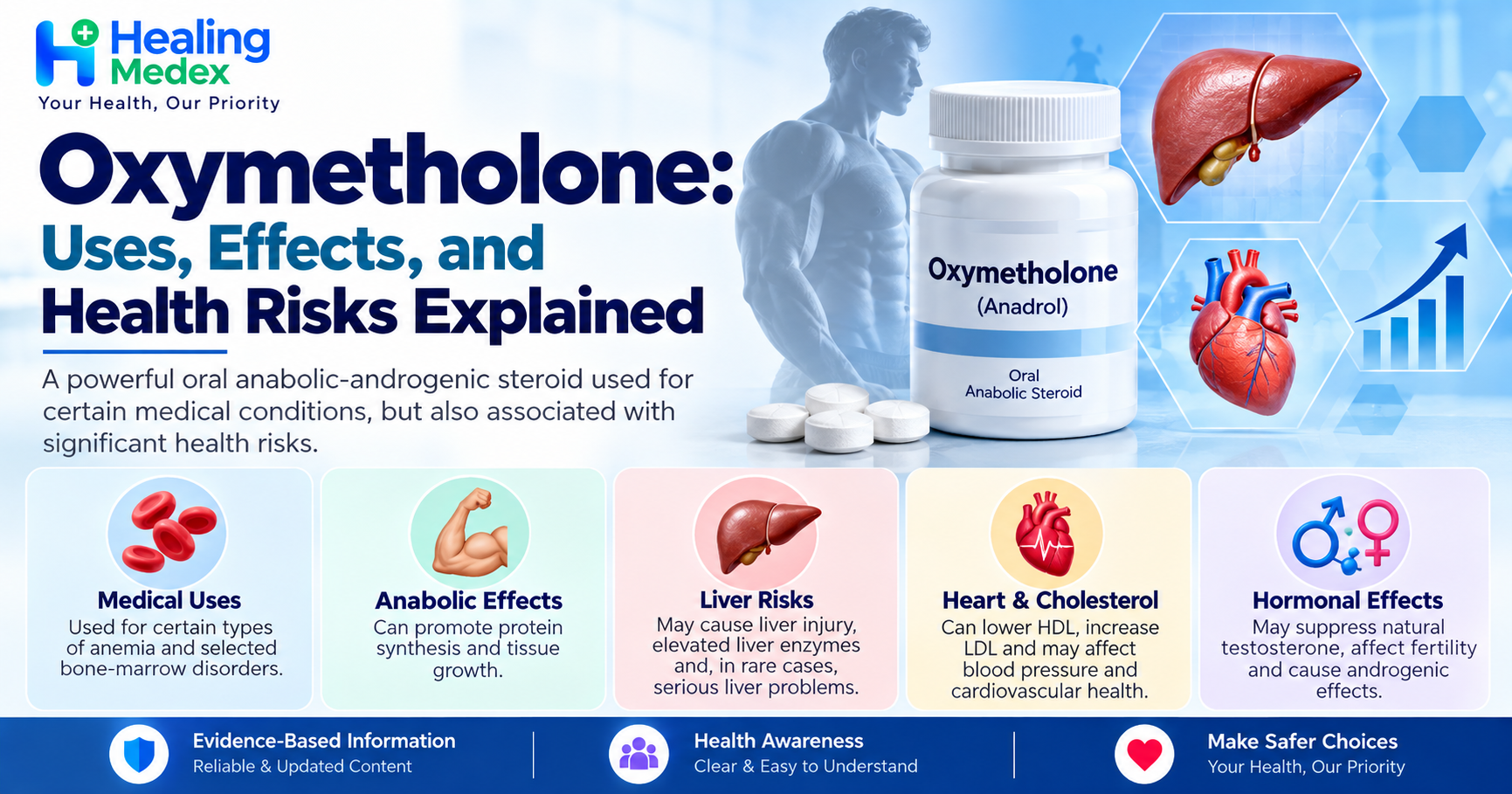
Although oxymetholone has legitimate medical applications, it can cause significant adverse effects involving the liver, cardiovascular system, hormones, reproductive system, and fluid balance. Its anabolic properties have also led to non-medical use for muscle and performance enhancement, but such use exposes people to potentially serious health risks without medical supervision.
Oxymetholone is a 17-alpha-alkylated anabolic steroid, a chemical modification that allows it to remain active when taken orally. That same characteristic is also associated with a greater potential for liver toxicity compared with some non-oral androgen preparations.
What Is Oxymetholone?
Oxymetholone is a synthetic derivative of testosterone with both anabolic and androgenic activity.
“Anabolic” refers mainly to effects on tissue growth and protein metabolism, while “androgenic” refers to effects related to male sex hormones.
In medical settings, oxymetholone can stimulate erythropoiesis—the production of red blood cells—and may increase erythropoietin activity in certain forms of anemia. U.S. prescribing information has historically indicated oxymetholone for anemias caused by deficient red-cell production, including selected cases of aplastic and hypoplastic anemia.
It should not be confused with testosterone replacement therapy. Oxymetholone is a separate synthetic anabolic steroid with a different risk profile.
What Is Oxymetholone Used For?
1. Certain Types of Anemia
The principal medical use of oxymetholone has been the treatment of selected anemias in which the body does not produce enough red blood cells.
Examples described in prescribing information include:
Acquired aplastic anemia
Congenital aplastic anemia
Certain hypoplastic anemias
Some cases associated with bone-marrow failure
Myelofibrosis-associated anemia in selected circumstances
Oxymetholone does not replace treatment of correctable causes of anemia such as iron, vitamin B12, folate, or other nutritional deficiencies.
2. Selected Bone-Marrow Failure Disorders
Oxymetholone has historically been used in some patients with bone-marrow failure, including Fanconi anemia, when specialists determine that androgen therapy may be appropriate.
Today, treatment decisions for these disorders are highly individualized because more modern therapies may be available and oxymetholone carries substantial long-term risks.
3. Other Investigational or Historical Uses
Oxymetholone has been studied for conditions including severe wasting and other catabolic illnesses. Research into some of these applications has produced mixed results, and they should not be assumed to represent approved or routine uses.
What Effects Does Oxymetholone Have on the Body?
Oxymetholone affects multiple systems rather than acting only on muscle.
Increased Red Blood Cell Production
One of its medically useful effects is stimulation of erythropoiesis.
In patients whose anemia responds to treatment, increased red blood cell production may improve hemoglobin levels and oxygen-carrying capacity.
However, excessive increases in red-cell mass may also create problems, which is why blood counts require medical monitoring.
Increased Anabolic Activity
Like other anabolic steroids, oxymetholone promotes processes involved in protein synthesis and tissue growth.
This is one reason it has been misused for bodybuilding and performance enhancement.
However, increases in body weight during anabolic-steroid exposure are not necessarily entirely muscle. Fluid and sodium retention can also contribute to weight gain.
Using oxymetholone without a medical indication does not make its adverse effects less significant.
Major Health Risks of Oxymetholone
1. Liver Injury
Liver toxicity is one of the most important concerns with oxymetholone.
Because it is a 17-alpha-alkylated oral anabolic steroid, it has been associated with several patterns of liver injury.
These include:
Elevated liver enzymes
Cholestatic hepatitis
Jaundice
Severe itching associated with cholestasis
Peliosis hepatis
Rare hepatic tumors
Cholestatic liver injury can cause impaired bile flow, producing symptoms such as yellowing of the skin or eyes, dark urine and intense itching. LiverTox identifies oxymetholone among the anabolic steroids strongly associated with this type of liver injury.
Rare but serious liver complications associated with prolonged androgen exposure include peliosis hepatis, in which blood-filled cavities develop within the liver, and hepatic tumors.
Warning signs that require medical attention
Seek medical assessment promptly if symptoms such as these occur:
Yellow skin or eyes
Dark urine
Pale stools
Persistent nausea
Severe itching
Unusual tiredness
Persistent upper-right abdominal pain
Abdominal swelling
2. Changes in Cholesterol
Anabolic-androgenic steroids can adversely affect blood lipids.
They may:
Lower HDL cholesterol — often described as “good” cholesterol.
Increase LDL cholesterol — commonly called “bad” cholesterol.
This combination may produce a more atherogenic lipid profile and could contribute to cardiovascular risk. Changes in HDL and LDL can sometimes be substantial during anabolic-steroid exposure.
For this reason, cholesterol levels may need periodic monitoring when anabolic steroids are prescribed medically.
3. Fluid Retention and Edema
Oxymetholone can promote retention of sodium and water.
Possible consequences include:
Swollen ankles
Rapid increases in body weight from fluid
Increased cardiovascular workload
Worsening edema
Fluid retention can be especially concerning for people with underlying heart, liver, or kidney disease.
4. Natural Testosterone Suppression
External anabolic-androgenic steroids can interfere with the body's hypothalamic-pituitary-gonadal axis.
In males, anabolic-steroid exposure may suppress signaling responsible for normal testicular testosterone production.
Potential consequences can include:
Reduced natural testosterone production
Testicular shrinkage
Reduced sperm production
Changes in fertility
Changes in libido
Sexual dysfunction
These effects are not necessarily predictable from appearance, strength or muscle mass.
Recovery after stopping anabolic steroids varies between individuals.
5. Fertility Effects
Anabolic steroids can suppress gonadotropins—the hormones involved in stimulating testosterone and sperm production.
As a result, some men may develop oligospermia, meaning reduced sperm concentration.
Fertility may improve after anabolic steroids are discontinued, but the timeframe varies and recovery is not guaranteed to be rapid.
People concerned about fertility should discuss appropriate hormone and semen testing with a healthcare professional rather than attempting to self-treat steroid-induced hormonal changes.
6. Androgenic Effects
Despite being described as an anabolic steroid, oxymetholone retains androgenic activity.
Possible effects include:
Acne
Increased oily skin
Increased body or facial hair
Changes in scalp hair in genetically susceptible individuals
Changes in libido
Women exposed to anabolic steroids may develop virilizing effects such as:
Deepening of the voice
Increased facial or body hair
Menstrual irregularities
Clitoral enlargement
Some virilizing changes—particularly voice deepening—may not fully reverse after treatment is stopped.
7. Gynecomastia
Changes in normal sex-hormone regulation can contribute to breast-tissue enlargement in males.
Gynecomastia has been reported with anabolic-androgenic steroid exposure, although the underlying hormonal mechanisms can vary between different compounds and patterns of use.
New breast tenderness, swelling or a persistent lump should be medically assessed rather than assumed to be steroid-related.
8. Effects on Blood Counts
Oxymetholone is capable of stimulating red blood cell production—that is partly why it was developed as an anemia treatment.
When androgenic anabolic steroids are medically prescribed, clinicians may monitor:
Hemoglobin
Hematocrit
Other components of the complete blood count
Abnormally elevated red blood cell levels may increase blood viscosity and require medical evaluation.
9. Mood and Nervous-System Effects
Changes involving mood, sleep and libido have been reported with anabolic-androgenic steroids.
Possible effects can include:
Irritability
Sleep disturbance
Changes in mood
Changes in libido
The psychological effects associated with non-medical anabolic-steroid use vary considerably between individuals and may also be influenced by the dose, other drugs being used and pre-existing factors.
10. Risks During Pregnancy
Oxymetholone should not be used during pregnancy because androgen exposure can harm fetal development.
Anyone who is pregnant, may become pregnant, or is planning pregnancy should discuss medication risks with a qualified healthcare professional before exposure.
Can Oxymetholone Affect the Heart?
Oxymetholone's cardiovascular concerns are related to several possible effects rather than one mechanism alone.
These may include:
Unfavorable cholesterol changes
Fluid retention
Increased red blood cell concentration
Possible blood-pressure effects
Broader cardiovascular risks associated with anabolic-androgenic steroid exposure
Long-term non-medical AAS exposure has been associated in research with adverse cardiovascular outcomes and structural or functional cardiovascular abnormalities, although individual risk varies according to the substances used, duration, dose and other health factors.
The cardiovascular consequences of unsupervised anabolic-steroid use should therefore not be judged only by whether someone feels healthy during use.
Is Oxymetholone Safe for Bodybuilding?
Oxymetholone's ability to promote anabolic activity has resulted in substantial non-medical bodybuilding use.
However, medical approval for treating selected forms of anemia does not mean the drug has been established as safe for bodybuilding or athletic enhancement.
Non-medical use may expose users to:
Liver injury
Severe cholesterol changes
Fluid retention
Hormonal suppression
Fertility problems
Cardiovascular complications
Androgenic effects
Drug interactions
Risk may increase further when several anabolic steroids or other performance-enhancing substances are used together.
There is no bodybuilding cycle, stack, or supplement combination that eliminates these risks.
Does Oxymetholone Damage the Liver Permanently?
Not every abnormal liver test means permanent liver damage.
Some liver abnormalities caused by anabolic steroids improve after the responsible drug is discontinued.
However, severe cholestasis can take a prolonged period to resolve, and rare complications such as peliosis hepatis or hepatic tumors are considerably more serious. LiverTox reports that anabolic-steroid-associated cholestasis may persist even after the drug is stopped.
This is why unexplained jaundice or abnormal liver tests during anabolic-steroid exposure should be medically evaluated rather than managed by simply switching to another steroid.
What Monitoring May Be Needed During Medical Treatment?
When oxymetholone is prescribed for a genuine medical indication, clinicians may monitor factors such as:
Complete blood count
Hemoglobin and hematocrit
Liver function tests
Bilirubin
Cholesterol and triglycerides
Kidney function
Blood pressure
Signs of edema
Hormonal or reproductive effects when relevant
Monitoring requirements depend on the patient's underlying condition and other medications.
Medical supervision is particularly important because significant abnormalities can develop before obvious symptoms appear.
Who Should Be Particularly Cautious?
Oxymetholone may be inappropriate or require specialist assessment in people with conditions such as:
Significant liver disease
Certain kidney disorders
Prostate or breast cancer
Severe fluid-retention problems
Pregnancy
The complete medical history and medication list should always be reviewed before oxymetholone is prescribed.
Oxymetholone and Other Medicines
Drug interactions can also matter.
Anabolic steroids may interact with medications including certain anticoagulants, and monitoring requirements may change when drugs affecting blood clotting, blood sugar, fluid balance or liver function are taken concurrently.
Patients should therefore tell their healthcare professional about prescription medications, over-the-counter products, vitamins and supplements they use.
Frequently Asked Questions
1. Is oxymetholone the same as testosterone?
No. Oxymetholone is a synthetic anabolic-androgenic steroid derived from testosterone, but its chemical structure, pharmacological properties and adverse-effect profile differ from standard testosterone preparations.
2. Is oxymetholone an oral steroid?
Yes. Oxymetholone is orally active because it is a 17-alpha-alkylated anabolic steroid. This modification is also associated with its potential for liver toxicity.
3. Does oxymetholone build muscle?
Oxymetholone has potent anabolic effects and can influence tissue growth and body weight. However, its medical indication is not bodybuilding, and using it for physique or performance enhancement can expose users to serious health risks.
4. Can oxymetholone lower natural testosterone?
Yes. Like other anabolic-androgenic steroids, oxymetholone can suppress the hormonal signaling responsible for normal endogenous testosterone and sperm production.
5. Can oxymetholone affect fertility?
Yes. Suppression of the reproductive hormone axis may reduce sperm production and impair fertility.
6. Can oxymetholone cause liver problems?
Yes. Oxymetholone has been associated with cholestatic liver injury, jaundice, peliosis hepatis and, rarely, liver tumors.
7. Are oxymetholone side effects reversible?
Some effects may improve after the drug is discontinued, but recovery depends on the complication. Certain androgenic effects and serious liver complications may not resolve quickly or completely. Medical evaluation is recommended when adverse effects develop.
The Bottom Line
Its anabolic effects can also explain why it has been used outside medicine for bodybuilding and performance enhancement. However, those same hormonal effects come with substantial health concerns.
Major risks include liver toxicity, adverse cholesterol changes, fluid retention, testosterone suppression, fertility problems, androgenic effects and potential cardiovascular complications.
Because some abnormalities can occur before symptoms become obvious, oxymetholone should not be viewed as a routine muscle-building supplement. When there is a genuine medical reason for treatment, appropriate clinical supervision and laboratory monitoring are important.