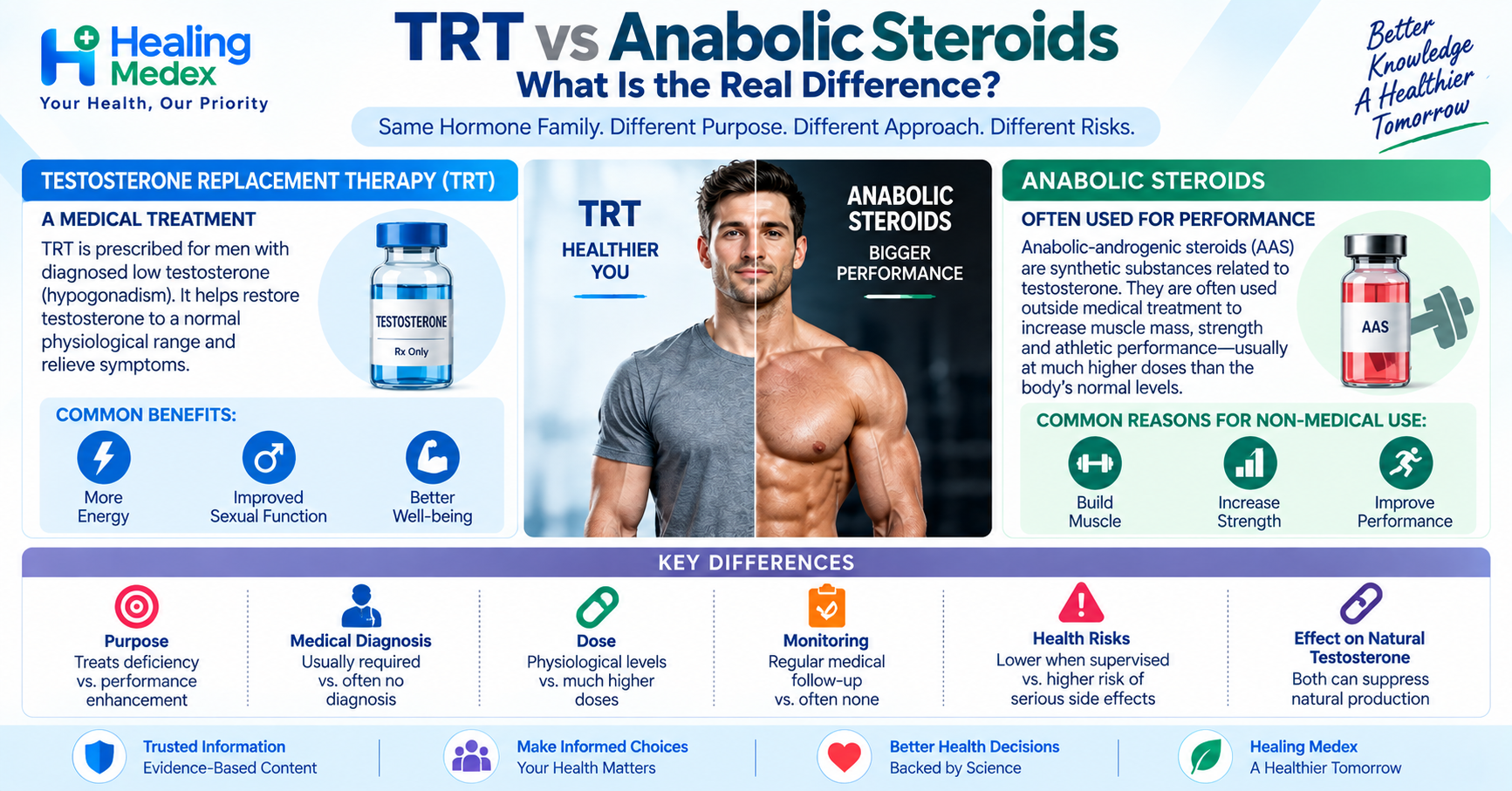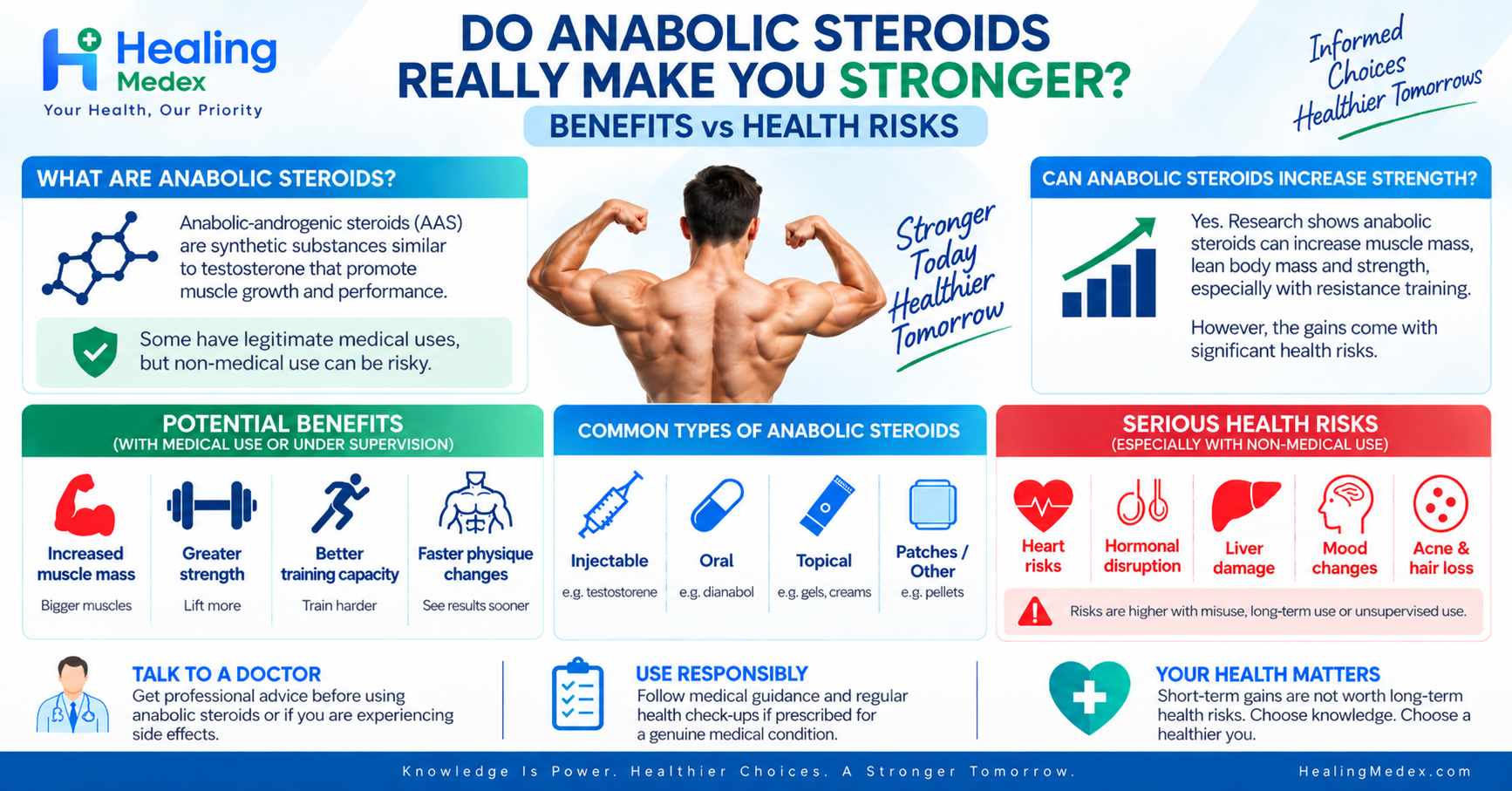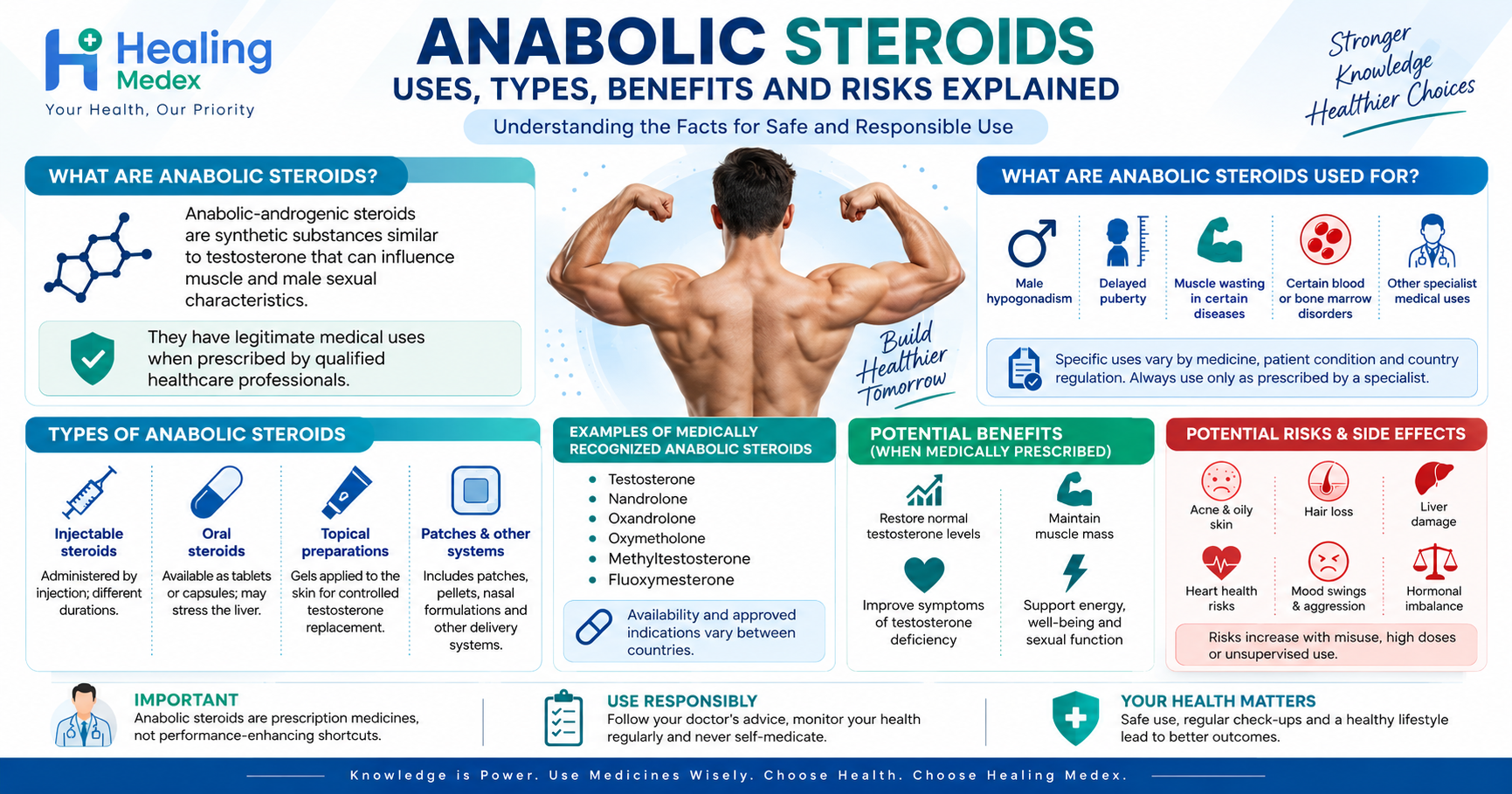
Anabolic-androgenic steroids (AAS) are synthetic substances designed to mimic some of the effects of testosterone. While they may increase muscle mass and strength, using anabolic steroids — particularly at non-medical or supraphysiologic doses — can interfere with the body’s normal hormone-production system.
One of the most important hormonal effects is suppression of natural testosterone production.
Research shows that anabolic steroid exposure can suppress the hypothalamic-pituitary-gonadal (HPG) axis, the hormonal system responsible for signaling the testes to produce testosterone and sperm.
How Does the Body Normally Produce Testosterone?
Natural testosterone production is controlled by a communication system involving the brain, pituitary gland and testes.
The process works approximately like this:
The hypothalamus releases gonadotropin-releasing hormone (GnRH).
GnRH signals the pituitary gland to release luteinizing hormone (LH) and follicle-stimulating hormone (FSH).
LH stimulates the testes to produce testosterone.
FSH, along with testosterone, helps support sperm production.
The body continuously monitors testosterone levels and adjusts these signals through a hormonal feedback system.
How Do Anabolic Steroids Lower Natural Testosterone?
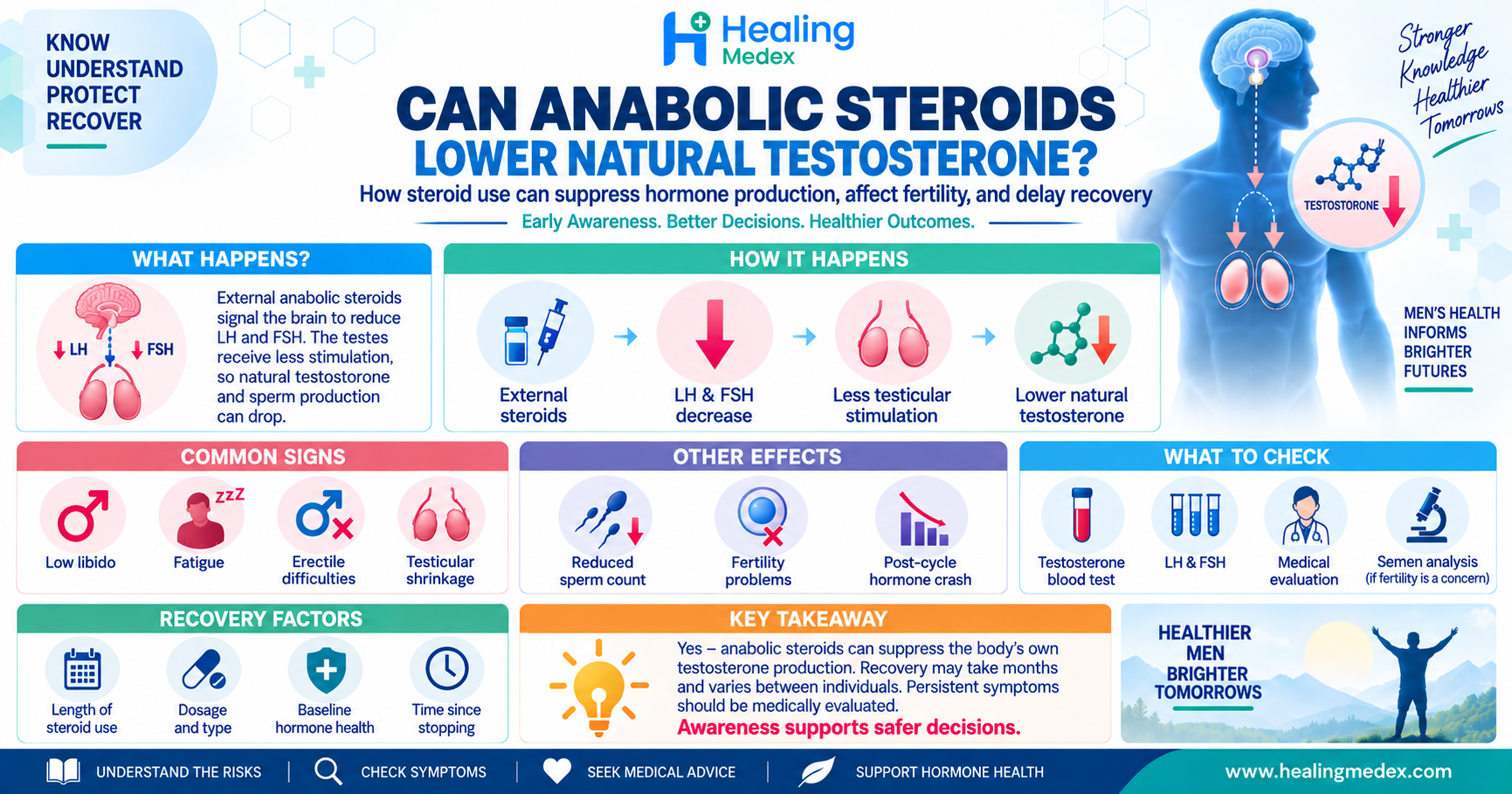
When anabolic steroids or other external androgens enter the body, the brain detects high androgen activity.
In response, the hypothalamus and pituitary gland reduce their hormonal signals. Levels of LH and FSH may fall substantially, meaning the testes receive less stimulation to produce their own testosterone.
This is known as suppression of the HPG axis.
Studies have found reduced LH and FSH among anabolic steroid users, and suppression can persist for months after steroid use is discontinued.
Therefore, someone using anabolic steroids may have high levels of androgen activity while using them but still have very little natural testosterone production.
10 Ways Anabolic Steroids Can Affect Natural Testosterone and Hormonal Health
1. They Suppress LH Production
LH is one of the primary signals telling the testes to manufacture testosterone.
External anabolic steroids can reduce LH secretion, resulting in lower natural testosterone production.
2. They Reduce FSH Levels
FSH plays an important role in sperm development.
Lower FSH resulting from steroid use may therefore contribute to reduced sperm production and fertility problems.
3. The Testes May Produce Less Testosterone
Because the testes are receiving less stimulation from LH, their testosterone production can decrease significantly.
The Endocrine Society identifies anabolic steroid use as a recognized cause of male hypogonadism, or testosterone deficiency.
4. Testicular Size Can Decrease
Reduced hormonal stimulation can cause the testes to become smaller during prolonged anabolic steroid use.
A systematic review found reduced testicular size among anabolic steroid users.
5. Sperm Production Can Fall
High circulating androgen levels do not necessarily mean high testosterone levels inside the testes.
Anabolic steroids can reduce intratesticular testosterone, which is required for normal sperm production. In some cases, sperm counts may become extremely low or even temporarily reach zero, a condition called azoospermia.
6. Testosterone May Drop After a Steroid Cycle
Hormone problems may become particularly noticeable after anabolic steroids are stopped.
The external hormones disappear, but the body’s normal testosterone-production system may not immediately restart.
This can create a period in which testosterone levels are lower than normal.
7. Low Libido Can Occur After Stopping Steroids
Reduced testosterone following anabolic steroid withdrawal can contribute to decreased sexual desire.
Research involving men who stopped illicit anabolic steroids has documented sexual-function problems during the first year after discontinuation, particularly among men with lower testosterone concentrations.
8. Erectile Dysfunction May Occur
Hormonal disturbances after stopping anabolic steroids can also contribute to erectile difficulties.
A systematic review found decreased libido and erectile dysfunction following withdrawal among some anabolic steroid users.
Erectile dysfunction can have many other causes, however, including cardiovascular disease, diabetes, medications, psychological factors and lifestyle habits.
9. Mood and Energy Levels May Change
Testosterone deficiency may be associated with symptoms such as:
Fatigue
Reduced motivation
Low mood
Difficulty concentrating
Reduced sexual desire
Reduced physical performance
Research on men discontinuing anabolic steroids has also reported low mood, anxiety and reduced wellbeing during the withdrawal period.
10. Recovery May Take Time
Natural testosterone production does not always return immediately after anabolic steroids are discontinued.
Recovery varies considerably between individuals and may be influenced by factors including the duration and extent of androgen exposure, age and individual hormonal function.
A review of anabolic steroid-induced hypogonadism found that hormonal and reproductive recovery can occur over months or sometimes years, rather than following one predictable timetable.
What Are the Signs of Low Testosterone After Steroid Use?
Possible symptoms include:
Reduced sex drive
Erectile difficulties
Fatigue or low energy
Reduced motivation
Depressed mood
Difficulty concentrating
Reduced muscle performance
Testicular shrinkage
Reduced sperm count
Fertility difficulties
Symptoms alone cannot confirm testosterone deficiency.
The Endocrine Society recommends diagnosing hypogonadism only when a person has compatible symptoms or signs together with consistently and unequivocally low testosterone concentrations.
Does Natural Testosterone Recover After Stopping Anabolic Steroids?
It can, but recovery varies considerably.
Some individuals experience spontaneous recovery after discontinuing anabolic steroids, whereas others experience prolonged hormonal suppression.
Research presented by the Endocrine Society indicates that previous anabolic steroid use can suppress testosterone production for months after discontinuation.
Another study found that recovery of testosterone and sperm production after performance-enhancing hormone use may require many months, with reproductive recovery sometimes taking considerably longer.
There is therefore no universal recovery timeline that applies to everyone.
What Determines How Quickly Testosterone Recovers?
Recovery may be influenced by several factors, including:
The number and type of anabolic-androgenic steroids used
Degree of hormonal suppression
Age
Previous steroid exposure
Baseline testosterone levels
Testicular function
General health
Longer or more extensive androgen exposure may be associated with a more complicated recovery process.
Does PCT Guarantee Testosterone Recovery?
No.
Post-cycle therapy, commonly called PCT, refers to various medications used by some steroid users after discontinuing anabolic steroids in an attempt to restore hormonal function.
Some observational research has reported associations between PCT use and improved reproductive hormone recovery. However, this does not establish that PCT guarantees recovery, and there is currently no universally established treatment protocol for anabolic steroid withdrawal.
The Endocrine Society specifically warns that self-medicating with PCT drugs is not recommended and may be hazardous, particularly when medications are obtained from unregulated sources.
Medical evaluation is safer than attempting to manage persistent hormonal suppression independently.
How Is Low Testosterone After Steroid Use Evaluated?
A healthcare professional may consider symptoms, steroid-use history and laboratory testing.
Depending on the clinical situation, testing may include:
Morning total testosterone
Free testosterone when appropriate
LH
FSH
Estradiol
Prolactin
Other tests based on symptoms and medical history
Measuring LH and FSH can help healthcare professionals distinguish between problems originating primarily in the testes and suppression involving the hypothalamus or pituitary gland.
Men concerned about fertility may also require a semen analysis.
Can Steroid-Related Infertility Recover?
Recovery is possible in many individuals, but it may take time.
Anabolic steroids can significantly suppress spermatogenesis because LH and FSH fall and intratesticular testosterone decreases.
Research suggests sperm production may gradually recover after anabolic steroid cessation, although recovery may take months or longer and varies substantially between individuals.
Anyone planning a pregnancy after anabolic steroid use should consider discussing fertility testing with an endocrinologist, urologist or reproductive specialist.
When Should You See a Doctor?
Medical evaluation is particularly important if symptoms continue after stopping anabolic steroids, including:
Persistent low libido
Severe fatigue
Testicular shrinkage
Fertility problems
Persistently low mood
Anxiety or significant changes in mental wellbeing
Urgent medical attention should be sought for severe depression, suicidal thoughts or other serious psychological symptoms.
Frequently Asked Questions
1. Can one steroid cycle lower testosterone?
Yes. Even relatively short exposure to exogenous anabolic-androgenic steroids can suppress LH and FSH and therefore reduce natural testosterone production. The degree and duration of suppression vary between individuals.
2. Is testosterone high or low while taking anabolic steroids?
Blood androgen activity may be high while external steroids are being used, while the body’s own testosterone production can simultaneously be strongly suppressed.
3. Why does testosterone fall after stopping steroids?
While steroids are being used, the brain reduces LH and FSH production. When steroid use suddenly stops, external androgen levels decline before the body’s hormonal signaling system has necessarily recovered, resulting in temporarily or persistently low testosterone.
4. How long does testosterone suppression last?
There is no single timeline. Some individuals recover within months, while others experience suppression for considerably longer. Research shows that recovery varies according to factors such as age and the extent and duration of anabolic steroid exposure.
5. Can anabolic steroids permanently lower testosterone?
Persistent hormonal abnormalities have been documented in some former anabolic steroid users, although long-term outcomes vary significantly between individuals. Evidence remains incomplete regarding exactly who will experience prolonged testosterone deficiency.
The Bottom Line
Yes, anabolic steroids can lower natural testosterone production.
External anabolic-androgenic steroids can suppress the brain’s normal hormonal signaling system, reducing LH and FSH and causing the testes to decrease their own testosterone and sperm production.
After steroids are discontinued, natural testosterone production may gradually recover, but the process can take months or longer and varies considerably between individuals.
Anyone experiencing persistent symptoms of low testosterone, sexual dysfunction or fertility problems after anabolic steroid use should seek appropriate medical assessment rather than relying on symptoms alone or attempting unsupervised hormonal treatment.