Post-cycle therapy, commonly called PCT, is frequently discussed among people who stop using anabolic-androgenic steroids (AAS). The idea behind PCT is to help the body restart its natural production of testosterone after steroids have suppressed the hormonal system.
But an important question remains:
Does PCT guarantee that natural testosterone levels will fully recover?
The short answer is no. PCT does not guarantee testosterone recovery.
Some research suggests that certain medically used hormonal treatments may be associated with faster hormonal recovery in selected men. However, recovery varies considerably from person to person, spontaneous recovery is common, and there is currently no universally accepted or evidence-based PCT protocol that guarantees restoration of normal testosterone production after anabolic steroid use.
Why Can Testosterone Drop After Steroid Use?
The body normally regulates testosterone through the hypothalamic-pituitary-gonadal (HPG) axis.
The process involves signals between the:
Hypothalamus
Pituitary gland
Testicles
The pituitary releases luteinizing hormone (LH) and follicle-stimulating hormone (FSH). LH stimulates testosterone production, while FSH plays an important role in sperm production.
When large amounts of testosterone or other anabolic-androgenic steroids enter the body from an external source, the brain detects high androgen levels.
It responds by reducing signals to the testicles.
As a result:
LH and FSH decrease → natural testosterone production falls → sperm production may decrease → the testicles may shrink.
After steroids are stopped, the HPG axis needs time to begin functioning normally again. Research confirms that exogenous anabolic steroids can suppress both natural testosterone production and spermatogenesis.
What Is Post-Cycle Therapy?
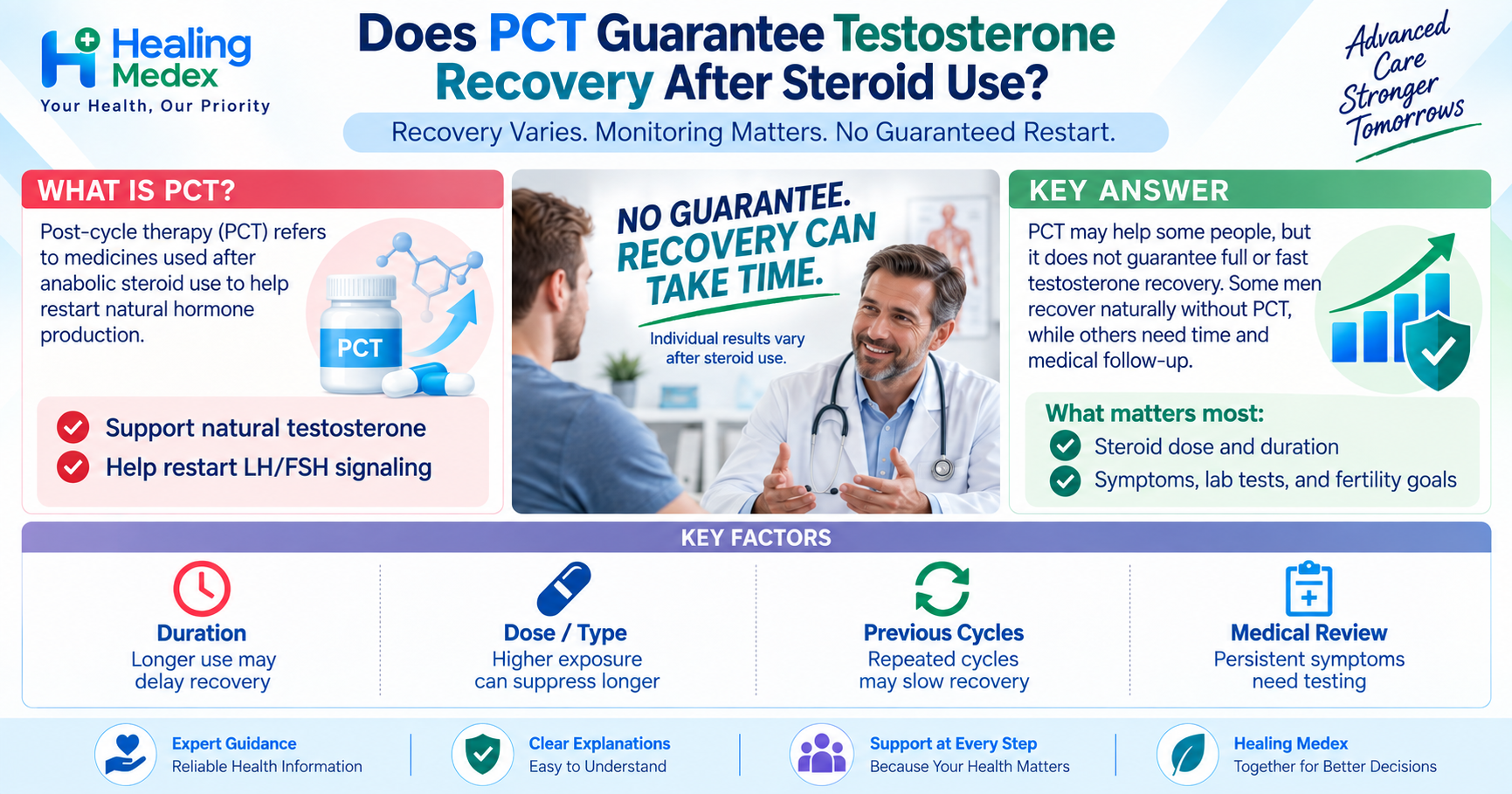
Post-cycle therapy refers to the use of medications after stopping anabolic steroids with the aim of helping restore normal hormonal function.
Drugs sometimes associated with PCT include:
Selective estrogen receptor modulators (SERMs)
Human chorionic gonadotropin (hCG)
Aromatase inhibitors
These medications affect hormones in different ways and may influence testosterone, LH, FSH or estrogen levels.
However, PCT is not one standardized medical treatment. Different users may take completely different combinations, durations and doses.
A 2026 review noted that while PCT is widely used after androgen abuse, evidence supporting it remains limited. Most evidence comes from observational studies rather than large randomized controlled trials.
Does PCT Guarantee Testosterone Recovery?
No. PCT cannot guarantee testosterone recovery.
Testosterone recovery depends on many factors beyond whether someone uses PCT.
One retrospective study involving men who had stopped anabolic steroids found that only 48.2% had normalization of testosterone, LH and FSH at the time they were evaluated. PCT use was associated with faster biochemical recovery shortly after steroid cessation, but the researchers emphasized that PCT remains poorly defined and that further research is required.
More recent research has also suggested that medically supervised hormonal treatments may accelerate recovery in some short-term steroid users. However, spontaneous recovery also occurred, and researchers stressed the need for prospective randomized trials before standardized treatment protocols can be established.
Therefore:
PCT may influence recovery in some individuals, but it cannot promise that testosterone will return to normal—or determine exactly how quickly recovery will occur.
Why Does Testosterone Recovery Differ Between People?
Several factors can influence how quickly the hormonal system recovers.
1. Duration of Steroid Use
Someone who used anabolic steroids for a relatively short period may recover differently from someone who has used steroids repeatedly for several years.
Long-term exposure can cause more prolonged suppression of the HPG axis.
Research has found that men with shorter periods of steroid exposure generally have a better chance of faster hormonal recovery than long-term users.
2. Number of Steroids Used
Using multiple anabolic steroids simultaneously may cause greater endocrine suppression.
One study found that hormonal recovery became less likely as the number of anabolic steroids used increased.
3. Type and Dose of Steroids
Different anabolic steroids have different potencies, half-lives and effects on the hormonal system.
High-dose or long-acting compounds may produce prolonged suppression even after the final dose.
4. Previous Steroid Cycles
Repeated cycles may expose the HPG axis to repeated periods of suppression and recovery.
The effects can therefore differ significantly from those experienced after a single short exposure.
5. Age
Age can influence natural testosterone production and reproductive function.
A review of anabolic-steroid-induced hypogonadism concluded that recovery appears to depend partly on age and the extent of previous androgen exposure.
6. Individual Hormonal Health
Some people may already have an underlying hormonal or reproductive condition that becomes apparent after steroid use stops.
Persistently low testosterone should therefore not automatically be assumed to be caused entirely by steroids.
How Long Can Testosterone Recovery Take After Steroids?
There is no exact recovery timeline that applies to everyone.
A major clinical review reported that many men who had used anabolic steroids for less than approximately one year recovered normal HPG-axis function within several months after stopping, although recovery was not universal. Longer-term users may experience suppressed testosterone for considerably longer.
A separate review found that:
Gonadotropins such as LH and FSH may recover over approximately 3–6 months
Testosterone often recovers over several months
Sperm production may take months to years
Testicular size can take months to years to recover
Individual variation remains substantial.
This means someone should not assume that testosterone has permanently failed to recover simply because levels remain low several weeks after stopping steroids.
At the same time, persistent symptoms or abnormal laboratory results deserve medical evaluation.
Can Testosterone Recover Without PCT?
Yes.
Natural hormonal recovery can occur after anabolic steroids are discontinued.
A recent clinical review noted that most men gradually recover without pharmacological intervention and recommended structured monitoring and supportive care rather than routine hormonal stimulation for everyone stopping anabolic steroids.
This is another reason PCT should not be viewed as mandatory or as a guaranteed solution.
The appropriate approach depends on symptoms, hormone measurements, duration of steroid exposure, fertility goals and other medical factors.
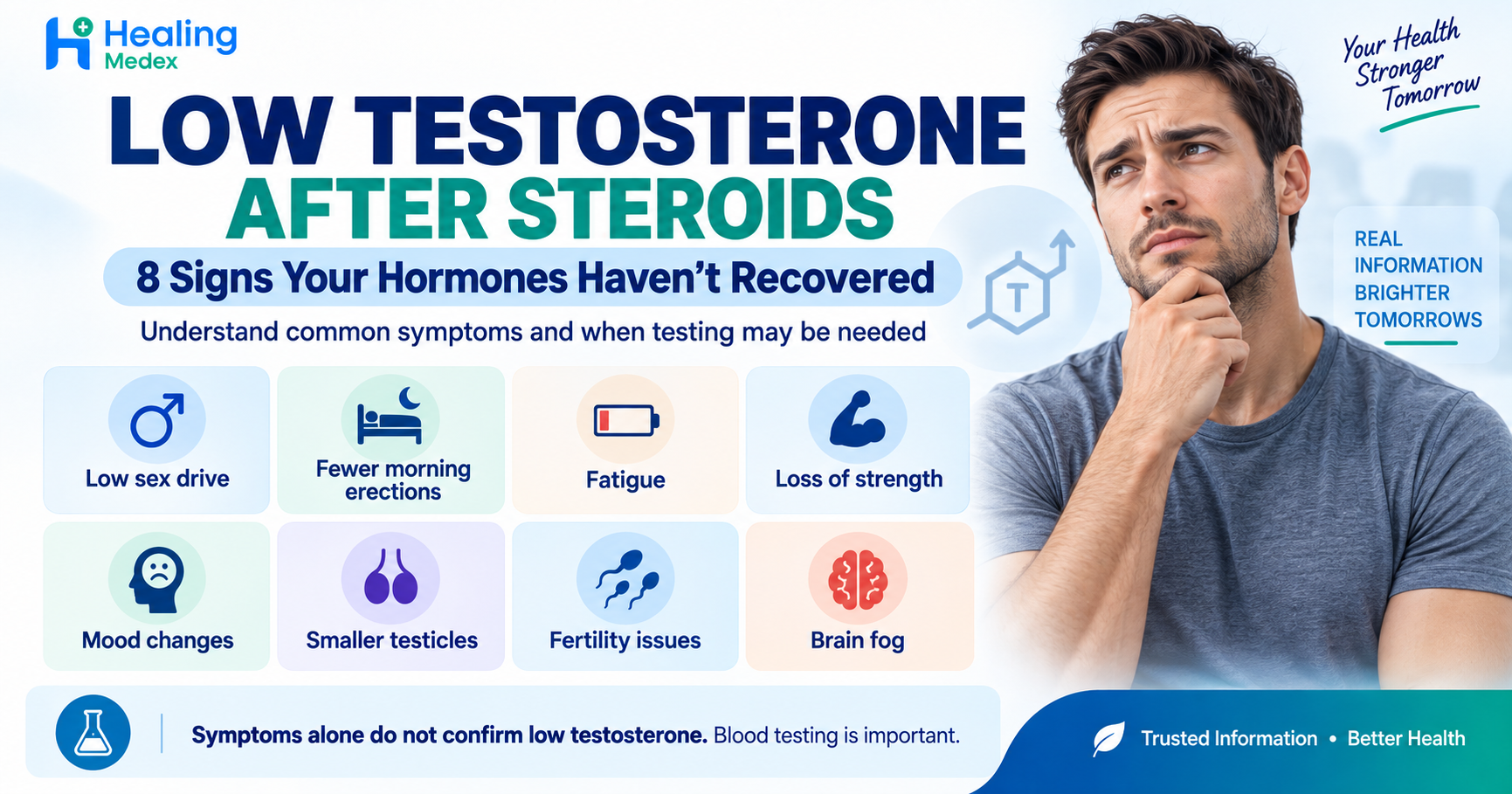
Signs Testosterone May Still Be Low After Steroid Use
During hormonal recovery, some men may experience symptoms associated with low testosterone or steroid withdrawal.
Possible symptoms include:
Reduced sex drive
Erectile difficulties
Fatigue
Low energy
Reduced motivation
Loss of muscle mass
Reduced strength
Mood changes
Depression or anxiety
Difficulty concentrating
Reduced sperm production or infertility
Withdrawal symptoms can also include sleep problems, restlessness and steroid cravings. Depression can occasionally become severe and requires prompt medical attention.
Symptoms alone cannot confirm low testosterone because many other medical and psychological conditions can cause similar problems.
How Is Testosterone Recovery Checked?
Hormonal recovery should ideally be assessed using appropriate blood testing rather than symptoms alone.
Depending on the individual situation, a healthcare professional may evaluate:
Total testosterone
This measures the amount of testosterone circulating in the blood.
LH
LH can provide information about whether the pituitary gland is signaling the testicles to produce testosterone.
FSH
FSH is particularly important when evaluating sperm production and fertility.
Additional tests may sometimes include:
SHBG
Estradiol
Prolactin
Complete blood count
Liver function
Kidney function
Lipid profile
Men concerned about fertility may also require a semen analysis.
Testing should be interpreted by a healthcare professional because hormone values can change depending on timing, medications and recent steroid exposure.
What About Fertility After Steroids?
Testosterone recovery and fertility recovery are not necessarily the same thing.
Even after blood testosterone begins returning toward normal, sperm production may take considerably longer to recover.
The American Urological Association and American Society for Reproductive Medicine note that external testosterone suppresses gonadotropins and can substantially reduce or completely stop sperm production. Recovery after stopping testosterone can take months and occasionally years.
Men hoping to conceive should therefore discuss previous steroid or testosterone use with a doctor, endocrinologist, urologist or fertility specialist.
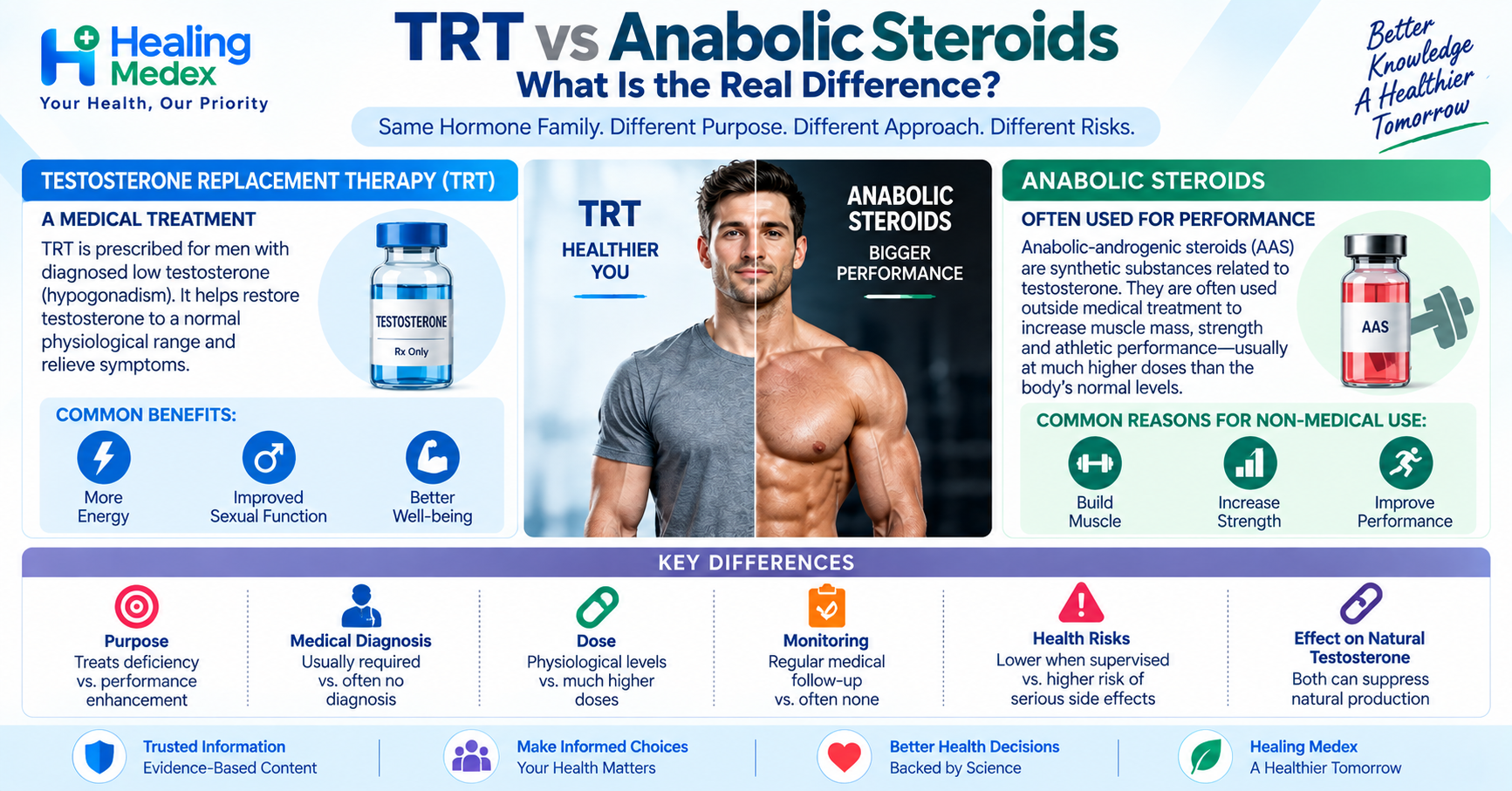
Starting testosterone replacement therapy without considering fertility goals may also be problematic because external testosterone can suppress sperm production further.
Is Self-Administered PCT Safe?
Not necessarily.
Drugs frequently used for PCT affect powerful hormonal pathways and may cause side effects or complications.
Problems can include inappropriate estrogen suppression, changes in sexual function and other medication-specific adverse effects.
The Endocrine Society has specifically cautioned that self-medicating with PCT is not recommended and may be hazardous, particularly when medications come from unregulated or illicit sources.
Taking more medications or combining several hormonal drugs also does not necessarily mean testosterone will recover faster.
Ideally, persistent symptoms after steroid cessation should be evaluated medically rather than treated using an internet-based PCT protocol.
When Should You Speak With a Doctor?
Medical evaluation is particularly important when someone experiences:
Persistent symptoms of low testosterone
Severe fatigue or weakness
Persistent erectile difficulties
Very low sexual desire
Testicular shrinkage
Infertility
Breast enlargement
Significant depression or anxiety
Symptoms that continue for several months after stopping steroids
Anyone experiencing severe depression, suicidal thoughts or thoughts of self-harm should seek urgent medical care.
A healthcare professional can determine whether symptoms are related to steroid withdrawal, persistent hypogonadism or another health condition.
Can Low Testosterone Become Long Lasting?
For many people, hormonal function improves after steroids are discontinued.
However, recovery is not always rapid or complete.
Studies have documented prolonged impairment of testicular function in some former anabolic steroid users, and long-term or heavy steroid exposure may increase the likelihood of delayed recovery.
Persistently abnormal testosterone should therefore be investigated rather than assuming another PCT cycle is required.
The Bottom Line
PCT does not guarantee testosterone recovery after anabolic steroid use.
Some studies suggest that certain medically used hormonal therapies may accelerate biochemical or fertility recovery in selected individuals, especially shortly after steroid cessation. However, the evidence remains limited, PCT protocols are not standardized, and spontaneous recovery occurs in many men.
Recovery may take several months and, particularly for sperm production or after prolonged steroid exposure, sometimes considerably longer.
Factors such as the duration of steroid use, number and type of steroids used, age, previous cycles and underlying hormonal health can all influence recovery.
Rather than relying on an unsupervised PCT protocol, people experiencing persistent symptoms should consider medical evaluation with appropriate hormone testing.
Frequently Asked Questions
1. Does everyone need PCT after steroids?
No. There is currently no evidence-based recommendation that everyone who stops anabolic steroids requires PCT. Many people experience spontaneous hormonal recovery.
2. Can PCT restart natural testosterone?
Certain medications can stimulate parts of the reproductive hormonal system and may increase testosterone in appropriately selected patients. However, this does not guarantee complete or permanent recovery.
3. How long does low testosterone last after steroids?
It varies considerably. Testosterone may improve over several months, while some long-term users can remain suppressed for much longer.
4. Can natural testosterone recover without medication?
Yes. Spontaneous recovery occurs in many men after anabolic steroids are stopped.
5. Can fertility take longer to recover than testosterone?
Yes. Sperm production frequently takes longer to recover than circulating testosterone levels and may require many months or occasionally years.
6. Should I start testosterone replacement therapy if testosterone is low after a steroid cycle?
Not automatically. Exogenous testosterone can continue suppressing LH, FSH and sperm production. Persistent low testosterone should first be evaluated by a qualified healthcare professional, particularly when future fertility is important.