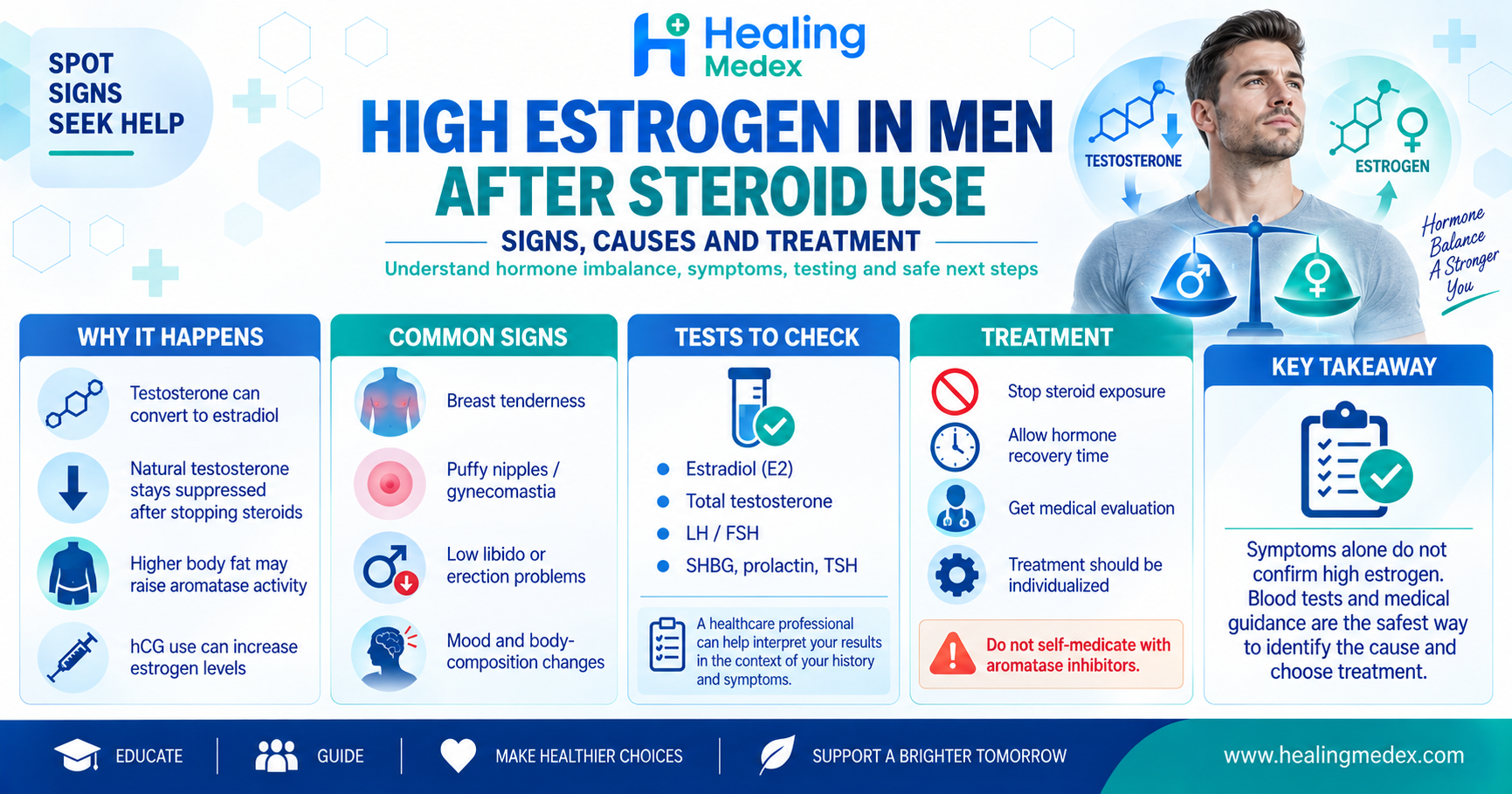
Anabolic-androgenic steroids can significantly change the normal balance between testosterone and estrogen in men. During a steroid cycle, some androgens—particularly testosterone—can be converted by the aromatase enzyme into estradiol, the main form of estrogen in men.
After steroids are stopped, the situation can become more complicated. Natural testosterone production may remain suppressed for weeks or months, which can change the balance between testosterone and estrogen even when the estradiol level itself is not dramatically elevated.
Possible consequences include breast tenderness, gynecomastia, changes in sexual function and other hormone-related symptoms. However, symptoms alone cannot confirm that estrogen is high. Blood testing and medical evaluation are important before considering treatment.
What Is Estrogen and Why Do Men Need It?
Estrogen is often described as a female hormone, but men naturally produce it as well.
Most estradiol in men is formed when the enzyme aromatase converts testosterone and other androgen precursors into estrogen. Estradiol contributes to normal male physiology, including bone health and aspects of sexual function.
The goal therefore is not to eliminate estrogen.
Problems may develop when there is an abnormal balance between estrogen and androgen activity. Gynecomastia, for example, can develop when estrogenic stimulation becomes stronger relative to androgen activity.
Why Can Steroids Increase Estrogen?
Some anabolic steroids are capable of being aromatized into estrogen.
Testosterone is the clearest example. When testosterone concentrations become much higher than normal during nonmedical steroid use, more substrate may be available for conversion into estradiol.
Endotext notes that an excess of testosterone or other aromatizable androgen substrate can increase estrogen production and contribute to breast tissue development. Gynecomastia has also been reported in athletes and bodybuilders using aromatizable androgens.
1. High-Dose Testosterone Can Increase Estradiol
Testosterone can be converted to estradiol by aromatase.
Therefore, using testosterone at supraphysiologic doses may increase circulating estradiol along with testosterone.
High-dose testosterone and hCG use have both been associated with gynecomastia in anabolic-steroid users.
2. Natural Testosterone Production Becomes Suppressed
Anabolic steroids suppress the hypothalamic-pituitary-gonadal axis.
This reduces the release of luteinizing hormone (LH) and follicle-stimulating hormone (FSH) and suppresses natural testicular testosterone production and sperm production.
After steroids are stopped, natural testosterone production does not necessarily return immediately.
As a result, a man can have relatively weak androgen activity compared with estrogen activity during recovery.
Importantly, this does not automatically mean estradiol itself is extremely high. Low testosterone can also change the estrogen-to-androgen balance.
3. Higher Body Fat Can Increase Aromatase Activity
Aromatase is found in adipose tissue.
Higher levels of body fat are associated with increased peripheral aromatase activity, meaning more androgen can potentially be converted into estrogen.
This may be particularly relevant for men who gain body fat during or following steroid use.
4. hCG Can Affect Estrogen Levels
Some steroid users take human chorionic gonadotropin (hCG) during cycles or during attempts at hormonal recovery.
hCG stimulates the testes and can increase testosterone production. Some of that testosterone can subsequently be converted into estradiol.
Clinical literature therefore notes gynecomastia particularly with high doses of testosterone or hCG.
5. Other Hormonal or Medical Problems May Be Present
Not every case of gynecomastia or suspected high estrogen after steroids is caused entirely by the steroid cycle.
Other possible causes include:
Low testosterone
Obesity
Thyroid disorders
Liver disease
Kidney disease
Certain medications
Testicular or adrenal disorders
Rare hormone-producing tumors
For this reason, adult-onset gynecomastia deserves an appropriate medical evaluation rather than simply assuming estrogen is the cause.
Signs of High Estrogen After Steroid Use
There is no group of symptoms that can reliably diagnose elevated estradiol without laboratory testing.
However, several changes may raise suspicion of an altered estrogen-androgen balance.
1. Breast Tenderness
Tenderness or soreness around the nipple or breast tissue can occur during the early stages of gynecomastia.
The area may become sensitive when touched or when clothing rubs against it.
2. Puffy or Sensitive Nipples
Some men notice increased nipple sensitivity or swelling beneath the nipple.
A small, rubbery or firm area of glandular tissue may develop underneath the areola.
Persistent changes should be evaluated by a healthcare professional.
3. Gynecomastia
Gynecomastia means enlargement of glandular breast tissue in a male.
It can affect one or both breasts and may occur unevenly. It should not be confused with pseudogynecomastia, in which the chest enlargement is primarily due to fat rather than glandular breast tissue.
Anabolic steroids are a recognized potential cause of gynecomastia.
4. Changes in Libido
Changes in sexual desire can occur after anabolic steroids.
However, low libido should not automatically be attributed to high estrogen.
After steroid cessation, suppressed testosterone production can itself cause reduced libido and other symptoms of hypogonadism. AAS-related sexual dysfunction can involve multiple hormonal mechanisms.
5. Erectile Difficulties
Some men experience difficulty obtaining or maintaining erections after steroid use.
Again, erectile dysfunction does not prove estradiol is elevated.
Low testosterone, withdrawal-related hormonal disruption, cardiovascular factors, psychological factors and medication or substance use may all contribute.
6. Changes in Body Composition
Users sometimes associate increased body fat, bloating or fluid retention with estrogen.
These symptoms are nonspecific and cannot be used to diagnose high estradiol. Proper hormonal testing is more useful than attempting to identify estrogen levels based on appearance alone.
7. Mood Changes
Mood changes may occur during anabolic steroid use and withdrawal.
Anxiety, irritability and depressive symptoms have been reported after cessation of chronic AAS use.
These symptoms should not automatically be labeled as an estrogen problem because multiple hormonal and neuropsychological factors may be involved.
High Estrogen vs Low Testosterone After Steroids
This distinction is extremely important.
A man who stops anabolic steroids may have:
Elevated estradiol
Normal estradiol with very low testosterone
Low testosterone and low estradiol
Hormone levels that are gradually recovering
Another endocrine problem altogether
Therefore, treating symptoms without knowing the underlying hormone pattern can potentially make the situation worse.
For example, aggressively lowering estradiol when estrogen is already normal or low may adversely affect bone health, body composition, libido and sexual function.
What Blood Tests Should Be Checked?
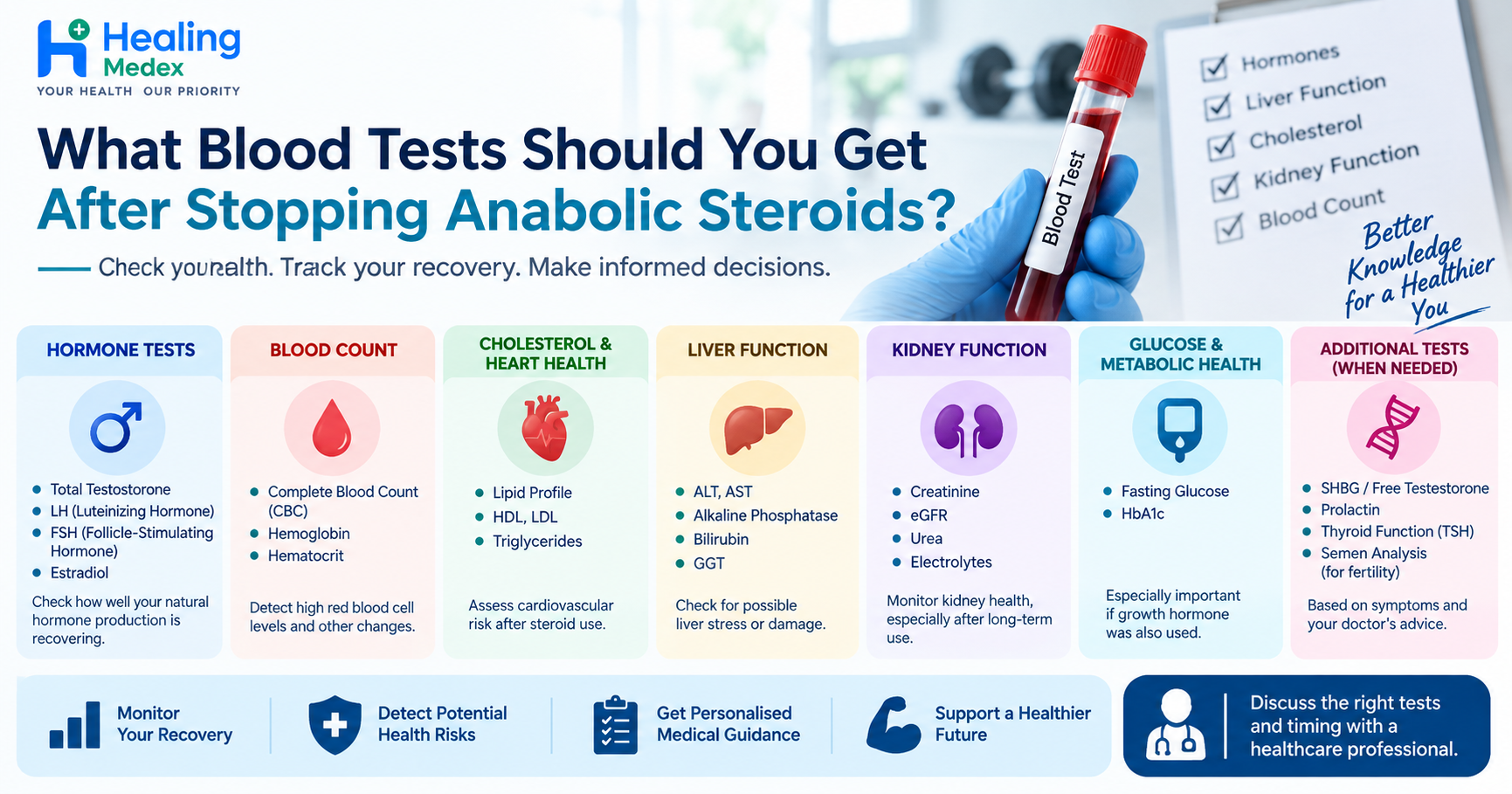
A healthcare professional may consider several tests depending on symptoms, examination findings and the person's steroid history.
The European Academy of Andrology guideline for gynecomastia evaluation lists potential investigations including:
Total testosterone
Estradiol (E2)
SHBG
LH
FSH
Prolactin
TSH
hCG
AFP when clinically appropriate
Liver function tests
Kidney function tests
The exact tests required will vary between individuals.
Estradiol Testing Matters
Testing estradiol is particularly useful when breast symptoms or gynecomastia are present.
Estradiol measurement in men can be technically challenging because concentrations are much lower than in women. The EAA guideline notes that LC-MS/MS-based estradiol measurement is generally more accurate than standard immunoassays when available.
The result should also be interpreted alongside testosterone and other hormone measurements rather than in isolation.
How Is High Estrogen After Steroid Use Treated?
Treatment depends on the actual cause.
There is no universal medication or "post-cycle" treatment that is appropriate for every person.
1. Address the Steroid Exposure
When gynecomastia or hormonal imbalance is related to anabolic steroid use, discontinuing the causative substance is an important part of management.
Guidelines recommend addressing underlying causes and discontinuing substances associated with gynecomastia when medically appropriate.
Men using prescribed testosterone or another medically indicated hormone treatment should speak with their prescriber rather than changing the dose themselves.
2. Allow the Hormonal Axis Time to Recover
Natural testosterone production may recover after anabolic steroids are discontinued, but the timeline varies considerably.
A clinical review found that in many men who had used AAS for one year or less, LH and FSH recovered within approximately 3–6 months, with testosterone often recovering toward baseline within about six months. Recovery may take substantially longer after prolonged or high-dose use.
There is therefore no fixed number of weeks in which "high estrogen" should disappear.
3. Treat Confirmed Testosterone Deficiency Appropriately
Persistent symptoms combined with repeatedly low testosterone may require an evaluation for steroid-induced hypogonadism.
Treatment should be based on laboratory findings, symptoms, fertility goals and the duration and type of prior steroid exposure.
Testosterone therapy should not simply be started because someone feels low after a cycle; professional guidelines recommend testosterone treatment only when testosterone deficiency has been properly established.
4. Treatment of Gynecomastia
Recent, painful gynecomastia may sometimes be treated medically by a specialist.
Drugs that block estrogen receptors, such as tamoxifen, have been studied for gynecomastia, while aromatase inhibitors such as anastrozole reduce estrogen production.
However, these medicines are not appropriate for routine unsupervised use, and treatments used for gynecomastia may be off-label depending on the country. Mayo Clinic notes that medications such as tamoxifen, raloxifene and aromatase inhibitors may be considered in certain cases but are not specifically FDA-approved for gynecomastia treatment.
The European Academy of Andrology does not recommend routine use of SERMs or aromatase inhibitors for gynecomastia in general.
Treatment therefore needs to be individualized.
5. Surgery for Persistent Gynecomastia
Gynecomastia that has been present for a long period may become increasingly fibrotic and less likely to disappear even when the underlying hormonal problem is corrected.
For persistent or significant gynecomastia, surgical removal of glandular tissue may be considered.
Should You Take an Aromatase Inhibitor?
Not automatically.
Some steroid users take drugs such as anastrozole, letrozole or exemestane because they assume breast tenderness, water retention or sexual symptoms mean estrogen is too high.
This approach carries risks.
Estradiol is important for men's bone health and sexual function. Excessive suppression of estradiol may contribute to reduced bone mineral density, increased body fat and decreased libido or sexual function.
For that reason:
Do not attempt to drive estrogen as low as possible.
The safer approach is to determine whether estradiol is genuinely elevated and investigate why before attempting hormonal treatment.
When Should You See a Doctor?
Medical assessment is particularly important if you develop:
New or rapidly enlarging breast tissue
Significant breast pain
A hard breast lump
Enlargement mainly on one side
Nipple discharge, especially bloody discharge
Dimpling or other skin changes
A testicular lump or swelling
Persistent erectile dysfunction
Severe loss of libido
Persistent symptoms of low testosterone
Fertility problems after steroid use
A firm breast lump, nipple discharge or suspicious skin changes require prompt evaluation because male breast cancer, although uncommon, can sometimes present with similar findings.
Can High Estrogen Return to Normal After Steroids?
In many cases, hormone balance improves after anabolic steroids are discontinued and the hypothalamic-pituitary-testicular axis recovers.
However, recovery varies.
Factors that can influence recovery include:
Duration of steroid use
Dose
Number of compounds used
Type of anabolic steroid
Previous cycles
Age
Body composition
Baseline testosterone production
Other drugs or hormones used during the cycle
Underlying endocrine or testicular conditions
Long-term AAS users may experience suppressed testosterone for much longer than short-term users.
Frequently Asked Questions
1.Can high estrogen cause gynecomastia after steroids?
Yes. Increased estrogen production or an increased estrogen-to-androgen effect can stimulate glandular breast tissue and contribute to gynecomastia. Aromatizable androgens such as testosterone are particularly relevant.
2.Does every man using testosterone get high estrogen?
No.
Estradiol responses vary considerably between individuals. The dose, body composition, aromatase activity and other medications or hormones being used can all influence estrogen levels.
3.Can high estrogen cause erectile dysfunction?
Hormonal imbalance may contribute to changes in sexual function, but erectile dysfunction is not a specific sign of high estrogen.
After anabolic steroid use, low testosterone and suppression of the reproductive hormone axis are important alternative explanations.
4.Should estrogen be completely blocked after steroids?
No.
Men need estradiol for normal physiology. Excessive estrogen suppression can negatively affect bone health and sexual function.
5.How do you know whether estrogen is really high?
Blood testing is the most useful way to determine whether estradiol is elevated. Results should be interpreted alongside testosterone, LH, FSH, SHBG and other tests when clinically appropriate.
How long does hormonal recovery take after steroids?
There is no universal recovery period. Many men with shorter AAS exposure recover gonadotropins and testosterone over several months, while prolonged high-dose users may experience suppression lasting much longer.
The Bottom Line
High estrogen or an abnormal estrogen-to-androgen balance can occur during or after anabolic steroid use, particularly with aromatizable compounds such as testosterone.
The most recognizable estrogen-related problem is gynecomastia, which may begin with breast or nipple tenderness and progress to palpable glandular tissue.
However, symptoms such as low libido, erectile problems, changes in mood or body composition are not reliable evidence that estrogen is high. After stopping steroids, suppressed testosterone may be equally or more important.
Rather than self-treating with aromatase inhibitors or other hormone-modifying drugs, men experiencing post-steroid symptoms should consider appropriate hormone testing and medical evaluation. Correct treatment depends on whether the underlying problem is elevated estradiol, low testosterone, persistent suppression of LH and FSH, gynecomastia or another medical condition.