After steroids are stopped, the hypothalamic-pituitary-testicular (HPT) axis needs time to restart normal signaling and testosterone production. For some men, this happens within a few months. For others — particularly after prolonged or repeated steroid use — recovery may take much longer.
Research suggests that testosterone levels may recover within approximately 3–6 months in many men after stopping anabolic steroids, particularly following shorter periods of use. However, recovery is highly individual, and prolonged high-dose steroid use can lead to low testosterone lasting a year or longer.
This article explains what happens to testosterone after stopping steroids, the typical recovery timeline, factors that can slow recovery, and when medical evaluation may be necessary.
Why Do Steroids Lower Natural Testosterone?
The body normally controls testosterone through the hypothalamic-pituitary-testicular axis.
The hypothalamus signals the pituitary gland, which releases:
Luteinizing hormone (LH)
Follicle-stimulating hormone (FSH)
LH stimulates the testicles to produce testosterone, while FSH plays an important role in sperm production.
When anabolic steroids introduce large amounts of external androgens into the body, the brain detects that androgen levels are already high. It therefore reduces the signals responsible for natural testosterone production.
As a result:
Anabolic steroids → increased external androgens → reduced LH and FSH → reduced natural testosterone production
During heavy steroid use, LH and FSH can become extremely low or even undetectable.
Once steroids are stopped, these hormonal signals must gradually recover.
How Long Does Testosterone Take to Recover After Steroids?
There is no single recovery time that applies to everyone.
A useful general timeline is:
First Few Weeks After Stopping
During the first several weeks, steroid hormones may still remain in the body, especially after long-acting injectable steroids.
At the same time, natural testosterone production may remain suppressed.
Some people experience symptoms such as:
Fatigue
Reduced motivation
Low libido
Erectile difficulties
Mood changes
Reduced training performance
Loss of strength
Difficulty maintaining muscle mass
The Endocrine Society notes that withdrawal after prolonged high-dose AAS use can involve markedly suppressed endogenous testosterone together with sexual dysfunction, fatigue and depressed mood.
Around 1–3 Months
The pituitary gland may begin producing more LH and FSH, allowing the testicles to resume testosterone production.
The prospective HAARLEM study, which followed 100 male amateur athletes, found that testosterone concentrations had normalized within approximately 3 months after stopping androgen use in most participants.
However, individual responses varied considerably.
Around 3–6 Months
For many people who have not used anabolic steroids for prolonged periods, substantial hormonal recovery may occur during this period.
A 2023 review of anabolic steroid-induced hypogonadism concluded that near-complete testosterone recovery over several months is likely, while LH and FSH recovery is generally expected within approximately 3–6 months.
An earlier clinical review similarly reported that many men who had used AAS for less than one year recovered normal hypothalamic-pituitary-testicular function within several months after stopping.
Around 6–12 Months
People with heavier or repeated steroid exposure may require considerably longer.
Some may have testosterone within the laboratory reference range but still have levels lower than their previous baseline.
The recovery process can therefore involve more than simply obtaining one “normal” testosterone test.
One Year or Longer
Long-term or repeated high-dose AAS use increases concern for prolonged testosterone suppression.
Clinical reports have documented men experiencing symptoms of hypogonadism and low testosterone for years after discontinuing prolonged high-dose anabolic steroid use.
Therefore, someone who has used steroids repeatedly for several years should not assume that their recovery timeline will be the same as someone completing a single short cycle.
What Factors Affect Testosterone Recovery?
Recovery differs substantially between individuals. Several factors may influence the process.
1. Duration of Steroid Use
Generally, longer exposure to anabolic steroids produces more prolonged suppression of the reproductive hormone system.
Using steroids continuously or repeatedly for years may therefore produce a different recovery pattern from relatively short exposure.
2. Previous Steroid Cycles
Repeated cycles can increase cumulative exposure.
The HAARLEM researchers found that men who remained testosterone-deficient later in follow-up tended to have substantial previous androgen exposure.
3. Steroid Dose
Anabolic steroid users may take androgen doses far above normal physiological testosterone production.
Higher exposure may produce greater suppression, although research has not identified a simple dose-based formula that accurately predicts how long an individual will need to recover.
4. Type of Steroid
Different anabolic steroids have different durations of action.
Long-acting injectable esters may remain biologically active for considerably longer than shorter-acting preparations, which can delay the point at which natural hormonal signaling begins recovering.
5. Stacking Multiple Steroids
Using several anabolic agents simultaneously can make hormonal suppression and subsequent recovery more complicated.
6. Age
Hormonal recovery may differ with age and underlying testicular function.
A younger person with healthy testosterone production before steroid use may experience a different recovery pattern from someone who already had borderline-low testosterone.
7. Testosterone Levels Before Steroid Use
Pre-existing low testosterone can be important.
Some individuals who develop persistently low testosterone after steroid cessation may have already had impaired gonadal function before their latest cycle.
8. Overall Health
Sleep, obesity, metabolic health, medications, alcohol use, chronic illness and other medical conditions can also influence testosterone levels.
Testosterone Recovery Is Not the Same as Fertility Recovery
This distinction is extremely important.
Blood testosterone can recover much earlier than sperm production.
In the HAARLEM study, testosterone normalized within approximately three months in most participants, but recovery of sperm production took much longer — roughly one year on average.
Another clinical review reported that recovery of sperm concentration after externally administered testosterone may take approximately 12–16 months, although recovery after real-world anabolic steroid use can vary substantially.
Therefore:
Normal testosterone does not automatically mean normal fertility.
Men concerned about fertility may require semen testing in addition to hormone testing.
What Are the Signs Testosterone Has Not Recovered?
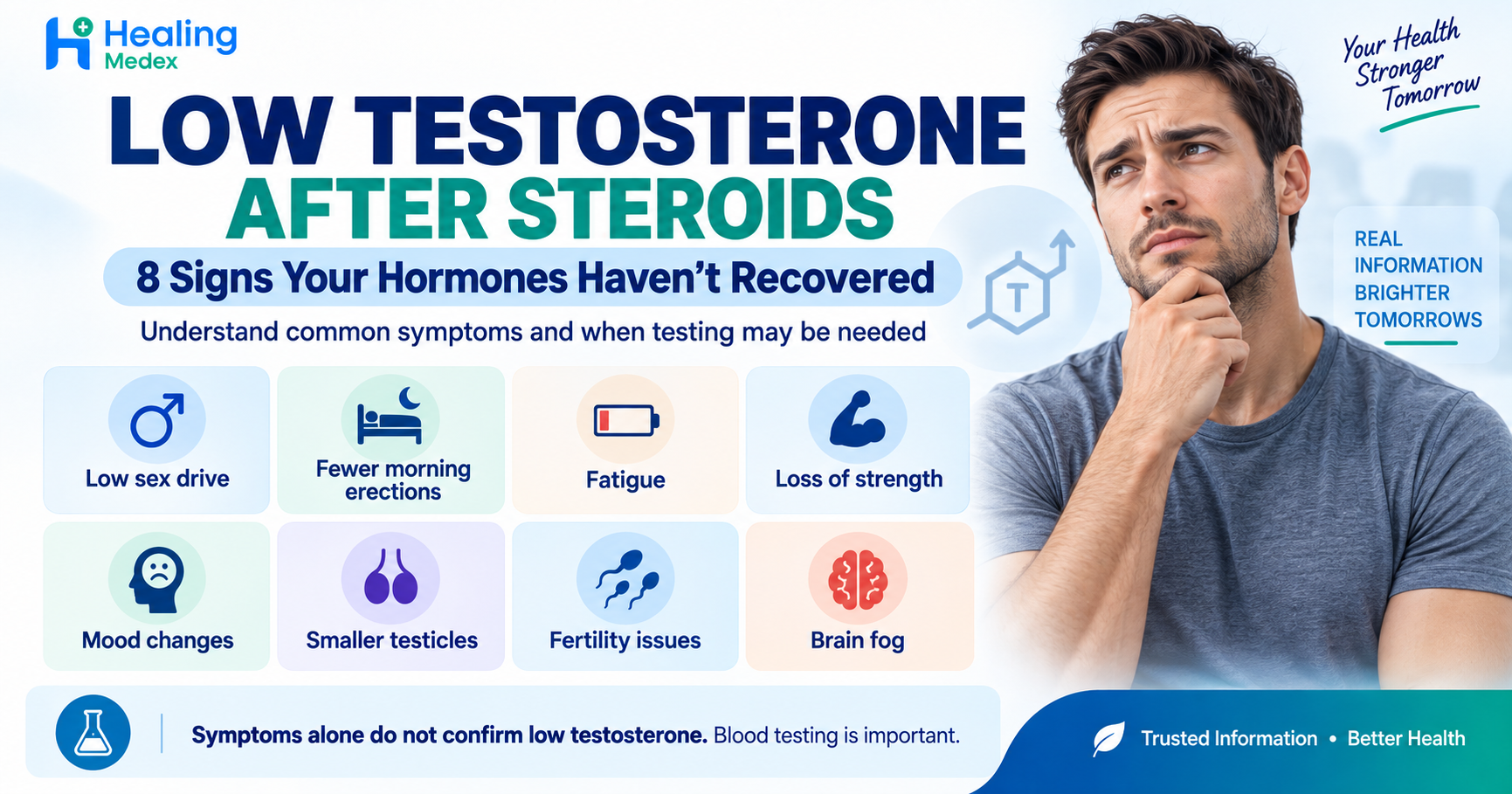
Persistent low testosterone after stopping steroids can cause symptoms such as:
Low sexual desire
Erectile difficulties
Fatigue
Reduced energy
Poor motivation
Depressed mood
Difficulty concentrating
Reduced muscle mass
Loss of strength
Increased body fat
Reduced testicular size
Fertility problems
Symptoms alone cannot confirm low testosterone because many other medical conditions can cause similar problems.
Blood testing is needed for proper evaluation.
What Blood Tests May Be Checked?
A healthcare professional evaluating testosterone suppression after steroid use may consider tests such as:
Total testosterone
LH
FSH
SHBG
Estradiol
Prolactin
Depending on the individual’s symptoms and history, additional testing may also be appropriate.
When fertility is a concern, semen analysis can provide important information that testosterone testing alone cannot.
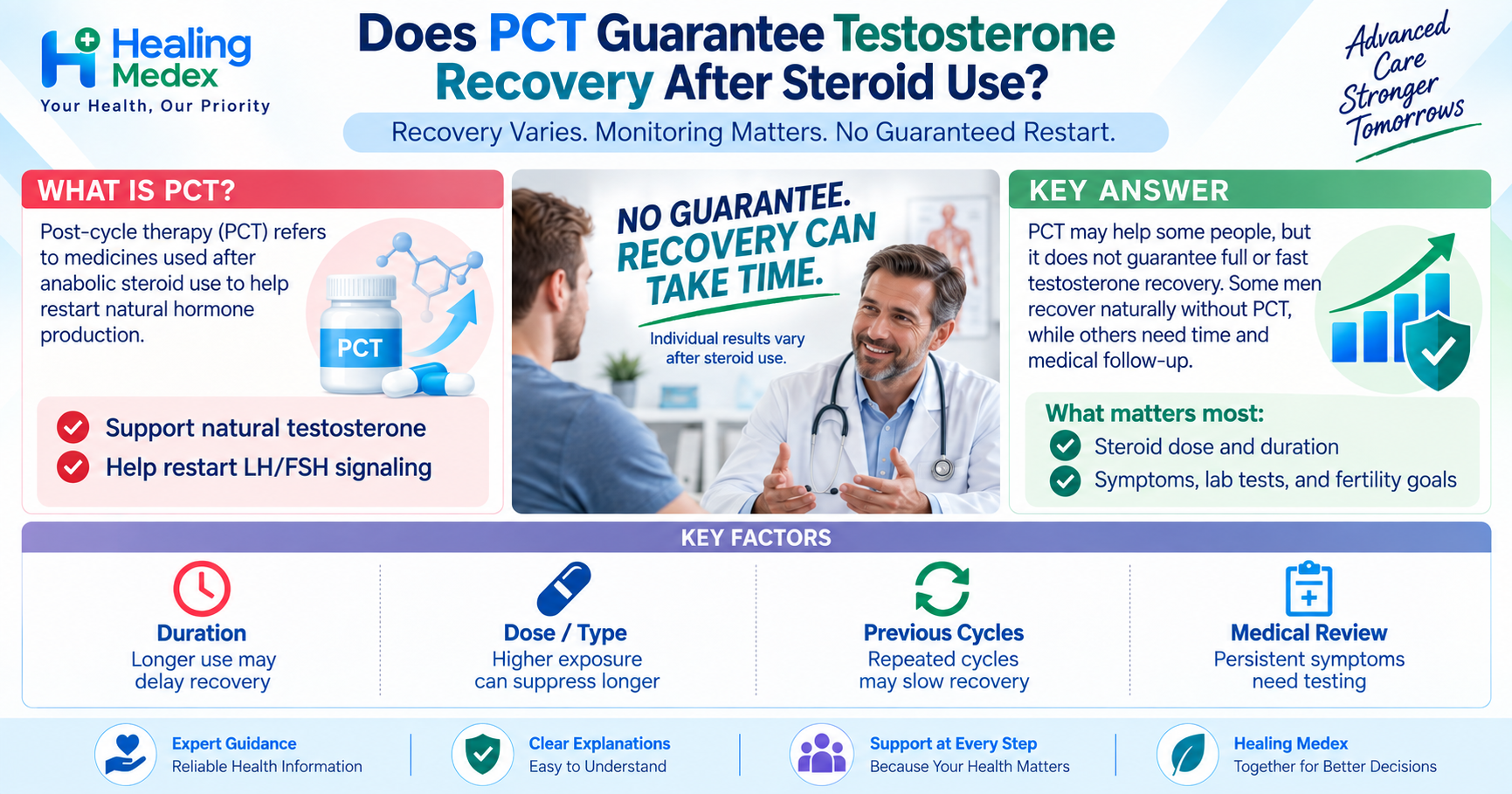
Does PCT Guarantee Faster Testosterone Recovery?
No.
Post-cycle therapy, commonly called PCT, often involves medications intended to stimulate hormonal recovery after anabolic steroid use.
However, there is no guarantee that PCT will restore testosterone production, and evidence supporting many PCT practices used outside medical supervision remains limited.
The HAARLEM study did not demonstrate a clear beneficial effect of commonly used PCT medications on recovery and emphasized that natural recovery itself can make uncontrolled observations difficult to interpret.
Medications sometimes used in this setting can also have risks and should not be self-prescribed.
Anyone experiencing persistent symptoms after stopping steroids should discuss them openly with a qualified healthcare professional rather than relying on an unverified PCT protocol.
Can Testosterone Stay Low Permanently After Steroids?
Most individuals recover at least substantially after stopping anabolic steroids, but persistent suppression is possible.
The Endocrine Society notes that after prolonged use of highly supraphysiological doses, recovery of the HPT axis can take months or even years and may occasionally remain incomplete.
Similarly, long-term AAS users have been reported to experience hypogonadal symptoms and low testosterone years after cessation.
Persistent low testosterone does not automatically mean permanent damage. It does mean that proper medical investigation is warranted.
When Should You See a Doctor?
Consider medical evaluation if significant symptoms continue after stopping anabolic steroids, particularly symptoms such as:
Persistent low libido
Severe fatigue
Persistent depressed mood
Significant loss of strength or muscle
Testicular changes
Difficulty conceiving
Persistently low testosterone on blood testing
Tell the healthcare professional about previous steroid use, including approximately how long the substances were used.
Accurate information helps clinicians interpret hormone results correctly.
Severe depression, suicidal thoughts or other major psychological symptoms during steroid withdrawal require urgent medical attention.
How Long Does Full Recovery Take?
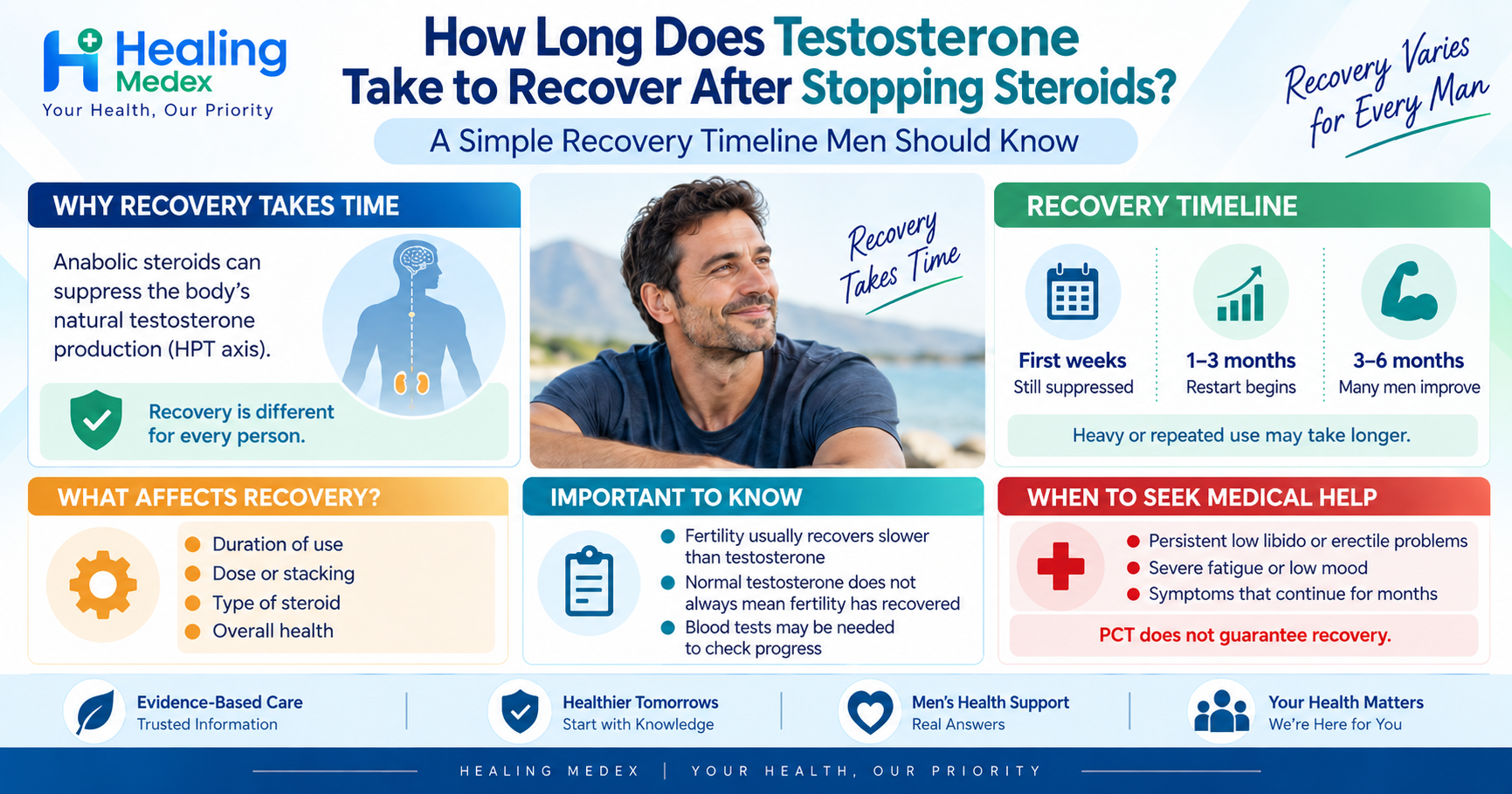
A simplified estimate based on current evidence is:
First weeks: Natural testosterone may remain strongly suppressed.
1–3 months: Hormonal signaling and testosterone commonly begin recovering.
3–6 months: Many shorter-term users experience substantial or near-complete testosterone recovery.
6–12 months: Recovery may continue, particularly after heavier or repeated steroid exposure.
More than 12 months: Some long-term or high-dose users can remain hormonally suppressed and may require medical evaluation.
Fertility: Sperm production usually takes longer to recover than blood testosterone and can require roughly a year or more.
These ranges are estimates rather than deadlines. Individual recovery can be substantially faster or slower.
Can You Speed Up Natural Testosterone Recovery?
There is no universally proven method that guarantees rapid recovery after anabolic steroid use.
Basic health measures may support normal hormonal function, including adequate sleep, appropriate nutrition, maintaining a healthy body weight, avoiding excessive alcohol, managing stress and allowing adequate recovery from training.
However, these measures cannot necessarily reverse significant steroid-induced hypogonadism.
Self-medicating with additional hormones or PCT drugs may complicate the hormonal picture and can carry additional risks.
Medical testing is preferable when symptoms persist.
The Bottom Line
How long testosterone takes to recover after stopping steroids varies considerably from person to person.
In many individuals — particularly those with normal hormonal function before shorter-term anabolic steroid exposure — testosterone may recover substantially within 3–6 months.
Recovery can take 6–12 months or longer after repeated, prolonged or high-dose anabolic steroid use, and a minority of individuals can experience persistent testosterone suppression for years.
It is also important to remember that testosterone recovery and fertility recovery are not the same thing. Testosterone can normalize months before sperm production fully recovers.
If symptoms such as low libido, erectile dysfunction, fatigue, depressed mood or fertility problems persist after stopping anabolic steroids, appropriate hormone testing and medical evaluation can help determine whether the HPT axis is recovering normally.
Frequently Asked Questions
1.How long does low testosterone last after steroids?
For many shorter-term users, testosterone substantially recovers within several months. Longer or repeated steroid use may cause suppression lasting a year or longer.
2.Can testosterone recover naturally after steroids?
Yes. Spontaneous recovery occurs in many people after anabolic steroids are discontinued, although the recovery time varies considerably.
3.Is three months enough for testosterone to recover?
It can be for some individuals. In the HAARLEM study, most participants had normalized testosterone concentrations approximately three months after stopping androgen use. That result should not be interpreted as a guarantee for every steroid user.
4.Can steroids permanently lower testosterone?
Persistent or incomplete recovery has been reported, particularly following prolonged exposure to high doses of anabolic steroids.
5.Does normal testosterone mean fertility has recovered?
No. Sperm production generally recovers more slowly than testosterone and may take approximately a year or longer.
6.Should I use PCT after stopping steroids?
PCT should not be assumed to guarantee recovery. Evidence for commonly used unsupervised PCT strategies remains limited, and medications used for PCT can have risks. Discuss persistent hormonal symptoms with a qualified healthcare professional.