Anabolic steroids can dramatically increase androgen levels while they are being used. However, these externally supplied hormones can also suppress the body's own testosterone production.
After anabolic steroids are stopped, natural testosterone production does not necessarily return to normal immediately. Some men experience a period of anabolic steroid-induced hypogonadism (ASIH), during which testosterone and the hormones controlling testosterone production remain suppressed.
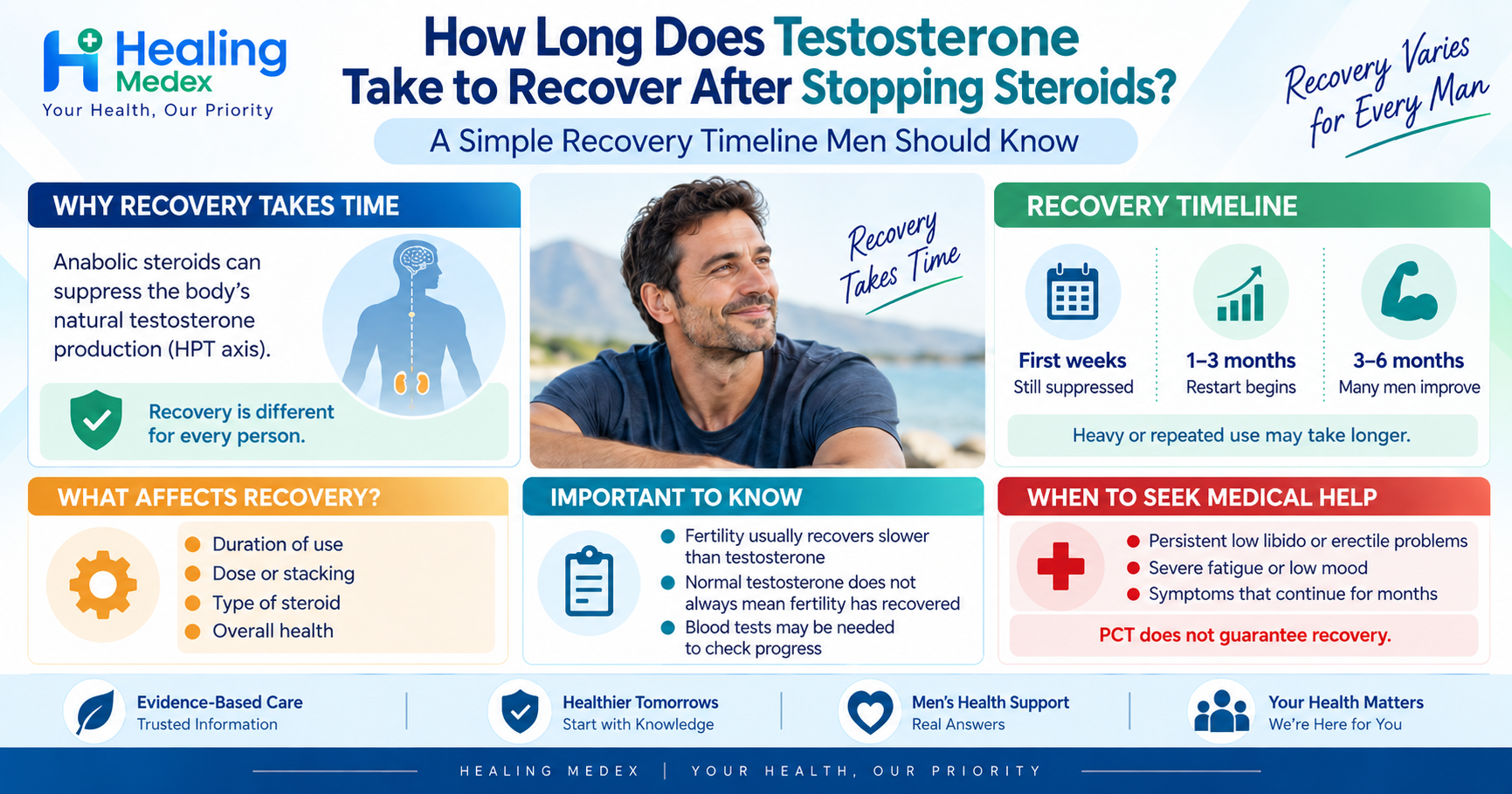
Recovery varies considerably from one person to another. Research suggests that testosterone may recover over several months in many former anabolic steroid users, while fertility, testicular size, and other aspects of reproductive function can take much longer. Some people may experience persistent symptoms.
So how can you tell if your hormonal system may still be recovering?
Important: Symptoms alone cannot diagnose low testosterone. A diagnosis requires appropriate symptoms together with consistently low testosterone levels confirmed through medical testing.
Why Can Testosterone Drop After Stopping Steroids?
Natural testosterone production is controlled by the hypothalamic-pituitary-testicular (HPT) axis.
Normally:
The hypothalamus signals the pituitary gland.
The pituitary releases luteinizing hormone (LH) and follicle-stimulating hormone (FSH).
LH stimulates the testes to produce testosterone.
FSH helps support sperm production.
When someone takes anabolic-androgenic steroids, the body detects unusually high levels of androgen.
In response, the brain reduces its hormonal signals to the testes. LH and FSH can fall, causing the testes to decrease their own testosterone and sperm production.
After steroids are discontinued, the HPT axis needs time to restart.
This recovery may occur gradually rather than immediately.
1. Your Sex Drive Is Much Lower Than Before
A noticeable reduction in libido is one of the more recognizable symptoms associated with testosterone deficiency.
Someone who had a strong sex drive while using anabolic steroids may experience a significant decline after stopping.
This does not necessarily mean testosterone is permanently damaged. During steroid withdrawal, circulating androgen levels can fall significantly while natural hormone production is still recovering.
You may notice:
Less interest in sexual activity
Fewer sexual thoughts
Reduced sexual responsiveness
A significant change from your normal libido
Research on anabolic steroid-induced hypogonadism suggests that libido generally improves during recovery, although the timeframe varies considerably between individuals.
2. Morning Erections Have Decreased or Erectile Dysfunction Has Appeared
Testosterone isn't the only factor involved in erections, but adequate androgen levels are important for normal sexual function.
After stopping steroids, some men notice fewer spontaneous or morning erections.
Others may experience erectile dysfunction (ED), such as difficulty:
Getting an erection
Maintaining an erection
Achieving the same erection quality they previously experienced
Low testosterone is only one possible explanation for erectile dysfunction. Stress, anxiety, cardiovascular disease, medication, sleep problems, diabetes, and other hormonal problems can also contribute.
Former anabolic steroid users experiencing persistent ED should therefore avoid assuming testosterone is automatically responsible.
Both testosterone levels and other potential causes should be medically evaluated.
3. Persistent Fatigue and Low Energy
Feeling unusually tired after stopping anabolic steroids can be another sign that the hormonal system has not yet stabilized.
You might notice that normal activities require more effort or that your overall energy is significantly lower than it was previously.
Possible symptoms include:
Low daytime energy
Feeling physically drained
Reduced motivation to exercise
Needing more recovery between workouts
Difficulty maintaining normal activity levels
Fatigue is not specific to testosterone deficiency.
Poor sleep, overtraining, calorie restriction, depression, thyroid disorders, anemia, infections, and many other health conditions can cause similar symptoms.
However, persistent fatigue combined with several other symptoms of testosterone deficiency warrants medical investigation.
4. You Are Losing Muscle or Strength
After stopping steroids, some reduction in performance or muscle fullness should not automatically be interpreted as abnormal hormone recovery.
However, persistently low testosterone may make maintaining muscle mass and strength more difficult.
Possible changes include:
Reduced strength
Loss of muscle mass
Slower workout recovery
Reduced training performance
Increased body fat
There is an important distinction here.
Not maintaining the extreme muscularity achieved while using supraphysiological doses of anabolic steroids does not necessarily mean someone has abnormally low testosterone.
The goal of hormonal recovery is a return toward normal physiological function—not maintaining steroid-enhanced hormone levels.
5. Your Mood Has Changed Significantly
The hormonal changes that occur after stopping anabolic steroids can also affect psychological well-being.
Some former steroid users report:
Low mood
Irritability
Anxiety
Reduced motivation
Loss of interest in activities
Emotional instability
Research examining anabolic steroid withdrawal has found depressive and anxious symptoms during the recovery period, although the severity and duration differ considerably between individuals.
Mental-health symptoms should never automatically be attributed to testosterone.
Severe depression, thoughts of self-harm, suicidal thoughts, extreme anxiety, or major behavioral changes require urgent professional medical or mental-health support.
6. Your Testicles Still Appear Smaller
One effect of anabolic steroid use can be testicular atrophy, or shrinkage of the testes.
This happens because externally supplied androgens suppress LH and FSH signals from the pituitary gland. With less hormonal stimulation, the testes reduce their own testosterone production.
After stopping steroids, testicular size may gradually improve as the hormonal axis recovers.
However, recovery can be slow.
A review of anabolic steroid-induced hypogonadism found that testicular volume may recover over months to years, and recovery may not always be completely predictable.
Persistent testicular changes should be discussed with a healthcare professional rather than being used as the sole measure of testosterone recovery.
7. Fertility Has Not Returned to Normal
Anabolic steroids do not just suppress testosterone.
They can also significantly suppress sperm production.
When LH and FSH levels are reduced, intratesticular testosterone falls and spermatogenesis can decline dramatically. Some anabolic steroid users may temporarily develop very low sperm counts or even have no measurable sperm in semen.
Fertility recovery often takes longer than improvements in blood testosterone.
Research suggests sperm production can recover after anabolic steroid cessation, but recovery may take months or sometimes years, depending on factors such as previous steroid exposure and individual biology.
Men who are trying to conceive should consider medical evaluation and semen analysis rather than assuming that a normal testosterone blood test automatically means fertility has returned.
Exogenous testosterone can itself suppress sperm production, so men who are planning fertility should discuss treatment options carefully with a qualified clinician. The Endocrine Society advises against starting testosterone therapy in men planning fertility in the near term.
8. Poor Concentration, Motivation or Mental Clarity Continues
Some people describe a period of reduced mental sharpness after stopping anabolic steroids.
Possible complaints include:
Difficulty concentrating
Poor motivation
Reduced productivity
Problems focusing
Feeling mentally sluggish
Sleep disturbances
These symptoms are sometimes described as "brain fog."
They are not specific to testosterone deficiency and can occur for many reasons, including poor sleep, anxiety, depression, nutritional problems, stress, medication use, and other medical conditions.
However, when these symptoms occur alongside low libido, sexual dysfunction, fatigue, testicular changes, and other features of androgen deficiency, hormone testing may be appropriate.
How Long Does Testosterone Take to Recover After Steroids?
There is no universal recovery timeline.
A 2023 review of anabolic steroid-induced hypogonadism found that recovery varies considerably depending on the person's age, degree of androgen exposure, duration and pattern of steroid use, and other individual factors.
Available research suggests that in many cases:
LH and FSH: may recover over approximately several weeks to months, with recovery commonly occurring within roughly 3–6 months in available studies.
Testosterone: often improves over several months, although recovery can be incomplete or take substantially longer in some individuals.
Libido and sexual function: may gradually improve over several months.
Sperm production: may take several months to years to completely recover.
Testicular size: may take months or years to recover.
These are general observations rather than deadlines.
Men who used high doses, multiple anabolic steroids, or steroids for long periods may experience a different recovery pattern.
Some research has documented persistent low testosterone and symptoms for considerably longer periods after prolonged anabolic steroid exposure.
How Do You Know Whether Testosterone Has Actually Recovered?
Symptoms can provide clues, but blood testing is necessary.
The Endocrine Society recommends diagnosing male hypogonadism only when a man has compatible symptoms or signs together with consistently and unequivocally low testosterone levels.
Testing may include:
Total Testosterone
Testosterone normally varies throughout the day.
Current Endocrine Society guidance emphasizes confirming suspected hypogonadism using repeated early-morning testosterone measurements, rather than relying on a single test.
LH
Luteinizing hormone helps determine whether the pituitary gland is appropriately signaling the testes to produce testosterone.
FSH
FSH plays an important role in sperm production and provides additional information about pituitary and testicular function.
The Endocrine Society recommends measuring LH and FSH in men with confirmed hypogonadism to help distinguish primary testicular dysfunction from secondary hypothalamic or pituitary causes.
Depending on symptoms and clinical history, a healthcare professional may also consider additional tests such as free testosterone, prolactin, estradiol, thyroid function, blood counts, or semen analysis.
Can You Tell Testosterone Recovery From Symptoms Alone?
No.
Symptoms such as fatigue, low libido, erectile dysfunction, low mood, and poor concentration occur in numerous medical conditions.
Similarly, feeling physically strong or having a normal sex drive does not guarantee that testosterone, LH, FSH, and sperm production have completely recovered.
Laboratory testing combined with medical assessment provides a much more reliable picture.
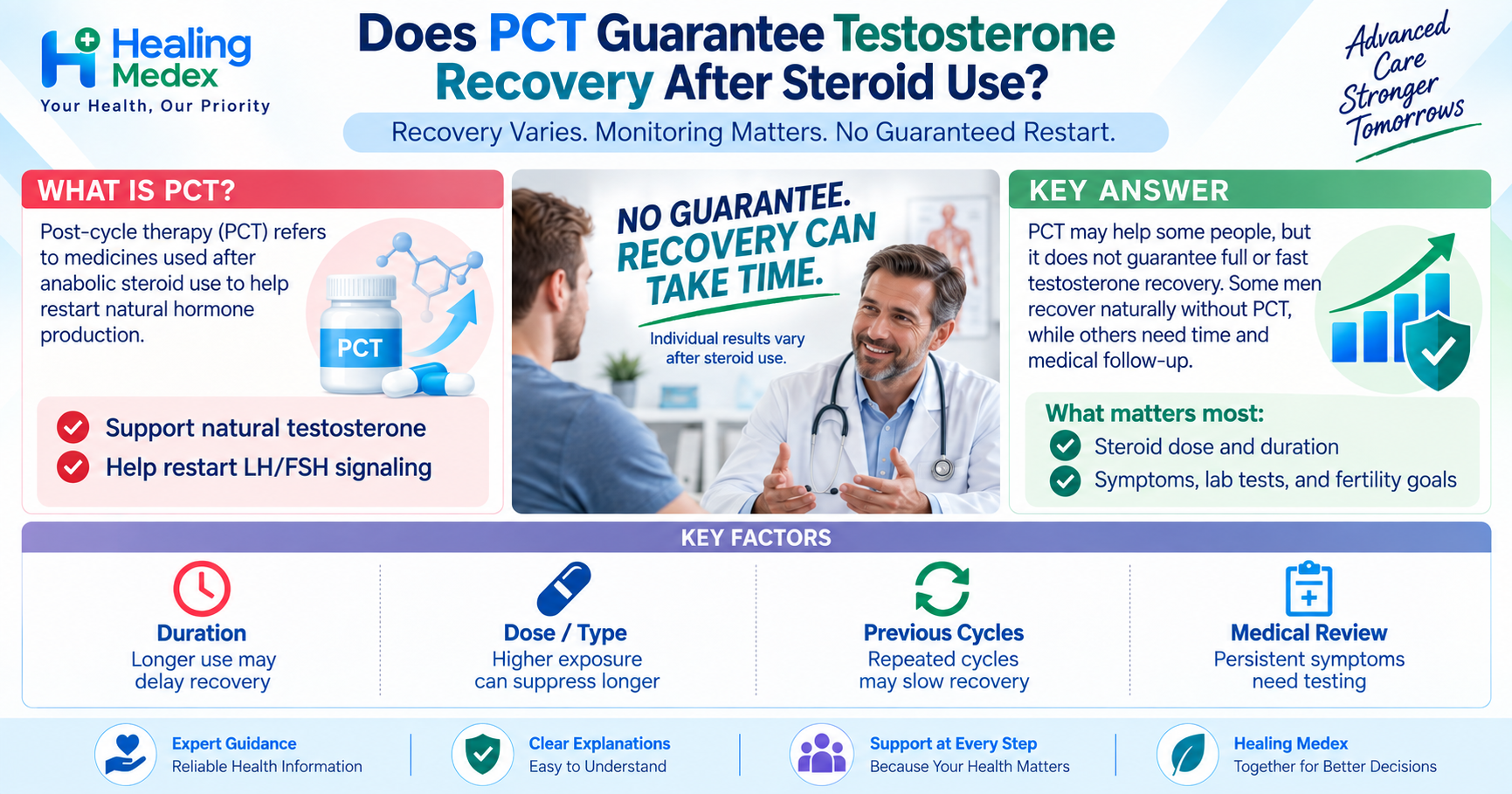
Should You Use PCT to Restore Testosterone?
Some anabolic steroid users use medications commonly referred to as post-cycle therapy (PCT) in an attempt to restart natural testosterone production.
However, recovery after anabolic steroid use is highly variable, and there is no self-directed PCT protocol that can guarantee recovery.
Medications sometimes used in this context can have adverse effects and may not be appropriate for everyone.
Persistent symptoms after steroid cessation should therefore be evaluated by an endocrinologist, urologist, or another clinician experienced in male reproductive hormones instead of relying on unsupervised hormone manipulation.
When Should You See a Doctor?
Consider seeking medical evaluation if symptoms remain persistent or significantly affect your health after stopping anabolic steroids.
Medical attention is particularly important if you experience:
Persistent loss of libido
Significant fatigue
Reduced testicular size
Difficulty conceiving
Persistent low mood or anxiety
Significant loss of strength or muscle
Symptoms lasting longer than expected
Previous prolonged or high-dose anabolic steroid use
Tell your healthcare professional about any anabolic steroids, testosterone, hormones, supplements, or PCT medications you have used.
Providing accurate information can help them interpret hormone tests correctly and recommend appropriate follow-up.
The Bottom Line
Anabolic steroid use can suppress the body's natural testosterone-producing system. After steroids are stopped, the hypothalamic-pituitary-testicular axis may require weeks or months to restart, while fertility and testicular recovery may take substantially longer.
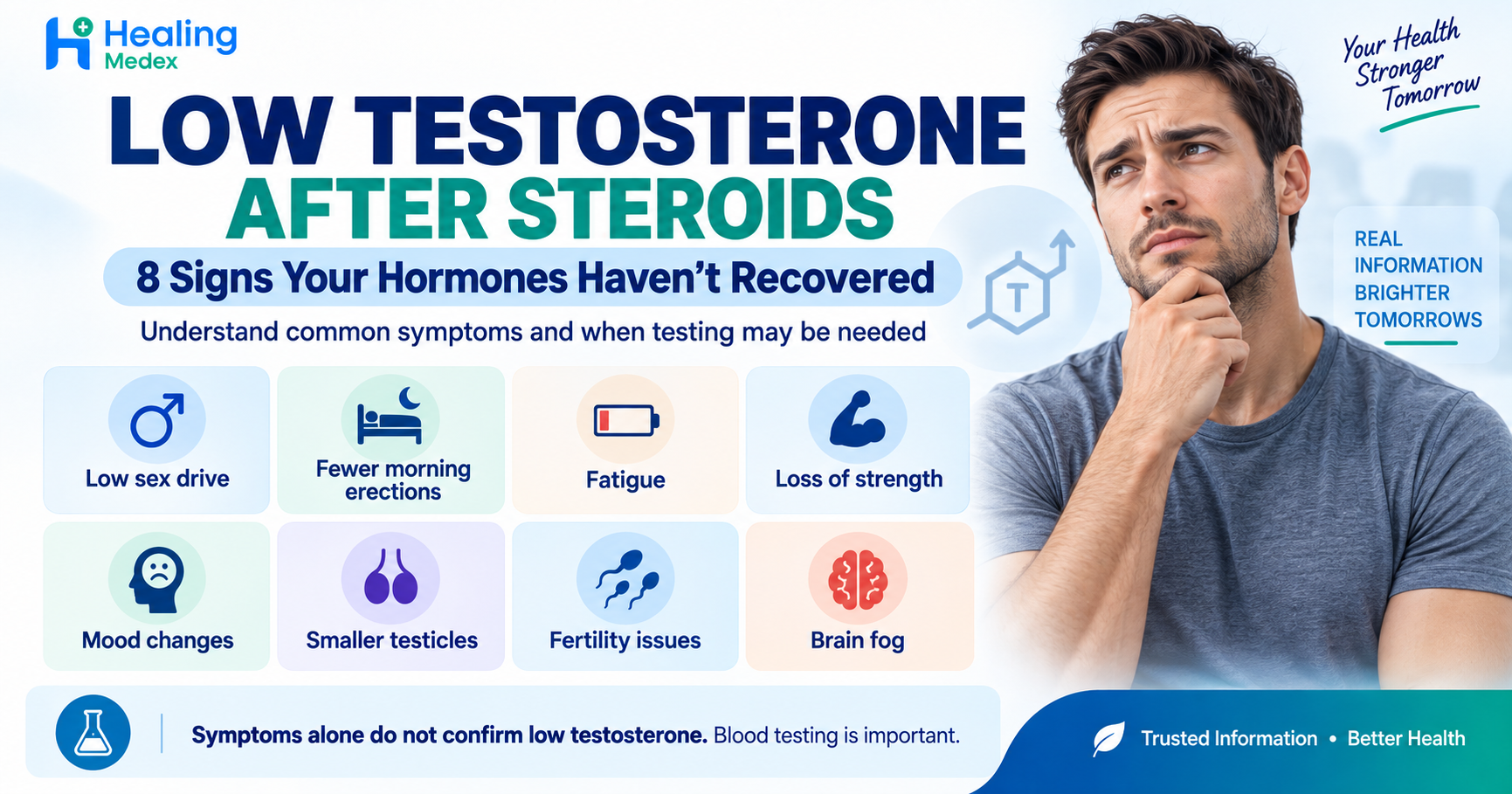
Eight possible signs that hormones may not have fully recovered include:
Reduced sex drive
Fewer morning erections or erectile dysfunction
Persistent fatigue and low energy
Loss of muscle or strength
Depression, anxiety, irritability, or low motivation
Persistent reduction in testicular size
Reduced fertility or sperm production
Difficulty concentrating or persistent mental sluggishness
However, none of these symptoms proves that testosterone remains low.
The most reliable way to determine whether your hormones have recovered is through an appropriate medical evaluation with repeated morning testosterone testing and, when indicated, LH, FSH and other laboratory tests.
Hormonal recovery after anabolic steroid use is highly individual. Avoid comparing your recovery timeline with someone else's or attempting to correct persistent symptoms with additional steroids or unsupervised hormonal medications.
If symptoms continue, proper testing and medical supervision can identify whether testosterone is still suppressed and whether another condition could be responsible.