Anabolic-androgenic steroids (AAS) are synthetic substances related to testosterone. Although some anabolic steroids have legitimate medical uses, nonmedical use for muscle growth, strength, or appearance can expose the body to significant health risks.
What Are Oral Anabolic Steroids?
Many oral AAS are chemically modified at the 17-alpha position. This modification allows the steroid to survive metabolism sufficiently to remain active when taken by mouth.
Examples of 17-alpha-alkylated anabolic steroids include compounds such as oxandrolone, stanozolol and oxymetholone.
The same structural modification that improves oral activity is also associated with greater potential for liver toxicity. LiverTox notes that 17-alpha-alkylated androgenic steroids have been associated with cholestatic liver injury, peliosis hepatis and liver tumors.
What Are Injectable Anabolic Steroids?
Injectable anabolic steroids are generally administered into muscle. Many are testosterone or testosterone-like compounds modified with an ester that allows the hormone to remain active for longer periods.
Because these drugs do not need the same chemical modification required by many oral steroids, some injectable preparations are less strongly associated with cholestatic liver injury than 17-alpha-alkylated oral steroids.
However, this does not mean injectable steroids are harmless.
Injectable AAS can still affect blood pressure, cholesterol, heart structure, natural testosterone production, fertility, mood and other body systems. Nonsterile injections also introduce additional risks such as abscesses and transmission of blood-borne infections.
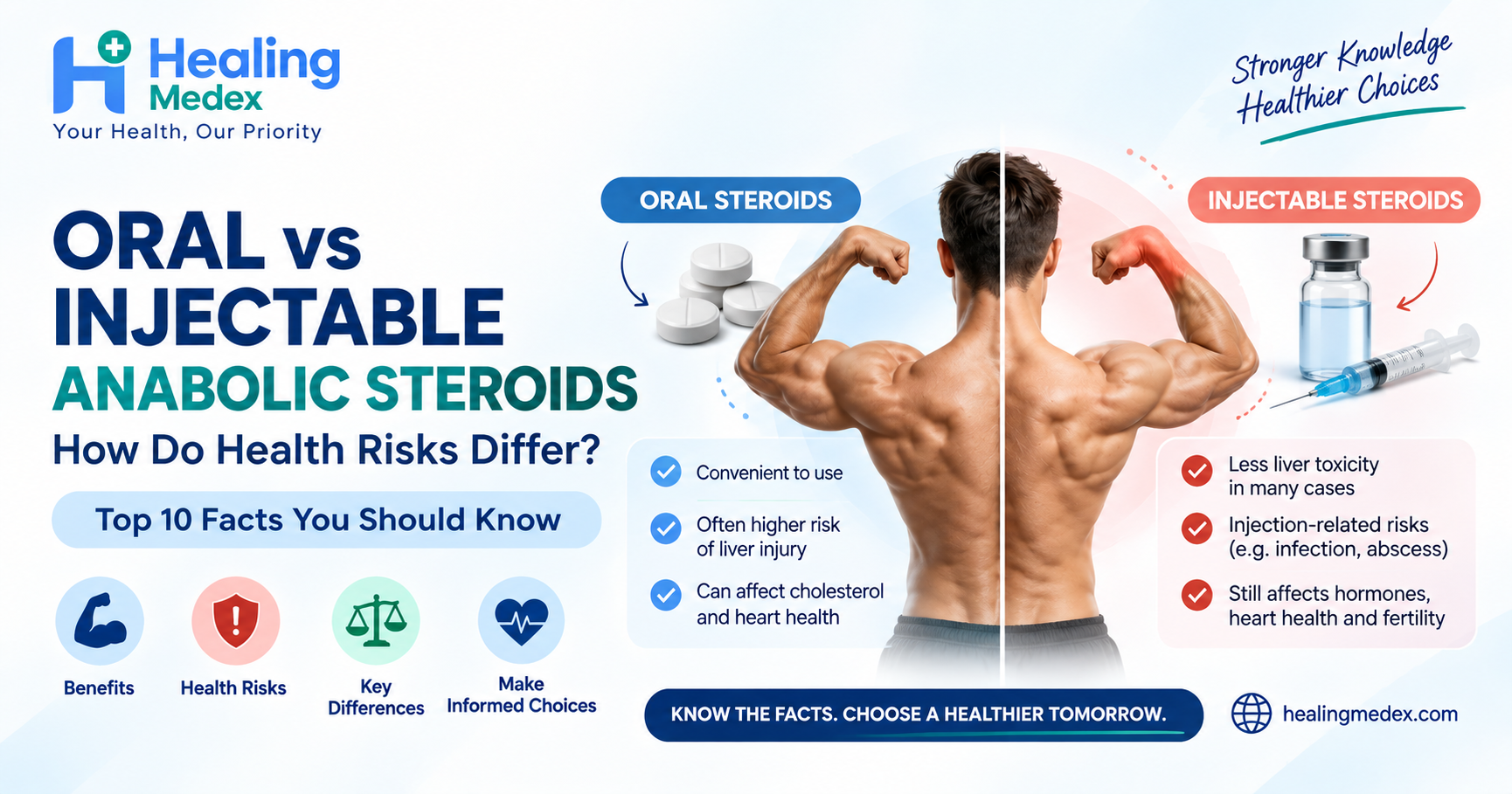
Oral vs Injectable Steroids: Key Health-Risk Differences
Health concern | ||
|---|---|---|
Liver injury | Often greater concern with 17-alpha-alkylated oral AAS | Generally less cholestatic liver toxicity with many esterified preparations, but liver effects can still occur |
Cardiovascular risk | Significant | Significant |
Cholesterol changes | Can be substantial | Can also occur |
Blood-pressure effects | Possible | Possible |
Natural testosterone suppression | Significant | Significant |
Fertility problems | Possible | Possible |
Injection-site infection | Not applicable | Additional risk |
Abscess formation | Not applicable | Possible |
Blood-borne infection from shared equipment | Not applicable | Possible |
Counterfeit/contaminated products | Possible | Possible |
The route of administration changes some risks, but many of the most serious consequences of AAS exposure occur with both oral and injectable drugs.
1. Oral Steroids Usually Carry Greater Liver Concerns
The most important difference between many oral and injectable anabolic steroids involves the liver.
Many orally active anabolic steroids undergo 17-alpha alkylation so they are not rapidly broken down during first-pass metabolism.
This modification can increase hepatotoxicity.
Potential liver complications associated particularly with 17-alpha-alkylated anabolic steroids include cholestasis, jaundice, abnormal liver enzymes, peliosis hepatis and, with prolonged exposure, hepatic tumors.
However, it would be inaccurate to say that every oral steroid causes liver damage or that injectable steroids cannot affect the liver. Risk varies considerably among individual drugs.
2. Both Routes Can Damage Cardiovascular Health
One of the most important misconceptions surrounding injectable steroids is that avoiding oral steroids eliminates the major health dangers.
It does not.
AAS misuse has been associated with high blood pressure, harmful cholesterol changes, blood clots, heart attacks, stroke and structural changes to the heart.
A recent systematic review and meta-analysis of athletes and physically active individuals found AAS exposure associated with higher blood pressure and adverse changes in LDL cholesterol, reinforcing concerns about cardiovascular health.
These risks are related largely to the hormonal effects and exposure to anabolic steroids themselves rather than simply whether a drug is swallowed or injected.
3. Oral Steroids May Have Particularly Strong Effects on Cholesterol
Some oral AAS can substantially worsen the blood-lipid profile, including reductions in protective HDL cholesterol and increases in LDL cholesterol.
Injectable anabolic steroids can also produce unfavorable lipid changes, so switching routes should not be viewed as a reliable method of avoiding cardiovascular risk.
A person's overall risk will depend on the compound, exposure level, duration, genetics, smoking, blood pressure and existing cardiovascular health.
4. Injectable Steroids Carry Injection-Specific Risks
Injectable anabolic steroids introduce risks that oral steroids do not have.
Poor injection technique or contaminated products can cause inflammation, tissue damage and bacterial infections. NIDA specifically identifies injection-site abscesses among possible complications associated with anabolic steroid misuse.
Reusing or sharing needles or syringes can also transmit infections such as hepatitis B, hepatitis C and HIV. The CDC warns that unsafe injection practices can transmit viral, bacterial and fungal infections.
5. Both Can Suppress Natural Testosterone
The body regulates testosterone through the hypothalamic-pituitary-gonadal axis.
When high levels of external androgens are introduced, the brain can reduce signaling to the testes. As a result, natural testosterone production may fall substantially.
Potential consequences include reduced testicular size, reduced sperm production, low testosterone after stopping AAS, reduced libido, erectile dysfunction and impaired fertility.
Clinical reviews identify suppression of the gonadal axis and infertility among established adverse consequences of AAS exposure.
This occurs with both oral and injectable steroids.
6. Fertility Can Be Affected Regardless of Route
Men sometimes assume injectable testosterone or other injectable AAS will preserve fertility because the substance resembles naturally occurring testosterone.
In reality, external androgens can suppress the hormones LH and FSH that stimulate the testes.
Sperm production can consequently fall dramatically, sometimes resulting in severe oligospermia or temporary azoospermia.
Recovery after discontinuation varies considerably between individuals, and sperm production may recover more slowly than circulating hormone levels.
7. Both Routes Can Increase Red Blood Cell Production
Androgens can stimulate production of red blood cells.
Excessive increases may lead to erythrocytosis, meaning an abnormally high concentration of red blood cells.
Clinical literature identifies erythrocytosis as an established complication of AAS exposure, while high-dose use has also been associated with thrombotic and cardiovascular complications.
This risk is not exclusive to one route of administration.
8. Psychological Effects Are Possible With Either Route
Anabolic steroid exposure may also affect mood and behavior.
Reported problems associated with misuse include irritability, mood changes, aggression, mania and, in some individuals, depression or anxiety—particularly during withdrawal after prolonged use.
Again, these effects are related more to androgen exposure, dose and individual susceptibility than simply whether the steroid is oral or injectable.
9. Counterfeit Products Add Another Layer of Risk
Nonmedical anabolic steroids are frequently obtained outside regulated medical supply chains.
Products sold through unofficial sources may contain the wrong concentration, another substance entirely, contaminants or nonsterile ingredients.
A 2024 clinical review noted that black-market androgen products may be counterfeit, adding uncertainty to the health risks associated with nonmedical AAS use.
This concern applies to both tablets and injectable products.
10. Dose and Duration Matter More Than Route Alone
It is tempting to ask which option is the "safer steroid."
In reality, route is only one part of the risk profile.
Health effects are influenced by the exact substance used, total androgen exposure, duration of use, use of multiple anabolic steroids or other substances, pre-existing medical conditions and individual susceptibility.
A comprehensive review of AAS adverse effects notes that these drugs can contribute to hypertension, abnormal cholesterol, liver injury, testosterone deficiency, erectile dysfunction and cardiomyopathy.
Using multiple substances together may make it even harder to predict which complications will occur.
Are Injectable Steroids Safer for the Liver?
In certain respects, many injectable esterified testosterone preparations have less potential for cholestatic liver injury than 17-alpha-alkylated oral anabolic steroids.
LiverTox reports that 17-alpha-alkylated steroids are particularly associated with liver injury, whereas cholestasis has been reported much less commonly with 17-beta-esterified testosterone preparations.
That difference should not be interpreted as meaning injectable steroids are generally safe.
Liver toxicity represents only one part of the overall health risk of anabolic steroids.
Which Is More Dangerous: Oral or Injectable Steroids?
There is no simple answer.
If the question is specifically about certain types of liver injury, many 17-alpha-alkylated oral anabolic steroids generally present the greater concern.
If the question concerns infection or injection-site complications, injectable steroids introduce risks that oral preparations do not.
For cardiovascular disease, testosterone suppression, infertility, sexual problems and psychological effects, both routes can carry significant risks.
Therefore, comparing oral and injectable steroids solely by route can create a false sense of safety.
When Should Someone Seek Medical Advice?
Anyone currently using or who has recently stopped anabolic steroids should consider speaking openly with a healthcare professional, particularly if symptoms such as jaundice, severe abdominal pain, chest pain, shortness of breath, severe headache, leg swelling, persistent high blood pressure, reduced libido, erectile dysfunction, testicular shrinkage, infertility concerns, severe mood changes or injection-site redness and swelling develop.
Chest pain, difficulty breathing, symptoms of stroke or severe infection require urgent medical attention.
The Bottom Line
Oral and injectable anabolic steroids have overlapping but somewhat different risk profiles.
Many oral 17-alpha-alkylated steroids carry a greater risk of liver injury, while injectable steroids add risks related to infections, abscesses and unsafe needle practices.
However, both forms can disrupt natural testosterone production, impair fertility, alter cholesterol and blood pressure and contribute to potentially serious cardiovascular and psychological complications.
The most important message is that injectable anabolic steroids should not be considered a safe alternative to oral steroids. Route matters, but the specific drug, exposure level, duration and combination of substances often play an even larger role in determining overall health risk.