Oxymetholone, commonly known by the former brand name Anadrol, is a potent oral anabolic-androgenic steroid (AAS). Although it has had legitimate medical uses for certain types of anemia, oxymetholone is also used non-medically for physique and performance purposes.
One important consequence of anabolic steroid exposure is often misunderstood: having more androgen activity in the body does not mean the testes continue producing normal amounts of testosterone.
In fact, oxymetholone and other anabolic-androgenic steroids can suppress the hormonal signals responsible for natural testosterone production. This may affect testosterone levels, testicular function, sperm production, fertility, sexual health and mood. Suppression can become particularly noticeable after the steroid is discontinued.
This article explains what happens to the body's natural hormones, why testosterone can fall, and what recovery may look like after anabolic steroid exposure.
What Is Oxymetholone?
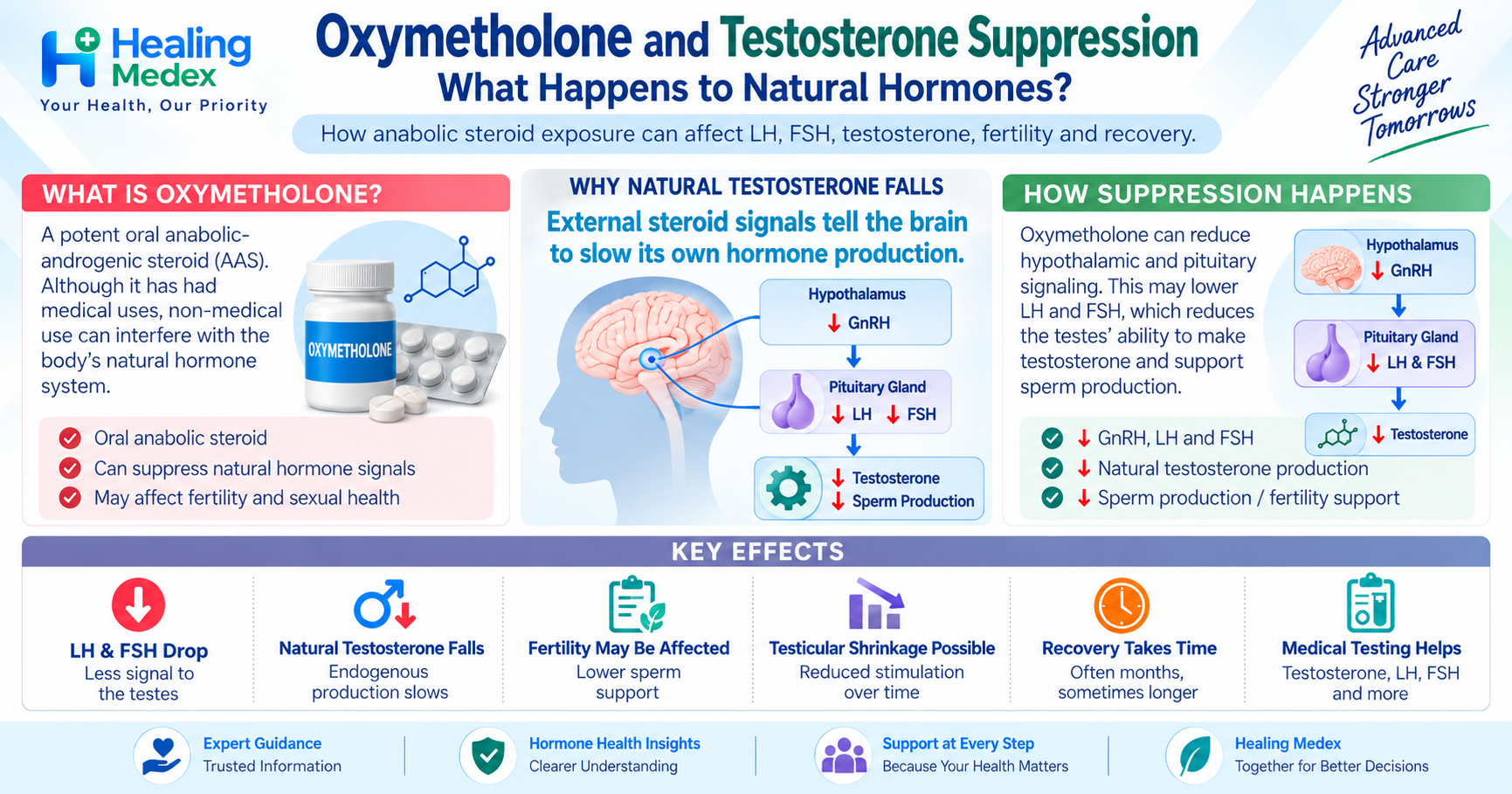
Oxymetholone is an oral anabolic-androgenic steroid. It was developed medically to stimulate red blood cell production in certain forms of anemia.
Like other anabolic steroids, however, oxymetholone produces androgenic signals that can interfere with the body's normal reproductive hormone system.
Product information for oxymetholone has identified effects such as inhibition of testicular function, testicular atrophy and oligospermia, meaning a reduced sperm concentration.
The hormonal consequences are especially relevant when oxymetholone is used outside medical supervision.
How Does the Body Normally Produce Testosterone?
Natural testosterone production depends on a communication system called the hypothalamic-pituitary-gonadal axis, or HPG axis.
It works through three main steps:
1. The hypothalamus releases GnRH
The brain releases gonadotropin-releasing hormone (GnRH).
2. The pituitary gland releases LH and FSH
GnRH signals the pituitary gland to release two important hormones:
LH — luteinizing hormone
FSH — follicle-stimulating hormone
3. The testes respond
LH stimulates Leydig cells in the testes to produce testosterone.
FSH, together with high concentrations of testosterone within the testes, helps support sperm production.
When this system is functioning normally, the brain constantly adjusts hormone production through a feedback mechanism.
How Does Oxymetholone Suppress Natural Testosterone?
Introducing powerful external anabolic-androgenic steroids changes this feedback system.
The brain detects strong androgenic signals and essentially receives the message that sufficient androgen is already present.
As a result, the hypothalamus and pituitary can reduce their hormonal signaling.
This may lead to:
Reduced GnRH → reduced LH and FSH → reduced testicular testosterone production.
Suppression of GnRH, LH and FSH is a central mechanism behind anabolic steroid-induced hypogonadism (ASIH).
Therefore, someone can have substantial androgenic activity from an anabolic steroid while simultaneously producing very little testosterone naturally.
What Happens to LH?
LH is one of the most important hormones controlling testosterone production.
When anabolic steroid exposure suppresses pituitary activity, LH can fall significantly.
Lower LH means that the Leydig cells inside the testes receive less stimulation to manufacture testosterone.
If suppression continues, endogenous—or naturally produced—testosterone can become very low.
This explains why testosterone production may not immediately return to normal when anabolic steroids are discontinued.
The brain-pituitary-testicular signaling pathway first has to reactivate.
What Happens to FSH?
FSH is especially important for reproductive function.
Together with testosterone inside the testes, FSH supports the Sertoli cells responsible for sperm development.
Suppression of FSH may therefore contribute to:
Reduced sperm production
Low sperm concentration
Poorer fertility
Severe oligospermia
In some cases, azoospermia, where no sperm are detected in the ejaculate
Exogenous testosterone and anabolic-androgenic steroids are well documented to suppress the HPG axis and reduce intratesticular testosterone, which can substantially interfere with spermatogenesis.
Can the Testes Become Smaller?
Yes.
When LH and FSH remain suppressed, the testes receive less stimulation.
Some anabolic steroid users may develop reduced testicular volume or testicular atrophy.
Oxymetholone product information has specifically listed inhibition of testicular function and testicular atrophy among potential adverse effects.
Testicular size can improve after normal hormone signaling returns, but recovery varies considerably between individuals.
What Happens While Oxymetholone Is Being Used?
Natural testosterone may already be suppressed while the person is taking an anabolic steroid.
However, symptoms of low natural testosterone may not always be immediately obvious because the anabolic steroid itself continues producing androgenic effects.
This creates an important distinction:
Androgen activity in the body is not the same thing as normal natural testosterone production.
A person may therefore feel relatively normal—or notice strong anabolic effects—while LH, FSH and endogenous testosterone production are substantially suppressed.
The consequences can become much more noticeable when the external androgen is removed.
What Can Happen After Oxymetholone Is Stopped?
After anabolic steroid exposure stops, external androgen activity declines.
Natural testosterone production, however, may not immediately restart at the same speed.
This temporary mismatch can result in a period of post-anabolic-steroid hypogonadism.
Possible symptoms include:
Low energy
Fatigue
Reduced libido
Erectile difficulties
Depressed or low mood
Anxiety or irritability
Reduced motivation
Loss of strength
Reduced muscle mass
Increased body fat
Testicular shrinkage
Reduced sperm production
Fertility problems
Withdrawal from chronic AAS use has also been associated with anxiety and depressive symptoms in some individuals.
Persistent or severe mood symptoms should be assessed by a healthcare professional.
Does Oxymetholone Affect Fertility?
It can.
Normal sperm production requires active signaling from LH and FSH and sufficiently high testosterone concentrations inside the testes.
Anabolic steroids can suppress all three.
Oxymetholone labeling has specifically identified oligospermia as a potential adverse effect, and broader AAS research shows that suppression can sometimes progress to extremely low sperm counts or azoospermia.
This is especially important for men who are planning to have children.
Normal testosterone in a blood test also does not necessarily guarantee normal sperm production. A semen analysis provides more direct information about fertility.
How Long Does Natural Testosterone Take to Recover?
There is no single recovery timeline.
Recovery can depend on factors such as:
Duration of anabolic steroid exposure
Total lifetime exposure
Types of steroids used
Whether several anabolic steroids were combined
Age
Baseline hormone function
Previous steroid exposure
Individual biology
Other medical conditions
A 2023 scoping review found that recovery from anabolic steroid-induced hypogonadism is highly variable. Across the available evidence, gonadotropins such as LH and FSH often recovered over approximately 3–6 months, while testosterone recovery generally occurred over months but could remain incomplete in some individuals.
Other clinical reviews have reported that many men with shorter periods of AAS exposure recover normal HPG-axis function within a year after stopping, although this should not be considered a guarantee for an individual patient.
Can Testosterone Suppression Last Longer Than Expected?
Yes.
Most people should not assume that natural hormone production will automatically return to normal within a particular number of weeks.
Research has documented individuals with prolonged symptoms and biochemical evidence of hypogonadism after anabolic steroid cessation. The likelihood and duration appear to vary substantially.
Longer or heavier exposure may be associated with slower recovery, although predicting recovery for one individual remains difficult.
Persistent symptoms should therefore be investigated rather than automatically attributed to a temporary hormonal "crash."
How Long Does Fertility Take to Recover?
Sperm production can recover more slowly than blood testosterone.
Research into anabolic steroid-induced hypogonadism suggests that spermatogenesis may require months and sometimes considerably longer to recover. Testicular volume may also recover over months to years in some individuals.
Men concerned about future fertility should discuss their history openly with an endocrinologist, urologist or reproductive specialist.
Which Blood Tests May Be Helpful?
Someone with symptoms following anabolic steroid use should receive an individualized medical assessment rather than relying only on how they feel.
Depending on the situation, a clinician may consider tests such as:
Morning total testosterone
Repeat morning testosterone when appropriate
LH
FSH
SHBG
Calculated or measured free testosterone when indicated
Estradiol
Prolactin
Complete blood count/hematocrit
Liver function tests
Lipid profile
A semen analysis may also be appropriate when fertility is a concern.
Clinical guidelines recommend diagnosing testosterone deficiency based on both compatible symptoms and consistently low testosterone concentrations, usually confirmed with repeat morning measurements.
Because oxymetholone can affect organs beyond the reproductive system, hormone testing should not necessarily be the only medical evaluation performed.
Oxymetholone Can Affect More Than Testosterone
Although testosterone suppression is important, it is not the only potential concern associated with oxymetholone.
As an orally active anabolic steroid, oxymetholone has also been associated with significant adverse effects involving areas such as:
Liver function
Cholesterol levels
Fluid retention
Blood pressure
Red blood cell levels
Fertility
Oxymetholone and other 17-alpha-alkylated oral anabolic steroids have particular concerns regarding liver toxicity.
For this reason, focusing only on whether testosterone eventually recovers may overlook other important health risks.
What About “PCT” After Oxymetholone?
Some non-medical anabolic steroid users attempt to restart natural testosterone production with so-called post-cycle therapy (PCT).
However, self-directed PCT is not a standardized medical treatment.
Drugs sometimes used for this purpose can have their own adverse effects, interactions and contraindications, and products obtained outside regulated pharmacies may be counterfeit or contain unexpected ingredients.
Medical literature discusses several therapies that specialists may use for selected patients with persistent AAS-related hypogonadism or infertility, but the evidence base remains limited and treatment depends strongly on the individual's hormone results, fertility goals and medical history.
Anyone experiencing prolonged hormonal symptoms should therefore seek medical assessment rather than assuming a standard online PCT protocol is appropriate.
When Should You Speak to a Doctor?
Medical evaluation is particularly important when someone experiences:
Persistent low libido
Erectile dysfunction
Severe fatigue
Significant mood changes
Depression
Testicular shrinkage
Fertility problems
Persistently low testosterone
Abnormal liver tests
Jaundice
Significant swelling or fluid retention
Severe depression, suicidal thoughts, jaundice, chest pain or other serious symptoms require urgent medical attention.
Being open with the clinician about previous anabolic steroid exposure can make diagnosis considerably easier.
Key Takeaway
Oxymetholone can suppress natural testosterone production by reducing activity within the hypothalamic-pituitary-gonadal axis.
As LH and FSH decline, the testes receive less stimulation to produce testosterone and sperm. This can contribute to low endogenous testosterone, reduced testicular volume and impaired fertility.
After oxymetholone or other anabolic steroids are discontinued, natural hormone production may recover—but the timeline varies widely. Testosterone and gonadotropin recovery can take months, while fertility may take longer, and some individuals experience prolonged hypogonadism.
Anyone with persistent symptoms should consider proper medical evaluation and hormone testing rather than attempting to diagnose or treat hormone suppression based solely on symptoms.
Frequently Asked Questions
1. Does oxymetholone shut down natural testosterone?
Oxymetholone can significantly suppress the hormonal signaling responsible for natural testosterone production. The degree of suppression varies between individuals.
2.Does testosterone immediately return after stopping oxymetholone?
Not necessarily. The hypothalamus, pituitary gland and testes may need time to restore normal communication. Recovery may take months and can occasionally be prolonged.
3.Can oxymetholone reduce sperm count?
Yes. Oligospermia has been reported with oxymetholone, and suppression of LH, FSH and intratesticular testosterone from anabolic steroids can impair sperm production.
4.Can anabolic steroid-related testicular shrinkage recover?
Recovery is possible, but the timing varies. Research on AAS-induced hypogonadism suggests that testicular volume may improve gradually over months or longer.
5.Which hormones are most affected by anabolic steroids?
The major hormones involved include GnRH, LH, FSH and endogenous testosterone. Sperm production can also be affected because of reduced gonadotropin signaling and intratesticular testosterone.
6.Can testosterone suppression become permanent?
Persistent hypogonadism has been documented, although it is difficult to predict who will experience prolonged suppression. Longer and heavier AAS exposure may increase concern for delayed recovery.