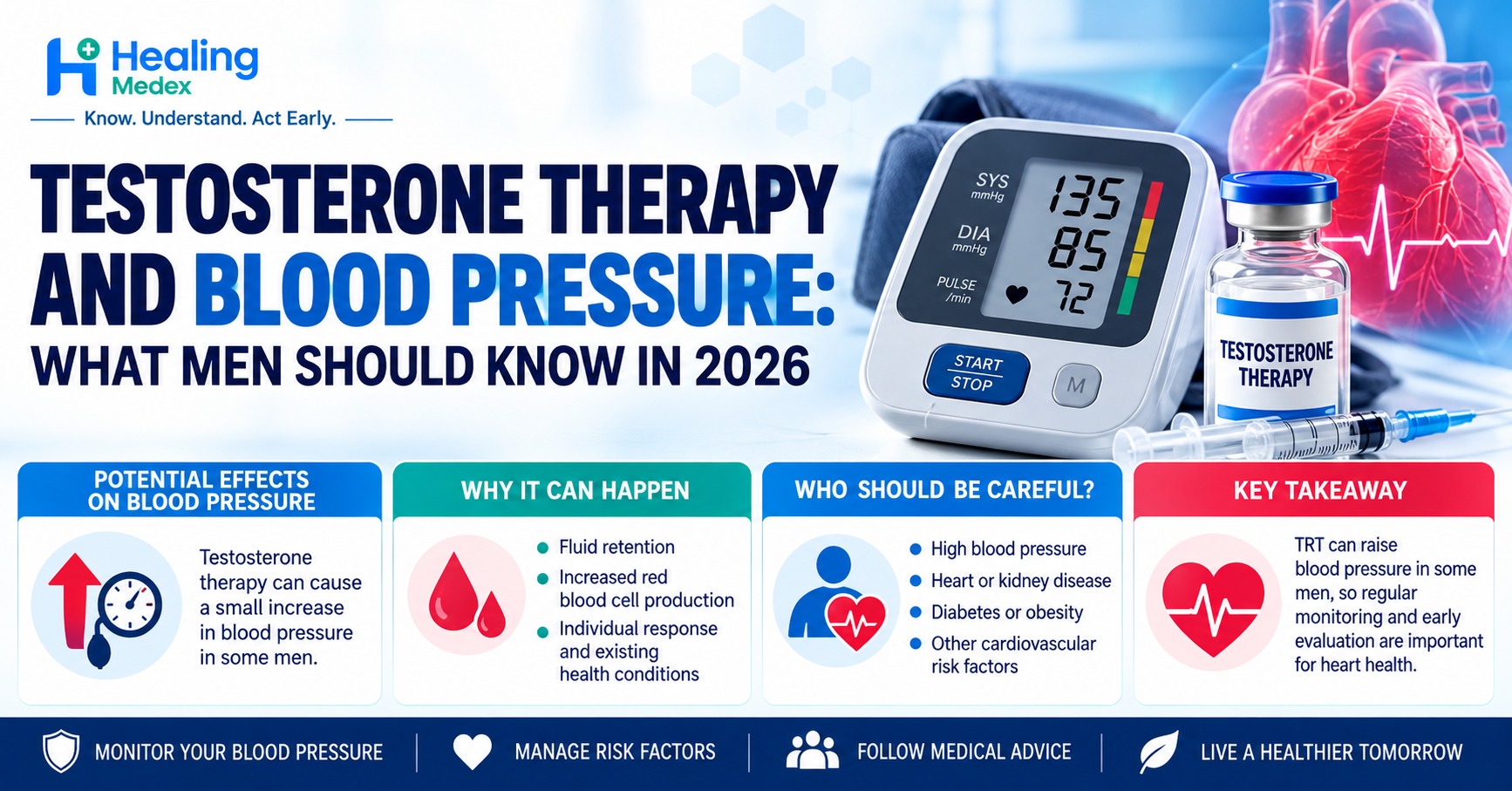
Testosterone replacement therapy (TRT) can improve symptoms in appropriately diagnosed men with testosterone deficiency, but treatment requires ongoing monitoring. One issue receiving increased attention in 2026 is blood pressure.
Current evidence indicates that testosterone therapy can cause a small increase in blood pressure in some men, although the effect varies between individuals and testosterone formulations. This is particularly important for men who already have hypertension, diabetes, kidney disease, obesity, or cardiovascular disease.
In 2025, the U.S. Food and Drug Administration (FDA) required testosterone products to carry updated warnings about increased blood pressure after ambulatory blood-pressure monitoring studies found increases across testosterone products.
So, does testosterone therapy cause high blood pressure? And what should men using TRT monitor in 2026?
Does Testosterone Therapy Raise Blood Pressure?
It can.
Testosterone does not cause the same blood-pressure response in every person, but clinical studies show that some testosterone formulations can produce measurable increases in systolic blood pressure.
For example, a study involving men with hypogonadism using testosterone gel for 16 weeks found an average increase of approximately 1.9 mm Hg in 24-hour systolic blood pressure. The researchers also noted that the effect appeared more pronounced in some men who already had hypertension or diabetes.
Another ambulatory blood-pressure study of transdermal testosterone reported an average increase of approximately 3.5 mm Hg in 24-hour systolic blood pressure among the evaluable participants.
These averages may appear small, but even modest increases can matter when someone already has cardiovascular risk factors.
What Changed With Testosterone Safety Warnings?
A significant change occurred in February 2025.
Following review of postmarketing ambulatory blood-pressure studies, the FDA concluded that the completed studies confirmed an increase in blood pressure associated with testosterone products and required updated labeling across the drug class.
Current testosterone prescribing information may therefore include warnings advising clinicians to:
monitor blood pressure periodically;
consider cardiovascular risk;
pay particular attention to men who already have hypertension; and
appropriately manage blood pressure during treatment.
For example, updated prescribing information for testosterone gel states that testosterone can increase blood pressure and advises periodic BP measurement.
Why Might Testosterone Affect Blood Pressure?
Several factors could contribute.
1. Fluid and Sodium Retention
Androgens can promote fluid retention in susceptible individuals. More retained fluid can increase circulating blood volume and potentially contribute to higher blood pressure.
Fluid retention may be particularly important in people who already have heart, kidney, or liver disease.
2. Increased Red Blood Cell Production
Testosterone stimulates production of red blood cells.
As a result, TRT can increase:
hemoglobin;
hematocrit; and
overall red blood cell mass.
This is one reason hematocrit is routinely monitored during testosterone therapy. Excessive erythrocytosis can increase blood viscosity and may contribute to cardiovascular or thrombotic concerns, although blood pressure is influenced by many other factors as well.
3. Existing Cardiovascular Risk
Men beginning testosterone therapy frequently have other conditions that influence blood pressure, such as:
obesity;
sleep apnea;
kidney disease;
physical inactivity;
high sodium intake; or
pre-existing hypertension.
A rise in blood pressure during TRT therefore should not automatically be attributed to testosterone alone. The patient's complete cardiovascular health should be reviewed.
Does Testosterone Therapy Increase Heart Attack or Stroke Risk?
The answer is more nuanced than earlier warnings suggested.
The large TRAVERSE trial included more than 5,200 men aged 45–80 with confirmed hypogonadism and either established cardiovascular disease or increased cardiovascular risk.
Major cardiovascular events occurred in 7.0% of men receiving testosterone gel and 7.3% receiving placebo, meeting the trial's criteria for cardiovascular noninferiority.
Based partly on these results, the FDA removed the previous boxed-warning language concerning an increased risk of major adverse cardiovascular outcomes from testosterone product labeling in 2025. At the same time, however, the FDA added or strengthened warnings about blood-pressure increases.
These are two different issues.
The TRAVERSE results should therefore not be interpreted as meaning that blood-pressure monitoring is unnecessary.
Who Should Be Especially Careful?
Blood-pressure monitoring is important for every man receiving TRT, but it deserves particular attention in men with:
existing hypertension;
previous heart attack or stroke;
coronary artery disease;
heart failure;
kidney disease;
obesity;
obstructive sleep apnea;
high hematocrit; or
multiple cardiovascular risk factors.
Some current testosterone product labeling specifically states that treatment is not recommended in men with uncontrolled hypertension.
Individual prescribing information should always be checked because warnings and risks can vary by formulation.
What Blood Pressure Is Considered High in 2026?
According to the 2025 AHA/ACC hypertension guideline, adult blood-pressure categories are:
Blood Pressure Category | Systolic | Diastolic |
|---|---|---|
Normal | Below 120 | and below 80 |
Elevated | 120–129 | and below 80 |
Stage 1 hypertension | 130–139 | or 80–89 |
Stage 2 hypertension | 140 or higher | or 90 or higher |
The guideline generally identifies less than 130/80 mm Hg as the treatment goal for adults receiving treatment for hypertension, while individual circumstances still need to be considered.
A single elevated reading does not necessarily establish hypertension. Clinicians usually look at repeated measurements and the patient's overall medical situation.
Blood Pressure Monitoring Before Starting TRT
Before testosterone therapy begins, a healthcare professional should review cardiovascular risk and obtain an accurate baseline blood-pressure measurement.
Men should also be properly evaluated for testosterone deficiency.
The Endocrine Society emphasizes that hypogonadism should be diagnosed based on compatible symptoms together with consistently low testosterone concentrations, generally confirmed with at least two early-morning testosterone measurements rather than symptoms alone.
Baseline evaluation may include:
blood pressure;
testosterone levels;
complete blood count and hematocrit;
cardiovascular history;
current medications;
prostate assessment where appropriate;
diabetes and cholesterol risk; and
evaluation for conditions that could contribute to low testosterone.
Blood Pressure Monitoring After Starting Testosterone
Men receiving TRT should have their blood pressure checked periodically.
Monitoring becomes especially useful:
shortly after treatment begins;
after the testosterone dose is changed;
after changing testosterone formulations;
if hypertension medications are changed;
if significant weight or fluid retention develops; or
if home blood-pressure measurements start trending upward.
Home blood-pressure monitoring can provide additional information between medical visits. The 2025 hypertension guideline supports home BP monitoring as part of effective blood-pressure management.
Use a validated upper-arm cuff rather than relying solely on cuffless smartwatches or similar devices for clinical decisions.
What If Blood Pressure Goes Up During TRT?
Do not automatically stop testosterone or change the dose without speaking to the prescribing clinician.
The healthcare professional may investigate several possibilities, including:
whether the testosterone dose is appropriate;
whether testosterone levels are above the intended range;
whether hematocrit has increased excessively;
whether fluid retention is occurring;
whether another medication is raising BP;
whether sleep apnea is present or poorly controlled;
diet and sodium intake;
alcohol intake;
body weight; and
whether antihypertensive treatment needs adjustment.
Depending on the findings, treatment might involve lifestyle measures, adjustment of blood-pressure medication, modification of testosterone therapy, or switching formulations.
Can Men With High Blood Pressure Use Testosterone Therapy?
Having hypertension does not automatically mean that every man is unable to receive testosterone.
The important questions are whether testosterone therapy is medically indicated, whether the blood pressure is adequately controlled, and whether the patient can be appropriately monitored.
Men with poorly controlled hypertension require additional caution because testosterone-related increases in BP could add to their existing cardiovascular risk.
The decision should be individualized by the prescribing healthcare professional.
Ways to Protect Cardiovascular Health During TRT
Men receiving testosterone therapy can reduce overall cardiovascular risk by focusing on factors that are modifiable.
These include:
checking blood pressure regularly;
taking prescribed hypertension medication consistently;
reducing excess sodium;
maintaining a healthy body weight;
staying physically active;
managing diabetes;
controlling cholesterol;
avoiding tobacco;
limiting or avoiding excessive alcohol;
treating sleep apnea when present; and
attending scheduled TRT monitoring appointments.
Current hypertension guidelines strongly recommend weight management, a heart-healthy dietary pattern, sodium reduction and regular physical activity for preventing and managing high blood pressure.
When Does High Blood Pressure Require Urgent Care?
Very high blood pressure deserves prompt attention.
A blood pressure higher than 180/120 mm Hg is considered severe hypertension.
If a reading above this level is accompanied by symptoms such as:
chest pain;
shortness of breath;
weakness or numbness;
difficulty speaking;
sudden vision changes; or
other symptoms suggesting acute organ damage,
emergency medical assessment is required.
Testosterone Therapy and Blood Pressure: Key Takeaway for 2026
Testosterone therapy can increase blood pressure, although the amount varies between individuals and formulations.
The most important change men should understand in 2026 is that blood-pressure elevation is now recognized in U.S. testosterone labeling as a class-wide safety concern requiring monitoring.
At the same time, evidence from the large TRAVERSE cardiovascular trial did not demonstrate a higher rate of major cardiovascular events with testosterone gel compared with placebo in appropriately selected men with hypogonadism and cardiovascular risk.
Therefore, TRT should neither be viewed as universally dangerous for the heart nor treated as cardiovascularly risk-free.
The practical approach is straightforward:
Confirm that testosterone therapy is medically appropriate, control existing hypertension, monitor blood pressure and hematocrit, and regularly review cardiovascular risk with a healthcare professional.
Frequently Asked Questions
1. Does TRT always raise blood pressure?
No. Blood-pressure responses vary considerably. Some men experience little or no clinically important change, while others may develop a meaningful increase.
2. How much can testosterone raise blood pressure?
The amount depends on the individual and formulation. Recent ambulatory BP studies have reported average systolic increases ranging from roughly 2 to several mm Hg with certain testosterone preparations.
3. Can I take blood-pressure medicine while using testosterone?
Many men receiving TRT also take antihypertensive medication. Treatment needs to be individualized, and blood pressure should continue to be monitored by the prescribing clinician.
4. Should I stop TRT if my blood pressure becomes high?
Do not change prescription testosterone therapy on your own. Contact your healthcare professional so the cause of the BP increase and the safest treatment strategy can be evaluated.
5. Is TRT safe for the heart?
The TRAVERSE study found testosterone gel was noninferior to placebo for major adverse cardiovascular events in the population studied. However, testosterone still has important potential adverse effects and requires appropriate diagnosis, prescribing and monitoring