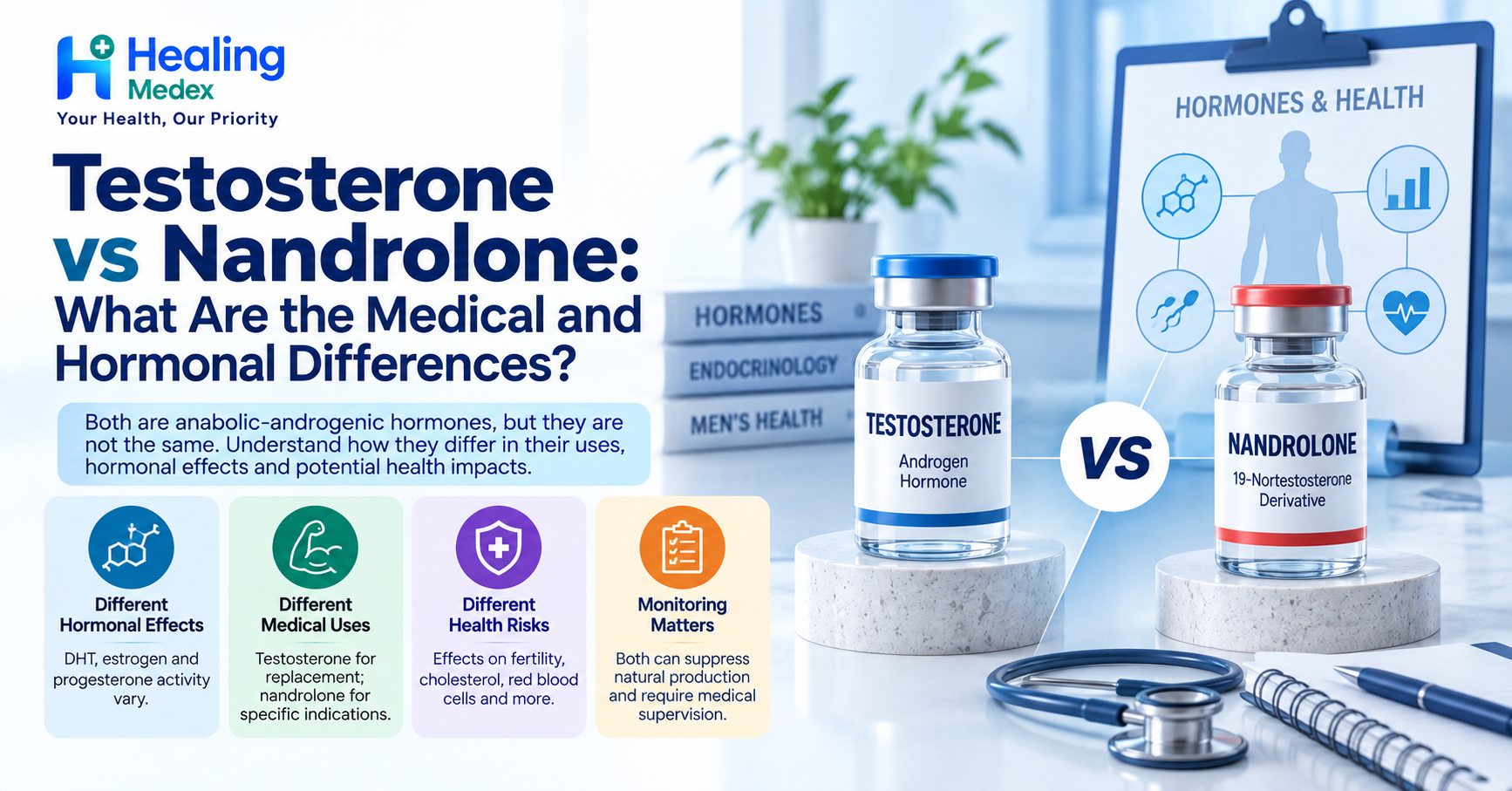
Testosterone and nandrolone are both anabolic-androgenic hormones, but they are not medically or hormonally equivalent.
Testosterone is the principal natural androgen in men and is used medically as replacement therapy in appropriately diagnosed testosterone deficiency. Nandrolone is a synthetic derivative of testosterone—specifically 19-nortestosterone—with a different pattern of androgenic, anabolic and hormonal activity.
Although both substances activate androgen receptors and can suppress the body's own hormone production, important differences exist in their effects on DHT, estrogen pathways, progesterone receptors, fertility, red blood cell production and other tissues.
This article explains the major medical and hormonal differences between testosterone and nandrolone.
Testosterone vs Nandrolone: Quick Comparison
Feature | Testosterone | Nandrolone |
|---|---|---|
Type | Naturally occurring androgen | Synthetic 19-nortestosterone androgen |
Main medical role | Testosterone replacement in diagnosed hypogonadism | Certain anabolic medical indications; these vary by country |
Androgen receptor activity | Strong | Strong |
Conversion by 5-alpha-reductase | Converts to potent DHT | Converts to less androgenically active dihydronandrolone |
Estrogen pathway | Readily aromatized to estradiol | Less susceptible to aromatization; estrogenic metabolism is more complex |
Progestogenic activity | Relatively limited | More significant progesterone-receptor activity |
Natural testosterone suppression | Yes | Yes |
Sperm suppression | Possible/significant | Possible/significant |
Red blood cell effects | Can increase hematocrit | Can increase hemoglobin/red-cell mass |
Lipid effects | Requires cardiovascular-risk monitoring | May lower HDL and increase LDL |
Appropriate substitute for TRT? | Testosterone itself is the standard replacement hormone | Not considered a routine substitute for testosterone replacement |
1. What Is Testosterone?
Testosterone is the major androgen produced primarily by the testes. Smaller amounts are also produced by the adrenal glands.
It plays important roles in:
Sexual development
Libido and sexual function
Sperm production
Muscle and bone maintenance
Red blood cell production
Secondary male sexual characteristics
General androgen-dependent tissue function
Medical testosterone therapy is used when a patient has an appropriate clinical diagnosis of testosterone deficiency.
The Endocrine Society emphasizes that hypogonadism should not be diagnosed from symptoms alone. Diagnosis involves compatible symptoms or signs together with consistently low, accurately measured testosterone concentrations and evaluation of the underlying cause.
2. What Is Nandrolone?
Nandrolone is an anabolic-androgenic steroid closely related chemically to testosterone.
It is often called 19-nortestosterone because its chemical structure lacks the carbon-19 methyl group found in testosterone. This relatively small structural change alters how the hormone behaves in different tissues.
Nandrolone still activates androgen receptors, but its metabolism differs substantially from testosterone.
Medical indications and availability vary internationally. In current U.S. labeling, nandrolone decanoate is indicated for management of anemia associated with renal insufficiency, because it can increase hemoglobin and red blood cell mass.
It should not be assumed that nandrolone is approved for every condition for which it has historically been studied.
3. Testosterone Is Primarily a Replacement Hormone
One of the largest medical differences concerns why the drugs are prescribed.
For men with appropriately diagnosed hypogonadism, testosterone therapy aims to restore testosterone exposure and improve consequences of androgen deficiency.
The Endocrine Society continues to describe physiologic testosterone replacement as having established benefits for men with properly diagnosed hypogonadism caused by disorders involving the testes, hypothalamus or pituitary gland.
Nandrolone, despite being an androgen, does not reproduce every physiological action of testosterone in the same way.
Therefore:
Nandrolone should not automatically be regarded as an alternative form of TRT.
Its tissue metabolism, estrogenic activity and progestogenic activity differ from testosterone.
4. Testosterone Produces DHT — Nandrolone Behaves Differently
This is one of their most important hormonal differences.
The enzyme 5-alpha-reductase converts testosterone into dihydrotestosterone, or DHT.
DHT has stronger androgenic activity than testosterone in several androgen-sensitive tissues. This pathway is especially important in tissues such as the prostate and skin.
Nandrolone also undergoes 5-alpha-reduction, but the result is very different.
Instead of producing DHT, nandrolone produces 5-alpha-dihydronandrolone, sometimes called DHN.
Unlike DHT, this nandrolone metabolite has weaker androgen-receptor activity than its parent hormone. Experimental pharmacology therefore helps explain why nandrolone demonstrates proportionally less androgenic activity in certain tissues compared with its anabolic effects.
This does not mean nandrolone has no androgenic effects. Androgenic adverse effects remain possible.
5. Nandrolone Has a Different Anabolic-to-Androgenic Profile
Both testosterone and nandrolone activate the androgen receptor.
However, historical laboratory and animal assays show nandrolone having a higher ratio of muscle-related anabolic activity relative to androgenic activity than testosterone.
This distinction is frequently misunderstood.
These experimental ratios are not clinical conversion formulas and should not be used to calculate equivalent doses or design non-medical steroid regimens.
Humans also respond differently depending on dose, exposure, health status, genetics and concurrent medications.
6. Testosterone Has a More Established Estradiol Pathway
Some testosterone is converted through the enzyme aromatase into estradiol.
Estradiol is not simply a "female hormone." In men, normal estrogen signaling contributes to areas such as:
Bone health
Sexual physiology
Neuroendocrine signaling
Reproductive hormone regulation
Nandrolone is structurally different and appears to be less susceptible than testosterone to conventional aromatization. Research into its exact estrogenic metabolism in humans is less complete, and older human research has demonstrated changes in estrogen metabolites during nandrolone exposure.
For this reason, it is too simplistic to describe nandrolone as simply having "no estrogen effects."
Hormonal effects need to be interpreted clinically rather than predicted from one pathway alone.
7. Nandrolone Has More Relevant Progestogenic Activity
Another important difference involves the progesterone receptor.
Nandrolone is not only an androgen-receptor agonist. Laboratory evidence shows significant progestogenic activity through the progesterone receptor.
Testosterone does not have the same clinically relevant progestogenic profile.
This matters because progesterone-receptor signaling can influence hypothalamic and pituitary regulation of reproductive hormones.
Consequently, nandrolone's endocrine effects cannot be understood simply by looking at serum testosterone or estrogen concentrations.
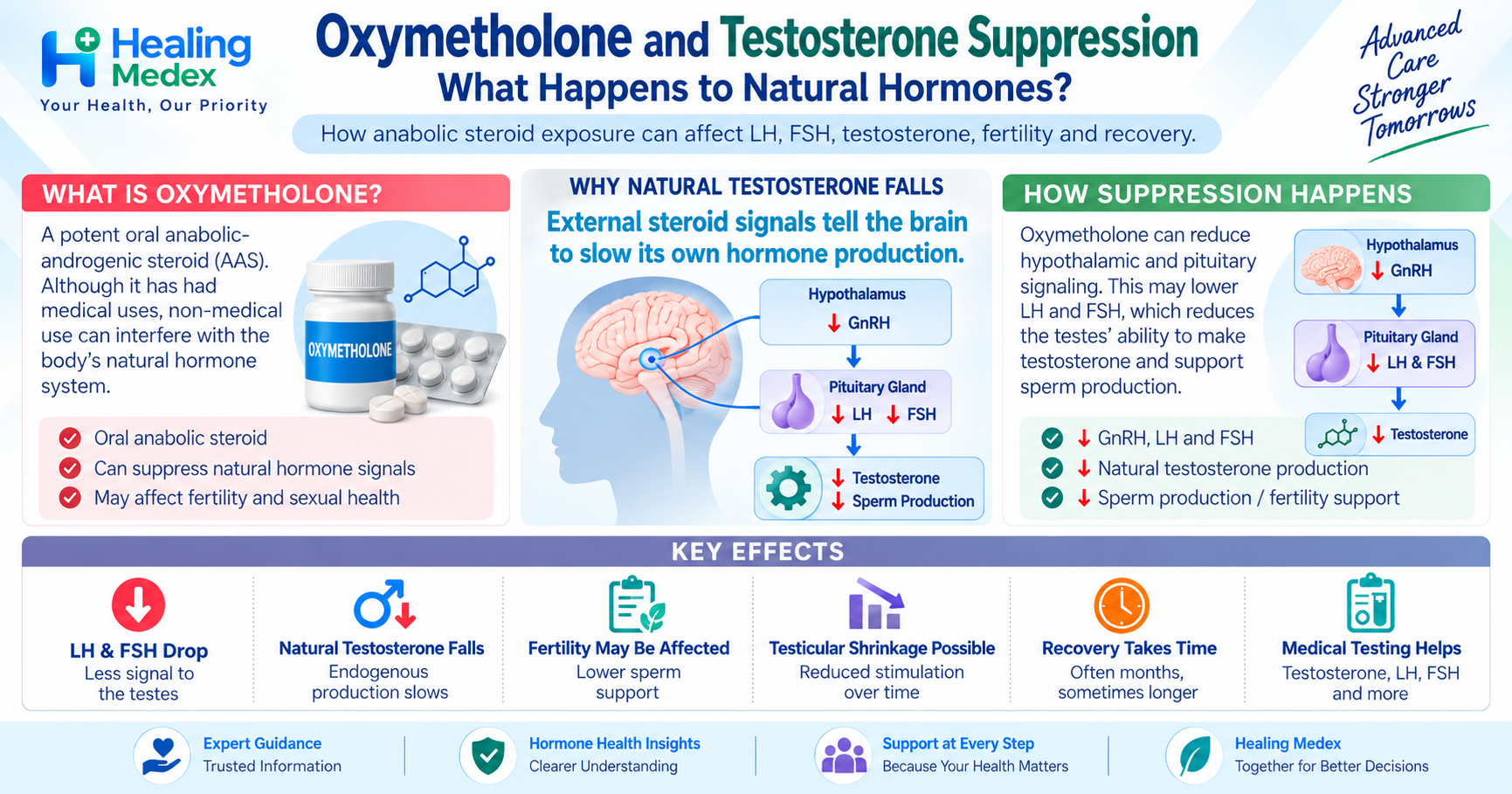
8. Both Can Suppress Natural Testosterone Production
Taking an external androgen tells the hypothalamus and pituitary that sufficient androgenic signaling is already present.
This can reduce signaling through the hypothalamic-pituitary-gonadal axis and decrease stimulation of the testes.
Nandrolone labeling specifically notes that anabolic steroids suppress pituitary gonadotropic function and may directly affect the testes.
Testosterone therapy can also suppress the reproductive axis.
Therefore, someone receiving external testosterone may have an adequate circulating testosterone concentration while producing considerably less testosterone inside the testes.
The same general principle applies to nandrolone.
9. Both Can Reduce Fertility
Suppression of LH and FSH can reduce intratesticular testosterone concentrations and interfere with sperm production.
FDA testosterone prescribing information warns that exogenous androgen administration may lead to azoospermia, meaning an absence of sperm in the semen.
Because of this effect, the Endocrine Society recommends against beginning testosterone therapy in men who are planning fertility in the near term.
Nandrolone also suppresses pituitary-gonadal function and may adversely affect testicular function.
Anyone concerned about fertility should discuss this before beginning androgen therapy rather than waiting until fertility problems develop.
10. Their Effects on Sexual Function Are Not Identical
Testosterone deficiency itself can contribute to reduced libido and certain sexual symptoms, so appropriately prescribed testosterone replacement may improve some symptoms in genuinely hypogonadal patients.
The effects of nandrolone are more complicated.
Because nandrolone can suppress endogenous testosterone while producing different DHT, estrogen and progesterone-receptor effects, sexual symptoms during non-medical nandrolone exposure cannot reliably be predicted from total testosterone measurements alone.
Possible sexual symptoms should not automatically be blamed on one hormone such as estrogen or prolactin without testing and clinical assessment.
Other contributors may include:
Psychological factors
Medication use
Other endocrine abnormalities
Relationship factors
Sleep disorders
Blood pressure
General health
11. Both Can Increase Red Blood Cell Production
Androgens stimulate erythropoiesis—the production of red blood cells.
Testosterone therapy can therefore increase hemoglobin and hematocrit. Monitoring hematocrit is an important component of medical testosterone therapy, particularly because excessive elevation may require reassessment of treatment.
Nandrolone has sufficiently strong erythropoietic effects that its U.S. labeling includes treatment of anemia caused by renal insufficiency.
This illustrates an important principle:
A drug's ability to increase red blood cells can be medically useful in one context but potentially problematic in another.
12. Cardiovascular and Cholesterol Effects Matter
Neither drug should be considered harmless to cardiovascular health.
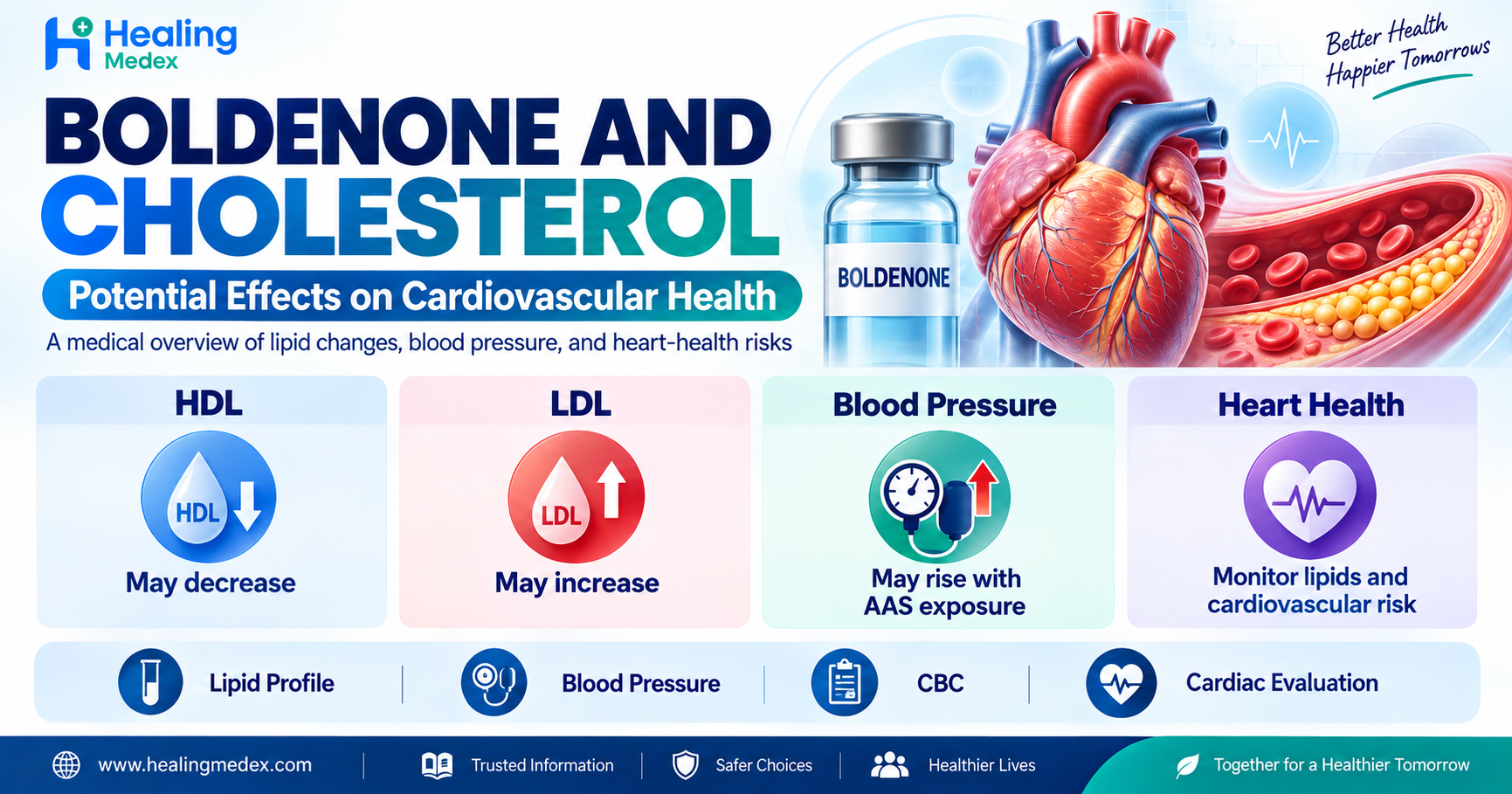
Nandrolone labeling reports that anabolic steroids can:
Increase LDL cholesterol
Decrease HDL cholesterol
Such changes can make the lipid profile less favorable.
Testosterone safety information has also changed in recent years.
Following review of the large TRAVERSE trial and post-market blood-pressure studies, the FDA removed older boxed-warning language concerning increased major cardiovascular events from testosterone products but required warnings about increased blood pressure across the testosterone drug class.
In 2026, the FDA reported that the TRAVERSE trial found no meaningful difference in major cardiovascular events between testosterone gel and placebo in the studied population, while testosterone treatment continues to require individualized assessment and monitoring.
These findings should not be extrapolated to high-dose non-medical testosterone or anabolic-steroid use.
13. Does Nandrolone Cause Fewer Androgenic Side Effects?
Pharmacologically, nandrolone can demonstrate lower androgenic activity in some tissues because 5-alpha-reduction produces the weaker androgen dihydronandrolone rather than DHT.
However, lower androgenic activity does not mean zero androgenic activity or lower overall health risk.
Nandrolone remains an anabolic-androgenic steroid.
Potential concerns with anabolic steroid exposure can include effects involving:
Reproductive hormone suppression
Fertility
Cholesterol
Blood pressure and fluid retention
Red blood cell production
Skin and hair
Mood or psychological symptoms
Sexual function
Risk also changes considerably with dose, duration, underlying disease and whether multiple anabolic steroids are being used.
14. Is Nandrolone Safer Than Testosterone?
There is no universal answer because the two drugs are used for different medical purposes and have different physiological effects.
For a person with appropriately diagnosed testosterone deficiency, the therapeutic goal is generally to replace the deficient hormone with testosterone, not to select an anabolic steroid according to which appears more anabolic or less androgenic.
The evidence base supporting contemporary testosterone replacement is also substantially larger than the evidence supporting nandrolone as a general treatment for male hypogonadism.
A review of nandrolone's possible therapeutic applications has specifically noted that human evidence remains limited in several proposed areas and that additional research is required.
Testosterone vs Nandrolone: The Main Hormonal Differences
The comparison can be summarized simply:
Testosterone
Is the body's major natural androgen
Converts to DHT
Aromatizes to estradiol
Is the standard replacement hormone for appropriately diagnosed male hypogonadism
Suppresses LH, FSH and sperm production when administered externally
Can increase hematocrit and blood pressure
Nandrolone
Is a synthetic 19-nortestosterone derivative
Converts to the less androgenically active dihydronandrolone
Has a different and less straightforward estrogenic pathway
Has significant progestogenic activity
Has relatively greater anabolic versus androgenic activity in experimental models
Suppresses the reproductive hormone axis
Can affect fertility and lipid levels
Has medical indications that differ from testosterone
What Monitoring May Be Needed With Androgen Therapy?
Monitoring depends on the specific drug, indication, age, medical history and national prescribing guidance.
For medically prescribed testosterone, clinicians may consider factors such as:
Testosterone concentrations
Hemoglobin and hematocrit
Blood pressure
Treatment response and adverse effects
Prostate assessment when clinically appropriate
Cardiovascular risk
Fertility plans
Additional testing based on the underlying cause of hypogonadism
Current endocrine guidance emphasizes both confirming the diagnosis before starting therapy and monitoring patients after treatment begins.
Final Takeaway
Testosterone is the body's natural primary androgen and is the established replacement hormone for appropriately diagnosed testosterone deficiency. Nandrolone is a synthetic 19-nortestosterone compound with a higher relative anabolic profile, weaker androgenic activity in some tissues, different estrogen metabolism and meaningful progesterone-receptor activity.
Both can suppress natural testosterone and sperm production, and both can produce medically important systemic effects.
For these reasons, nandrolone should not be viewed as a simple substitute for testosterone, and choosing between androgen therapies should be based on a confirmed medical diagnosis, approved indications, individual health risks and clinician monitoring—not bodybuilding comparisons or anabolic-to-androgenic ratios.
Frequently Asked Questions
1. Is nandrolone the same as testosterone?
No. Nandrolone is structurally related to testosterone but is a synthetic 19-nortestosterone derivative with different metabolism and tissue effects.
2.Does nandrolone suppress natural testosterone?
Yes. Nandrolone and other anabolic steroids can suppress pituitary gonadotropin signaling and reduce endogenous testicular hormone production.
3.Does testosterone suppress sperm production?
Yes. External testosterone can suppress the reproductive axis and may cause severe reductions in sperm production or azoospermia.
4.Does nandrolone convert to DHT?
Not in the same way as testosterone. Testosterone is converted to DHT, whereas nandrolone is converted by 5-alpha-reductase to dihydronandrolone, which has weaker androgenic activity than nandrolone itself.
5.Can nandrolone replace testosterone in TRT?
Nandrolone is not considered a routine equivalent replacement for testosterone. Testosterone remains the standard hormone used to replace deficient testosterone in appropriately diagnosed male hypogonadism.