Stopping anabolic-androgenic steroids (AAS) does not necessarily mean that hormone levels and other health markers return to normal immediately. Anabolic steroids can suppress the body’s natural testosterone production and may also affect cholesterol, red blood cell production, liver function, kidney markers and fertility.
For this reason, blood testing after stopping anabolic steroids can be an important part of assessing recovery and identifying complications that may not cause obvious symptoms.
Research suggests that recovery of the hypothalamic-pituitary-testicular (HPT) axis varies considerably between individuals. In many men, luteinizing hormone (LH) and follicle-stimulating hormone (FSH) recover over approximately 3–6 months, while testosterone recovery can take several months and may take considerably longer after prolonged or high-dose AAS exposure.
This article explains which blood tests doctors may consider after someone stops anabolic steroids, what the tests measure and when repeat testing may be useful.
Why Are Blood Tests Important After Stopping Steroids?
Anabolic steroids provide the body with external androgens. When androgen concentrations become high, the hypothalamus and pituitary gland reduce signals to the testes.
This can suppress:
LH, which normally stimulates testosterone production, and FSH, which plays an important role in sperm production.
After anabolic steroids are discontinued, those signals may take time to recover. During this period, some men experience symptoms including reduced libido, erectile difficulties, fatigue, lower mood, reduced motivation and reduced testicular size.
Steroid use can also produce changes outside the reproductive system. Recognized biochemical effects include erythrocytosis or elevated hematocrit, reduced HDL cholesterol, increased LDL cholesterol and, particularly with some oral anabolic steroids, liver injury.
Blood tests therefore help evaluate both hormonal recovery and general health.
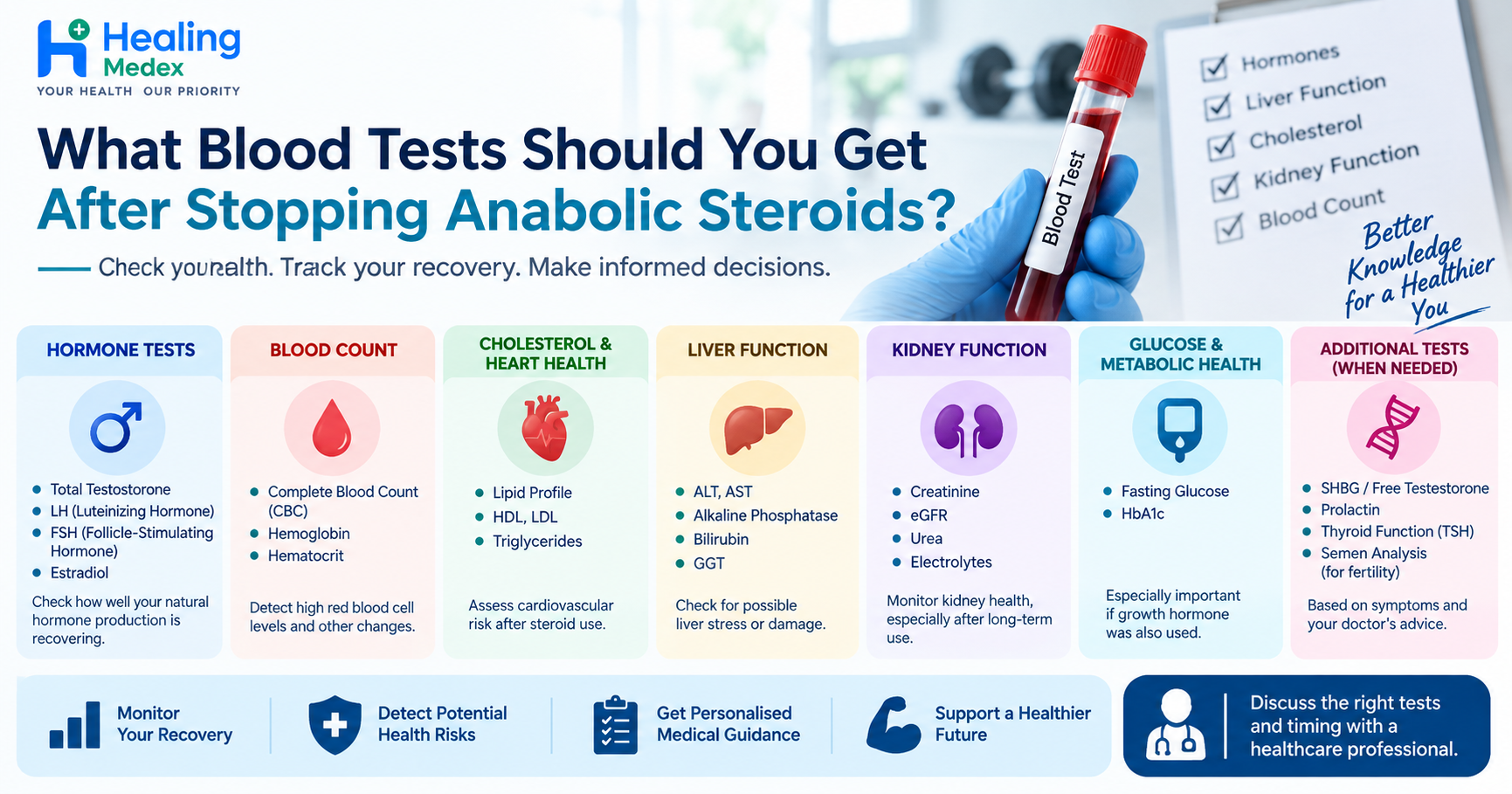
What Blood Tests Should You Consider After Stopping Anabolic Steroids?
A healthcare professional may select tests according to which steroids were used, how long they were taken, doses, symptoms, medical history and whether other performance-enhancing drugs were used.
Blood Test | What It Can Help Assess |
|---|---|
Total testosterone | Recovery of natural testosterone production |
LH | Recovery of pituitary signaling to the testes |
FSH | Reproductive-axis recovery and fertility signaling |
Estradiol | Estrogen balance after androgen exposure |
Full blood count/CBC | Hemoglobin, red blood cells and hematocrit |
Lipid profile | HDL, LDL, triglycerides and cardiovascular risk |
Liver function tests | Possible liver stress or injury |
Kidney function/electrolytes | Creatinine, renal function and electrolyte abnormalities |
HbA1c/glucose | Blood-sugar control, particularly if growth hormone was also used |
SHBG/free testosterone when indicated | Helps interpret testosterone in selected cases |
1. Total Testosterone
AAS use suppresses the body’s own testosterone production. After stopping, testosterone may temporarily fall below the normal reference range.
Clinical guidance specifically recommends testosterone testing in people cycling off anabolic steroids to determine whether the hypothalamic-pituitary-testicular axis is recovering.
Because testosterone naturally varies throughout the day, standard endocrine guidance recommends confirming suspected testosterone deficiency using repeat early-morning fasting testosterone measurements rather than diagnosing hypogonadism from one isolated result.
A low result should therefore be interpreted alongside symptoms, LH, FSH and other relevant laboratory findings.
2. LH — Luteinizing Hormone
LH tells you whether the pituitary gland has resumed signaling the testes to produce testosterone.
A typical pattern soon after anabolic steroid exposure may involve:
Low testosterone + low or inappropriately normal LH
This can indicate continuing suppression of the hypothalamic-pituitary-testicular axis.
As recovery progresses, LH generally begins returning toward the normal range. Research suggests gonadotropin recovery often occurs over approximately 3–6 months, although recovery time varies significantly between individuals.
3. FSH — Follicle-Stimulating Hormone
FSH is particularly important for men concerned about fertility.
FSH helps regulate sperm production. Anabolic steroids can dramatically suppress FSH, which may contribute to reduced sperm concentration and sometimes temporary azoospermia—the absence of sperm in semen.
Endocrinology guidance considers testosterone, LH and FSH among the most useful hormone measurements for evaluating men with a history of anabolic steroid exposure.
Hormone recovery does not necessarily mean fertility has recovered at exactly the same time. Sperm production can require additional months to normalize.
If fertility is a priority, a semen analysis may therefore be more informative than blood tests alone.
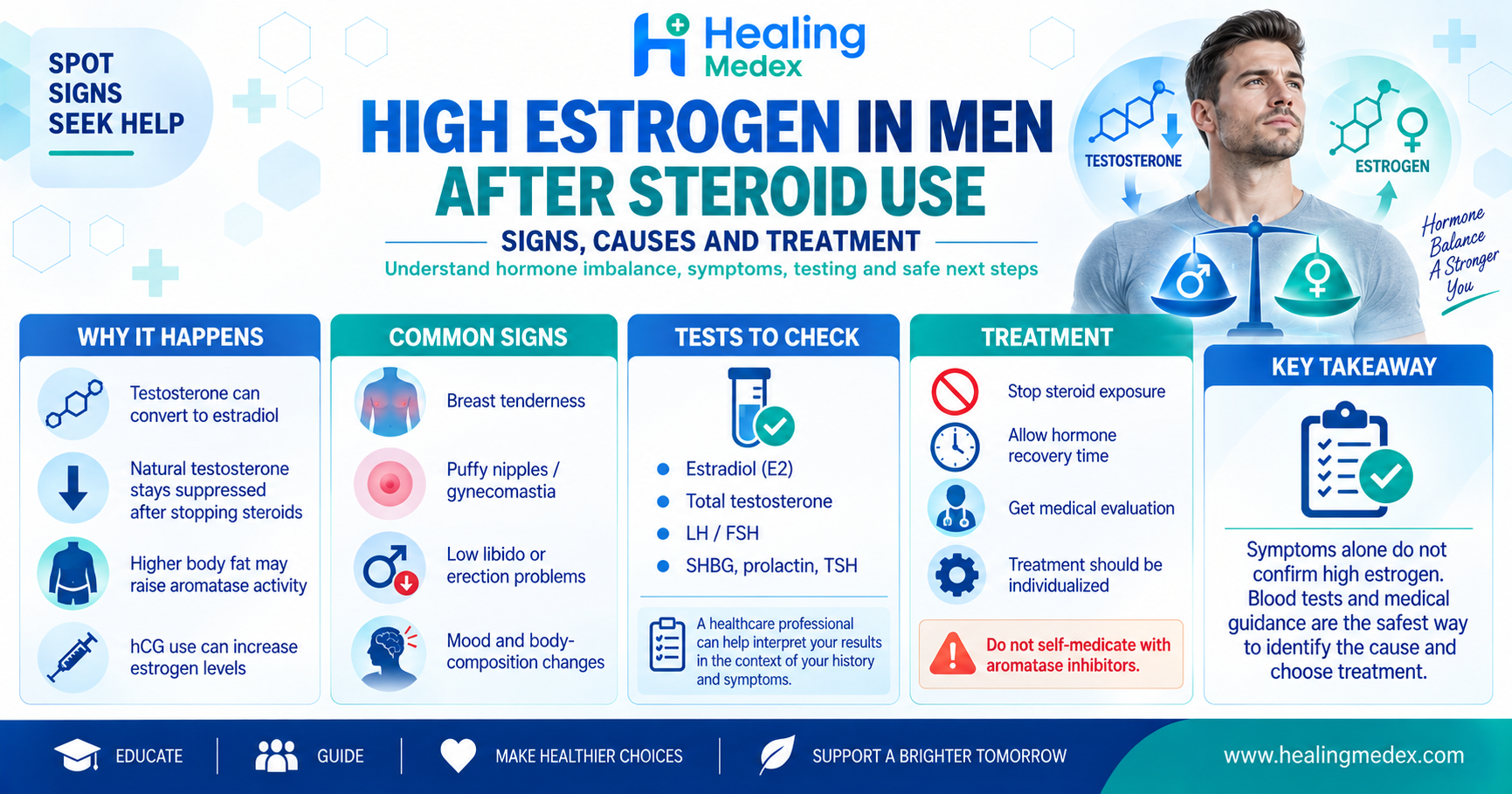
4. Estradiol
Some testosterone is converted into estradiol by the aromatase enzyme.
During AAS use, estradiol can become elevated, particularly when aromatizable steroids or high testosterone doses have been used. Abnormal estrogen-androgen balance may contribute to breast tissue enlargement, changes in libido and sexual symptoms.
Estradiol can therefore be useful in selected people, particularly when symptoms such as gynecomastia or significant hormonal symptoms are present.
Estradiol results should not automatically lead to treatment with an aromatase inhibitor. Excessive suppression of estradiol can itself cause health problems, and treatment decisions should be made by a qualified clinician.
5. Full Blood Count and Hematocrit
Anabolic steroids—especially testosterone—can stimulate red blood cell production.
This may cause erythrocytosis, resulting in elevated:
Hemoglobin, red blood cell count and hematocrit.
A 2024 primary-care guideline on anabolic steroid monitoring specifically recommends a full blood count because supraphysiologic testosterone exposure is associated with polycythemia.
Even after steroid use has stopped, an elevated hematocrit may take time to normalize.
Very high hematocrit levels require medical assessment rather than simply waiting for them to fall.
6. Lipid Profile
Anabolic steroids can significantly alter cholesterol.
A typical steroid-associated pattern is:
Lower HDL cholesterol and higher LDL cholesterol.
A lipid panel usually evaluates total cholesterol, LDL cholesterol, HDL cholesterol and triglycerides.
Clinical guidance recommends checking lipids in people using AAS and repeating abnormal measurements after they have discontinued the drugs.
7. Liver Function Tests
Liver testing can be especially important after oral anabolic steroids.
Many oral AAS are chemically modified to survive first-pass metabolism through the liver. Certain 17-alpha-alkylated anabolic steroids are associated with hepatotoxicity.
Common laboratory measurements include ALT, AST, alkaline phosphatase, bilirubin and sometimes GGT.
One complication is that hard resistance exercise can temporarily increase AST and ALT because these enzymes are also released from muscle.
The 2024 primary-care guideline notes that when ALT is moderately elevated, repeating testing after approximately 10–14 days without heavy weight training can sometimes help distinguish exercise-related enzyme elevation from persistent liver abnormalities.
Significant or persistent abnormalities should be medically evaluated.
8. Kidney Function and Electrolytes
Kidney monitoring commonly includes:
Creatinine, estimated glomerular filtration rate (eGFR), urea and electrolytes.
Interpretation can be complicated in bodybuilders because people with unusually high muscle mass may naturally have higher creatinine levels.
As a result, creatinine-based eGFR may underestimate kidney function in very muscular individuals. Clinical guidance specifically advises caution when interpreting eGFR based on creatinine in bodybuilders and others with extreme muscle mass.
A clinician may consider additional kidney testing if results remain abnormal.
Blood pressure should also be checked because AAS exposure may contribute to hypertension.
9. HbA1c and Blood Glucose
HbA1c measures average blood glucose over the previous several months.
It may be especially relevant when anabolic steroids were combined with other performance-enhancing substances such as human growth hormone (HGH).
Growth hormone can reduce insulin sensitivity and increase blood glucose, which is why AAS monitoring guidance recommends HbA1c testing particularly when HGH has been used.
People with obesity, a family history of diabetes or other metabolic risk factors may also benefit from glucose screening based on their clinician's assessment.
10. SHBG and Free Testosterone
Sex hormone-binding globulin, or SHBG, binds circulating testosterone.
AAS exposure can reduce SHBG significantly. This means that total testosterone alone may occasionally provide an incomplete picture of androgen status.
If total testosterone is borderline or SHBG is abnormal, a clinician may consider assessing free testosterone using an appropriate validated method or calculating free testosterone using testosterone, SHBG and albumin.
Standard endocrine recommendations recognize free testosterone assessment as particularly useful when total testosterone is borderline or when conditions affecting SHBG are present.
What About Prolactin and Thyroid Tests?
Prolactin and thyroid testing are not automatically required for everyone who stops anabolic steroids.
However, a doctor may order prolactin, TSH or additional pituitary hormone testing when symptoms or laboratory findings suggest another hormonal problem.
For example, persistent low testosterone with an unusual LH/FSH pattern may require investigation for causes other than previous steroid exposure.
This is another reason not to assume that every symptom appearing after steroid cessation is simply part of “post-cycle recovery.”
When Should Blood Tests Be Done After Stopping Steroids?
There is no single testing schedule that works for every anabolic steroid.
Different compounds and injectable esters remain in the body for different periods, and early testing may still reflect residual exogenous hormones.
Safety-related tests such as CBC, liver enzymes, kidney function and lipids can still provide useful information soon after discontinuation.
For hormonal recovery, repeated measurements are often more informative than a single test.
Expert guidance on men recovering from AAS exposure describes monitoring testosterone and gonadotropins every 1–3 months in appropriate patients.
A 2024 primary-care guideline suggests that men with low testosterone accompanied by low or inappropriately normal gonadotropins should generally have testosterone repeated approximately 12 weeks later, with further follow-up depending on the direction of recovery.
The exact timing should be individualized according to the steroid used, duration of exposure and symptoms.
How Long Does Testosterone Take to Recover After Anabolic Steroids?
Recovery varies enormously.
A recent review found that testosterone recovery generally occurs over months, while LH and FSH commonly recover within approximately 3–6 months. However, recovery can take much longer after prolonged or heavier AAS exposure.
Another systematic review found that gonadotropins can remain suppressed for months after stopping anabolic steroids, demonstrating why one early abnormal result does not necessarily indicate permanent testosterone deficiency.
Some long-term AAS users have experienced persistent hypogonadism for considerably longer periods.
Should You Start PCT Before Having Blood Tests?
Using medications marketed as “post-cycle therapy” can change testosterone, LH, FSH and estradiol levels, making it more difficult to determine whether the body's natural hormonal system has recovered.
Medications such as hCG or selective estrogen receptor modulators can directly alter hormone measurements.
Management of AAS withdrawal should therefore be discussed with an endocrinologist, urologist or another clinician experienced in reproductive hormones rather than starting prescription medicines based solely on internet protocols.
Importantly, there is still limited high-quality clinical-trial evidence establishing the safest and most effective medical treatment for anabolic-steroid withdrawal.
When Should You See a Doctor?
Medical assessment is particularly important if low libido, erectile dysfunction, marked fatigue, testicular shrinkage, infertility, breast enlargement or other symptoms continue after stopping AAS.
Persistent low testosterone also deserves medical evaluation rather than automatically restarting testosterone, because restarting exogenous testosterone can again suppress LH, FSH and sperm production.
Urgent medical attention is appropriate for serious symptoms such as chest pain, severe shortness of breath, jaundice, severe headaches, neurological symptoms or significant psychological distress.
Depression and anxiety can occur during AAS withdrawal, and severe depression or suicidal thoughts require urgent professional help.
The Bottom Line
After stopping anabolic steroids, blood testing can provide a clearer picture of both hormonal recovery and overall health.
The most useful assessment commonly includes total testosterone, LH, FSH, estradiol, CBC/hematocrit, lipid profile, liver function and kidney function, with additional testing such as HbA1c, SHBG/free testosterone or other hormones when clinically appropriate.
One blood test cannot always determine whether recovery is complete. Testosterone and gonadotropins may need to be followed over several months because recovery of the hormonal axis is gradual and varies according to the drugs used, dose, duration and individual health.
Rather than trying to force hormone levels back to normal based on a single laboratory result, post-AAS testing should ideally be interpreted by a healthcare professional who can look at symptoms, laboratory trends and fertility goals together.