Testosterone replacement therapy (TRT) may be prescribed to men with hypogonadism, a condition in which the body does not produce enough testosterone. Among the most commonly used forms of testosterone therapy are testosterone injections and testosterone gel.
Both deliver testosterone to the body, but they differ considerably in how they are administered, how testosterone levels fluctuate, how often treatment is required, convenience, side effects and lifestyle considerations.
So, what is the difference between testosterone injections and testosterone gel—and how are they chosen?
This guide explains the major differences.
What Is Testosterone Replacement Therapy?
According to the Endocrine Society, a diagnosis of hypogonadism should generally be based on both symptoms or signs consistent with testosterone deficiency and consistently low testosterone concentrations confirmed by appropriate blood testing.
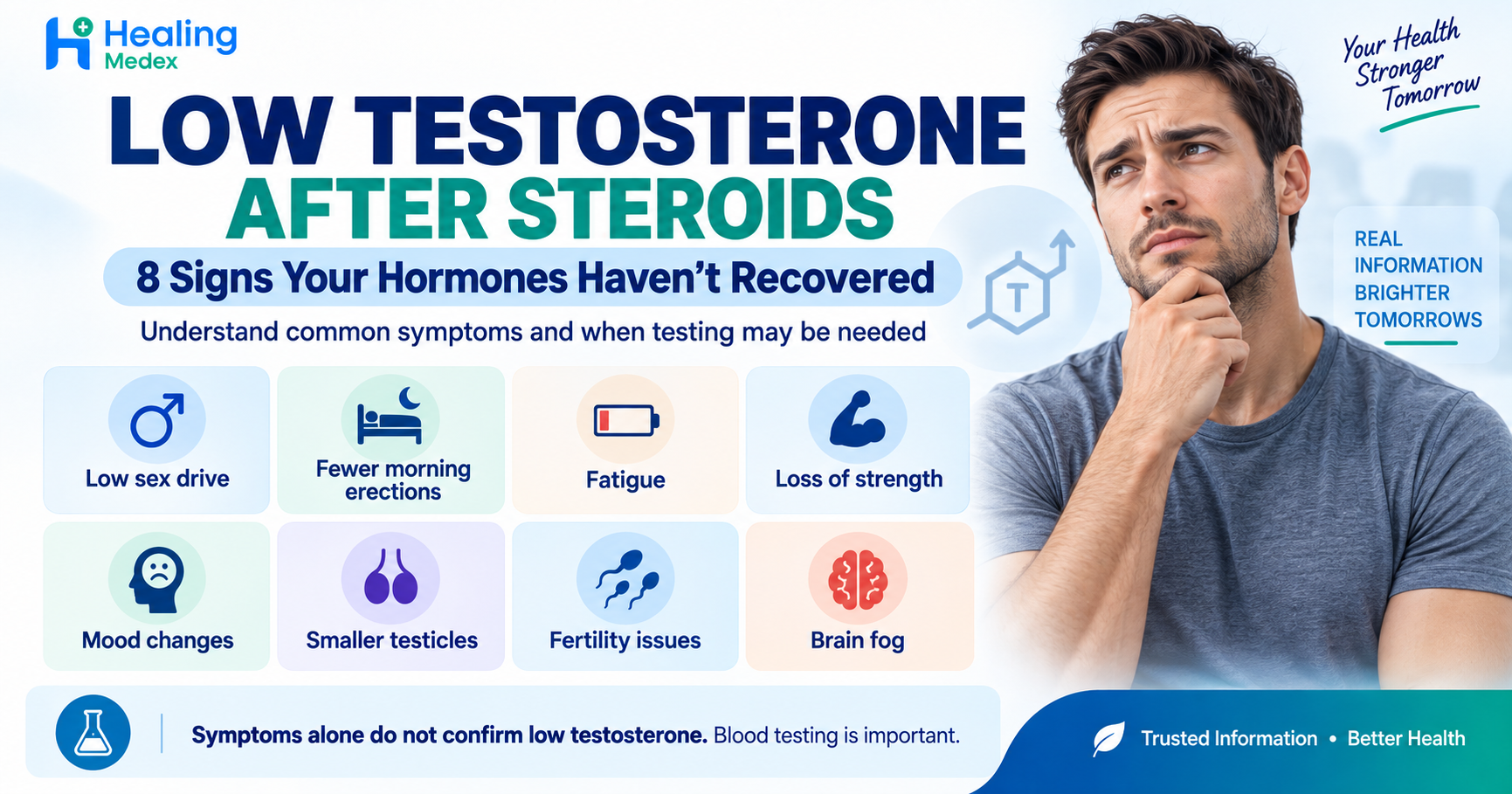
Possible symptoms of testosterone deficiency can include:
Reduced sex drive
Fatigue or reduced energy
Reduced muscle mass
Reduced strength
Changes in mood
Decreased body or facial hair
Reduced bone density
Infertility in some men
Testosterone therapy can be administered through several methods, including injections, gels, patches, nasal formulations and implants. Two frequently used approaches are injectable testosterone and transdermal testosterone gel.
What Are Testosterone Injections?
Testosterone injections deliver testosterone directly into the body through an injection, usually into muscle or, with certain products, under the skin.
Common injectable testosterone preparations include forms such as:
Testosterone undecanoate
The schedule varies significantly depending on the specific medication and prescribed dose. Some preparations are administered relatively frequently, while certain long-acting formulations may be given much less often.
Some injections can be administered at home after appropriate medical instruction, whereas other formulations need to be administered by a healthcare professional.
What Is Testosterone Gel?
Depending on the specific product, gel may be applied to areas such as the:
Shoulders
Upper arms
Thighs
Most testosterone gels are applied every day.
The gel must usually be allowed to dry before the treated skin is covered. Instructions about bathing, swimming and skin contact vary by product and should be followed carefully.
One particularly important consideration is preventing testosterone gel from accidentally transferring to another person through skin contact.
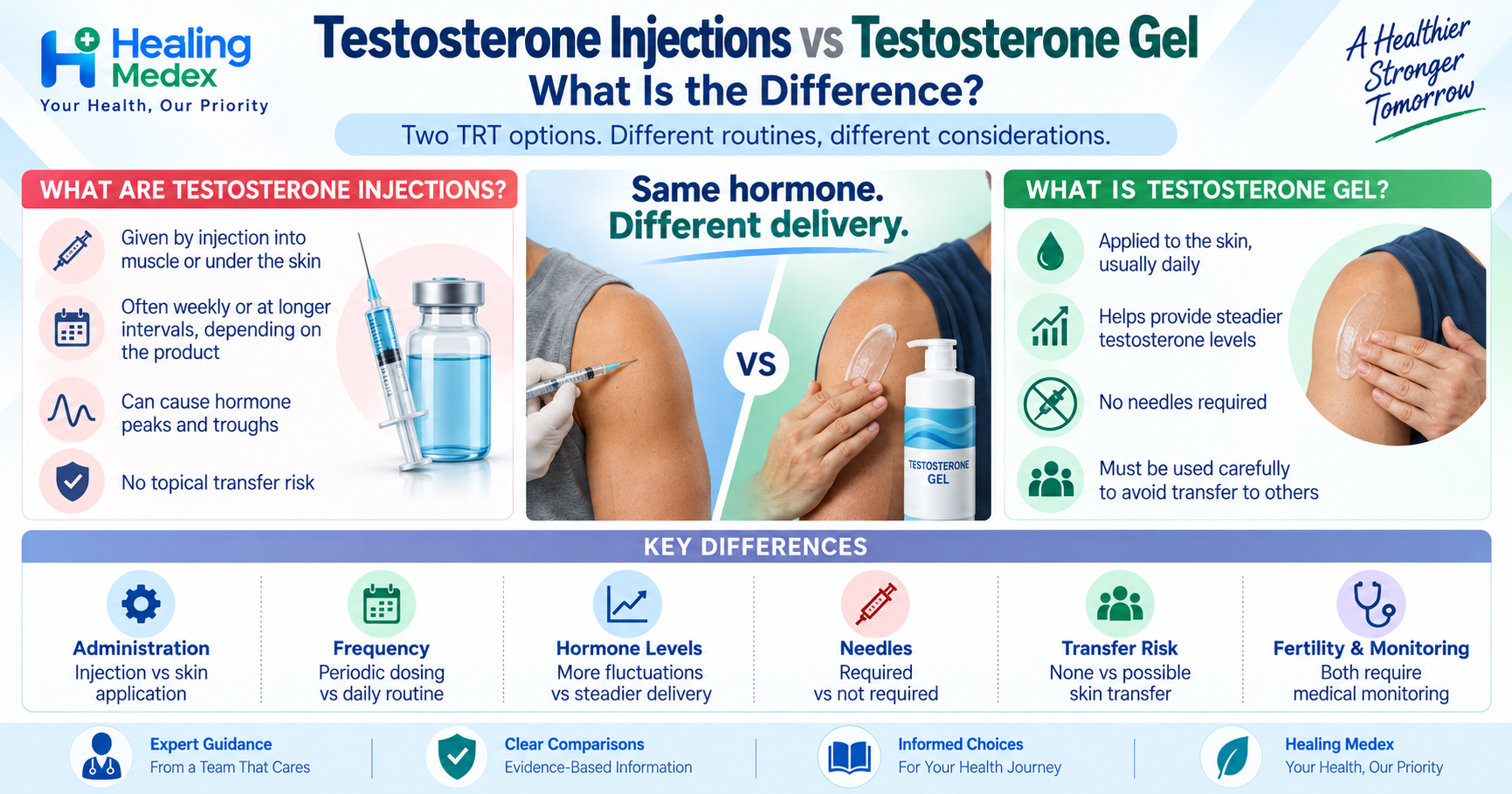
Testosterone Injections vs Testosterone Gel: Quick Comparison
Feature | ||
|---|---|---|
Administration | Injection into muscle or under the skin, depending on product | Applied to the skin |
Frequency | Depends on formulation; may range from relatively frequent to long-acting schedules | Usually daily |
Testosterone pattern | Some short-acting injections can produce greater peaks and troughs | Generally provides steadier daily exposure |
Needles | Yes | No |
Skin irritation | Uncommon as a delivery issue, although injection-site reactions can occur | Possible |
Transfer to others | No topical transfer risk | Possible through skin contact |
Convenience | Less frequent dosing may suit some patients | No injections, but requires daily application |
Dose adjustment | Possible but depends on injectable product | Often adjusted by changing the amount applied |
Hematocrit increase | Can occur; some short-acting injections have shown higher rates | Can occur but may be lower with transdermal therapy in some studies |
Fertility effects | Can suppress sperm production | Can suppress sperm production |
The exact effects depend on the formulation, dose, absorption, treatment schedule and individual patient response.
1. Testosterone Levels May Be More Stable With Gel
One of the biggest differences between the treatments is how testosterone reaches the bloodstream.
Testosterone injections
Some commonly used short-acting testosterone injections can produce relatively high testosterone concentrations after an injection, followed by progressively lower concentrations before the next dose.
This can create what are sometimes described as peaks and troughs.
Some patients may consequently notice variations in symptoms between injections.
Long-acting injectable testosterone products behave differently and can produce a more sustained testosterone profile.
Testosterone gel
Because gel is normally applied every day, testosterone enters the bloodstream gradually through the skin.
Daily transdermal formulations generally provide more stable testosterone concentrations than short-acting injections when used correctly.
2. The Treatment Schedule Is Different
Another important difference is frequency.
Gel
Testosterone gel usually becomes part of a patient's daily routine.
Missing applications can reduce testosterone exposure.
Injections
Depending on the preparation, injections may be required:
Weekly or at another relatively frequent interval
At longer intervals with certain formulations
Therefore, someone who does not want to remember a daily treatment may find an injectable schedule more practical, while someone uncomfortable with injections may find gel easier to use.
Treatment schedules should always follow the exact product instructions and prescribing clinician's directions.
3. Testosterone Gel Avoids Needles
For people who dislike needles, gel has an obvious practical advantage.
It is applied directly to the skin and requires no injection technique.
Testosterone injections, by comparison, can occasionally cause:
Injection-site discomfort
Swelling
Bruising
Redness
Some people are comfortable learning how to self-administer certain injections, whereas others prefer administration by a healthcare professional.
4. Testosterone Gel Can Transfer to Other People
This is one of the most important safety differences.
Testosterone remaining on the skin can potentially transfer to another person through direct skin contact.
Children and women should particularly avoid contact with unwashed or uncovered application sites. Secondary testosterone exposure in children has resulted in signs of virilization.
Patients using testosterone gel should carefully follow product-specific precautions, which may include:
Washing hands after applying the gel
Allowing the gel to dry
Covering the application site with clothing
Washing the application area before anticipated skin-to-skin contact
Testosterone injections do not have this type of topical transfer risk.
5. Gel Absorption Can Vary Between Individuals
Not everyone absorbs transdermal testosterone at exactly the same rate.
Factors such as:
Skin characteristics
Application technique
Application site
Product formulation
Adherence to treatment
may affect testosterone exposure.
Because of this, blood tests are necessary after starting treatment to determine whether testosterone levels have reached the intended range.
Injection absorption is not dependent on testosterone crossing the skin, although injectable formulations still require dose and interval adjustments in some patients.
6. Testosterone Injections May Cause Greater Hormone Fluctuations
Short-acting testosterone injections may sometimes produce testosterone levels above the desired physiological range shortly after administration and lower levels near the end of the dosing interval.
These fluctuations can potentially affect how a person feels throughout the treatment cycle.
Changing the dose or injection interval may sometimes reduce these variations, but adjustments should be made by the prescribing healthcare professional.
Long-acting injections have a different pharmacokinetic profile and should not be assumed to behave like shorter-acting preparations.
7. Both Can Increase Red Blood Cell Levels
Testosterone stimulates red blood cell production.
Consequently, testosterone therapy can increase hemoglobin and hematocrit, potentially resulting in erythrocytosis or polycythemia.
Research has suggested that short-acting injectable testosterone, particularly testosterone cypionate and enanthate, may produce larger increases in hematocrit than transdermal formulations in some populations.
However, hematocrit can increase with any form of testosterone therapy.
The American Urological Association recommends measuring hemoglobin and hematocrit before testosterone therapy because of this risk.
Regular blood monitoring remains important regardless of whether testosterone is delivered through injections or gel.
8. Both Can Affect Fertility
Men planning to have children should discuss fertility before starting TRT.
External testosterone can suppress signals from the pituitary gland that normally stimulate the testicles to produce testosterone and sperm.
As a result, testosterone therapy can:
Reduce sperm production
Lower sperm count
Cause very low sperm counts
Occasionally result in azoospermia, meaning no sperm are detected in the semen
This is not unique to injections. Testosterone gel can suppress fertility as well.
The Endocrine Society recommends against starting testosterone therapy in men who are planning fertility in the near term.
Men who want to preserve fertility should discuss appropriate alternatives and fertility evaluation with a qualified clinician.
9. Side Effects Differ Slightly
Both preparations expose the body to testosterone, so many systemic side effects overlap.
Potential effects of testosterone therapy may include:
Increased hematocrit
Acne or oily skin
Fluid retention
Changes in blood pressure
Reduced sperm production
Breast tenderness or enlargement
Worsening of certain prostate or urinary symptoms
Possible worsening of sleep apnea in susceptible individuals
However, there are formulation-specific differences.
Testosterone injection-specific considerations
These may include:
Injection-site pain
Bruising
Hormonal peaks and troughs with some formulations
Testosterone gel-specific considerations
These may include:
Skin irritation
Daily application inconvenience
Variable absorption
Accidental transfer to others
10. Cost and Convenience May Influence the Choice
Treatment cost can vary substantially depending on:
Country
Brand
Insurance coverage
Generic availability
Injection frequency
Required clinic visits
Some conventional injectable testosterone preparations may be relatively inexpensive compared with branded gels, but this varies significantly by healthcare system and product.
Convenience is also personal.
Someone may prefer a gel because they dislike injections, while another person may prefer injections because they do not want to apply medication every morning.
Neither factor determines which treatment is medically appropriate on its own.
Are Testosterone Injections More Effective Than Gel?
Not necessarily.
Both injections and gels can successfully increase testosterone concentrations in appropriately selected patients.
Studies comparing formulations have shown that both injectable and transdermal testosterone can raise testosterone levels, although their pharmacokinetic patterns and some side-effect profiles differ.
The goal of properly prescribed testosterone replacement therapy is not simply to achieve the highest possible testosterone level.
Instead, treatment is generally intended to restore testosterone to an appropriate physiological range while improving relevant symptoms and minimizing adverse effects.
Which Works Faster: Testosterone Injections or Gel?
Blood testosterone can increase relatively quickly after an injection, particularly with shorter-acting formulations.
Testosterone gel also begins delivering testosterone after application, but stable treatment levels depend on consistent daily use and individual skin absorption.
However, a rapid increase in blood testosterone does not necessarily mean symptoms improve immediately.
Changes in symptoms such as sexual function, energy, muscle composition and bone health may occur over different time periods.
TRT should therefore be assessed through both symptoms and appropriate laboratory monitoring rather than judging its effectiveness after only a few doses.
Can You Switch From Testosterone Injections to Gel?
Yes, changing testosterone formulations is possible when medically appropriate.
Reasons someone might discuss switching include:
Difficulty administering injections
Significant peaks and troughs
Increased hematocrit
Injection-site reactions
Difficulty remembering daily gel
Skin irritation
Poor gel absorption
Lifestyle preferences
Cost or availability
However, testosterone products are not automatically dose-for-dose interchangeable.
Different formulations have different absorption and pharmacokinetic characteristics, so switching should be planned and monitored by a healthcare professional.
What Tests Are Needed During Testosterone Therapy?
Monitoring is an essential part of testosterone replacement therapy.
Depending on the patient's age, medical history and treatment, clinicians may monitor:
Total testosterone
Free testosterone when clinically appropriate
Hemoglobin
Hematocrit
Blood pressure
Symptoms and treatment response
Adverse effects
Prostate health when appropriate
The Endocrine Society recommends clinical evaluation after treatment begins to assess response, adverse effects and adherence.
The timing of a testosterone blood test may differ between injections and gel because testosterone concentrations change differently after each type of treatment.
Is Testosterone Therapy Safe for the Heart?
The cardiovascular safety of testosterone therapy has been studied extensively.
In the large TRAVERSE trial of more than 5,200 men, major cardiovascular events occurred at similar rates among men receiving testosterone gel and those receiving placebo. Following evaluation of newer evidence, the FDA removed earlier class-wide boxed-warning language concerning increased cardiovascular risk, while testosterone product labeling includes information regarding possible increases in blood pressure.
That does not mean testosterone therapy is risk-free.
A patient's cardiovascular history, blood pressure, hematocrit and other health factors should still be assessed and monitored.
Who Should Not Start Testosterone Without Further Medical Evaluation?
Testosterone should not be used simply because someone feels tired or wants greater muscle mass.
Low testosterone symptoms can have many other causes.
The Endocrine Society recommends careful evaluation and identifies several situations requiring particular caution or in which treatment may be inappropriate, including men planning fertility and people with certain prostate or breast cancers, elevated hematocrit and some uncontrolled or significant medical conditions.
A proper medical evaluation should identify why testosterone is low before treatment begins.
Testosterone Injections vs Gel: Which One Should You Choose?
There is no single testosterone formulation that is appropriate for everyone.
The choice can depend on:
Confirmed cause of testosterone deficiency
Testosterone levels
Symptoms
Hematocrit
Other medical conditions
Fertility plans
Preference regarding injections
Ability to use gel safely around children or partners
Lifestyle
Cost
Treatment availability
Response to previous testosterone therapy
For some people, the convenience of injections may be attractive.
For others, the steadier daily delivery and needle-free administration of gel may be preferable.
The final treatment decision should be individualized with a healthcare professional.
Frequently Asked Questions
1.Is testosterone gel safer than injections?
Neither formulation can be considered universally safer. Their risks differ. Some injectable preparations are more strongly associated with increases in hematocrit, while gel carries the unique risk of accidental skin transfer to other people.
2.Do testosterone injections build more muscle than gel?
The purpose of medically prescribed TRT is to restore testosterone to an appropriate physiological range—not to produce supraphysiological testosterone levels for muscle growth.
When treatment achieves appropriate testosterone concentrations, both formulations can address effects of genuine testosterone deficiency.
3.Does testosterone gel work every day?
Most transdermal testosterone gels are designed for daily application. Regular use is important because missing doses may reduce testosterone exposure.
4.Are testosterone injections painful?
Some patients experience temporary discomfort, tenderness or bruising at the injection site. Others experience little or no significant discomfort.
5.Can testosterone gel cause erectile dysfunction?
Testosterone gel is intended to treat testosterone deficiency rather than cause ED. However, erectile dysfunction has many possible causes, and restoring testosterone does not automatically resolve ED when other vascular, neurological, medication-related or psychological factors are involved.
6.Can testosterone injections cause infertility?
Yes. External testosterone can suppress sperm production. This applies to both injections and gel.
7.Can I stop testosterone suddenly?
Changes to testosterone treatment should be discussed with the prescribing clinician. After testosterone is discontinued, endogenous hormone production and symptoms may change, and recovery depends partly on the underlying reason for treatment.
The Bottom Line
Testosterone injections and testosterone gel contain the same primary hormone but deliver it in very different ways.
Injections may require less frequent administration but some short-acting preparations can create larger fluctuations in testosterone levels and may be more likely to increase hematocrit.
Testosterone gel provides daily transdermal delivery and generally steadier hormone exposure, but it requires consistent application and careful precautions to prevent accidental transfer to other people.
Both treatments can suppress fertility and require ongoing medical monitoring.
The appropriate option depends on the individual's diagnosis, health history, laboratory results, fertility plans, lifestyle and treatment preferences.
Testosterone replacement therapy should only be used under appropriate medical supervision after testosterone deficiency has been properly evaluated and confirmed.