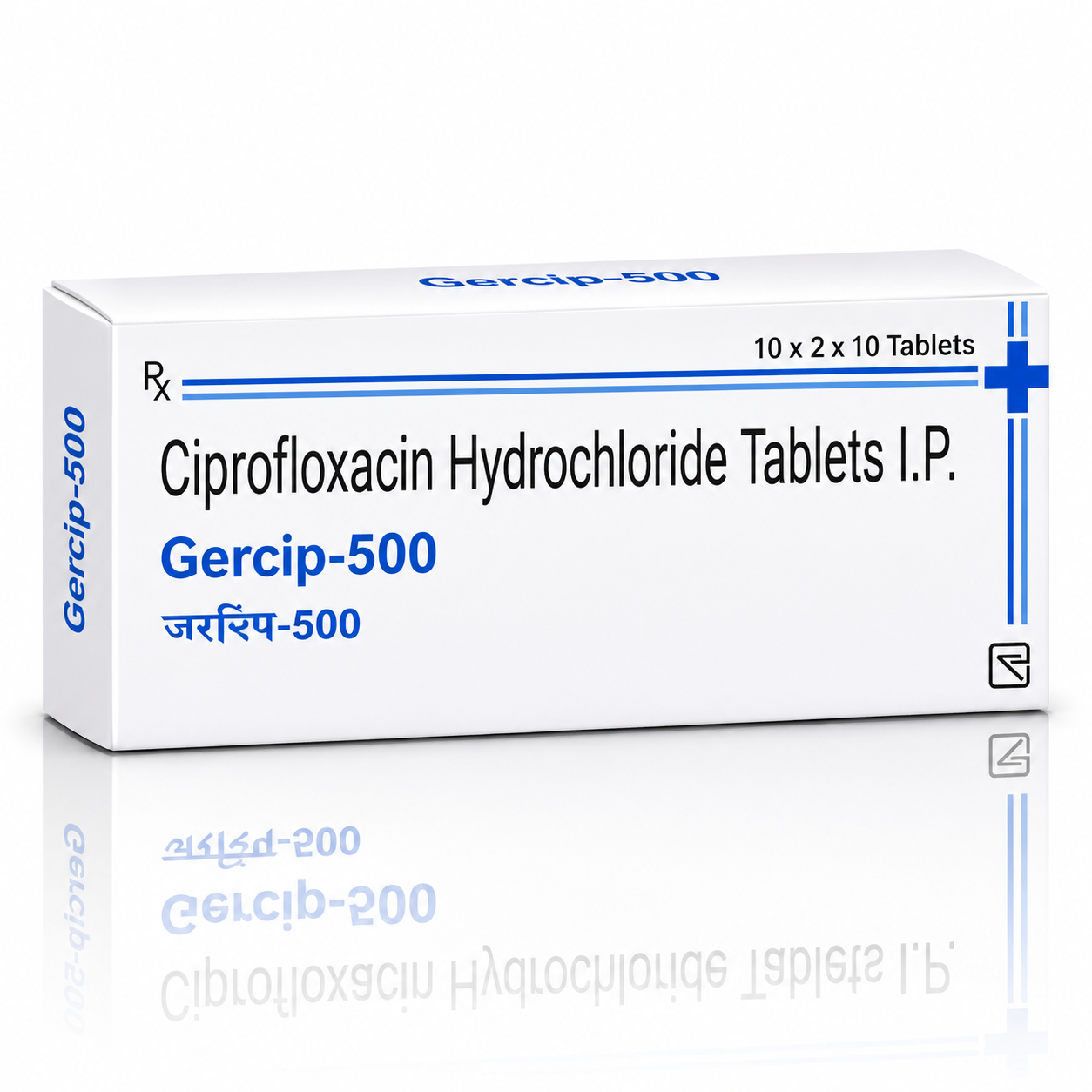
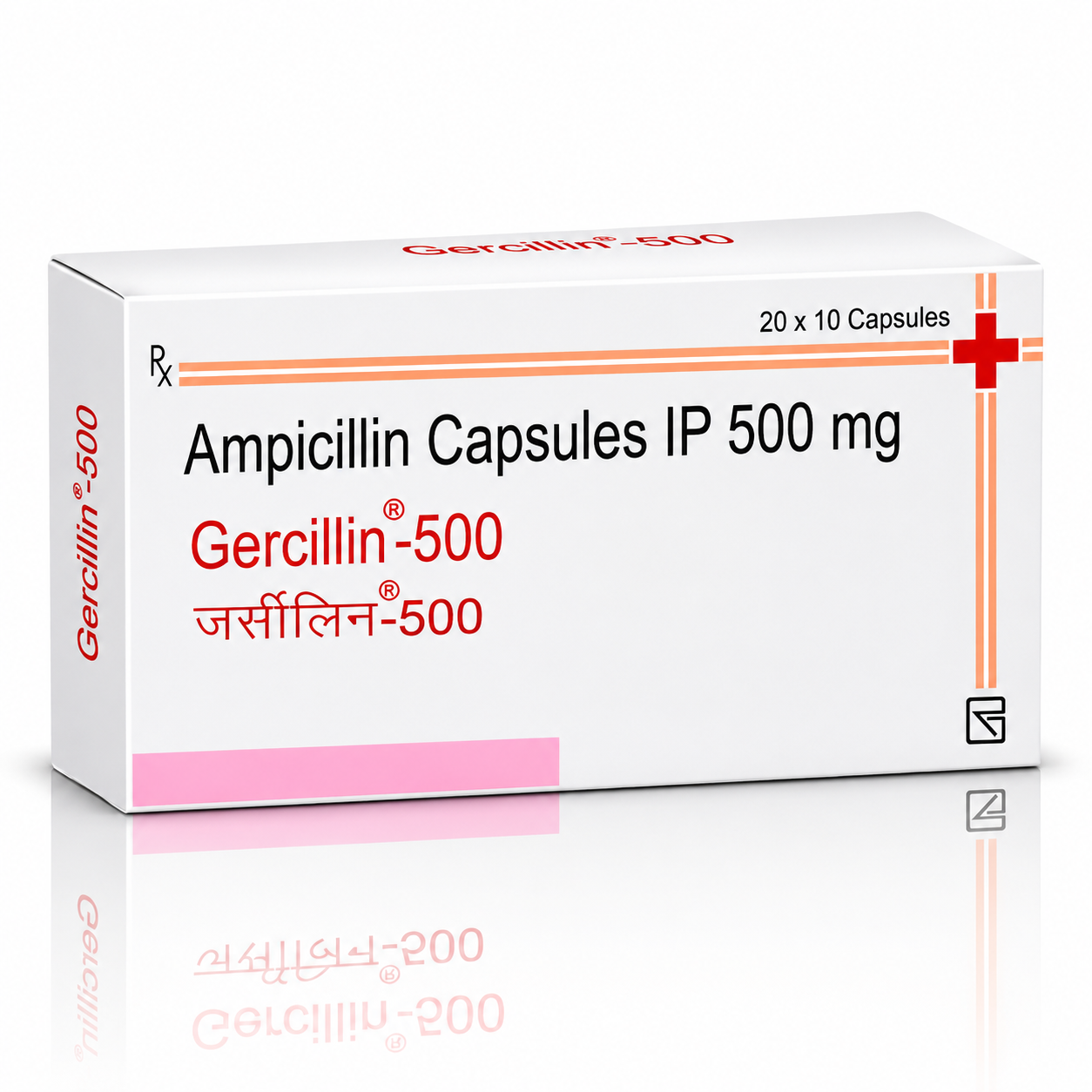
Gercip 500 MG Tablet
Starting at just $0.09
$0.05 / unit
| Pack Size | Price | Price / Unit | Quantity | Action |
|---|---|---|---|---|
| 180 Capsule | $9.00 | $0.05/unit | ||
| 150 Capsule | $7.50 | $0.05/unit | ||
| 120 Capsule | $6.00 | $0.05/unit | ||
| 90 Capsule | $4.50 | $0.05/unit | ||
| 60 Capsule | $3.00 | $0.05/unit | ||
| 30 Capsule | $1.50 | $0.05/unit |
Brand Name: Gercillin 500 mg Capsule
Generic Name: Ampicillin (as Ampicillin Trihydrate)
Strength: 500 mg
Dosage Form: Oral Capsule
Therapeutic Class: Penicillin Antibiotic / Aminopenicillin / Beta-Lactam Antibacterial Agent
Manufacturer/Marketer: Zydus Healthcare Limited / German Remedies (Zydus Group).
AMPICILLIN is a broad-spectrum penicillin antibiotic used to treat various bacterial infections caused by susceptible microorganisms. It belongs to the aminopenicillin group of beta-lactam antibiotics.
It works by inhibiting bacterial cell wall synthesis. Ampicillin binds to penicillin-binding proteins (PBPs), preventing the formation of peptidoglycan, an essential component of bacterial cell walls. This weakens the cell wall and causes susceptible bacteria to die.
Gercillin 500 mg Capsule may be prescribed for:
Respiratory Tract Infections: Certain bacterial infections affecting the lungs, bronchi, and respiratory passages.
Ear, Nose, and Throat Infections: Selected bacterial infections involving the ears, throat, tonsils, or sinuses.
Urinary Tract Infections (UTIs): Infections affecting the bladder or urinary tract caused by susceptible bacteria.
Gastrointestinal Infections: Certain bacterial infections affecting the stomach or intestines.
Skin and Soft Tissue Infections: Bacterial infections involving the skin and underlying tissues.
Genital Tract Infections: Selected infections caused by bacteria susceptible to ampicillin.
Other Susceptible Bacterial Infections: When bacterial culture, susceptibility testing, or clinical assessment indicates that ampicillin is appropriate.
Ampicillin may also be used to treat certain serious bacterial infections, but these conditions may require injectable antibiotics, different doses, or hospital-based treatment.
Important: Gercillin 500 mg Capsule treats bacterial infections only. It is not effective against viral infections such as the common cold, influenza, or most viral sore throats.
Antibiotic treatment should be based on the suspected or confirmed bacterial infection, medical history, and local antibiotic resistance patterns.
This medicine is for oral use only.
They need to know if you have any of these conditions:
kidney disease or impaired kidney function
liver disease or abnormal liver function tests
history of allergic reactions to penicillin antibiotics
history of severe allergic reactions to cephalosporins or other beta-lactam antibiotics
asthma or a history of severe allergies
infectious mononucleosis (glandular fever)
history of antibiotic-associated diarrhea
previous Clostridioides difficile infection
inflammatory bowel disease or other significant intestinal disorders
epilepsy or a history of seizures
history of severe skin reactions to medications
currently taking other antibiotics
currently taking medicines that may affect kidney function
an unusual or allergic reaction to ampicillin, other medicines, foods, dyes, or preservatives
pregnant or planning to become pregnant
breast-feeding
This medicine is for oral use only.
Take Gercillin 500 mg Capsule exactly as prescribed by your healthcare provider.
Swallow the capsule whole with a glass of water.
Ampicillin capsules are generally taken on an empty stomach, approximately 30 minutes before or 2 hours after meals, to improve absorption.
Take the medicine at evenly spaced intervals according to your prescribed schedule.
The dosage and duration depend on the type and severity of the bacterial infection, your age, kidney function, and response to treatment.
Do not crush, chew, or open the capsule unless specifically instructed by your healthcare provider or pharmacist.
Do not increase the dose or take the medicine more frequently than prescribed.
Complete the prescribed course of treatment, even if your symptoms improve before the course is finished, unless your healthcare provider advises you to stop or change treatment.
Stopping antibiotic treatment prematurely may result in incomplete treatment or recurrence of the infection.
Do not use leftover antibiotics or take this medicine without a prescription.
Patients with impaired kidney function may require dosage adjustments.
If you experience severe diarrhea, persistent vomiting, or an allergic reaction, contact your healthcare provider immediately.
Overdosage: Taking excessive amounts of ampicillin may cause nausea, vomiting, diarrhea, neurological symptoms, or seizures, particularly in patients with kidney impairment. Seek immediate medical attention or contact a poison control center if an overdose is suspected.
NOTE: This medicine is only for you. Do not share this medicine with others.
If you miss a dose, take it as soon as you remember.
If it is almost time for your next scheduled dose, skip the missed dose and continue your regular dosing schedule.
Do not take two doses at the same time to make up for a missed dose.
Try to take each dose at evenly spaced intervals to maintain effective antibiotic concentrations.
If you miss several doses, consult your healthcare provider for advice on completing the prescribed course.
allopurinol
probenecid
methotrexate
warfarin and other anticoagulants
tetracycline antibiotics
chloramphenicol
certain other antibacterial medicines
oral typhoid vaccine
mycophenolate mofetil
certain medicines that affect kidney function
other penicillin antibiotics
hormonal contraceptives, particularly if vomiting or severe diarrhea affects absorption
Allopurinol may increase the risk of skin rash when used with ampicillin.
Probenecid can reduce the renal elimination of ampicillin, increasing its concentration and duration of action.
Methotrexate elimination may be reduced when used with penicillin antibiotics, potentially increasing the risk of toxicity.
Warfarin and other anticoagulants may require additional monitoring because antibiotics can occasionally affect anticoagulant response.
Certain bacteriostatic antibiotics may interfere with the antibacterial activity of penicillins in some circumstances.
Ampicillin does not generally make hormonal contraceptives ineffective through a direct drug interaction, but vomiting or severe diarrhea may reduce the absorption of oral contraceptive pills.
This list may not describe all possible interactions. Inform your healthcare provider about all prescription medicines, over-the-counter medicines, herbal products, supplements, and other medications you use.
Use this medicine exactly as directed by your healthcare provider.
Gercillin 500 mg Capsule is effective only against susceptible bacterial infections.
Symptoms may begin to improve within a few days of starting treatment, although the response depends on the infection and the bacteria involved.
Complete the prescribed antibiotic course unless your healthcare provider instructs you to stop or change treatment.
Do not use this medicine for viral infections such as colds or influenza.
Ampicillin may cause allergic reactions, particularly in patients with a history of penicillin allergy.
Stop taking the medicine and seek emergency medical attention if you experience difficulty breathing, swelling of the face or throat, or other symptoms of a severe allergic reaction.
Mild diarrhea may occur during antibiotic treatment. However, severe, persistent, or bloody diarrhea may indicate antibiotic-associated colitis caused by Clostridioides difficile.
This condition can develop during treatment or several weeks after completing antibiotics.
Do not take medicines to stop severe diarrhea without consulting your healthcare provider.
Patients with kidney disease may need dosage adjustments because ampicillin is primarily eliminated through the kidneys.
Prolonged antibiotic treatment may occasionally cause overgrowth of resistant bacteria or fungi, including oral thrush or vaginal yeast infections.
If treatment is prolonged, your healthcare provider may recommend monitoring kidney function, liver function, or blood counts.
Ampicillin frequently causes a widespread rash in patients with infectious mononucleosis and should generally be avoided in such cases.
Antibiotic resistance may reduce the effectiveness of ampicillin against certain bacterial infections.
If your symptoms worsen, fever persists, or your infection does not improve after several days, consult your healthcare provider.
Important: Gercillin 500 mg Capsule should be used only when prescribed for a bacterial infection. Unnecessary antibiotic use increases the risk of antibiotic resistance and treatment failure.
allergic reactions such as rash, hives, itching, or swelling of the face, lips, tongue, or throat
difficulty breathing or severe allergic reactions
severe or persistent diarrhea
bloody or watery diarrhea
severe abdominal pain or cramping
severe skin reactions, including blistering or peeling
fever accompanied by a widespread skin rash
unusual bruising or bleeding
yellowing of the skin or eyes
dark urine or other signs of liver problems
severe dizziness or fainting
seizures
reduced urination or signs of kidney problems
unusual tiredness, weakness, or persistent fever
symptoms of severe antibiotic-associated colitis
nausea
vomiting
mild diarrhea
stomach discomfort
abdominal pain
mild indigestion
loss of appetite
mild headache
temporary changes in bowel movements
mild gastrointestinal irritation
oral thrush
vaginal yeast infection
This list may not describe all possible side effects.
Keep out of the reach of children.
Store below 30°C (86°F) in a cool, dry place, unless different storage instructions are provided on the product packaging.
Protect from excessive heat, moisture, and direct sunlight.
Keep the capsules in their original blister packaging until use.
Do not store in bathrooms or areas with excessive humidity.
Keep the medicine in a secure location to prevent accidental ingestion.
Do not use the capsules if the packaging is damaged or the medicine has changed noticeably in appearance.
Do not use the medicine after the expiration date.
Dispose of unused or expired antibiotics according to local pharmacy disposal recommendations.
Field | Information |
|---|---|
Brand Name | Gercillin 500 mg Capsule |
Generic Name | Ampicillin (as Ampicillin Trihydrate) |
Strength | 500 mg |
Dosage Form | Oral Capsule |
Pack Size | Strip of 10 Capsules |
Therapeutic Class | Penicillin Antibiotic / Aminopenicillin / Beta-Lactam Antibacterial Agent |
Indication | Susceptible Bacterial Respiratory Tract Infections, Ear and Throat Infections, Urinary Tract Infections, Gastrointestinal Infections, Skin and Soft Tissue Infections |
Manufacturer/Marketer | Zydus Healthcare Limited / German Remedies (Zydus Group) |
Associated Brand Portfolio | German Remedies |
Prescription Status | Prescription Only Medicine |
Route of Administration | Oral |
Storage | Store according to product labeling; protect from heat, moisture, and direct sunlight |
Country of Origin | India |
Starting at just $0.09
Starting at just $15.00
Starting at just $10.00
Starting at just $3.54
Starting at just $1.16