Testosterone therapy is used to treat appropriately diagnosed testosterone deficiency, or hypogonadism. While treatment may improve symptoms in suitable patients, testosterone can also affect several laboratory values—including hemoglobin, hematocrit, and red blood cell count.
One of the best-recognized effects of testosterone therapy is increased red blood cell production. In some patients, this rise is beneficial, particularly when low testosterone is associated with anemia. However, if hematocrit becomes too high, the condition is known as erythrocytosis, and treatment may need to be adjusted.
So, does testosterone therapy increase hematocrit and red blood cells? Yes. It can—and regular blood testing is an important part of safe testosterone treatment.
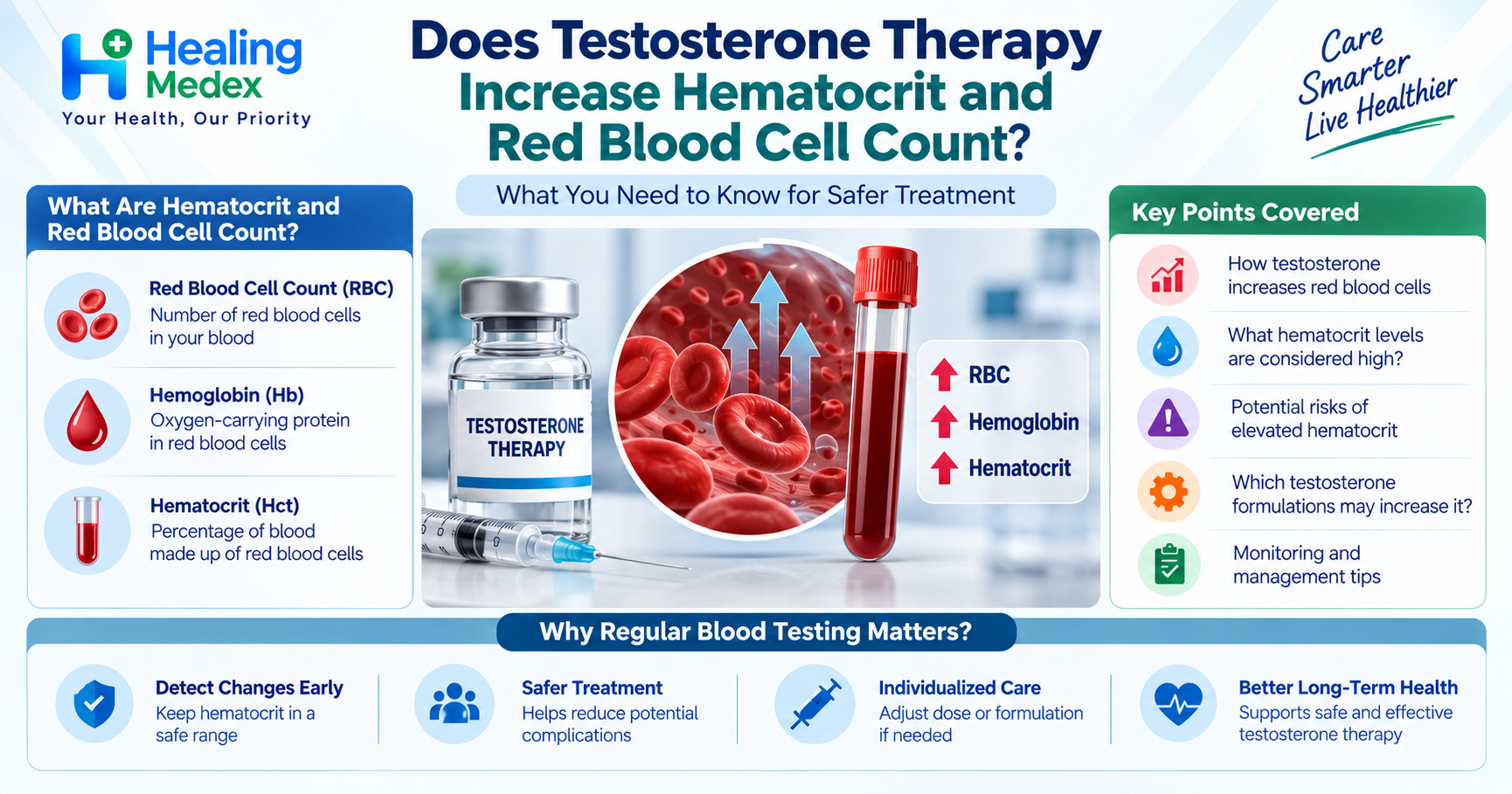
What Are Hematocrit and Red Blood Cell Count?
Red blood cells, or RBCs, transport oxygen from the lungs to tissues throughout the body.
Three commonly measured blood parameters are:
Red blood cell count (RBC): the number of red blood cells in a given volume of blood.
Hemoglobin (Hb): the oxygen-carrying protein contained within red blood cells.
Hematocrit (Hct): the percentage of the blood volume made up of red blood cells.
For example, a hematocrit of 45% means approximately 45% of the blood volume consists of red blood cells.
These measurements are usually included in a complete blood count (CBC).
Does Testosterone Increase Red Blood Cell Production?
Yes.
Testosterone stimulates erythropoiesis, the process through which the body produces red blood cells. Consequently, hemoglobin and hematocrit commonly increase after testosterone therapy begins.
The American Urological Association describes an increase in hemoglobin and hematocrit as the most frequent adverse laboratory effect associated with testosterone therapy. Levels often rise during approximately the first six months of treatment before tending to plateau.
This effect does not automatically mean something is wrong. Testosterone can actually help correct anemia in some men with testosterone deficiency. Problems arise when red blood cell production becomes excessive.
Why Does Testosterone Raise Hematocrit?
Several biological mechanisms may contribute.
1. Testosterone stimulates erythropoietin
Erythropoietin, commonly called EPO, is a hormone primarily produced by the kidneys that tells bone marrow to produce additional red blood cells.
Testosterone may temporarily increase EPO activity and alter the body's normal relationship between EPO and hemoglobin.
2. Testosterone affects hepcidin
Hepcidin helps regulate how iron is stored and made available within the body.
Testosterone can suppress hepcidin, potentially making more iron available for the production of hemoglobin and new red blood cells.
These mechanisms help explain why testosterone can progressively increase hemoglobin and hematocrit.
What Is Testosterone-Induced Erythrocytosis?
Erythrocytosis means that the amount of red blood cells in the circulation has become abnormally high.
It is sometimes referred to as polycythemia, although testosterone-related secondary erythrocytosis is not the same condition as polycythemia vera, which is a bone-marrow disorder.
According to the American Urological Association, hematocrit above approximately 52% is often used to define erythrocytosis, while a hematocrit of 54% or higher during testosterone treatment warrants clinical intervention.
The exact laboratory reference range can vary according to the laboratory, sex, altitude, hydration status and other factors.
Why Can Very High Hematocrit Be a Concern?
When the proportion of red blood cells becomes excessive, blood viscosity may increase.
This has raised concern about possible complications involving blood vessels, including:
venous blood clots
pulmonary embolism
heart attack
stroke
However, the relationship between testosterone-induced erythrocytosis and cardiovascular or thrombotic events is complex. Reviews have found reasons for concern, while also noting that the precise level of risk and the best way to manage testosterone-induced erythrocytosis remain areas of ongoing research.
This uncertainty is one reason clinicians focus on regular laboratory monitoring rather than waiting for symptoms to occur.
What Hematocrit Level Is Too High During Testosterone Therapy?
Clinical guidelines provide useful thresholds.
The American Urological Association recommends checking hemoglobin and hematocrit before testosterone therapy begins.
If hematocrit is already above 50% before treatment, clinicians should generally investigate why it is elevated and consider withholding testosterone until the cause is understood.
During treatment:
Hematocrit ≥54% generally requires intervention.
Depending on the individual situation, intervention may include reducing the testosterone dose, temporarily stopping treatment, changing formulations or evaluating other causes of erythrocytosis.
The Endocrine Society also recommends against beginning testosterone treatment in patients who already have an elevated hematocrit and emphasizes continued monitoring during therapy.
Which Testosterone Formulations Are More Likely to Raise Hematocrit?
The risk does not appear to be identical with every testosterone formulation.
Injectable testosterone
Intramuscular testosterone preparations—particularly formulations producing relatively high peaks in testosterone concentrations—have commonly been associated with larger increases in hematocrit.
Examples can include:
The AUA notes that clinical studies have generally found the greatest increases in hemoglobin and hematocrit with injectable testosterone compared with topical preparations.
Testosterone gels and other transdermal preparations
Transdermal testosterone generally produces steadier testosterone concentrations and may cause a smaller rise in hematocrit for some patients.
A 2025 review similarly concluded that the route of testosterone administration can substantially influence hematocrit changes.
However, any form of testosterone can potentially raise hematocrit, so monitoring remains necessary regardless of formulation.
Who May Have a Higher Risk of Elevated Hematocrit?
The likelihood of erythrocytosis can depend on more than testosterone alone.
Factors clinicians may consider include:
high testosterone doses or concentrations
injectable testosterone preparations
elevated hematocrit before starting treatment
smoking
obstructive sleep apnea
chronic lung disease or chronic hypoxia
living at high altitude
dehydration
increasing age
other medications or medical conditions affecting red blood cell production
Obstructive sleep apnea deserves particular attention because repeated reductions in oxygen during sleep can independently stimulate red blood cell production.
Can High Hematocrit Cause Symptoms?
Mild elevations may produce no noticeable symptoms, which is why routine blood tests are important.
When hematocrit becomes substantially elevated, possible symptoms can include:
headache
dizziness
unusual fatigue
facial flushing
blurred vision
shortness of breath
These symptoms are not specific to erythrocytosis and can have many other causes.
Urgent medical assessment is appropriate for symptoms that could suggest a cardiovascular or thrombotic emergency, including sudden chest pain, sudden severe shortness of breath, coughing blood, one-sided leg swelling, sudden weakness, difficulty speaking or other symptoms suggestive of stroke.
How Often Should Hematocrit Be Checked During Testosterone Therapy?
A CBC should generally be obtained before testosterone treatment starts to establish baseline hemoglobin and hematocrit.
Monitoring schedules can vary according to the patient, testosterone formulation, dose and clinician.
Traditional Endocrine Society guidance has recommended checking hematocrit at baseline, again within the first several months of therapy and periodically thereafter.
The Endocrine Society reaffirmed in July 2026 that appropriate diagnosis, screening and ongoing monitoring remain important for people receiving testosterone therapy.
Patients should follow the testing schedule recommended by their treating clinician rather than relying on symptoms alone.
What Happens If Hematocrit Becomes Too High?
Treatment depends on the hematocrit level, testosterone concentration, formulation, symptoms and other medical conditions.
A clinician may consider:
Reducing the testosterone dose
If testosterone concentrations are higher than necessary, lowering the dose can reduce stimulation of red blood cell production.
Changing the dosing schedule
Large fluctuations in testosterone concentration can sometimes contribute to erythrocytosis.
A clinician may modify the dose or dosing interval depending on the preparation being used.
Changing the testosterone formulation
Someone who develops recurrent erythrocytosis while receiving injectable testosterone may sometimes be considered for a transdermal preparation.
Temporarily stopping testosterone
If hematocrit becomes significantly elevated, testosterone may be temporarily withheld until the level decreases.
Looking for other causes
Doctors may evaluate contributing factors such as:
sleep apnea
smoking
chronic hypoxia
lung disease
dehydration
high-altitude exposure
If the elevated hematocrit cannot be explained by testosterone or common secondary causes, further hematologic evaluation may be necessary.
Phlebotomy
Therapeutic phlebotomy has traditionally been used in selected patients to reduce hematocrit by removing blood.
However, newer reviews emphasize that evidence supporting routine phlebotomy specifically for testosterone-induced erythrocytosis is limited. Decisions about phlebotomy should therefore be individualized rather than performed without medical supervision.
Should You Stop Testosterone if Your Hematocrit Is High?
Do not change or stop prescribed testosterone solely on the basis of one laboratory result without discussing it with your healthcare provider unless urgent medical care is required.
A high result may need to be repeated or interpreted alongside:
hemoglobin
red blood cell count
testosterone concentration
hydration status
treatment dose
timing of the testosterone measurement
oxygen levels
sleep apnea history
smoking history
other medical conditions and medications
For hematocrit 54% or higher, major testosterone guidelines recommend clinical intervention rather than simply continuing the same treatment unchanged.
Does a Higher Red Blood Cell Count Mean Testosterone Therapy Is Working Better?
No.
A larger increase in hematocrit does not mean testosterone treatment is more effective.
The goal of medically supervised testosterone therapy is to treat confirmed testosterone deficiency while maintaining testosterone and other laboratory parameters within appropriate ranges—not to maximize testosterone, hemoglobin or hematocrit.
Excessive dosing may increase adverse effects without providing additional therapeutic benefit.
Can Testosterone Help Someone With Anemia?
In appropriately selected patients, yes.
Low testosterone can contribute to otherwise unexplained anemia in some men, and testosterone therapy can stimulate red blood cell production enough to improve hemoglobin levels.
This beneficial effect and the risk of excessive erythrocytosis represent two sides of the same physiological process.
The objective is therefore to maintain adequate red blood cell production without allowing hematocrit to become excessively elevated.
Frequently Asked Questions
1.Does testosterone therapy increase hematocrit?
Yes. Testosterone stimulates red blood cell formation, and increases in hemoglobin and hematocrit are well-recognized effects of treatment.
2.Is increased hematocrit common with testosterone injections?
It can be. Injectable preparations have generally been associated with larger hematocrit increases than transdermal testosterone.
3.Is a hematocrit of 54% dangerous?
A hematocrit of 54% or higher during testosterone therapy is an important clinical threshold requiring evaluation and intervention according to major guidelines. It does not mean every person at 54% will experience a complication, but it should not be ignored.
4.Can drinking water lower hematocrit?
Dehydration can temporarily concentrate the blood and make hematocrit appear higher. Correcting dehydration may therefore change a mildly elevated result. However, hydration does not treat true testosterone-induced erythrocytosis.
5.Can testosterone therapy increase hemoglobin too?
Yes. Because testosterone promotes red blood cell production, both hemoglobin and hematocrit usually rise together.
6.Can changing from injections to testosterone gel help?
For some patients it may. Transdermal preparations generally produce smaller hematocrit increases than short-acting injectable testosterone, although individual responses vary.
The Bottom Line
Testosterone therapy can increase red blood cell count, hemoglobin and hematocrit.
This is a normal physiological response to testosterone, but excessive red blood cell production can result in erythrocytosis.
For people receiving testosterone therapy, safe treatment involves more than simply checking testosterone levels. Regular monitoring should include hemoglobin and hematocrit, particularly during the first several months after treatment begins or after dose changes.
A high hematocrit does not automatically mean testosterone therapy must be permanently stopped. Depending on the situation, clinicians may adjust the dose, change the dosing schedule or formulation, investigate contributing conditions such as sleep apnea, or temporarily interrupt treatment.