Testosterone replacement therapy (TRT) and anabolic steroids are often discussed as though they are completely different substances. In reality, the distinction is more nuanced.
Testosterone used for TRT is itself an anabolic-androgenic steroid. The major differences are usually why it is being used, the dose and hormone levels being targeted, whether treatment is medically indicated, and how closely the person is monitored.
TRT is a medical treatment intended to restore testosterone to an appropriate physiological range in people with properly diagnosed testosterone deficiency. In contrast, the term “anabolic steroid use” commonly refers to taking testosterone or other anabolic-androgenic steroids primarily to increase muscle mass, strength or athletic performance—often at doses that produce hormone levels above the normal physiological range.
Understanding this distinction is important because the potential benefits, risks and medical supervision can be very different.
What Is Testosterone Replacement Therapy (TRT)?
Testosterone replacement therapy is treatment with testosterone for people who have clinically confirmed testosterone deficiency, also called hypogonadism.
The Endocrine Society recommends diagnosing hypogonadism when a person has both:
Symptoms or signs consistent with testosterone deficiency
Consistently and unequivocally low testosterone levels on appropriate blood testing
Testing generally requires repeat early-morning testosterone measurements rather than making a diagnosis from symptoms alone.
Possible symptoms of testosterone deficiency can include:
Reduced sexual desire
Reduced energy
Loss of muscle mass
Reduced body or facial hair
Lower bone density
Changes in mood or concentration
Infertility
However, these symptoms are not specific to low testosterone and may result from many other medical or lifestyle factors.
What Is the Goal of TRT?
The aim of TRT is generally to replace testosterone that the body is not producing adequately, rather than to push testosterone far above the normal range.
The American Urological Association has recommended using the minimum testosterone dose needed to reach an appropriate physiological range while improving symptoms.
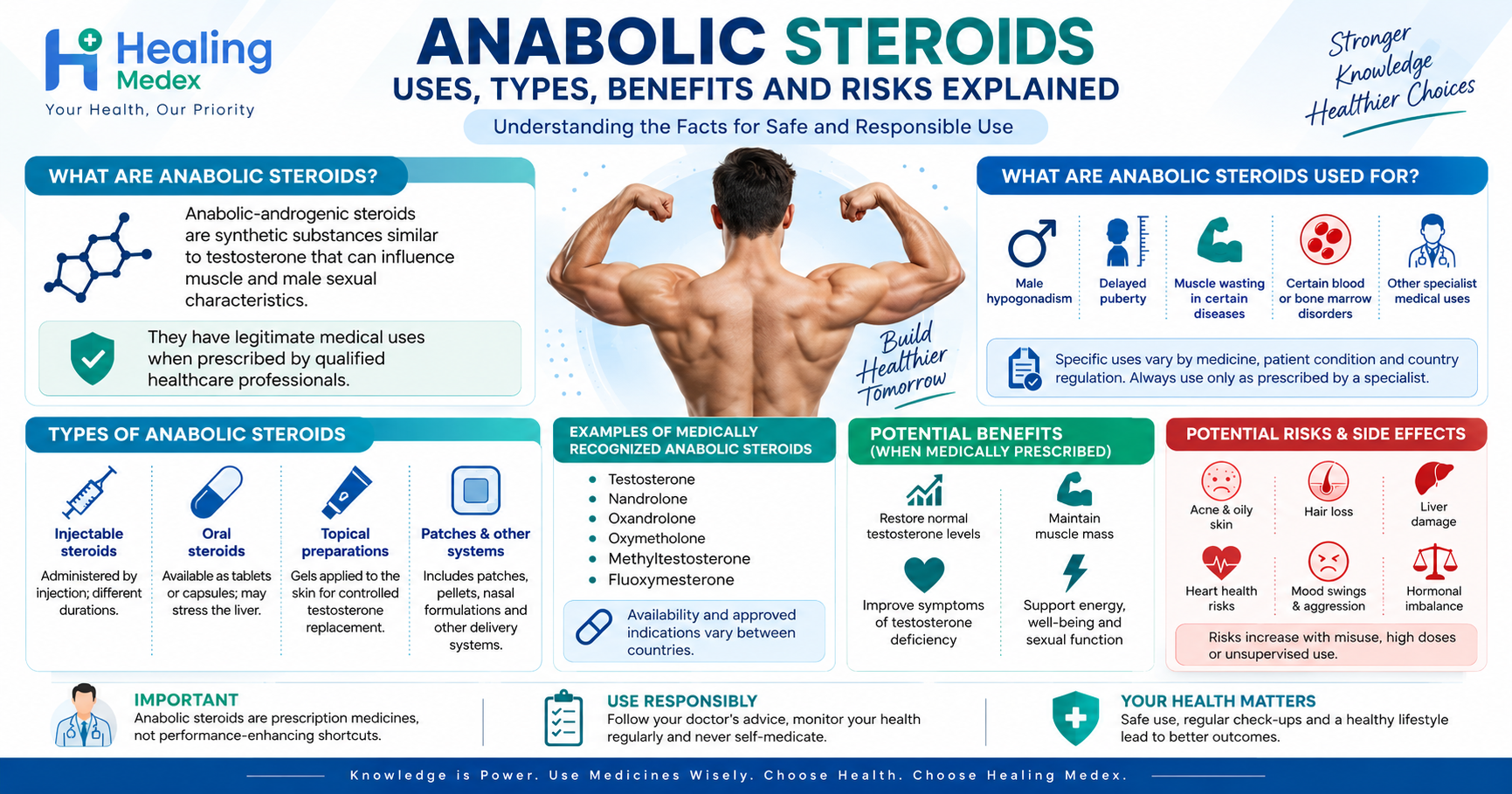
TRT may be available in several forms, including:
Transdermal patches
Certain oral formulations
Other approved testosterone delivery systems
The exact treatment depends on the patient's diagnosis, medical history, preferences and response.
What Are Anabolic Steroids?
They have two major types of effects:
Anabolic effects: promoting protein synthesis, muscle growth and recovery.
Androgenic effects: producing or maintaining male sexual characteristics.
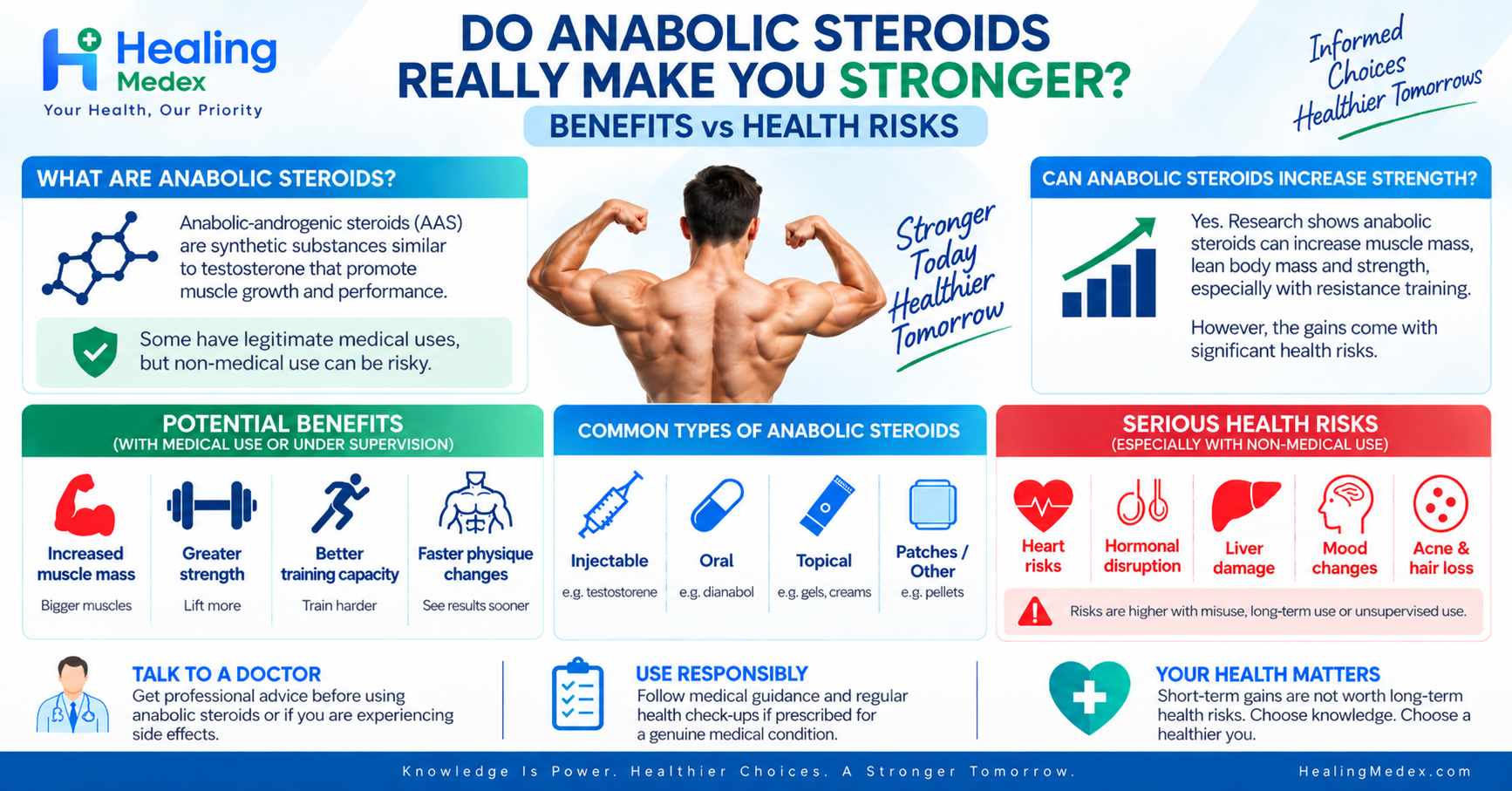
Some anabolic steroids have legitimate medical applications. However, outside medical treatment, anabolic steroids are often used in bodybuilding or sports in an attempt to increase:
Muscle size
Strength
Training capacity
Recovery
Physical appearance
Non-medical users may also combine several compounds, sometimes referred to as “stacking.”
Such use can expose the body to androgen levels far beyond normal physiological requirements and may carry significant health risks.
TRT vs Anabolic Steroids: The Main Differences
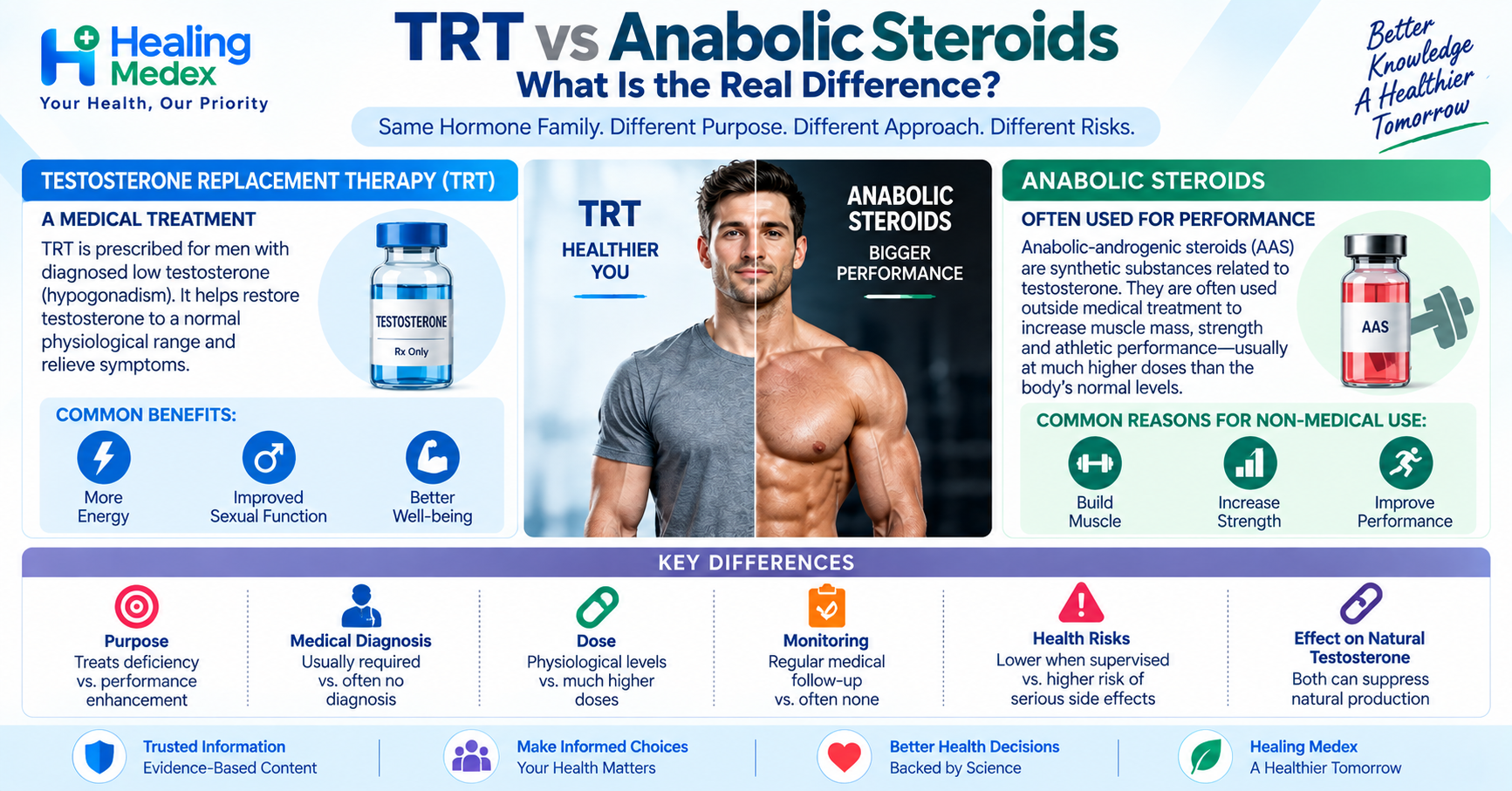
Factor | Medically Supervised TRT | Non-Medical Anabolic Steroid Use |
|---|---|---|
Primary purpose | Treat diagnosed testosterone deficiency | Increase muscle, strength or athletic performance |
Hormone target | Generally physiological testosterone levels | May produce supraphysiological levels |
Medical diagnosis | Usually required | Often no diagnosed deficiency |
Dose selection | Individualized by a healthcare professional | May involve substantially higher doses |
Compounds used | Usually approved testosterone formulations | Testosterone and/or other anabolic steroids may be combined |
Blood monitoring | Regular monitoring is typically required | Monitoring may be absent or inconsistent |
Duration | May be long-term when medically indicated | Often used in cycles, although patterns vary |
Main objective | Restore deficient hormone function and relieve symptoms | Muscle growth, strength or physique enhancement |
Risk control | Clinical screening, follow-up and dose adjustment | Risks may be substantially harder to control |
The key difference is therefore not simply “TRT versus steroids.” Testosterone used in TRT belongs to the anabolic-androgenic steroid family. The difference lies largely in the clinical indication, amount used, target hormone levels and medical supervision.
Does TRT Build Muscle?
TRT may help restore lean body mass and strength in people who genuinely have testosterone deficiency.
Someone whose testosterone is abnormally low may experience changes in:
Muscle mass
Body composition
Bone health
Sexual function
Certain symptoms associated with hypogonadism
when testosterone levels are appropriately restored.
However, medically supervised TRT is not designed as a bodybuilding treatment.
The objective is usually to correct testosterone deficiency rather than create testosterone concentrations significantly above the normal physiological range.
Do Anabolic Steroids Build More Muscle Than TRT?
High-dose anabolic steroid use can produce greater muscle-building effects because users may expose themselves to androgen concentrations considerably above natural physiological levels.
That does not mean higher doses are medically better.
Greater androgen exposure can also increase the likelihood or severity of adverse effects involving the:
Hormonal system
Reproductive system
Skin
Liver, particularly with certain oral anabolic steroids
Psychological and behavioral health
NIDA identifies potential consequences of anabolic steroid misuse including high blood pressure, blood clots, heart attack, stroke, reduced sperm production, testicular shrinkage, severe acne and other complications.
How Do TRT and Anabolic Steroids Affect Natural Testosterone?
This is one of the most important similarities.
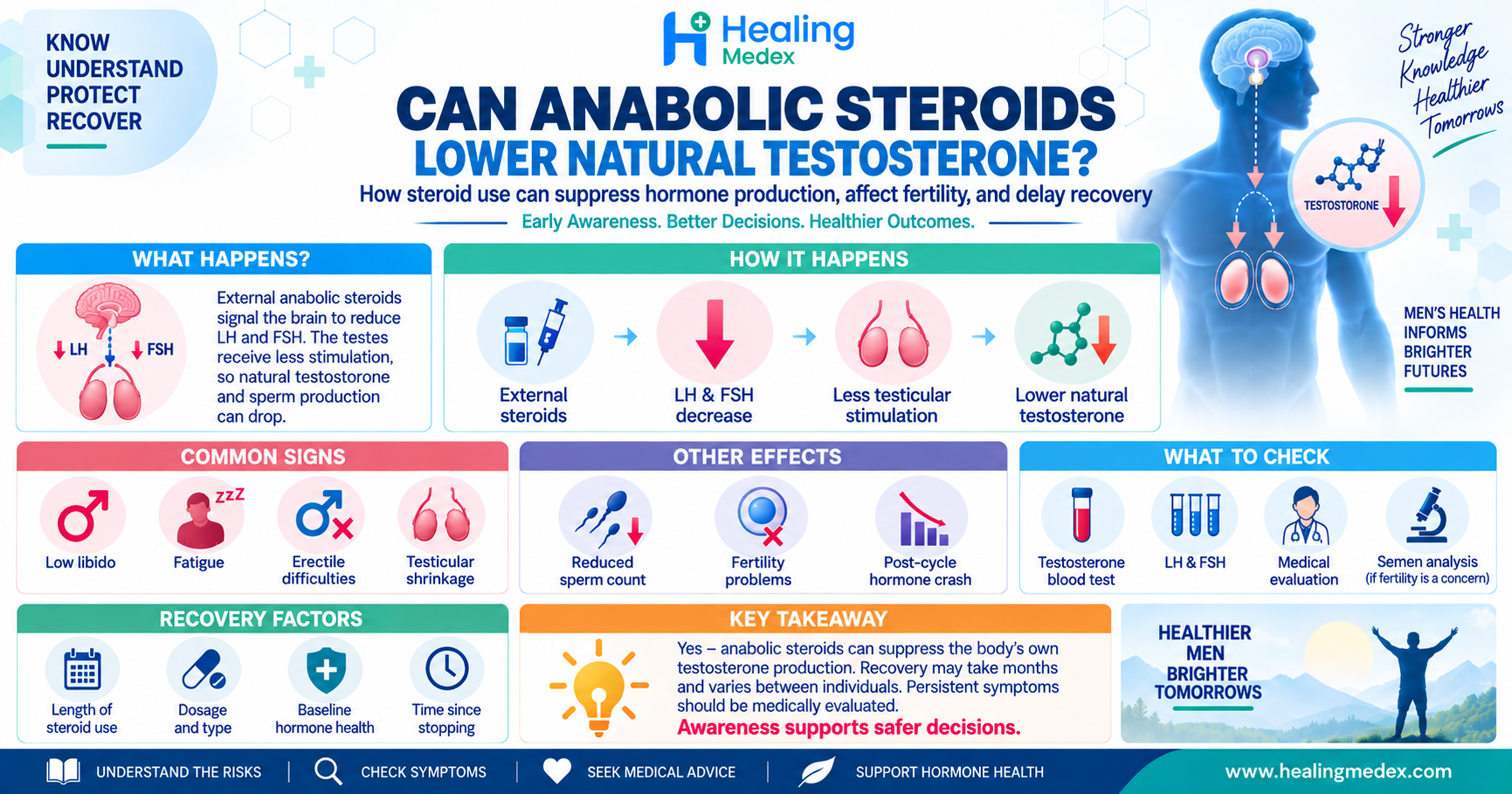
When testosterone or another androgen enters the body from an external source, the brain detects the androgen signal and can reduce production of:
Gonadotropin-releasing hormone (GnRH)
Luteinizing hormone (LH)
Follicle-stimulating hormone (FSH)
These hormones normally stimulate the testes to produce testosterone and sperm.
As a result, both TRT and non-medical anabolic steroid use can suppress the body's natural testosterone production.
This is why TRT should not be viewed as simply “boosting” the body's own production. It generally supplies testosterone from outside the body while endogenous testosterone production becomes suppressed.
TRT, Anabolic Steroids and Fertility
Both TRT and anabolic steroids can have an important effect on male fertility.
External testosterone can suppress LH and FSH, potentially causing sperm production to decrease dramatically or stop.
The American Urological Association and American Society for Reproductive Medicine recommend that exogenous testosterone should not be prescribed to men interested in current or near-term fertility because spermatogenesis can fall substantially, sometimes resulting in very low sperm counts or azoospermia. Recovery following discontinuation can take months and, occasionally, considerably longer.
Men considering TRT who may want children should therefore discuss fertility with a qualified healthcare professional before beginning treatment.
What Are the Possible Side Effects of TRT?
Even when TRT is medically appropriate, it is not risk-free.
Possible effects can include:
Increased red blood cell count or hematocrit
Acne or oily skin
Reduced sperm production
Increased prostate size in some men
Fluid retention
Changes in blood pressure
Breast tenderness or enlargement in some cases
Suppression of natural testosterone production
The FDA has required testosterone-product labeling to include information about increases in blood pressure following blood-pressure monitoring studies.
Current evidence surrounding cardiovascular outcomes has also evolved. The large TRAVERSE trial did not demonstrate a meaningful increase in major cardiovascular events such as cardiovascular death, nonfatal heart attack or nonfatal stroke among the studied men receiving testosterone compared with placebo. However, important questions about longer-term safety remain, and appropriate patient selection and monitoring are still necessary.
What Are the Risks of Anabolic Steroid Misuse?
The risks of non-medical anabolic steroid use depend on the compound, dose, duration, combinations used and individual health factors.
Potential effects can include:
1. Natural Testosterone Suppression
External anabolic steroids can strongly suppress the hypothalamic-pituitary-testicular axis, reducing natural testosterone production.
2. Reduced Fertility
Sperm production may fall significantly, sometimes reaching extremely low or undetectable levels.
3. Testicular Shrinkage
Reduced stimulation of the testes can contribute to decreased testicular volume.
4. Cardiovascular Problems
Possible consequences include:
Unfavorable cholesterol changes
Blood clots
Stroke
5. Acne and Oily Skin
High androgen exposure can increase sebaceous-gland activity, contributing to acne.
6. Hair Loss
People genetically predisposed to androgenic hair loss may experience accelerated male-pattern baldness.
7. Gynecomastia
Hormonal imbalances may contribute to enlargement of breast tissue in men.
8. Liver Problems
Certain anabolic steroids—particularly some orally active forms—can place considerable stress on the liver.
9. Mood or Behavioral Changes
Some users report changes involving irritability, aggression or mood. Psychiatric effects associated with anabolic steroid misuse can vary greatly between individuals.
10. Injection-Related Risks
Non-sterile injection practices can introduce additional risks including infection and transmission of blood-borne diseases.
NIDA lists cardiovascular, hormonal, liver, skin, psychiatric and infectious complications among the potential consequences of anabolic steroid misuse.
Does TRT Cause the Same Side Effects as Steroid Abuse?
There is overlap because both involve exposure to androgens.
However, the degree of exposure matters considerably.
TRT is generally intended to restore testosterone into an appropriate physiological range and is accompanied by clinical monitoring.
Non-medical anabolic steroid use may involve much greater doses, multiple compounds or hormone levels significantly above physiological ranges. That can alter the risk profile.
It would therefore be inaccurate to assume either that:
“TRT and steroid abuse are exactly the same,”
or that:
“TRT has no steroid-related risks.”
Both statements oversimplify the biology.
Is TRT Safe?
TRT can be an appropriate treatment for selected patients who have properly diagnosed hypogonadism, but treatment requires individualized assessment.
The Endocrine Society emphasizes confirming testosterone deficiency and investigating its underlying cause before treatment. Monitoring after treatment begins is also recommended.
Depending on the patient, clinicians may monitor factors such as:
Testosterone level
Hematocrit or hemoglobin
Blood pressure
Treatment response
Adverse effects
Prostate health when appropriate
Fertility considerations
TRT should therefore not be treated as a general wellness or muscle-building supplement.
Who Should Consider TRT?
TRT may be considered when someone has:
Symptoms or signs consistent with testosterone deficiency, and
Repeated laboratory testing confirming appropriately low testosterone, and
A clinical evaluation supporting treatment.
Simply feeling tired, losing gym performance or experiencing reduced libido does not automatically establish testosterone deficiency.
Obesity, poor sleep, sleep apnea, medication use, chronic illness, psychological factors and other hormonal disorders can produce similar symptoms.
The Endocrine Society's 2026 statement emphasizes that clinicians should identify potentially reversible contributors and make an accurate diagnosis before beginning TRT.
Is TRT the Same as a Steroid Cycle?
No.
A medically supervised TRT regimen is intended to maintain appropriate testosterone exposure in someone who needs hormone replacement.
A bodybuilding steroid cycle generally involves anabolic steroids for physique or performance enhancement and may include:
Higher androgen doses
Cycling between periods of use and non-use
Additional performance-enhancing substances
The biological substances can overlap—particularly testosterone—but the treatment goals and exposure patterns are very different.
Can You Stop TRT?
People receiving long-term TRT should discuss any decision to change or stop treatment with their healthcare professional.
Because external testosterone suppresses natural testosterone production, hormone levels may become low after discontinuation until endogenous production recovers.
How quickly recovery occurs depends on multiple factors, including:
Duration of treatment
Underlying cause of testosterone deficiency
Age
Previous hormone function
Individual biology
Someone whose testes or hypothalamic-pituitary system cannot produce adequate testosterone because of an underlying medical condition may continue to need replacement therapy.
TRT vs Anabolic Steroids: The Bottom Line
TRT and anabolic steroids are related, but they should not be treated as interchangeable concepts.
TRT uses testosterone—an anabolic-androgenic steroid—as medical hormone replacement for appropriately diagnosed testosterone deficiency.
The goal is generally to restore testosterone to a physiological range while controlling symptoms and monitoring potential adverse effects.
Non-medical anabolic steroid use, on the other hand, commonly involves testosterone or other anabolic-androgenic steroids for muscle growth, physical appearance or performance enhancement, sometimes at doses substantially higher than those required for hormone replacement.
The major distinctions therefore involve:
Purpose
Diagnosis
Dose
Target testosterone level
Medical supervision
Monitoring
Risk exposure
Neither TRT nor anabolic steroids should be assumed to be harmless. Both can suppress natural testosterone and sperm production, and both can produce adverse effects.
Anyone experiencing symptoms of low testosterone should seek appropriate medical evaluation rather than attempting to diagnose or treat testosterone deficiency based on symptoms alone.
Frequently Asked Questions
1. Is TRT technically an anabolic steroid?
Yes. Testosterone is an anabolic-androgenic steroid. TRT uses pharmaceutical testosterone as hormone replacement. The term “anabolic steroids” in everyday conversation often refers specifically to non-medical or performance-enhancing use.
2. Does TRT increase muscle mass?
Correcting genuine testosterone deficiency may improve lean body mass and strength. TRT is not intended to produce the extreme supraphysiological androgen levels sometimes sought in bodybuilding.
3. Does TRT shut down natural testosterone?
External testosterone typically suppresses the hormonal signals that stimulate the testes to produce testosterone, so natural testosterone production can decrease substantially during treatment.
4. Does TRT reduce sperm count?
Yes, it can. External testosterone suppresses LH and FSH and may markedly reduce sperm production. Men concerned about fertility should discuss this with a healthcare professional before starting TRT.
5. Are bodybuilding steroids stronger than TRT?
The distinction is usually not simply the “strength” of a substance. Non-medical steroid regimens may involve considerably greater androgen exposure and multiple anabolic agents, whereas medical TRT aims to replace deficient testosterone to an appropriate physiological level.
6. Is TRT safe for bodybuilding?
TRT is a medical treatment for appropriately diagnosed testosterone deficiency. It is not intended to be prescribed solely as a bodybuilding or performance-enhancement program.
7. Can anabolic steroid use permanently lower testosterone?
Recovery varies. Natural testosterone production may recover after anabolic steroid discontinuation, but recovery can take considerable time, and some individuals may experience prolonged hormonal suppression. Medical evaluation is appropriate when persistent symptoms occur.