
Latest Blog Articles
Anabolic Steriod
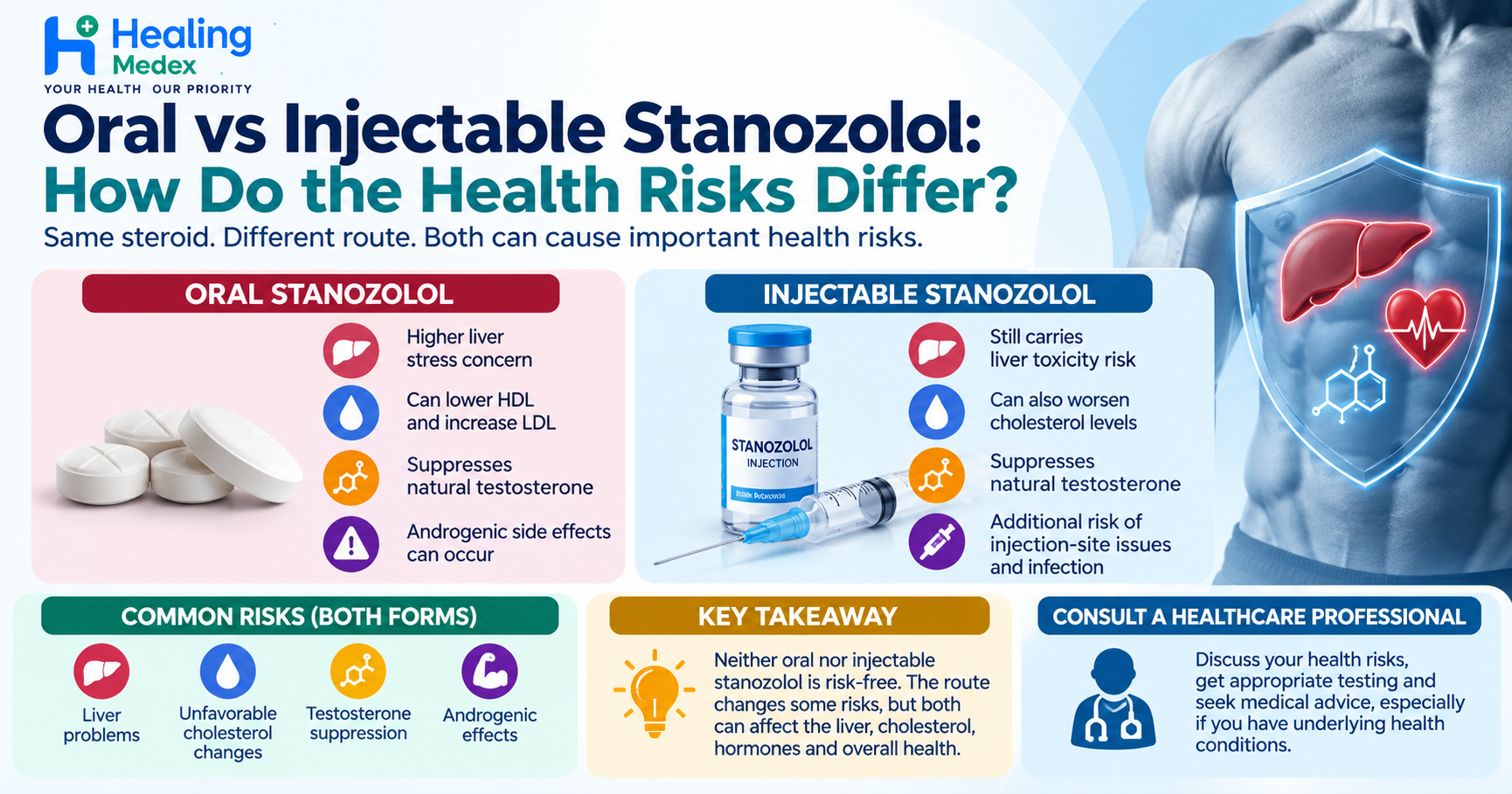
Oral vs Injectable Stanozolol: How Do the Health Risks Differ?
Stanozolol is a synthetic anabolic-androgenic steroid (AAS) historically known by the brand name Winstrol. It has been produced in both oral and injectable forms , which has led to a common assumption that the injectable version may be considerably safer because it does not need to pass through the digestive system first. The reality is more complicated. Although the route of administration can influence certain risks, both oral and injectable stanozolol can cause significant adverse effects . Stanozolol itself is a 17-alpha-alkylated anabolic steroid , a structural characteristic strongly associated with liver toxicity. Therefore, injecting stanozolol does not eliminate its potential effects on the liver. Both forms may also negatively affect cholesterol, suppress natural testosterone production, produce androgen-related effects, and contribute to cardiovascular risk. This article explains the major health differences between oral and injectable stanozolol and why neither formulation should be considered harmless. What Is Stanozolol? Stanozolol is a synthetic derivative of dihydrotestosterone (DHT). It has anabolic properties that promote protein synthesis and tissue growth while also producing androgenic effects. It has had limited medical applications historically, but stanozolol is perhaps better known for non-medical use in bodybuilding and competitive sports. Stanozolol has been available as: Oral tablets Intramuscular injections Despite the different routes of administration, the active drug is still stanozolol. This distinction is important because some of the drug's major health effects result from its chemical structure rather than simply whether it is swallowed or injected . Oral vs Injectable Stanozolol at a Glance Health consideration Oral stanozolol Injectable stanozolol Liver stress Significant concern Still a significant concern Cholestatic liver injury Possible Possible HDL cholesterol reduction Can be substantial Can also occur LDL cholesterol increase Possible Possible Testosterone suppression Yes Yes Fertility effects Possible Possible Injection-site complications No Yes Androgenic effects Yes Yes Cardiovascular concerns Yes Yes The exact magnitude of risk depends on factors such as exposure, individual susceptibility, other drugs being used, pre-existing medical conditions, and duration of use. Importantly, there is limited modern head-to-head clinical research directly comparing equivalent oral and injectable stanozolol exposure , so claims that one version is universally safer should be viewed cautiously. 1. Oral Stanozolol Can Place Significant Stress on the Liver Oral anabolic steroids often require chemical modification so that enough of the drug survives metabolism after being swallowed. Stanozolol is a C-17α-alkylated androgen , a class of anabolic steroids strongly associated with liver injury. Reported hepatic complications from this steroid class include: Elevated liver enzymes Cholestasis Jaundice Severe itching Peliosis hepatis Liver adenomas Rarely, malignant liver tumors with long-term androgen exposure One clinical trial using relatively low oral doses of stanozolol found temporary liver enzyme abnormalities in some participants. More serious cases of stanozolol-associated liver injury have also been documented. 2. Injectable Stanozolol Is Not Free From Liver Toxicity This is one of the most important differences to understand. Some injectable anabolic steroids, such as certain testosterone esters, largely avoid the particular liver toxicity associated with oral 17-alpha-alkylated steroids. Stanozolol is different. Injectable stanozolol remains chemically 17-alpha-alkylated , meaning the chemical feature associated with hepatotoxicity is still present. Therefore, bypassing the stomach and first-pass absorption does not make injectable stanozolol harmless to the liver. Cases involving severe cholestatic injury have been reported with both oral and parenteral stanozolol exposure. Symptoms of significant liver injury can include: Yellow skin or eyes Dark urine Pale stools Persistent itching Loss of appetite Nausea Unusual fatigue Abdominal discomfort These symptoms require medical evaluation. 3. Oral Stanozolol Can Produce Major Changes in Cholesterol One of the better documented concerns with stanozolol involves its effects on blood lipids. Oral stanozolol has repeatedly been associated with lower HDL cholesterol , often referred to as “good” cholesterol. Studies have also reported increases in LDL cholesterol. For example, research involving oral stanozolol has demonstrated marked reductions in HDL and increases in LDL in some participants. This matters because an unfavorable LDL-to-HDL profile is associated with atherosclerotic cardiovascular disease over time. The lipid effects of anabolic steroids become particularly concerning when combined with other cardiovascular risk factors such as: Smoking High blood pressure Diabetes Obesity Family history of premature heart disease Other anabolic steroid use 4. Injectable Stanozolol Can Also Worsen Cholesterol Changing the route of administration does not necessarily prevent stanozolol from affecting cholesterol metabolism. An older controlled study examining intramuscular stanozolol found that HDL cholesterol decreased while total cholesterol and LDL cholesterol increased following exposure. Therefore, injectable stanozolol should not be viewed as cardiovascularly neutral simply because it is injected. The evidence available does not support the idea that injectable stanozolol completely avoids the adverse lipid effects associated with the drug. 5. Both Forms Can Suppress Natural Testosterone Production Like other anabolic-androgenic steroids, stanozolol can interfere with the body's hypothalamic-pituitary-gonadal (HPG) axis . When external androgens are present, the brain may reduce signals involved in natural testosterone production. This can lower: Luteinizing hormone (LH) Follicle-stimulating hormone (FSH) Natural testicular testosterone production Possible consequences include: Low testosterone after discontinuation Reduced libido Fatigue Mood changes Reduced sperm production Testicular shrinkage Fertility problems Injecting the drug does not prevent this hormonal suppression. 6. Injectable Stanozolol Adds Injection-Related Risks Injectable stanozolol introduces risks that oral tablets do not. Potential injection-related complications include: Pain or swelling at the injection site Local inflammation Abscess formation Bacterial infection Tissue injury Contamination from non-sterile products Blood-borne infection if injection equipment is shared Products obtained through unregulated markets create additional uncertainty because the actual concentration, sterility, or ingredients may not match the label. These risks are separate from the systemic effects of stanozolol itself. 7. Both Forms May Affect Cardiovascular Health The cardiovascular effects of anabolic steroids extend beyond cholesterol. Long-term or high-exposure non-medical AAS use has been associated in research with problems involving: Blood pressure Endothelial function Heart structure Heart muscle function Lipid abnormalities Atherosclerotic cardiovascular risk Stanozolol's particularly unfavorable influence on HDL and LDL makes cardiovascular health an important concern regardless of whether the drug is taken orally or injected. Someone who already has high cholesterol, hypertension, diabetes, kidney disease or cardiovascular disease may have additional reasons for concern. 8. Both Forms Can Cause Androgenic Side Effects Stanozolol is derived from DHT and can produce androgen-related adverse effects. These may include: Acne and oily skin Androgen stimulation can increase activity in the sebaceous glands and contribute to acne. Scalp hair loss People genetically susceptible to androgenetic alopecia may experience accelerated hair thinning. Increased body or facial hair Androgenic effects may increase hair growth in certain areas. Effects in women Women exposed to anabolic-androgenic steroids may experience virilizing effects such as: Deeper voice Increased facial or body hair Menstrual changes Acne Clitoral enlargement Some androgenic changes, particularly voice deepening, may not completely reverse after the drug is stopped. These effects depend on the drug rather than simply its route of administration. 9. Kidney Problems Can Occur Secondary to Severe Liver Injury Severe anabolic-steroid -induced cholestasis can occasionally have consequences beyond the liver. Published cases involving stanozolol have described severe jaundice accompanied by renal dysfunction , with some patients requiring temporary dialysis. This is uncommon, but it highlights why jaundice after anabolic steroid exposure should never be dismissed simply because liver enzyme elevations appear modest. A person can have clinically important cholestatic liver injury even when ALT and AST elevations do not appear dramatic. 10. Injectable Does Not Automatically Mean Safer The phrase “injectable steroids are safer for the liver” is an oversimplification. It may apply to comparisons involving some injectable testosterone preparations versus certain oral 17-alpha-alkylated steroids, but it cannot automatically be applied to every anabolic steroid. Injectable stanozolol is still stanozolol. Because the drug retains its 17-alpha-alkylated structure, serious liver toxicity remains possible. Injectable use also brings additional risks associated with injections themselves. For this reason, the most accurate conclusion is not that oral stanozolol is dangerous while injectable stanozolol is safe. Instead: The two formulations have somewhat different risk profiles, but both can produce important systemic health effects. Is Oral Stanozolol Worse for the Liver Than Injectable Stanozolol? Oral administration is traditionally considered particularly concerning for many 17-alpha-alkylated anabolic steroids because of hepatic exposure during metabolism. However, there is insufficient high-quality modern evidence directly comparing equivalent doses and durations of oral versus injectable stanozolol to quantify exactly how much safer one route might be. Importantly, medically documented liver injury has occurred with stanozolol, and reports have included both oral and parenteral exposure . Therefore, it is inappropriate to assume that switching from tablets to injections eliminates liver risk. Which Form Is Worse for Cholesterol? Oral stanozolol has particularly strong evidence showing significant reductions in HDL cholesterol. However, injectable stanozolol has also demonstrated unfavorable lipid changes. One study involving a single intramuscular stanozolol injection reported a subsequent decrease in HDL along with increases in LDL and total cholesterol. The available evidence therefore suggests that both formulations can negatively affect lipid health , although differences in dose, duration and study design make precise comparisons difficult. What Health Monitoring May Be Important After Stanozolol Exposure? People with current or previous anabolic steroid exposure should discuss appropriate medical evaluation with a healthcare professional. Depending on the individual's history, a clinician may consider tests such as: Liver evaluation ALT AST ALP GGT Total and direct bilirubin Cardiovascular and metabolic evaluation Total cholesterol LDL cholesterol HDL cholesterol Triglycerides Blood pressure Hormonal evaluation when appropriate Total testosterone LH FSH Estradiol Additional testing may be appropriate depending on symptoms, duration of exposure, other substances used and underlying medical conditions. Testing should be interpreted by a qualified healthcare professional rather than relying on a single abnormal laboratory value. When Should Someone Seek Medical Attention? Prompt medical assessment is particularly important if symptoms develop such as: Yellow eyes or skin Very dark urine Persistent severe itching Significant abdominal pain Persistent vomiting Unexplained severe fatigue Chest pain Shortness of breath Fainting Significant swelling Fever, redness or worsening pain around an injection site Jaundice following anabolic steroid exposure warrants medical attention even if the person otherwise feels reasonably well. Oral vs Injectable Stanozolol: Key Takeaway The route of administration changes some aspects of stanozolol's risk profile, but it does not remove the drug's major systemic risks. Oral stanozolol is well documented to cause substantial changes in HDL and LDL cholesterol and carries significant potential for liver toxicity. Injectable stanozolol eliminates the need to swallow the drug, but it does not eliminate liver toxicity, cholesterol changes, testosterone suppression or other androgen-related effects . It also creates additional risks related to injection technique, infection and product sterility. Most importantly, stanozolol is structurally different from many injectable testosterone preparations. Its 17-alpha-alkylated structure remains present regardless of whether it is swallowed or injected , meaning injectable stanozolol should not be viewed as a liver-safe version of the drug. Anyone experiencing symptoms or abnormal laboratory results after anabolic steroid use should seek medical assessment rather than attempting to manage the problem solely by changing formulations or adding other drugs. Frequently Asked Questions 1. Is injectable stanozolol safer than oral stanozolol? Not necessarily. Injectable administration may alter some aspects of drug exposure, but stanozolol itself remains a 17-alpha-alkylated anabolic steroid. Liver injury, cholesterol abnormalities and hormone suppression remain possible. 2. Does injectable Winstrol bypass the liver? It avoids gastrointestinal absorption and first-pass administration in the usual sense, but this does not mean the liver is protected . The drug still enters the circulation and is metabolized, and hepatotoxicity has been reported with parenteral stanozolol. 3. Can stanozolol lower HDL cholesterol? Yes. Reductions in HDL are among the most consistently documented metabolic effects of stanozolol. Clinical studies have reported substantial decreases in HDL during treatment. 4. Can stanozolol increase LDL cholesterol? Yes. Several studies have reported increased LDL alongside decreases in HDL, resulting in a less favorable cardiovascular lipid profile. 5. Can stanozolol suppress testosterone? Yes. As an anabolic-androgenic steroid , stanozolol can suppress the hormonal signals responsible for normal endogenous testosterone and sperm production. 6. Can liver damage improve after stopping stanozolol? Some drug-induced liver abnormalities improve after exposure ends, but recovery from severe cholestatic injury can take weeks or months. Serious symptoms such as jaundice require medical evaluation rather than simply waiting for them to resolve.
 Dr. Marcus Vance, PharmD
Anabolic Steriod
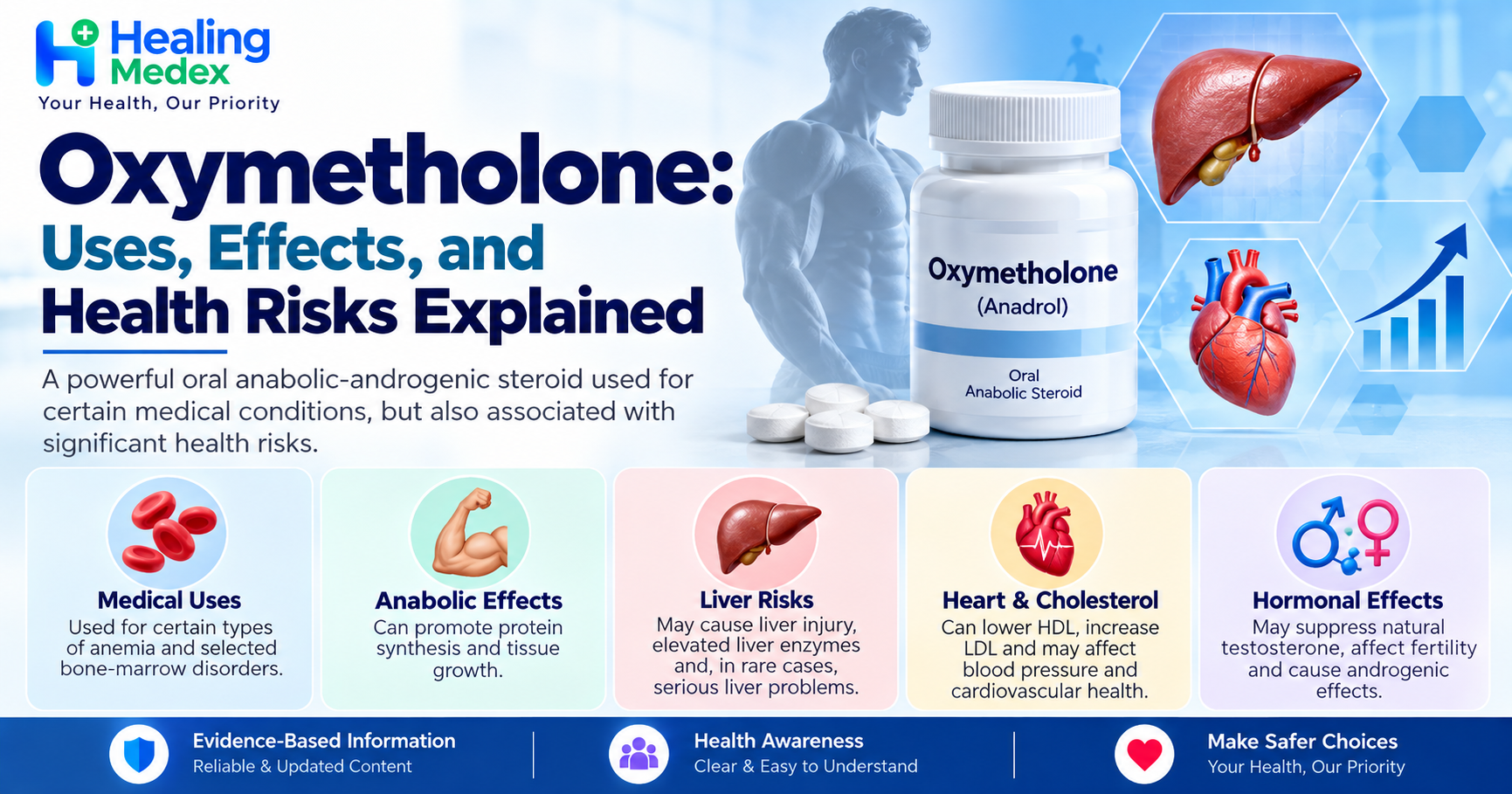
Oxymetholone: Uses, Effects, and Health Risks Explained
Oxymetholone is a powerful oral anabolic-androgenic steroid (AAS) that was developed for certain medical conditions involving inadequate red blood cell production. It is also widely known by the former/brand name Anadrol . Although oxymetholone has legitimate medical applications, it can cause significant adverse effects involving the liver, cardiovascular system, hormones, reproductive system, and fluid balance . Its anabolic properties have also led to non-medical use for muscle and performance enhancement, but such use exposes people to potentially serious health risks without medical supervision. Oxymetholone is a 17-alpha-alkylated anabolic steroid , a chemical modification that allows it to remain active when taken orally. That same characteristic is also associated with a greater potential for liver toxicity compared with some non-oral androgen preparations. What Is Oxymetholone? Oxymetholone is a synthetic derivative of testosterone with both anabolic and androgenic activity. “Anabolic” refers mainly to effects on tissue growth and protein metabolism, while “androgenic” refers to effects related to male sex hormones. In medical settings, oxymetholone can stimulate erythropoiesis—the production of red blood cells—and may increase erythropoietin activity in certain forms of anemia. U.S. prescribing information has historically indicated oxymetholone for anemias caused by deficient red-cell production , including selected cases of aplastic and hypoplastic anemia. It should not be confused with testosterone replacement therapy. Oxymetholone is a separate synthetic anabolic steroid with a different risk profile. What Is Oxymetholone Used For? 1. Certain Types of Anemia The principal medical use of oxymetholone has been the treatment of selected anemias in which the body does not produce enough red blood cells. Examples described in prescribing information include: Acquired aplastic anemia Congenital aplastic anemia Certain hypoplastic anemias Some cases associated with bone-marrow failure Myelofibrosis-associated anemia in selected circumstances Oxymetholone does not replace treatment of correctable causes of anemia such as iron, vitamin B12, folate, or other nutritional deficiencies. 2. Selected Bone-Marrow Failure Disorders Oxymetholone has historically been used in some patients with bone-marrow failure, including Fanconi anemia , when specialists determine that androgen therapy may be appropriate. Today, treatment decisions for these disorders are highly individualized because more modern therapies may be available and oxymetholone carries substantial long-term risks. 3. Other Investigational or Historical Uses Oxymetholone has been studied for conditions including severe wasting and other catabolic illnesses. Research into some of these applications has produced mixed results, and they should not be assumed to represent approved or routine uses. What Effects Does Oxymetholone Have on the Body? Oxymetholone affects multiple systems rather than acting only on muscle. Increased Red Blood Cell Production One of its medically useful effects is stimulation of erythropoiesis. In patients whose anemia responds to treatment, increased red blood cell production may improve hemoglobin levels and oxygen-carrying capacity. However, excessive increases in red-cell mass may also create problems, which is why blood counts require medical monitoring. Increased Anabolic Activity Like other anabolic steroids , oxymetholone promotes processes involved in protein synthesis and tissue growth. This is one reason it has been misused for bodybuilding and performance enhancement. However, increases in body weight during anabolic-steroid exposure are not necessarily entirely muscle. Fluid and sodium retention can also contribute to weight gain. Using oxymetholone without a medical indication does not make its adverse effects less significant. Major Health Risks of Oxymetholone 1. Liver Injury Liver toxicity is one of the most important concerns with oxymetholone. Because it is a 17-alpha-alkylated oral anabolic steroid , it has been associated with several patterns of liver injury. These include: Elevated liver enzymes Cholestatic hepatitis Jaundice Severe itching associated with cholestasis Peliosis hepatis Rare hepatic tumors Cholestatic liver injury can cause impaired bile flow, producing symptoms such as yellowing of the skin or eyes, dark urine and intense itching. LiverTox identifies oxymetholone among the anabolic steroids strongly associated with this type of liver injury. Rare but serious liver complications associated with prolonged androgen exposure include peliosis hepatis , in which blood-filled cavities develop within the liver, and hepatic tumors. Warning signs that require medical attention Seek medical assessment promptly if symptoms such as these occur: Yellow skin or eyes Dark urine Pale stools Persistent nausea Severe itching Unusual tiredness Persistent upper-right abdominal pain Abdominal swelling 2. Changes in Cholesterol Anabolic-androgenic steroids can adversely affect blood lipids. They may: Lower HDL cholesterol — often described as “good” cholesterol. Increase LDL cholesterol — commonly called “bad” cholesterol. This combination may produce a more atherogenic lipid profile and could contribute to cardiovascular risk. Changes in HDL and LDL can sometimes be substantial during anabolic-steroid exposure. For this reason, cholesterol levels may need periodic monitoring when anabolic steroids are prescribed medically. 3. Fluid Retention and Edema Oxymetholone can promote retention of sodium and water. Possible consequences include: Swollen ankles Rapid increases in body weight from fluid Increased cardiovascular workload Worsening edema Fluid retention can be especially concerning for people with underlying heart, liver, or kidney disease . 4. Natural Testosterone Suppression External anabolic-androgenic steroids can interfere with the body's hypothalamic-pituitary-gonadal axis . In males, anabolic-steroid exposure may suppress signaling responsible for normal testicular testosterone production. Potential consequences can include: Reduced natural testosterone production Testicular shrinkage Reduced sperm production Changes in fertility Changes in libido Sexual dysfunction These effects are not necessarily predictable from appearance, strength or muscle mass. Recovery after stopping anabolic steroids varies between individuals. 5. Fertility Effects Anabolic steroids can suppress gonadotropins—the hormones involved in stimulating testosterone and sperm production. As a result, some men may develop oligospermia , meaning reduced sperm concentration. Fertility may improve after anabolic steroids are discontinued, but the timeframe varies and recovery is not guaranteed to be rapid. People concerned about fertility should discuss appropriate hormone and semen testing with a healthcare professional rather than attempting to self-treat steroid-induced hormonal changes. 6. Androgenic Effects Despite being described as an anabolic steroid, oxymetholone retains androgenic activity. Possible effects include: Acne Increased oily skin Increased body or facial hair Changes in scalp hair in genetically susceptible individuals Changes in libido Women exposed to anabolic steroids may develop virilizing effects such as: Deepening of the voice Increased facial or body hair Menstrual irregularities Clitoral enlargement Some virilizing changes—particularly voice deepening—may not fully reverse after treatment is stopped. 7. Gynecomastia Changes in normal sex-hormone regulation can contribute to breast-tissue enlargement in males. Gynecomastia has been reported with anabolic-androgenic steroid exposure, although the underlying hormonal mechanisms can vary between different compounds and patterns of use. New breast tenderness, swelling or a persistent lump should be medically assessed rather than assumed to be steroid-related. 8. Effects on Blood Counts Oxymetholone is capable of stimulating red blood cell production—that is partly why it was developed as an anemia treatment. When androgenic anabolic steroids are medically prescribed, clinicians may monitor: Hemoglobin Hematocrit Other components of the complete blood count Abnormally elevated red blood cell levels may increase blood viscosity and require medical evaluation. 9. Mood and Nervous-System Effects Changes involving mood, sleep and libido have been reported with anabolic-androgenic steroids . Possible effects can include: Irritability Sleep disturbance Changes in mood Changes in libido The psychological effects associated with non-medical anabolic-steroid use vary considerably between individuals and may also be influenced by the dose, other drugs being used and pre-existing factors. 10. Risks During Pregnancy Oxymetholone should not be used during pregnancy because androgen exposure can harm fetal development. Anyone who is pregnant, may become pregnant, or is planning pregnancy should discuss medication risks with a qualified healthcare professional before exposure. Can Oxymetholone Affect the Heart? Oxymetholone's cardiovascular concerns are related to several possible effects rather than one mechanism alone. These may include: Unfavorable cholesterol changes Fluid retention Increased red blood cell concentration Possible blood-pressure effects Broader cardiovascular risks associated with anabolic-androgenic steroid exposure Long-term non-medical AAS exposure has been associated in research with adverse cardiovascular outcomes and structural or functional cardiovascular abnormalities, although individual risk varies according to the substances used, duration, dose and other health factors. The cardiovascular consequences of unsupervised anabolic-steroid use should therefore not be judged only by whether someone feels healthy during use. Is Oxymetholone Safe for Bodybuilding? Oxymetholone's ability to promote anabolic activity has resulted in substantial non-medical bodybuilding use. However, medical approval for treating selected forms of anemia does not mean the drug has been established as safe for bodybuilding or athletic enhancement . Non-medical use may expose users to : Liver injury Severe cholesterol changes Fluid retention Hormonal suppression Fertility problems Cardiovascular complications Androgenic effects Drug interactions Risk may increase further when several anabolic steroids or other performance-enhancing substances are used together. There is no bodybuilding cycle, stack, or supplement combination that eliminates these risks. Does Oxymetholone Damage the Liver Permanently? Not every abnormal liver test means permanent liver damage. Some liver abnormalities caused by anabolic steroids improve after the responsible drug is discontinued. However, severe cholestasis can take a prolonged period to resolve, and rare complications such as peliosis hepatis or hepatic tumors are considerably more serious. LiverTox reports that anabolic-steroid -associated cholestasis may persist even after the drug is stopped. This is why unexplained jaundice or abnormal liver tests during anabolic-steroid exposure should be medically evaluated rather than managed by simply switching to another steroid. What Monitoring May Be Needed During Medical Treatment? When oxymetholone is prescribed for a genuine medical indication, clinicians may monitor factors such as: Complete blood count Hemoglobin and hematocrit Liver function tests Bilirubin Cholesterol and triglycerides Kidney function Blood pressure Signs of edema Hormonal or reproductive effects when relevant Monitoring requirements depend on the patient's underlying condition and other medications. Medical supervision is particularly important because significant abnormalities can develop before obvious symptoms appear. Who Should Be Particularly Cautious? Oxymetholone may be inappropriate or require specialist assessment in people with conditions such as: Significant liver disease Certain kidney disorders Prostate or breast cancer Significant cardiovascular disease Severe fluid-retention problems Pregnancy The complete medical history and medication list should always be reviewed before oxymetholone is prescribed. Oxymetholone and Other Medicines Drug interactions can also matter. Anabolic steroids may interact with medications including certain anticoagulants , and monitoring requirements may change when drugs affecting blood clotting, blood sugar, fluid balance or liver function are taken concurrently. Patients should therefore tell their healthcare professional about prescription medications, over-the-counter products, vitamins and supplements they use. Frequently Asked Questions 1. Is oxymetholone the same as testosterone? No. Oxymetholone is a synthetic anabolic-androgenic steroid derived from testosterone, but its chemical structure, pharmacological properties and adverse-effect profile differ from standard testosterone preparations. 2. Is oxymetholone an oral steroid? Yes. Oxymetholone is orally active because it is a 17-alpha-alkylated anabolic steroid . This modification is also associated with its potential for liver toxicity. 3. Does oxymetholone build muscle? Oxymetholone has potent anabolic effects and can influence tissue growth and body weight. However, its medical indication is not bodybuilding, and using it for physique or performance enhancement can expose users to serious health risks. 4. Can oxymetholone lower natural testosterone? Yes. Like other anabolic-androgenic steroids, oxymetholone can suppress the hormonal signaling responsible for normal endogenous testosterone and sperm production. 5. Can oxymetholone affect fertility? Yes. Suppression of the reproductive hormone axis may reduce sperm production and impair fertility. 6. Can oxymetholone cause liver problems? Yes. Oxymetholone has been associated with cholestatic liver injury, jaundice, peliosis hepatis and, rarely, liver tumors. 7. Are oxymetholone side effects reversible? Some effects may improve after the drug is discontinued, but recovery depends on the complication. Certain androgenic effects and serious liver complications may not resolve quickly or completely. Medical evaluation is recommended when adverse effects develop. The Bottom Line Oxymetholone is a potent oral anabolic-androgenic steroid with legitimate but limited medical applications , particularly in selected disorders involving inadequate red blood cell production. Its anabolic effects can also explain why it has been used outside medicine for bodybuilding and performance enhancement. However, those same hormonal effects come with substantial health concerns. Major risks include liver toxicity, adverse cholesterol changes, fluid retention, testosterone suppression, fertility problems, androgenic effects and potential cardiovascular complications . Because some abnormalities can occur before symptoms become obvious, oxymetholone should not be viewed as a routine muscle-building supplement. When there is a genuine medical reason for treatment, appropriate clinical supervision and laboratory monitoring are important.
Dr. Marcus Vance, PharmD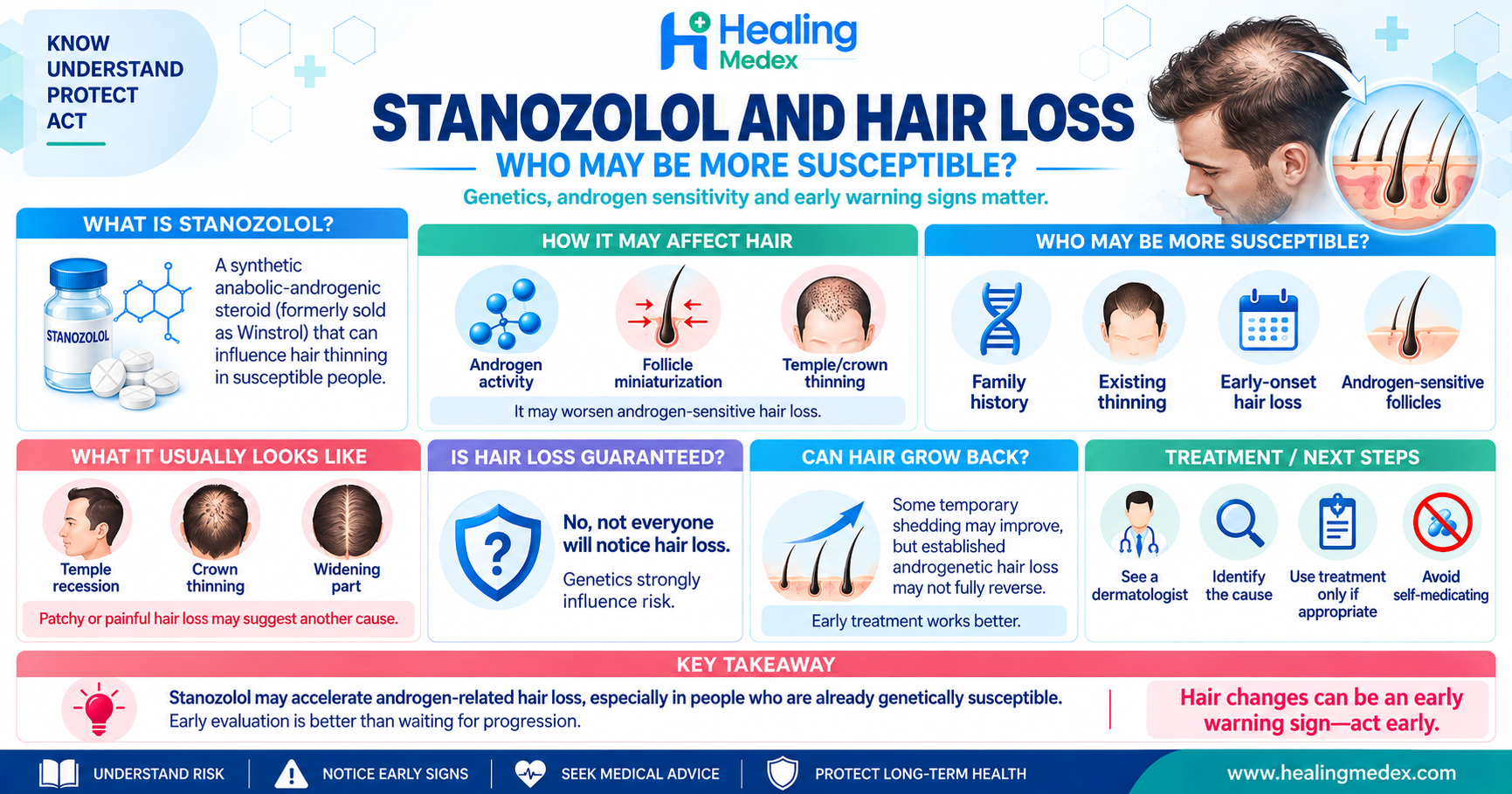
Anabolic Steriod
Stanozolol and Hair Loss: Who May Be More Susceptible?
Stanozolol, commonly known by the former brand name Winstrol , is a synthetic anabolic-androgenic steroid (AAS). It has both anabolic and androgenic activity and is structurally related to dihydrotestosterone (DHT). Like other androgenic steroids, stanozolol can potentially contribute to androgen-related effects involving the skin and hair. One concern among people exposed to anabolic steroids is scalp hair thinning or accelerated pattern hair loss . However, not everyone who uses an androgenic steroid develops noticeable hair loss. Genetic susceptibility, existing androgenetic alopecia, follicle sensitivity and other factors can significantly influence what happens. Importantly, direct clinical research measuring the exact incidence of hair loss caused specifically by stanozolol is limited. Therefore, it is more accurate to say that stanozolol may accelerate androgen-sensitive hair loss in susceptible people rather than claiming that everyone who uses it will become bald. How Could Stanozolol Affect Hair? The most common form of progressive hair loss is androgenetic alopecia , often called male-pattern or female-pattern hair loss. Androgenetic alopecia occurs when genetically susceptible scalp follicles respond excessively to androgen signaling. Over time, affected follicles become progressively smaller, producing shorter and thinner hairs until visible scalp thinning develops. DHT normally plays an important role in this process. However, stanozolol is itself a DHT-derived, androgenically active steroid , so its effects cannot simply be understood by measuring natural testosterone or DHT levels. Stanozolol can influence androgen-responsive tissues through androgen-receptor-related pathways. A 2025 review examining hair loss associated with testosterone and anabolic-androgenic steroid use in male athletes also identified androgenetic alopecia as a relevant hair-related concern among AAS users. Who May Be More Susceptible to Hair Loss? Some individuals are considerably more vulnerable to androgen-related hair thinning than others. People with a strong family history of pattern baldness: Genetics is one of the strongest predictors of androgenetic alopecia. A 2026 systematic review and meta-analysis found that family history was significantly associated with both the presence and progression of androgenetic alopecia. People who already have a receding hairline or thinning crown: Existing androgenetic alopecia means susceptible follicles are already undergoing miniaturization. Additional androgen exposure may potentially accelerate the process. People who developed hair loss at a young age: Early-onset pattern hair loss may indicate substantial genetic and follicular sensitivity to androgens. Male-pattern hair loss can begin during the late teenage years or early twenties. People with highly androgen-sensitive follicles: Individuals differ considerably in how their follicles respond to androgen signaling. Variations involving the androgen receptor and numerous other genes contribute to susceptibility. People exposed to multiple androgenic substances: Combining anabolic-androgenic steroids increases overall hormonal exposure and makes it more difficult to determine which substance is responsible for a new adverse effect. Direct evidence quantifying the additional hair-loss risk of specific steroid combinations remains limited. People with other background risk factors for androgenetic alopecia: Smoking has been associated with both the presence and progression of androgenetic alopecia, while factors including poor sleep, obesity and some metabolic abnormalities have been associated with disease progression in observational research. These factors are not specific to stanozolol. What Does Stanozolol-Related Hair Loss Usually Look Like? If androgen exposure accelerates androgenetic alopecia, hair loss generally follows the person's genetically determined pattern rather than causing random bald patches. In men, this commonly involves recession around the temples, gradual thinning of the frontal scalp or thinning at the crown . In women, androgenetic alopecia more commonly produces diffuse thinning over the central scalp or widening of the part. Someone may initially notice that the hairline looks slightly thinner in photographs, more scalp is visible under bright lighting or hairs around the temples become shorter and finer. Sudden shedding across the entire scalp, sharply defined bald patches, inflammation, scaling or significant scalp pain may indicate another condition and should not automatically be blamed on stanozolol. Is Hair Loss Guaranteed With Stanozolol? No. Androgen exposure alone does not determine whether someone develops noticeable pattern baldness. Genetics and follicular sensitivity are extremely important. One person may experience substantial thinning while another exposed to similar androgen levels may notice little visible change. This is why family history can provide useful information, although it cannot predict exactly what will happen to an individual. Androgenetic alopecia is now understood to be a complex, polygenic condition involving numerous genetic pathways rather than a single “baldness gene.” Can Hair Grow Back After Stopping Stanozolol? The answer depends on what caused the hair loss and how advanced follicular miniaturization has become. Temporary shedding related to physiological stress may improve after the underlying trigger resolves. Established androgenetic alopecia behaves differently. Once susceptible follicles have progressively miniaturized, spontaneous complete recovery cannot be assumed. Stopping an androgenic trigger may reduce continued exposure, but it does not guarantee restoration of lost hair. Early evaluation is therefore important. The American Academy of Dermatology notes that treatment of hereditary hair loss tends to work better when started earlier. Does Finasteride Prevent Hair Loss From Stanozolol? Finasteride is an established treatment for male androgenetic alopecia . It works by inhibiting type-2 5-alpha-reductase, thereby reducing the conversion of testosterone into DHT. Stanozolol creates an important distinction. Stanozolol is already a 17α-alkylated derivative of DHT rather than testosterone that needs to be converted into DHT by 5-alpha-reductase. For that reason, people should not assume that taking finasteride will reliably protect their hair from androgenic effects associated with stanozolol. There is insufficient clinical evidence showing that finasteride specifically prevents stanozolol-associated hair loss. Finasteride also has contraindications and potential adverse effects, so it should not be self-prescribed simply to counteract steroid-related hair changes. What About Minoxidil? Topical minoxidil is one of the established treatments for androgenetic alopecia and is used to help maintain or improve hair growth in appropriate patients. However, using a hair-loss treatment does not make anabolic-steroid exposure medically safe, nor can it guarantee prevention of androgen-related follicle miniaturization. Anyone experiencing new or rapidly progressing hair loss should first establish the cause rather than automatically starting several hair-loss medications. When Should You See a Dermatologist? Medical evaluation is particularly useful when hair loss is progressing rapidly, begins soon after starting a new medication or hormone, occurs in patches, or is accompanied by itching, redness, scaling or scalp pain. A dermatologist can distinguish androgenetic alopecia from other causes such as telogen effluvium, alopecia areata, nutritional deficiencies, thyroid disorders and inflammatory scalp disease. The American Academy of Dermatology emphasizes that many conditions can cause hair loss and that identifying the underlying cause is important for selecting appropriate treatment. Hair Loss Is Not the Only Health Concern Hair changes may be cosmetically significant, but they should not distract from the broader health risks associated with non-medical anabolic-androgenic steroid use. Stanozolol is a 17α-alkylated anabolic steroid , a class particularly associated with liver toxicity. Androgenic steroids have been linked to cholestatic liver injury and, with prolonged exposure, more serious hepatic complications. Other AAS-related concerns can involve cholesterol, cardiovascular health, reproductive hormones and skin. Anyone using anabolic steroids without medical supervision should understand that taking additional medicines simply to control individual side effects does not eliminate these broader risks. The Bottom Line Stanozolol may contribute to or accelerate androgen-related scalp hair loss, particularly in people who are already genetically susceptible to androgenetic alopecia. The people most likely to notice problems include those with a strong family history of baldness, an already receding hairline or thinning crown, early-onset pattern hair loss, or follicles that are particularly sensitive to androgen signaling. At the same time, direct studies establishing exactly how often stanozolol causes hair loss are limited. Not everyone exposed to stanozolol will experience noticeable thinning, and the degree of hair loss cannot be predicted reliably from dose or family history alone. If hair thinning develops during anabolic-steroid exposure, early assessment by a dermatologist is preferable to assuming the cause or self-treating with medications such as finasteride.
Dr. Marcus Vance, PharmD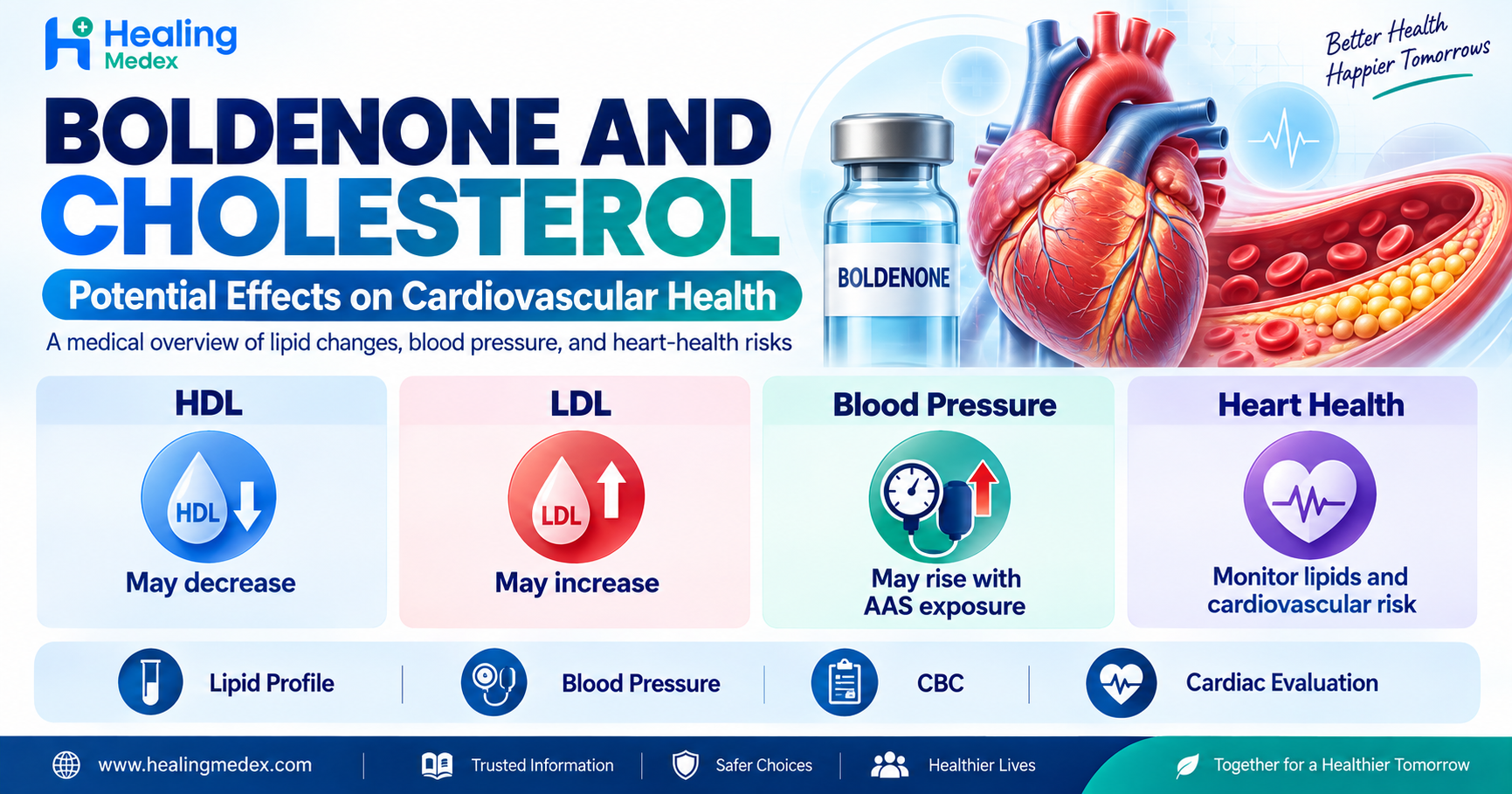
Anabolic Steriod
Boldenone and Cholesterol: Potential Effects on Cardiovascular Health
Boldenone is an anabolic-androgenic steroid (AAS) structurally related to testosterone. Boldenone undecylenate has primarily been used in veterinary medicine rather than as a standard human medical treatment. Despite this, non-medical use has occurred among some bodybuilders and athletes seeking increased muscle mass and performance. One important concern with boldenone and other anabolic steroids is their potential effect on cholesterol levels and cardiovascular health . Research specifically studying boldenone in humans is limited. Therefore, much of what is known about its cardiovascular risks comes from research involving anabolic-androgenic steroids as a broader group. Current evidence indicates that supraphysiological AAS exposure can adversely affect cholesterol, blood pressure, blood vessels and the structure and function of the heart. Understanding these effects is particularly important because cholesterol abnormalities may develop without obvious symptoms. What Is Boldenone? Boldenone is a synthetic androgen related to testosterone. One commonly encountered form is boldenone undecylenate , a long-acting ester generally administered by injection. Boldenone has anabolic and androgenic activity through activation of androgen receptors. Although it has historically been associated with veterinary applications, it has also been used non-medically for physique and performance enhancement. Human clinical safety data for such use are limited. This lack of high-quality human studies means it is not possible to precisely calculate how much cardiovascular risk comes from boldenone alone. However, cardiovascular concerns associated with the broader AAS class include: decreased HDL cholesterol increased LDL cholesterol increased blood pressure endothelial dysfunction increased red blood cell production changes in heart structure accelerated atherosclerosis increased risk of cardiovascular events These effects may become more important with prolonged exposure, high doses or simultaneous use of multiple anabolic steroids. How Could Boldenone Affect Cholesterol? Cholesterol travels through the bloodstream in particles known as lipoproteins. Two commonly measured forms are LDL cholesterol and HDL cholesterol . LDL is often called “bad cholesterol” because elevated concentrations contribute to cholesterol deposition inside artery walls. HDL is commonly called “good cholesterol” because it participates in transporting cholesterol away from peripheral tissues. Research involving anabolic-androgenic steroids consistently shows that supraphysiological androgen exposure can produce an unfavorable lipid profile. The exact response varies depending on the steroid, dose, duration of use, genetics, diet and other substances being taken. 1. HDL Cholesterol May Decrease One of the most consistently reported lipid effects of anabolic steroids is a reduction in HDL cholesterol. Low HDL is important because it often occurs together with other cardiovascular risk factors. Some AAS research has reported substantial HDL reductions during steroid exposure. However, these figures should not automatically be applied specifically to boldenone because direct controlled human boldenone studies are lacking. 2. LDL Cholesterol May Increase Anabolic steroid exposure has also been associated with increased LDL cholesterol. A 2025 systematic review and meta-analysis examining AAS users found a statistically significant average increase in LDL cholesterol compared with control groups. Higher LDL allows more cholesterol-containing particles to circulate in the bloodstream and potentially enter damaged arterial walls. Again, this evidence concerns AAS exposure overall and should not be interpreted as a precise measurement of boldenone's individual effect. 3. The LDL-to-HDL Balance May Become Less Favorable Cardiovascular risk cannot be understood from total cholesterol alone. A combination of: higher LDL + lower HDL can create a more atherogenic lipid profile. Over time, persistent unfavorable cholesterol levels may contribute to the development of atherosclerosis—the buildup of cholesterol-containing plaques within arteries. Why Are Cholesterol Changes Important? Atherosclerosis generally develops gradually. Cholesterol particles accumulate beneath the inner lining of arteries, triggering inflammation and plaque formation. As plaques enlarge, arteries may narrow and become less flexible. More importantly, some plaques can rupture. A ruptured coronary artery plaque can trigger formation of a blood clot that blocks blood flow to the heart muscle, resulting in a heart attack . Plaques affecting blood vessels supplying the brain can contribute to ischemic stroke . Recent cardiovascular reviews therefore increasingly recognize non-medical AAS exposure as an important cardiovascular risk factor, particularly among younger individuals who may otherwise appear healthy. Boldenone May Affect More Than Cholesterol Cholesterol abnormalities are only one potential component of cardiovascular risk. Increased Blood Pressure AAS users have demonstrated higher blood pressure in multiple studies. A 2025 meta-analysis found significant average increases in both systolic and diastolic blood pressure among AAS users compared with controls. High blood pressure increases stress on artery walls and forces the heart to work harder. When hypertension occurs together with high LDL and low HDL, cardiovascular risk may become greater. Changes in Red Blood Cell Levels Androgens can stimulate erythropoiesis—the production of red blood cells. Excessive increases can result in erythrocytosis , reflected by an abnormally high hematocrit. Higher hematocrit may increase blood viscosity and is another reason complete blood counts are commonly recommended when evaluating people exposed to supraphysiological androgens. Endothelial Dysfunction The endothelium is the thin layer of cells lining blood vessels. Healthy endothelial cells help arteries relax and regulate blood flow. Research suggests AAS exposure may interfere with endothelial function and normal nitric-oxide-mediated blood-vessel relaxation. These changes may contribute to hypertension and atherosclerosis. Changes in Heart Structure Long-term AAS exposure has also been associated with structural changes in the heart. A 2025 systematic review and meta-analysis involving approximately 2,000 men found that AAS-using resistance-trained athletes showed greater left-ventricular wall thickness and mass as well as modestly impaired measures of cardiac function compared with non-users. A newer 2026 systematic review has continued to examine duration-dependent cardiac changes associated with AAS exposure. These findings concern anabolic steroids broadly rather than boldenone alone. Can Boldenone Increase Heart-Attack Risk? There is not enough high-quality human research to assign boldenone itself a specific heart-attack risk percentage. However, the biological effects associated with supraphysiological anabolic-steroid exposure can create several conditions that favor cardiovascular disease: AAS exposure → abnormal cholesterol + higher blood pressure + vascular dysfunction + possible hematologic changes + cardiac remodeling Large observational and clinical studies have linked long-term AAS use with cardiovascular disease, accelerated atherosclerosis and adverse cardiac outcomes. Therefore, a normal appearance or high level of physical fitness should not be assumed to indicate normal cardiovascular health. Who May Be at Greater Risk? Potential cardiovascular risk may be higher in people who already have: elevated LDL cholesterol low HDL cholesterol hypertension diabetes or insulin resistance obesity smoking or nicotine exposure family history of premature heart disease existing cardiovascular disease high hematocrit kidney disease sleep apnea Risk may also increase with prolonged AAS exposure, high cumulative doses or simultaneous use of several performance-enhancing substances. Because non-medical users commonly combine multiple drugs, determining which individual steroid caused a particular abnormality can be difficult. What Tests Can Identify Cardiovascular Problems? Someone who has used anabolic steroids should be open with their healthcare professional about the substances involved. Clinical guidance for assessing AAS users recommends considering several measurements. Lipid Profile A lipid panel commonly includes: total cholesterol LDL cholesterol HDL cholesterol triglycerides This helps identify an atherogenic cholesterol pattern. Blood Pressure Blood pressure should also be measured because hypertension can occur without symptoms. Complete Blood Count A complete blood count can identify increased hemoglobin or hematocrit associated with excessive red blood cell production. Liver and Kidney Tests Liver and kidney function may also be evaluated because AAS use can affect multiple organ systems. Cardiac Evaluation Depending on exposure history, symptoms and cardiovascular risk, clinicians may consider investigations such as an electrocardiogram or echocardiogram. A 2025 cardiovascular review recommends considering lipid testing, complete blood count, liver testing, blood-pressure evaluation and echocardiography when assessing people using AAS. The exact tests required should be individualized by a healthcare professional. Do Cholesterol Levels Return to Normal After Stopping Anabolic Steroids? Some lipid abnormalities may improve after anabolic steroids are discontinued. Research suggests that reductions in HDL and elevations in LDL can be at least partly reversible in some users. However, recovery varies considerably between individuals. Recovery can depend on factors such as: duration of steroid exposure cumulative dose substances used genetics diet body composition smoking underlying metabolic disease Importantly, normalization of cholesterol does not necessarily prove that all cardiovascular effects have disappeared. Some research suggests structural or vascular abnormalities associated with prolonged AAS exposure may persist after discontinuation. Can Diet and Exercise Prevent Boldenone-Related Cholesterol Changes? A heart-healthy lifestyle remains important. This includes regular physical activity, avoiding smoking, maintaining an appropriate body weight and eating a diet rich in vegetables, fruits, whole grains, legumes, nuts and unsaturated fats while limiting trans fats and excessive saturated fat. However, healthy eating and exercise should not be considered protection against the cardiovascular effects of anabolic steroids . An individual may exercise intensively and appear extremely fit while still having high LDL, very low HDL, hypertension or structural cardiac changes. Laboratory testing and medical assessment are therefore more informative than physical appearance alone. Symptoms That Require Urgent Medical Attention Cardiovascular disease can initially produce no symptoms. However, emergency medical evaluation is needed for symptoms such as: new or severe chest pain or pressure sudden shortness of breath unexplained fainting severe or persistent palpitations sudden weakness or numbness on one side facial drooping difficulty speaking sudden severe dizziness These symptoms can indicate serious cardiovascular or neurological conditions and should not be ignored. Frequently Asked Questions 1. Does boldenone lower HDL cholesterol? Direct controlled human studies specifically examining boldenone are limited. However, reduced HDL is a well-established effect associated with supraphysiological exposure to many anabolic-androgenic steroids. Therefore, lipid monitoring is particularly relevant in people who have used boldenone or other AAS. 2. Can boldenone increase LDL cholesterol? Anabolic-androgenic steroids as a class have been associated with increased LDL cholesterol. There is insufficient human evidence to quantify precisely how much LDL would change with boldenone alone. 3. Is injectable boldenone safer for cholesterol than oral steroids? Being injectable does not eliminate cardiovascular risk. Although different AAS can have different effects on liver metabolism and lipids, injectable anabolic steroids can still contribute to dyslipidemia, hypertension, cardiac remodeling and other cardiovascular complications. 4. Can someone have cardiovascular problems despite feeling healthy? Yes. High LDL, low HDL, hypertension and early atherosclerosis frequently produce no symptoms. Blood tests and medical assessment may identify abnormalities long before symptoms develop. The Bottom Line Boldenone is an anabolic-androgenic steroid for which high-quality human safety research is limited. Much of our understanding of its potential cardiovascular effects therefore comes from broader research involving anabolic steroids. That research consistently raises concerns about lower HDL cholesterol, higher LDL cholesterol, elevated blood pressure, endothelial dysfunction, atherosclerosis and adverse changes in heart structure and function . The cardiovascular consequences of steroid exposure can also accumulate over time and may not always produce immediate symptoms. Anyone who has used boldenone or other anabolic steroids and is concerned about cardiovascular health should discuss their exposure openly with a qualified healthcare professional. A lipid profile, blood-pressure measurement, complete blood count and other cardiovascular investigations may be appropriate depending on the person's history and findings.
Dr. Marcus Vance, PharmD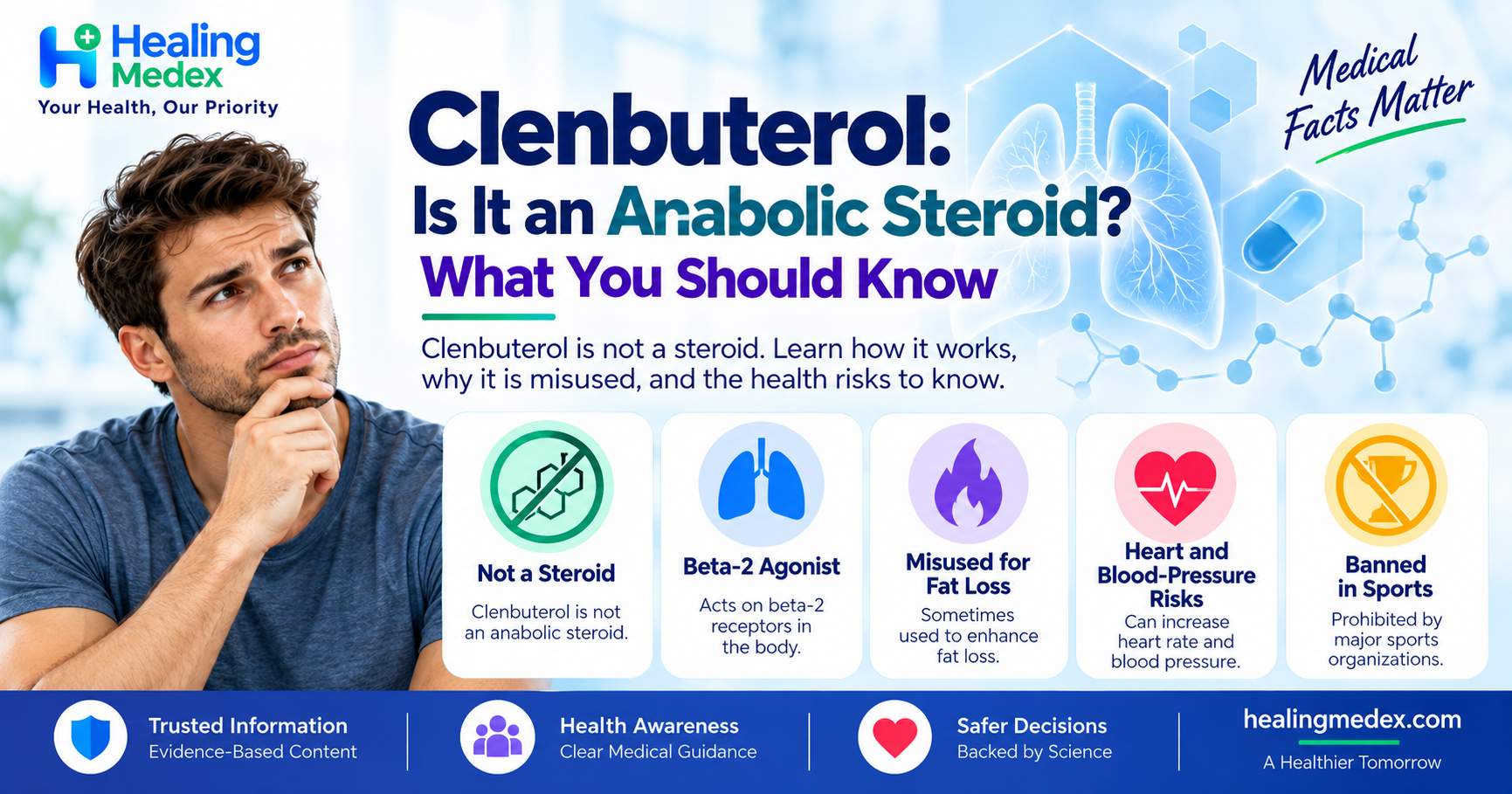
Anabolic Steriod
Clenbuterol: Is It an Anabolic Steroid? What You Should Know
What Is Clenbuterol? Clenbuterol is a long-acting beta-2 adrenergic receptor agonist . Beta-2 agonists stimulate receptors found in several tissues, particularly the smooth muscle surrounding the airways. Activation of these receptors can relax airway muscles, which is why clenbuterol has historically been used as a bronchodilator for asthma or other breathing disorders in some countries. Its pharmacological action is closer to other beta-2 agonist bronchodilators than to testosterone or anabolic steroids. Clenbuterol may also influence: Heart rate Blood pressure Energy expenditure Fat metabolism Blood glucose Blood potassium Skeletal muscle These systemic effects are one reason misuse can become dangerous. Is Clenbuterol an Anabolic Steroid? No. Clenbuterol is not an anabolic-androgenic steroid. Anabolic steroids such as testosterone, nandrolone, oxandrolone, stanozolol, and trenbolone primarily produce their effects through the androgen receptor . Clenbuterol instead works mainly by stimulating beta-2 adrenergic receptors . Therefore, although both clenbuterol and anabolic steroids may sometimes be discussed in bodybuilding communities, their mechanisms of action are fundamentally different. Clenbuterol vs Anabolic Steroids Feature Clenbuterol Anabolic Steroids Drug class Beta-2 adrenergic agonist Anabolic-androgenic steroid Testosterone derivative No Usually testosterone or steroid-related Main receptor Beta-2 adrenergic receptor Androgen receptor Originally developed for Bronchodilation Hormonal/medical indications vary May affect muscle tissue Potentially Yes Common non-medical purpose Fat loss/bodybuilding Muscle and strength enhancement Cardiovascular risks Yes Yes Testosterone suppression through typical androgenic feedback Not its primary mechanism Common with exogenous AAS This distinction is important because calling clenbuterol a "steroid" gives an inaccurate impression of how the substance actually works. Why Is Clenbuterol Sometimes Called an Anabolic Agent? There is an important difference between an anabolic steroid and an anabolic agent . Research in animals has demonstrated that clenbuterol can increase skeletal muscle mass and reduce fat under certain experimental conditions. Beta-2 receptor activation appears to contribute to these effects. However, findings from animal experiments cannot simply be translated into safe or effective bodybuilding use in humans. The World Anti-Doping Agency's 2026 Prohibited List places clenbuterol under S1.2 "Other Anabolic Agents." It is listed separately from S1.1 anabolic-androgenic steroids. So the most accurate description is: Clenbuterol is not an anabolic steroid , but it is classified as an anabolic agent in anti-doping regulations. Why Do Bodybuilders Use Clenbuterol? Non-medical clenbuterol use is commonly associated with attempts to: Reduce body fat Increase metabolic rate Preserve lean tissue during calorie restriction Achieve a more defined physique Improve perceived athletic performance Its stimulant-like metabolic effects have contributed to a reputation as a "fat burner." However, the evidence supporting meaningful performance-enhancing or bodybuilding benefits in humans is much less established than online claims often suggest. A systematic review examining reported clenbuterol adverse events among athletes found serious cardiovascular complications while also noting the lack of convincing evidence supporting its performance-enhancing usefulness. Potential physique changes therefore need to be weighed against potentially severe health consequences. Does Clenbuterol Burn Fat? Clenbuterol can stimulate adrenergic pathways involved in energy expenditure and fat metabolism. That biological effect is one reason it became popular in bodybuilding and weight-loss circles. However, this does not mean clenbuterol is a safe or medically appropriate weight-loss treatment. The doses and products used outside medical supervision can be unpredictable, and cardiovascular stimulation can occur alongside any metabolic effects. Poison Control notes that clenbuterol is frequently misused for possible fat-burning and anabolic effects despite serious toxicity being reported. Does Clenbuterol Build Muscle? This question requires more nuance. Animal research has demonstrated increases in skeletal muscle mass with clenbuterol exposure. These effects appear to involve beta-2 receptor stimulation rather than androgen-receptor activation. But strong evidence demonstrating that clenbuterol safely produces meaningful muscle growth in humans is lacking. Consequently, animal findings should not be interpreted as proof that clenbuterol is an effective or safe muscle-building drug for people. What Are the Common Side Effects of Clenbuterol? Because clenbuterol stimulates the adrenergic nervous system, side effects may include: Rapid heartbeat Heart palpitations Tremor or shaking Anxiety or restlessness Sweating Headache Nausea Muscle cramps Changes in blood pressure It may also produce important metabolic abnormalities such as low potassium levels (hypokalemia) and elevated blood glucose (hyperglycemia) . The intensity of these effects can vary substantially between individuals. Can Clenbuterol Affect the Heart? Cardiovascular complications are among the biggest concerns surrounding clenbuterol misuse. Published reports have associated clenbuterol exposure with: Persistent tachycardia Supraventricular tachycardia Atrial fibrillation Abnormal blood pressure Chest pain Myocardial ischemia Myocardial injury Cardiomyopathy Heart attack Cardiac arrest A 2023 systematic review of athlete case reports found cardiac complications to be particularly prominent among reported serious adverse events. These complications can occur even in relatively young or apparently healthy individuals. Can Clenbuterol Lower Potassium? Yes. Beta-2 receptor stimulation can shift potassium from the bloodstream into cells, causing hypokalemia . Low potassium may contribute to: Muscle weakness Muscle cramps Palpitations Abnormal heart rhythms Clenbuterol toxicity reports frequently describe hypokalemia together with tachycardia and hyperglycemia. This combination can place additional stress on the cardiovascular system. Does Clenbuterol Suppress Natural Testosterone? Clenbuterol does not work through the androgen receptor in the same way as anabolic-androgenic steroids. Therefore, it should not automatically be assumed to cause the same direct hypothalamic-pituitary-gonadal suppression associated with exogenous testosterone or anabolic steroid exposure . However, many people who misuse clenbuterol also use anabolic steroids or other performance-enhancing drugs simultaneously. This makes hormone changes difficult to attribute to clenbuterol itself. Using multiple substances can also increase overall health risk. Is Clenbuterol Approved for Human Use? Regulatory status differs between countries. In the United States, clenbuterol is not FDA-approved for human use . The FDA does list an approved clenbuterol hydrochloride veterinary product, Ventipulmin, for horses. Clenbuterol has been used or approved as a bronchodilator for humans in some countries outside the United States. People should therefore check the regulations that apply in their own country rather than assuming that online availability means a product is medically approved. Is Clenbuterol Banned in Sports? Yes, under World Anti-Doping Agency rules. The 2026 WADA Prohibited List includes clenbuterol under S1.2 Other Anabolic Agents . Competitive athletes should therefore be particularly cautious about products claiming to contain clenbuterol or supplements that could potentially be contaminated with prohibited substances. Is Clenbuterol Safer Than Anabolic Steroids? It is not useful to assume that clenbuterol is safe simply because it is not technically a steroid. The substances produce different risk profiles. Anabolic steroids may cause hormonal suppression, fertility problems, lipid abnormalities, cardiovascular changes, liver effects depending on the compound, and other androgen-related complications. Clenbuterol can produce intense adrenergic and cardiovascular stimulation and potentially dangerous metabolic abnormalities. In other words: Different mechanism does not mean lower risk. Both categories can cause serious harm when misused. What Are the Signs of Possible Clenbuterol Toxicity? Potential warning signs include: Very rapid or irregular heartbeat Severe palpitations Chest pain Fainting Severe tremor Shortness of breath Confusion or severe agitation Seizure Severe weakness Serious toxicity has been associated with myocardial injury, arrhythmias, cardiogenic shock, seizures, and cardiac arrest. Someone experiencing severe symptoms after suspected clenbuterol exposure should seek urgent medical attention rather than trying to manage the problem independently . Frequently Asked Questions 1.Is clenbuterol a steroid? No. Clenbuterol is a beta-2 adrenergic agonist, not an anabolic-androgenic steroid. 2.Is clenbuterol anabolic? It has demonstrated anabolic effects in animal studies and is categorized by WADA as an "other anabolic agent." That does not make it an anabolic steroid or establish safe muscle-building benefits in humans. 3.Is clenbuterol a fat burner? Clenbuterol can influence metabolic and fat-mobilizing pathways, which explains its non-medical use for weight loss. However, it is not a harmless fat-burning supplement, and serious cardiovascular toxicity has been reported. 4.Is clenbuterol the same as testosterone? No. Testosterone is an androgenic steroid hormone that acts primarily through androgen receptors. Clenbuterol stimulates beta-2 adrenergic receptors. 5.Can clenbuterol cause heart problems? Yes. Tachycardia, arrhythmias, myocardial injury, cardiomyopathy, heart attack, and cardiac arrest have all been reported in association with clenbuterol exposure. 6.Is clenbuterol permitted for competitive athletes? Clenbuterol appears on the WADA 2026 Prohibited List under Other Anabolic Agents. Final Takeaway Clenbuterol is not an anabolic steroid. It is a beta-2 adrenergic agonist with pharmacological effects that are very different from testosterone and traditional anabolic-androgenic steroids. Its ability to influence metabolism and skeletal muscle has led to its misuse for bodybuilding, fat loss, and performance enhancement. These potential effects have also led WADA to classify clenbuterol as an "other anabolic agent." But the distinction between a steroid and a non-steroid should not be confused with safety. Clenbuterol has been associated with rapid heartbeat, arrhythmias, abnormal potassium and glucose levels, myocardial injury, cardiomyopathy, heart attack, and other potentially life-threatening complications. Anyone considering or already using performance-enhancing substances should discuss their health, medications, cardiovascular risk factors, and laboratory monitoring with a qualified healthcare professional.
Dr. Marcus Vance, PharmD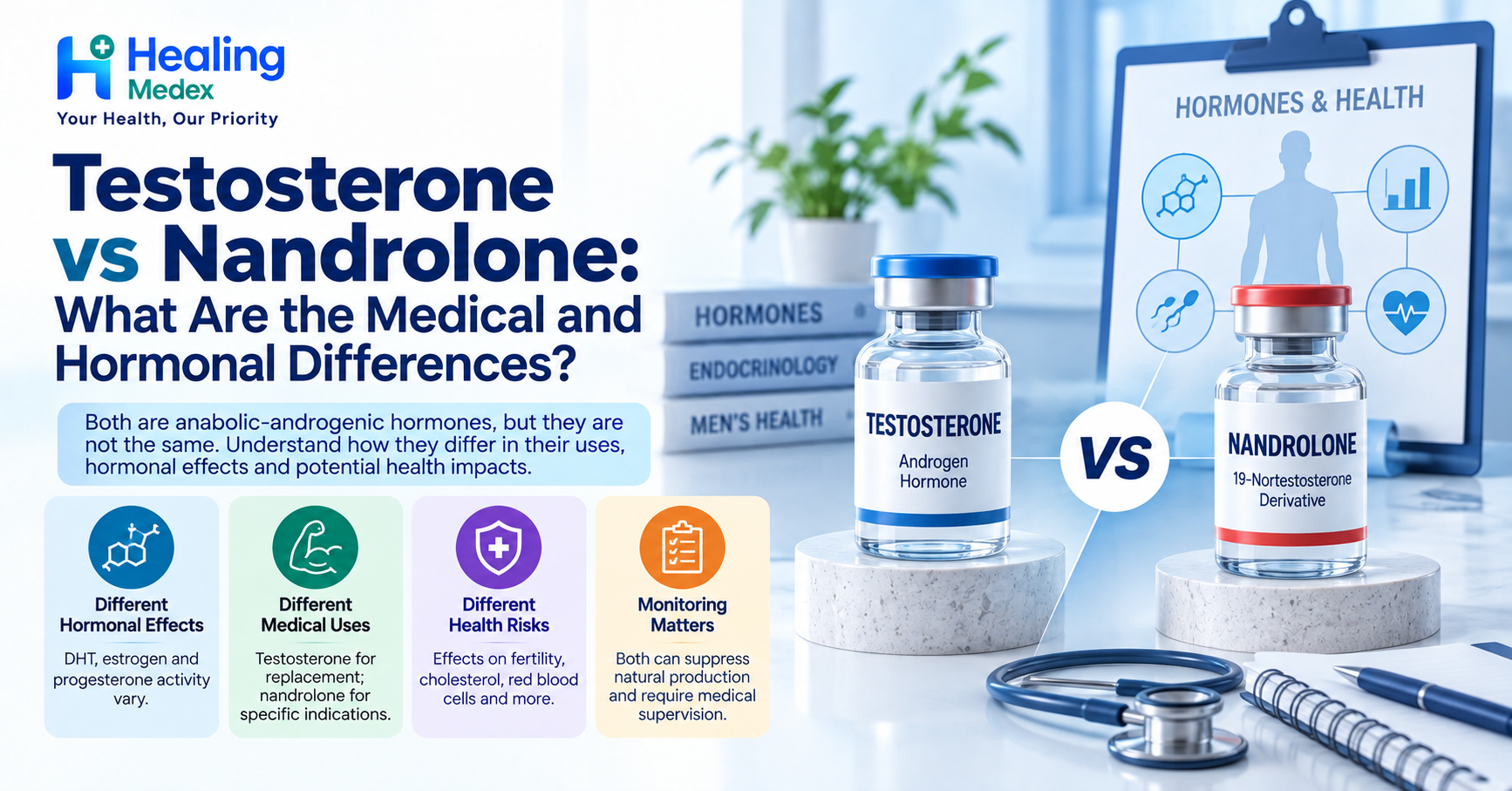
Anabolic Steriod
Testosterone vs Nandrolone: What Are the Medical and Hormonal Differences?
Testosterone and nandrolone are both anabolic-androgenic hormones, but they are not medically or hormonally equivalent . Testosterone is the principal natural androgen in men and is used medically as replacement therapy in appropriately diagnosed testosterone deficiency. Nandrolone is a synthetic derivative of testosterone—specifically 19-nortestosterone —with a different pattern of androgenic, anabolic and hormonal activity. Although both substances activate androgen receptors and can suppress the body's own hormone production, important differences exist in their effects on DHT, estrogen pathways, progesterone receptors, fertility, red blood cell production and other tissues . This article explains the major medical and hormonal differences between testosterone and nandrolone. Testosterone vs Nandrolone: Quick Comparison Feature Testosterone Nandrolone Type Naturally occurring androgen Synthetic 19-nortestosterone androgen Main medical role Testosterone replacement in diagnosed hypogonadism Certain anabolic medical indications; these vary by country Androgen receptor activity Strong Strong Conversion by 5-alpha-reductase Converts to potent DHT Converts to less androgenically active dihydronandrolone Estrogen pathway Readily aromatized to estradiol Less susceptible to aromatization; estrogenic metabolism is more complex Progestogenic activity Relatively limited More significant progesterone-receptor activity Natural testosterone suppression Yes Yes Sperm suppression Possible/significant Possible/significant Red blood cell effects Can increase hematocrit Can increase hemoglobin/red-cell mass Lipid effects Requires cardiovascular-risk monitoring May lower HDL and increase LDL Appropriate substitute for TRT? Testosterone itself is the standard replacement hormone Not considered a routine substitute for testosterone replacement 1. What Is Testosterone? Testosterone is the major androgen produced primarily by the testes. Smaller amounts are also produced by the adrenal glands. It plays important roles in: Sexual development Libido and sexual function Sperm production Muscle and bone maintenance Red blood cell production Secondary male sexual characteristics General androgen-dependent tissue function Medical testosterone therapy is used when a patient has an appropriate clinical diagnosis of testosterone deficiency. The Endocrine Society emphasizes that hypogonadism should not be diagnosed from symptoms alone. Diagnosis involves compatible symptoms or signs together with consistently low, accurately measured testosterone concentrations and evaluation of the underlying cause. 2. What Is Nandrolone? Nandrolone is an anabolic-androgenic steroid closely related chemically to testosterone. It is often called 19-nortestosterone because its chemical structure lacks the carbon-19 methyl group found in testosterone. This relatively small structural change alters how the hormone behaves in different tissues. Nandrolone still activates androgen receptors, but its metabolism differs substantially from testosterone. Medical indications and availability vary internationally. In current U.S. labeling, nandrolone decanoate is indicated for management of anemia associated with renal insufficiency , because it can increase hemoglobin and red blood cell mass. It should not be assumed that nandrolone is approved for every condition for which it has historically been studied. 3. Testosterone Is Primarily a Replacement Hormone One of the largest medical differences concerns why the drugs are prescribed. For men with appropriately diagnosed hypogonadism, testosterone therapy aims to restore testosterone exposure and improve consequences of androgen deficiency. The Endocrine Society continues to describe physiologic testosterone replacement as having established benefits for men with properly diagnosed hypogonadism caused by disorders involving the testes, hypothalamus or pituitary gland. Nandrolone, despite being an androgen, does not reproduce every physiological action of testosterone in the same way. Therefore: Nandrolone should not automatically be regarded as an alternative form of TRT. Its tissue metabolism, estrogenic activity and progestogenic activity differ from testosterone. 4. Testosterone Produces DHT — Nandrolone Behaves Differently This is one of their most important hormonal differences. The enzyme 5-alpha-reductase converts testosterone into dihydrotestosterone, or DHT. DHT has stronger androgenic activity than testosterone in several androgen-sensitive tissues. This pathway is especially important in tissues such as the prostate and skin. Nandrolone also undergoes 5-alpha-reduction, but the result is very different. Instead of producing DHT, nandrolone produces 5-alpha-dihydronandrolone , sometimes called DHN. Unlike DHT, this nandrolone metabolite has weaker androgen-receptor activity than its parent hormone. Experimental pharmacology therefore helps explain why nandrolone demonstrates proportionally less androgenic activity in certain tissues compared with its anabolic effects. This does not mean nandrolone has no androgenic effects. Androgenic adverse effects remain possible. 5. Nandrolone Has a Different Anabolic-to-Androgenic Profile Both testosterone and nandrolone activate the androgen receptor. However, historical laboratory and animal assays show nandrolone having a higher ratio of muscle-related anabolic activity relative to androgenic activity than testosterone. This distinction is frequently misunderstood. These experimental ratios are not clinical conversion formulas and should not be used to calculate equivalent doses or design non-medical steroid regimens. Humans also respond differently depending on dose, exposure, health status, genetics and concurrent medications. 6. Testosterone Has a More Established Estradiol Pathway Some testosterone is converted through the enzyme aromatase into estradiol . Estradiol is not simply a "female hormone." In men, normal estrogen signaling contributes to areas such as: Bone health Sexual physiology Neuroendocrine signaling Reproductive hormone regulation Nandrolone is structurally different and appears to be less susceptible than testosterone to conventional aromatization. Research into its exact estrogenic metabolism in humans is less complete, and older human research has demonstrated changes in estrogen metabolites during nandrolone exposure. For this reason, it is too simplistic to describe nandrolone as simply having "no estrogen effects." Hormonal effects need to be interpreted clinically rather than predicted from one pathway alone. 7. Nandrolone Has More Relevant Progestogenic Activity Another important difference involves the progesterone receptor . Nandrolone is not only an androgen-receptor agonist. Laboratory evidence shows significant progestogenic activity through the progesterone receptor. Testosterone does not have the same clinically relevant progestogenic profile. This matters because progesterone-receptor signaling can influence hypothalamic and pituitary regulation of reproductive hormones. Consequently, nandrolone's endocrine effects cannot be understood simply by looking at serum testosterone or estrogen concentrations. 8. Both Can Suppress Natural Testosterone Production Taking an external androgen tells the hypothalamus and pituitary that sufficient androgenic signaling is already present. This can reduce signaling through the hypothalamic-pituitary-gonadal axis and decrease stimulation of the testes. Nandrolone labeling specifically notes that anabolic steroids suppress pituitary gonadotropic function and may directly affect the testes. Testosterone therapy can also suppress the reproductive axis. Therefore, someone receiving external testosterone may have an adequate circulating testosterone concentration while producing considerably less testosterone inside the testes. The same general principle applies to nandrolone. 9. Both Can Reduce Fertility Suppression of LH and FSH can reduce intratesticular testosterone concentrations and interfere with sperm production. FDA testosterone prescribing information warns that exogenous androgen administration may lead to azoospermia , meaning an absence of sperm in the semen. Because of this effect, the Endocrine Society recommends against beginning testosterone therapy in men who are planning fertility in the near term. Nandrolone also suppresses pituitary-gonadal function and may adversely affect testicular function. Anyone concerned about fertility should discuss this before beginning androgen therapy rather than waiting until fertility problems develop. 10. Their Effects on Sexual Function Are Not Identical Testosterone deficiency itself can contribute to reduced libido and certain sexual symptoms, so appropriately prescribed testosterone replacement may improve some symptoms in genuinely hypogonadal patients. The effects of nandrolone are more complicated. Because nandrolone can suppress endogenous testosterone while producing different DHT, estrogen and progesterone-receptor effects, sexual symptoms during non-medical nandrolone exposure cannot reliably be predicted from total testosterone measurements alone. Possible sexual symptoms should not automatically be blamed on one hormone such as estrogen or prolactin without testing and clinical assessment. Other contributors may include: Cardiovascular health Psychological factors Medication use Other endocrine abnormalities Relationship factors Sleep disorders Diabetes Blood pressure General health 11. Both Can Increase Red Blood Cell Production Androgens stimulate erythropoiesis—the production of red blood cells. Testosterone therapy can therefore increase hemoglobin and hematocrit. Monitoring hematocrit is an important component of medical testosterone therapy, particularly because excessive elevation may require reassessment of treatment. Nandrolone has sufficiently strong erythropoietic effects that its U.S. labeling includes treatment of anemia caused by renal insufficiency. This illustrates an important principle: A drug's ability to increase red blood cells can be medically useful in one context but potentially problematic in another. 12. Cardiovascular and Cholesterol Effects Matter Neither drug should be considered harmless to cardiovascular health. Nandrolone labeling reports that anabolic steroids can: Increase LDL cholesterol Decrease HDL cholesterol Such changes can make the lipid profile less favorable. Testosterone safety information has also changed in recent years. Following review of the large TRAVERSE trial and post-market blood-pressure studies, the FDA removed older boxed-warning language concerning increased major cardiovascular events from testosterone products but required warnings about increased blood pressure across the testosterone drug class. In 2026, the FDA reported that the TRAVERSE trial found no meaningful difference in major cardiovascular events between testosterone gel and placebo in the studied population, while testosterone treatment continues to require individualized assessment and monitoring. These findings should not be extrapolated to high-dose non-medical testosterone or anabolic-steroid use. 13. Does Nandrolone Cause Fewer Androgenic Side Effects? Pharmacologically, nandrolone can demonstrate lower androgenic activity in some tissues because 5-alpha-reduction produces the weaker androgen dihydronandrolone rather than DHT. However, lower androgenic activity does not mean zero androgenic activity or lower overall health risk . Nandrolone remains an anabolic-androgenic steroid. Potential concerns with anabolic steroid exposure can include effects involving: Reproductive hormone suppression Fertility Cholesterol Cardiovascular health Blood pressure and fluid retention Red blood cell production Skin and hair Mood or psychological symptoms Sexual function Risk also changes considerably with dose, duration, underlying disease and whether multiple anabolic steroids are being used. 14. Is Nandrolone Safer Than Testosterone? There is no universal answer because the two drugs are used for different medical purposes and have different physiological effects. For a person with appropriately diagnosed testosterone deficiency, the therapeutic goal is generally to replace the deficient hormone with testosterone , not to select an anabolic steroid according to which appears more anabolic or less androgenic. The evidence base supporting contemporary testosterone replacement is also substantially larger than the evidence supporting nandrolone as a general treatment for male hypogonadism. A review of nandrolone's possible therapeutic applications has specifically noted that human evidence remains limited in several proposed areas and that additional research is required. Testosterone vs Nandrolone: The Main Hormonal Differences The comparison can be summarized simply: Testosterone Is the body's major natural androgen Converts to DHT Aromatizes to estradiol Is the standard replacement hormone for appropriately diagnosed male hypogonadism Suppresses LH, FSH and sperm production when administered externally Can increase hematocrit and blood pressure Nandrolone Is a synthetic 19-nortestosterone derivative Converts to the less androgenically active dihydronandrolone Has a different and less straightforward estrogenic pathway Has significant progestogenic activity Has relatively greater anabolic versus androgenic activity in experimental models Suppresses the reproductive hormone axis Can affect fertility and lipid levels Has medical indications that differ from testosterone What Monitoring May Be Needed With Androgen Therapy? Monitoring depends on the specific drug, indication, age, medical history and national prescribing guidance. For medically prescribed testosterone, clinicians may consider factors such as: Testosterone concentrations Hemoglobin and hematocrit Blood pressure Treatment response and adverse effects Prostate assessment when clinically appropriate Cardiovascular risk Fertility plans Additional testing based on the underlying cause of hypogonadism Current endocrine guidance emphasizes both confirming the diagnosis before starting therapy and monitoring patients after treatment begins. Final Takeaway Testosterone and nandrolone belong to the same broad anabolic-androgenic steroid family, but their hormonal effects are meaningfully different. Testosterone is the body's natural primary androgen and is the established replacement hormone for appropriately diagnosed testosterone deficiency. Nandrolone is a synthetic 19-nortestosterone compound with a higher relative anabolic profile, weaker androgenic activity in some tissues, different estrogen metabolism and meaningful progesterone-receptor activity. Both can suppress natural testosterone and sperm production, and both can produce medically important systemic effects. For these reasons, nandrolone should not be viewed as a simple substitute for testosterone, and choosing between androgen therapies should be based on a confirmed medical diagnosis, approved indications, individual health risks and clinician monitoring—not bodybuilding comparisons or anabolic-to-androgenic ratios. Frequently Asked Questions 1. Is nandrolone the same as testosterone? No. Nandrolone is structurally related to testosterone but is a synthetic 19-nortestosterone derivative with different metabolism and tissue effects. 2.Does nandrolone suppress natural testosterone? Yes. Nandrolone and other anabolic steroids can suppress pituitary gonadotropin signaling and reduce endogenous testicular hormone production. 3.Does testosterone suppress sperm production? Yes. External testosterone can suppress the reproductive axis and may cause severe reductions in sperm production or azoospermia. 4.Does nandrolone convert to DHT? Not in the same way as testosterone. Testosterone is converted to DHT, whereas nandrolone is converted by 5-alpha-reductase to dihydronandrolone, which has weaker androgenic activity than nandrolone itself. 5.Can nandrolone replace testosterone in TRT? Nandrolone is not considered a routine equivalent replacement for testosterone. Testosterone remains the standard hormone used to replace deficient testosterone in appropriately diagnosed male hypogonadism.
Dr. Marcus Vance, PharmD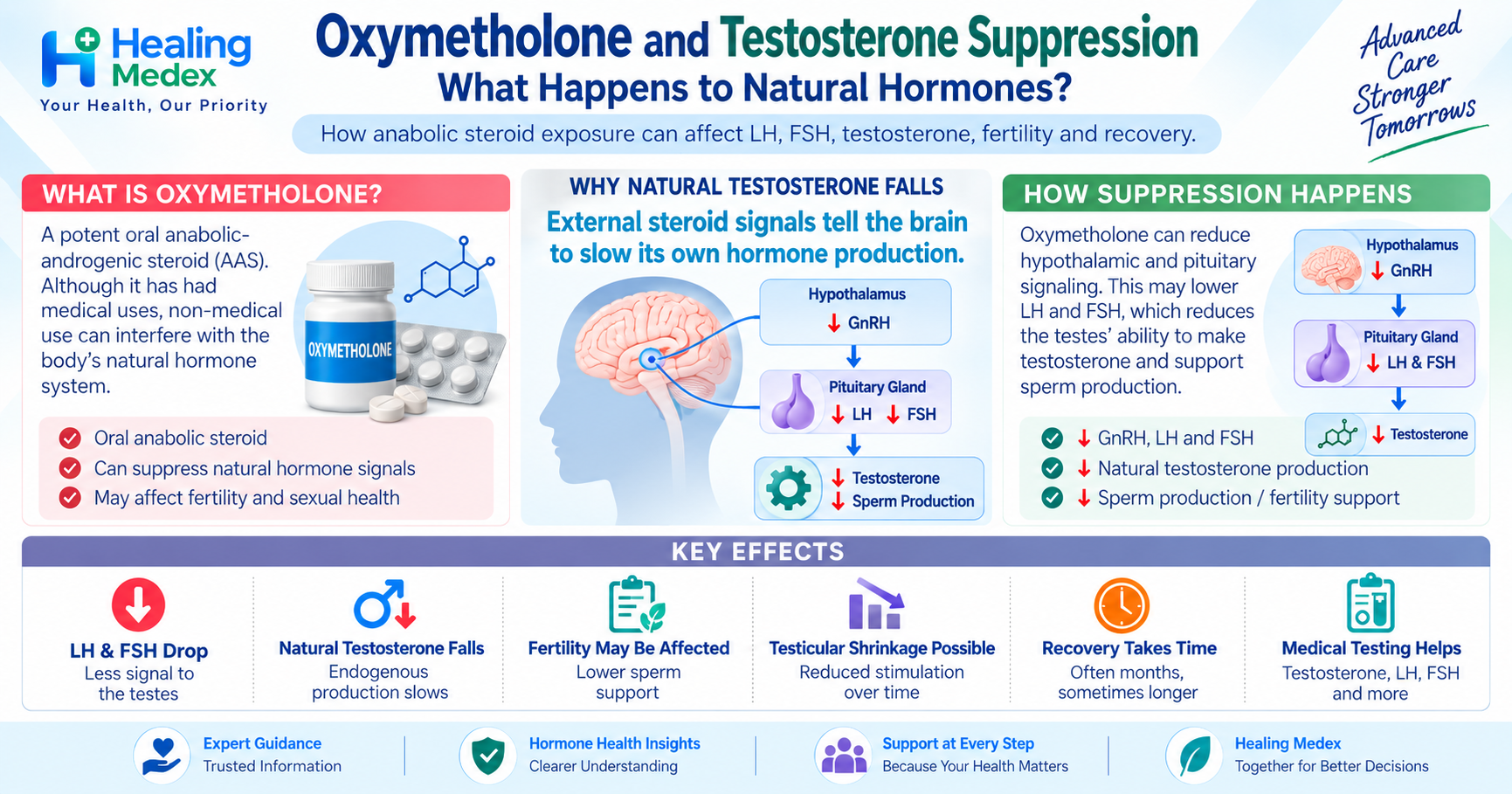
Anabolic Steriod
Oxymetholone and Testosterone Suppression: What Happens to Natural Hormones?
Oxymetholone, commonly known by the former brand name Anadrol , is a potent oral anabolic-androgenic steroid (AAS). Although it has had legitimate medical uses for certain types of anemia, oxymetholone is also used non-medically for physique and performance purposes. One important consequence of anabolic steroid exposure is often misunderstood: having more androgen activity in the body does not mean the testes continue producing normal amounts of testosterone . In fact, oxymetholone and other anabolic-androgenic steroids can suppress the hormonal signals responsible for natural testosterone production. This may affect testosterone levels, testicular function, sperm production, fertility, sexual health and mood. Suppression can become particularly noticeable after the steroid is discontinued. This article explains what happens to the body's natural hormones, why testosterone can fall, and what recovery may look like after anabolic steroid exposure. What Is Oxymetholone? Oxymetholone is an oral anabolic-androgenic steroid . It was developed medically to stimulate red blood cell production in certain forms of anemia. Like other anabolic steroids , however, oxymetholone produces androgenic signals that can interfere with the body's normal reproductive hormone system. Product information for oxymetholone has identified effects such as inhibition of testicular function, testicular atrophy and oligospermia , meaning a reduced sperm concentration. The hormonal consequences are especially relevant when oxymetholone is used outside medical supervision. How Does the Body Normally Produce Testosterone? Natural testosterone production depends on a communication system called the hypothalamic-pituitary-gonadal axis , or HPG axis. It works through three main steps: 1. The hypothalamus releases GnRH The brain releases gonadotropin-releasing hormone (GnRH). 2. The pituitary gland releases LH and FSH GnRH signals the pituitary gland to release two important hormones: LH — luteinizing hormone FSH — follicle-stimulating hormone 3. The testes respond LH stimulates Leydig cells in the testes to produce testosterone. FSH, together with high concentrations of testosterone within the testes, helps support sperm production. When this system is functioning normally, the brain constantly adjusts hormone production through a feedback mechanism. How Does Oxymetholone Suppress Natural Testosterone? Introducing powerful external anabolic-androgenic steroids changes this feedback system. The brain detects strong androgenic signals and essentially receives the message that sufficient androgen is already present. As a result, the hypothalamus and pituitary can reduce their hormonal signaling. This may lead to: Reduced GnRH → reduced LH and FSH → reduced testicular testosterone production. Suppression of GnRH, LH and FSH is a central mechanism behind anabolic steroid-induced hypogonadism (ASIH) . Therefore, someone can have substantial androgenic activity from an anabolic steroid while simultaneously producing very little testosterone naturally. What Happens to LH? LH is one of the most important hormones controlling testosterone production. When anabolic steroid exposure suppresses pituitary activity, LH can fall significantly . Lower LH means that the Leydig cells inside the testes receive less stimulation to manufacture testosterone. If suppression continues, endogenous—or naturally produced—testosterone can become very low. This explains why testosterone production may not immediately return to normal when anabolic steroids are discontinued. The brain-pituitary-testicular signaling pathway first has to reactivate. What Happens to FSH? FSH is especially important for reproductive function. Together with testosterone inside the testes, FSH supports the Sertoli cells responsible for sperm development. Suppression of FSH may therefore contribute to: Reduced sperm production Low sperm concentration Poorer fertility Severe oligospermia In some cases, azoospermia, where no sperm are detected in the ejaculate Exogenous testosterone and anabolic-androgenic steroids are well documented to suppress the HPG axis and reduce intratesticular testosterone, which can substantially interfere with spermatogenesis. Can the Testes Become Smaller? Yes. When LH and FSH remain suppressed, the testes receive less stimulation. Some anabolic steroid users may develop reduced testicular volume or testicular atrophy . Oxymetholone product information has specifically listed inhibition of testicular function and testicular atrophy among potential adverse effects. Testicular size can improve after normal hormone signaling returns, but recovery varies considerably between individuals. What Happens While Oxymetholone Is Being Used? Natural testosterone may already be suppressed while the person is taking an anabolic steroid. However, symptoms of low natural testosterone may not always be immediately obvious because the anabolic steroid itself continues producing androgenic effects. This creates an important distinction: Androgen activity in the body is not the same thing as normal natural testosterone production. A person may therefore feel relatively normal—or notice strong anabolic effects—while LH, FSH and endogenous testosterone production are substantially suppressed. The consequences can become much more noticeable when the external androgen is removed. What Can Happen After Oxymetholone Is Stopped? After anabolic steroid exposure stops, external androgen activity declines. Natural testosterone production, however, may not immediately restart at the same speed. This temporary mismatch can result in a period of post-anabolic-steroid hypogonadism . Possible symptoms include: Low energy Fatigue Reduced libido Erectile difficulties Depressed or low mood Anxiety or irritability Reduced motivation Loss of strength Reduced muscle mass Increased body fat Testicular shrinkage Reduced sperm production Fertility problems Withdrawal from chronic AAS use has also been associated with anxiety and depressive symptoms in some individuals. Persistent or severe mood symptoms should be assessed by a healthcare professional. Does Oxymetholone Affect Fertility? It can. Normal sperm production requires active signaling from LH and FSH and sufficiently high testosterone concentrations inside the testes . Anabolic steroids can suppress all three. Oxymetholone labeling has specifically identified oligospermia as a potential adverse effect , and broader AAS research shows that suppression can sometimes progress to extremely low sperm counts or azoospermia. This is especially important for men who are planning to have children. Normal testosterone in a blood test also does not necessarily guarantee normal sperm production. A semen analysis provides more direct information about fertility. How Long Does Natural Testosterone Take to Recover? There is no single recovery timeline. Recovery can depend on factors such as: Duration of anabolic steroid exposure Total lifetime exposure Types of steroids used Whether several anabolic steroids were combined Age Baseline hormone function Previous steroid exposure Individual biology Other medical conditions A 2023 scoping review found that recovery from anabolic steroid-induced hypogonadism is highly variable. Across the available evidence, gonadotropins such as LH and FSH often recovered over approximately 3–6 months , while testosterone recovery generally occurred over months but could remain incomplete in some individuals. Other clinical reviews have reported that many men with shorter periods of AAS exposure recover normal HPG-axis function within a year after stopping, although this should not be considered a guarantee for an individual patient. Can Testosterone Suppression Last Longer Than Expected? Yes. Most people should not assume that natural hormone production will automatically return to normal within a particular number of weeks. Research has documented individuals with prolonged symptoms and biochemical evidence of hypogonadism after anabolic steroid cessation. The likelihood and duration appear to vary substantially. Longer or heavier exposure may be associated with slower recovery, although predicting recovery for one individual remains difficult. Persistent symptoms should therefore be investigated rather than automatically attributed to a temporary hormonal "crash." How Long Does Fertility Take to Recover? Sperm production can recover more slowly than blood testosterone. Research into anabolic steroid-induced hypogonadism suggests that spermatogenesis may require months and sometimes considerably longer to recover . Testicular volume may also recover over months to years in some individuals. Men concerned about future fertility should discuss their history openly with an endocrinologist, urologist or reproductive specialist. Which Blood Tests May Be Helpful? Someone with symptoms following anabolic steroid use should receive an individualized medical assessment rather than relying only on how they feel. Depending on the situation, a clinician may consider tests such as: Morning total testosterone Repeat morning testosterone when appropriate LH FSH SHBG Calculated or measured free testosterone when indicated Estradiol Prolactin Complete blood count/hematocrit Liver function tests Lipid profile A semen analysis may also be appropriate when fertility is a concern. Clinical guidelines recommend diagnosing testosterone deficiency based on both compatible symptoms and consistently low testosterone concentrations, usually confirmed with repeat morning measurements. Because oxymetholone can affect organs beyond the reproductive system, hormone testing should not necessarily be the only medical evaluation performed. Oxymetholone Can Affect More Than Testosterone Although testosterone suppression is important, it is not the only potential concern associated with oxymetholone. As an orally active anabolic steroid, oxymetholone has also been associated with significant adverse effects involving areas such as: Liver function Cholesterol levels Fluid retention Blood pressure Red blood cell levels Fertility Cardiovascular health Oxymetholone and other 17-alpha-alkylated oral anabolic steroids have particular concerns regarding liver toxicity. For this reason, focusing only on whether testosterone eventually recovers may overlook other important health risks. What About “PCT” After Oxymetholone? Some non-medical anabolic steroid users attempt to restart natural testosterone production with so-called post-cycle therapy (PCT) . However, self-directed PCT is not a standardized medical treatment. Drugs sometimes used for this purpose can have their own adverse effects, interactions and contraindications, and products obtained outside regulated pharmacies may be counterfeit or contain unexpected ingredients. Medical literature discusses several therapies that specialists may use for selected patients with persistent AAS-related hypogonadism or infertility, but the evidence base remains limited and treatment depends strongly on the individual's hormone results, fertility goals and medical history. Anyone experiencing prolonged hormonal symptoms should therefore seek medical assessment rather than assuming a standard online PCT protocol is appropriate. When Should You Speak to a Doctor? Medical evaluation is particularly important when someone experiences: Persistent low libido Erectile dysfunction Severe fatigue Significant mood changes Depression Testicular shrinkage Fertility problems Persistently low testosterone Abnormal liver tests Jaundice Significant swelling or fluid retention Severe depression, suicidal thoughts, jaundice, chest pain or other serious symptoms require urgent medical attention. Being open with the clinician about previous anabolic steroid exposure can make diagnosis considerably easier. Key Takeaway Oxymetholone can suppress natural testosterone production by reducing activity within the hypothalamic-pituitary-gonadal axis. As LH and FSH decline, the testes receive less stimulation to produce testosterone and sperm. This can contribute to low endogenous testosterone, reduced testicular volume and impaired fertility. After oxymetholone or other anabolic steroids are discontinued, natural hormone production may recover—but the timeline varies widely. Testosterone and gonadotropin recovery can take months, while fertility may take longer, and some individuals experience prolonged hypogonadism. Anyone with persistent symptoms should consider proper medical evaluation and hormone testing rather than attempting to diagnose or treat hormone suppression based solely on symptoms. Frequently Asked Questions 1. Does oxymetholone shut down natural testosterone? Oxymetholone can significantly suppress the hormonal signaling responsible for natural testosterone production. The degree of suppression varies between individuals. 2.Does testosterone immediately return after stopping oxymetholone? Not necessarily. The hypothalamus, pituitary gland and testes may need time to restore normal communication. Recovery may take months and can occasionally be prolonged. 3.Can oxymetholone reduce sperm count? Yes. Oligospermia has been reported with oxymetholone, and suppression of LH, FSH and intratesticular testosterone from anabolic steroids can impair sperm production. 4.Can anabolic steroid-related testicular shrinkage recover? Recovery is possible, but the timing varies. Research on AAS-induced hypogonadism suggests that testicular volume may improve gradually over months or longer. 5.Which hormones are most affected by anabolic steroids? The major hormones involved include GnRH, LH, FSH and endogenous testosterone. Sperm production can also be affected because of reduced gonadotropin signaling and intratesticular testosterone. 6.Can testosterone suppression become permanent? Persistent hypogonadism has been documented, although it is difficult to predict who will experience prolonged suppression. Longer and heavier AAS exposure may increase concern for delayed recovery.
Dr. Marcus Vance, PharmD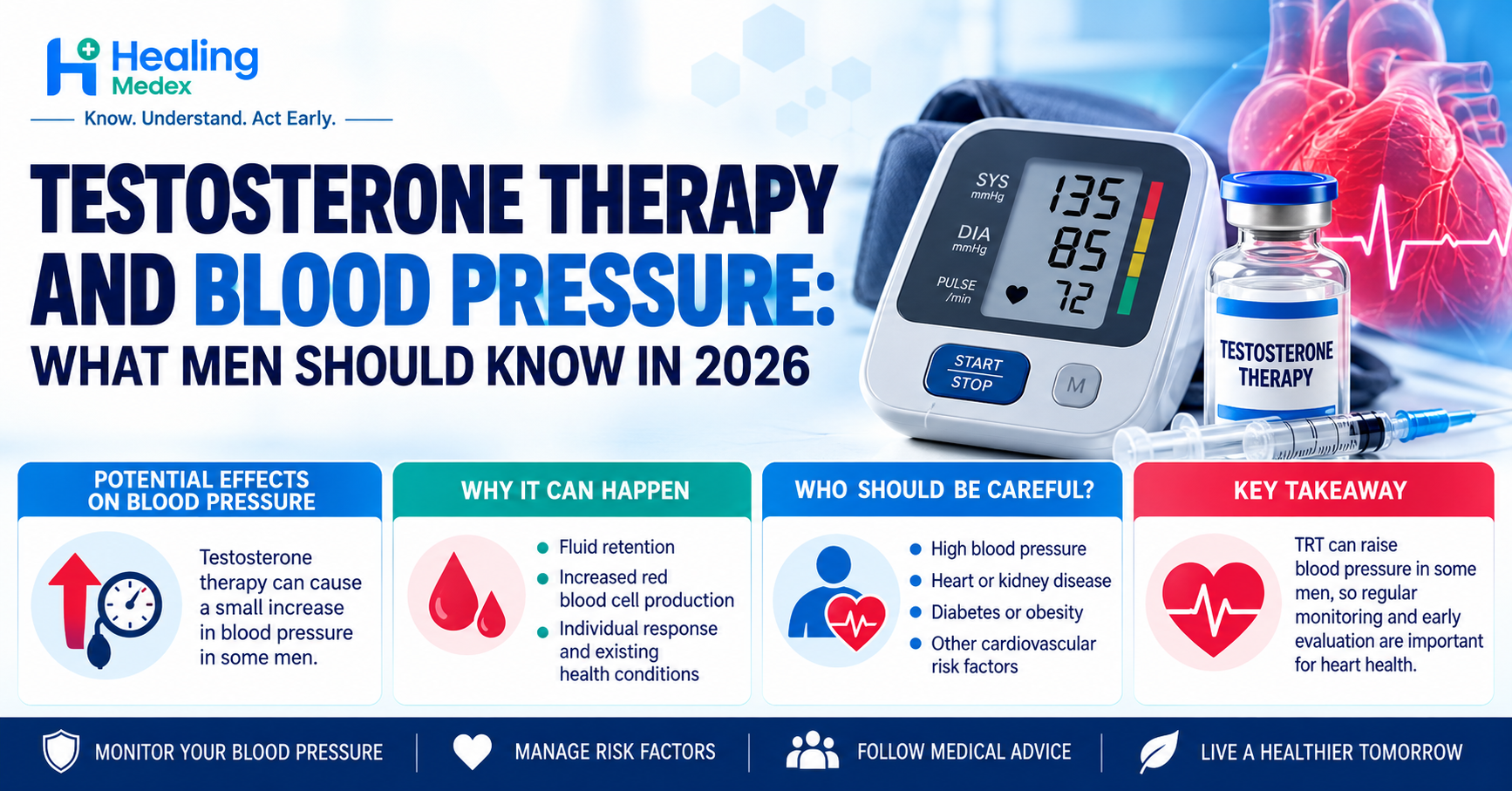
Anabolic Steriod
Testosterone Therapy and Blood Pressure: What Men Should Know in 2026
Testosterone replacement therapy (TRT) can improve symptoms in appropriately diagnosed men with testosterone deficiency, but treatment requires ongoing monitoring. One issue receiving increased attention in 2026 is blood pressure . Current evidence indicates that testosterone therapy can cause a small increase in blood pressure in some men , although the effect varies between individuals and testosterone formulations. This is particularly important for men who already have hypertension, diabetes, kidney disease, obesity, or cardiovascular disease. In 2025, the U.S. Food and Drug Administration (FDA) required testosterone products to carry updated warnings about increased blood pressure after ambulatory blood-pressure monitoring studies found increases across testosterone products. So, does testosterone therapy cause high blood pressure? And what should men using TRT monitor in 2026? Does Testosterone Therapy Raise Blood Pressure? It can. Testosterone does not cause the same blood-pressure response in every person, but clinical studies show that some testosterone formulations can produce measurable increases in systolic blood pressure. For example, a study involving men with hypogonadism using testosterone gel for 16 weeks found an average increase of approximately 1.9 mm Hg in 24-hour systolic blood pressure . The researchers also noted that the effect appeared more pronounced in some men who already had hypertension or diabetes. Another ambulatory blood-pressure study of transdermal testosterone reported an average increase of approximately 3.5 mm Hg in 24-hour systolic blood pressure among the evaluable participants. These averages may appear small, but even modest increases can matter when someone already has cardiovascular risk factors. What Changed With Testosterone Safety Warnings? A significant change occurred in February 2025 . Following review of postmarketing ambulatory blood-pressure studies, the FDA concluded that the completed studies confirmed an increase in blood pressure associated with testosterone products and required updated labeling across the drug class. Current testosterone prescribing information may therefore include warnings advising clinicians to: monitor blood pressure periodically; consider cardiovascular risk; pay particular attention to men who already have hypertension; and appropriately manage blood pressure during treatment. For example, updated prescribing information for testosterone gel states that testosterone can increase blood pressure and advises periodic BP measurement. Why Might Testosterone Affect Blood Pressure? Several factors could contribute. 1. Fluid and Sodium Retention Androgens can promote fluid retention in susceptible individuals. More retained fluid can increase circulating blood volume and potentially contribute to higher blood pressure. Fluid retention may be particularly important in people who already have heart, kidney, or liver disease . 2. Increased Red Blood Cell Production Testosterone stimulates production of red blood cells. As a result, TRT can increase: hemoglobin; hematocrit; and overall red blood cell mass. This is one reason hematocrit is routinely monitored during testosterone therapy. Excessive erythrocytosis can increase blood viscosity and may contribute to cardiovascular or thrombotic concerns, although blood pressure is influenced by many other factors as well. 3. Existing Cardiovascular Risk Men beginning testosterone therapy frequently have other conditions that influence blood pressure, such as: obesity; diabetes; sleep apnea; high cholesterol; kidney disease; physical inactivity; high sodium intake; or pre-existing hypertension. A rise in blood pressure during TRT therefore should not automatically be attributed to testosterone alone. The patient's complete cardiovascular health should be reviewed. Does Testosterone Therapy Increase Heart Attack or Stroke Risk? The answer is more nuanced than earlier warnings suggested. The large TRAVERSE trial included more than 5,200 men aged 45–80 with confirmed hypogonadism and either established cardiovascular disease or increased cardiovascular risk. Major cardiovascular events occurred in 7.0% of men receiving testosterone gel and 7.3% receiving placebo , meeting the trial's criteria for cardiovascular noninferiority. Based partly on these results, the FDA removed the previous boxed-warning language concerning an increased risk of major adverse cardiovascular outcomes from testosterone product labeling in 2025. At the same time, however, the FDA added or strengthened warnings about blood-pressure increases . These are two different issues. The TRAVERSE results should therefore not be interpreted as meaning that blood-pressure monitoring is unnecessary. Who Should Be Especially Careful? Blood-pressure monitoring is important for every man receiving TRT, but it deserves particular attention in men with: existing hypertension; previous heart attack or stroke; coronary artery disease; heart failure; kidney disease; diabetes; obesity; obstructive sleep apnea; high hematocrit; or multiple cardiovascular risk factors. Some current testosterone product labeling specifically states that treatment is not recommended in men with uncontrolled hypertension . Individual prescribing information should always be checked because warnings and risks can vary by formulation. What Blood Pressure Is Considered High in 2026? According to the 2025 AHA/ACC hypertension guideline , adult blood-pressure categories are: Blood Pressure Category Systolic Diastolic Normal Below 120 and below 80 Elevated 120–129 and below 80 Stage 1 hypertension 130–139 or 80–89 Stage 2 hypertension 140 or higher or 90 or higher The guideline generally identifies less than 130/80 mm Hg as the treatment goal for adults receiving treatment for hypertension, while individual circumstances still need to be considered. A single elevated reading does not necessarily establish hypertension. Clinicians usually look at repeated measurements and the patient's overall medical situation. Blood Pressure Monitoring Before Starting TRT Before testosterone therapy begins, a healthcare professional should review cardiovascular risk and obtain an accurate baseline blood-pressure measurement. Men should also be properly evaluated for testosterone deficiency. The Endocrine Society emphasizes that hypogonadism should be diagnosed based on compatible symptoms together with consistently low testosterone concentrations, generally confirmed with at least two early-morning testosterone measurements rather than symptoms alone. Baseline evaluation may include : blood pressure; testosterone levels; complete blood count and hematocrit; cardiovascular history; current medications; prostate assessment where appropriate; diabetes and cholesterol risk; and evaluation for conditions that could contribute to low testosterone. Blood Pressure Monitoring After Starting Testosterone Men receiving TRT should have their blood pressure checked periodically. Monitoring becomes especially useful: shortly after treatment begins; after the testosterone dose is changed; after changing testosterone formulations; if hypertension medications are changed; if significant weight or fluid retention develops; or if home blood-pressure measurements start trending upward. Home blood-pressure monitoring can provide additional information between medical visits. The 2025 hypertension guideline supports home BP monitoring as part of effective blood-pressure management. Use a validated upper-arm cuff rather than relying solely on cuffless smartwatches or similar devices for clinical decisions. What If Blood Pressure Goes Up During TRT? Do not automatically stop testosterone or change the dose without speaking to the prescribing clinician. The healthcare professional may investigate several possibilities, including: whether the testosterone dose is appropriate; whether testosterone levels are above the intended range; whether hematocrit has increased excessively; whether fluid retention is occurring; whether another medication is raising BP; whether sleep apnea is present or poorly controlled; diet and sodium intake; alcohol intake; body weight; and whether antihypertensive treatment needs adjustment. Depending on the findings, treatment might involve lifestyle measures, adjustment of blood-pressure medication, modification of testosterone therapy, or switching formulations. Can Men With High Blood Pressure Use Testosterone Therapy? Having hypertension does not automatically mean that every man is unable to receive testosterone. The important questions are whether testosterone therapy is medically indicated, whether the blood pressure is adequately controlled, and whether the patient can be appropriately monitored. Men with poorly controlled hypertension require additional caution because testosterone-related increases in BP could add to their existing cardiovascular risk. The decision should be individualized by the prescribing healthcare professional. Ways to Protect Cardiovascular Health During TRT Men receiving testosterone therapy can reduce overall cardiovascular risk by focusing on factors that are modifiable. These include: checking blood pressure regularly; taking prescribed hypertension medication consistently; reducing excess sodium; maintaining a healthy body weight; staying physically active; managing diabetes; controlling cholesterol; avoiding tobacco; limiting or avoiding excessive alcohol; treating sleep apnea when present; and attending scheduled TRT monitoring appointments. Current hypertension guidelines strongly recommend weight management, a heart-healthy dietary pattern, sodium reduction and regular physical activity for preventing and managing high blood pressure. When Does High Blood Pressure Require Urgent Care? Very high blood pressure deserves prompt attention. A blood pressure higher than 180/120 mm Hg is considered severe hypertension. If a reading above this level is accompanied by symptoms such as: chest pain; shortness of breath; weakness or numbness; difficulty speaking; sudden vision changes; or other symptoms suggesting acute organ damage, emergency medical assessment is required. Testosterone Therapy and Blood Pressure: Key Takeaway for 2026 Testosterone therapy can increase blood pressure, although the amount varies between individuals and formulations. The most important change men should understand in 2026 is that blood-pressure elevation is now recognized in U.S. testosterone labeling as a class-wide safety concern requiring monitoring . At the same time, evidence from the large TRAVERSE cardiovascular trial did not demonstrate a higher rate of major cardiovascular events with testosterone gel compared with placebo in appropriately selected men with hypogonadism and cardiovascular risk. Therefore, TRT should neither be viewed as universally dangerous for the heart nor treated as cardiovascularly risk-free. The practical approach is straightforward: Confirm that testosterone therapy is medically appropriate, control existing hypertension, monitor blood pressure and hematocrit, and regularly review cardiovascular risk with a healthcare professional. Frequently Asked Questions 1. Does TRT always raise blood pressure? No. Blood-pressure responses vary considerably. Some men experience little or no clinically important change, while others may develop a meaningful increase. 2. How much can testosterone raise blood pressure? The amount depends on the individual and formulation. Recent ambulatory BP studies have reported average systolic increases ranging from roughly 2 to several mm Hg with certain testosterone preparations. 3. Can I take blood-pressure medicine while using testosterone? Many men receiving TRT also take antihypertensive medication. Treatment needs to be individualized, and blood pressure should continue to be monitored by the prescribing clinician. 4. Should I stop TRT if my blood pressure becomes high? Do not change prescription testosterone therapy on your own. Contact your healthcare professional so the cause of the BP increase and the safest treatment strategy can be evaluated. 5. Is TRT safe for the heart? The TRAVERSE study found testosterone gel was noninferior to placebo for major adverse cardiovascular events in the population studied. However, testosterone still has important potential adverse effects and requires appropriate diagnosis, prescribing and monitoring
Dr. Marcus Vance, PharmD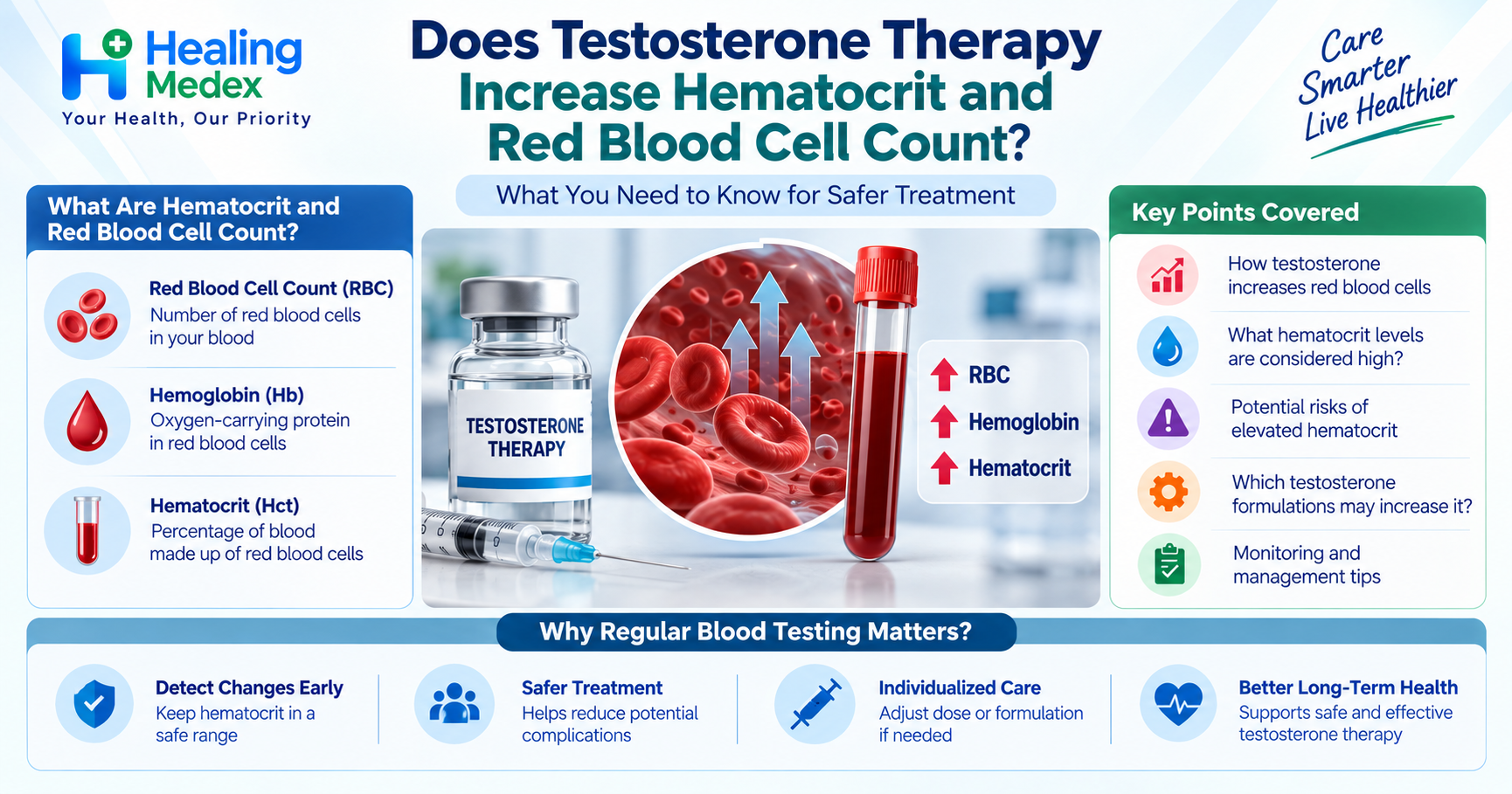
Anabolic Steriod
Does Testosterone Therapy Increase Hematocrit and Red Blood Cell Count?
Testosterone therapy is used to treat appropriately diagnosed testosterone deficiency, or hypogonadism. While treatment may improve symptoms in suitable patients, testosterone can also affect several laboratory values—including hemoglobin, hematocrit, and red blood cell count . One of the best-recognized effects of testosterone therapy is increased red blood cell production. In some patients, this rise is beneficial, particularly when low testosterone is associated with anemia. However, if hematocrit becomes too high, the condition is known as erythrocytosis , and treatment may need to be adjusted. So, does testosterone therapy increase hematocrit and red blood cells? Yes. It can—and regular blood testing is an important part of safe testosterone treatment. What Are Hematocrit and Red Blood Cell Count? Red blood cells, or RBCs, transport oxygen from the lungs to tissues throughout the body. Three commonly measured blood parameters are: Red blood cell count (RBC): the number of red blood cells in a given volume of blood. Hemoglobin (Hb): the oxygen-carrying protein contained within red blood cells. Hematocrit (Hct): the percentage of the blood volume made up of red blood cells. For example, a hematocrit of 45% means approximately 45% of the blood volume consists of red blood cells. These measurements are usually included in a complete blood count (CBC) . Does Testosterone Increase Red Blood Cell Production? Yes. Testosterone stimulates erythropoiesis , the process through which the body produces red blood cells. Consequently, hemoglobin and hematocrit commonly increase after testosterone therapy begins. The American Urological Association describes an increase in hemoglobin and hematocrit as the most frequent adverse laboratory effect associated with testosterone therapy. Levels often rise during approximately the first six months of treatment before tending to plateau. This effect does not automatically mean something is wrong. Testosterone can actually help correct anemia in some men with testosterone deficiency. Problems arise when red blood cell production becomes excessive. Why Does Testosterone Raise Hematocrit? Several biological mechanisms may contribute. 1. Testosterone stimulates erythropoietin Erythropoietin, commonly called EPO , is a hormone primarily produced by the kidneys that tells bone marrow to produce additional red blood cells. Testosterone may temporarily increase EPO activity and alter the body's normal relationship between EPO and hemoglobin. 2. Testosterone affects hepcidin Hepcidin helps regulate how iron is stored and made available within the body. Testosterone can suppress hepcidin, potentially making more iron available for the production of hemoglobin and new red blood cells. These mechanisms help explain why testosterone can progressively increase hemoglobin and hematocrit. What Is Testosterone-Induced Erythrocytosis? Erythrocytosis means that the amount of red blood cells in the circulation has become abnormally high. It is sometimes referred to as polycythemia, although testosterone-related secondary erythrocytosis is not the same condition as polycythemia vera , which is a bone-marrow disorder. According to the American Urological Association, hematocrit above approximately 52% is often used to define erythrocytosis, while a hematocrit of 54% or higher during testosterone treatment warrants clinical intervention . The exact laboratory reference range can vary according to the laboratory, sex, altitude, hydration status and other factors. Why Can Very High Hematocrit Be a Concern? When the proportion of red blood cells becomes excessive, blood viscosity may increase. This has raised concern about possible complications involving blood vessels, including: venous blood clots pulmonary embolism heart attack stroke However, the relationship between testosterone-induced erythrocytosis and cardiovascular or thrombotic events is complex. Reviews have found reasons for concern, while also noting that the precise level of risk and the best way to manage testosterone-induced erythrocytosis remain areas of ongoing research. This uncertainty is one reason clinicians focus on regular laboratory monitoring rather than waiting for symptoms to occur . What Hematocrit Level Is Too High During Testosterone Therapy? Clinical guidelines provide useful thresholds. The American Urological Association recommends checking hemoglobin and hematocrit before testosterone therapy begins. If hematocrit is already above 50% before treatment , clinicians should generally investigate why it is elevated and consider withholding testosterone until the cause is understood. During treatment: Hematocrit ≥54% generally requires intervention. Depending on the individual situation, intervention may include reducing the testosterone dose, temporarily stopping treatment, changing formulations or evaluating other causes of erythrocytosis. The Endocrine Society also recommends against beginning testosterone treatment in patients who already have an elevated hematocrit and emphasizes continued monitoring during therapy. Which Testosterone Formulations Are More Likely to Raise Hematocrit? The risk does not appear to be identical with every testosterone formulation. Injectable testosterone Intramuscular testosterone preparations—particularly formulations producing relatively high peaks in testosterone concentrations—have commonly been associated with larger increases in hematocrit. Examples can include: testosterone cypionate testosterone enanthate The AUA notes that clinical studies have generally found the greatest increases in hemoglobin and hematocrit with injectable testosterone compared with topical preparations. Testosterone gels and other transdermal preparations Transdermal testosterone generally produces steadier testosterone concentrations and may cause a smaller rise in hematocrit for some patients. A 2025 review similarly concluded that the route of testosterone administration can substantially influence hematocrit changes. However, any form of testosterone can potentially raise hematocrit , so monitoring remains necessary regardless of formulation. Who May Have a Higher Risk of Elevated Hematocrit? The likelihood of erythrocytosis can depend on more than testosterone alone. Factors clinicians may consider include: high testosterone doses or concentrations injectable testosterone preparations elevated hematocrit before starting treatment smoking obstructive sleep apnea chronic lung disease or chronic hypoxia living at high altitude dehydration increasing age other medications or medical conditions affecting red blood cell production Obstructive sleep apnea deserves particular attention because repeated reductions in oxygen during sleep can independently stimulate red blood cell production. Can High Hematocrit Cause Symptoms? Mild elevations may produce no noticeable symptoms , which is why routine blood tests are important. When hematocrit becomes substantially elevated, possible symptoms can include: headache dizziness unusual fatigue facial flushing blurred vision shortness of breath These symptoms are not specific to erythrocytosis and can have many other causes. Urgent medical assessment is appropriate for symptoms that could suggest a cardiovascular or thrombotic emergency, including sudden chest pain, sudden severe shortness of breath, coughing blood, one-sided leg swelling, sudden weakness, difficulty speaking or other symptoms suggestive of stroke. How Often Should Hematocrit Be Checked During Testosterone Therapy? A CBC should generally be obtained before testosterone treatment starts to establish baseline hemoglobin and hematocrit. Monitoring schedules can vary according to the patient, testosterone formulation, dose and clinician. Traditional Endocrine Society guidance has recommended checking hematocrit at baseline, again within the first several months of therapy and periodically thereafter. The Endocrine Society reaffirmed in July 2026 that appropriate diagnosis, screening and ongoing monitoring remain important for people receiving testosterone therapy. Patients should follow the testing schedule recommended by their treating clinician rather than relying on symptoms alone. What Happens If Hematocrit Becomes Too High? Treatment depends on the hematocrit level, testosterone concentration, formulation, symptoms and other medical conditions. A clinician may consider: Reducing the testosterone dose If testosterone concentrations are higher than necessary, lowering the dose can reduce stimulation of red blood cell production. Changing the dosing schedule Large fluctuations in testosterone concentration can sometimes contribute to erythrocytosis. A clinician may modify the dose or dosing interval depending on the preparation being used. Changing the testosterone formulation Someone who develops recurrent erythrocytosis while receiving injectable testosterone may sometimes be considered for a transdermal preparation. Temporarily stopping testosterone If hematocrit becomes significantly elevated, testosterone may be temporarily withheld until the level decreases. Looking for other causes Doctors may evaluate contributing factors such as: sleep apnea smoking chronic hypoxia lung disease dehydration high-altitude exposure If the elevated hematocrit cannot be explained by testosterone or common secondary causes, further hematologic evaluation may be necessary. Phlebotomy Therapeutic phlebotomy has traditionally been used in selected patients to reduce hematocrit by removing blood. However, newer reviews emphasize that evidence supporting routine phlebotomy specifically for testosterone-induced erythrocytosis is limited. Decisions about phlebotomy should therefore be individualized rather than performed without medical supervision. Should You Stop Testosterone if Your Hematocrit Is High? Do not change or stop prescribed testosterone solely on the basis of one laboratory result without discussing it with your healthcare provider unless urgent medical care is required. A high result may need to be repeated or interpreted alongside: hemoglobin red blood cell count testosterone concentration hydration status treatment dose timing of the testosterone measurement oxygen levels sleep apnea history smoking history other medical conditions and medications For hematocrit 54% or higher , major testosterone guidelines recommend clinical intervention rather than simply continuing the same treatment unchanged. Does a Higher Red Blood Cell Count Mean Testosterone Therapy Is Working Better? No. A larger increase in hematocrit does not mean testosterone treatment is more effective. The goal of medically supervised testosterone therapy is to treat confirmed testosterone deficiency while maintaining testosterone and other laboratory parameters within appropriate ranges—not to maximize testosterone, hemoglobin or hematocrit. Excessive dosing may increase adverse effects without providing additional therapeutic benefit. Can Testosterone Help Someone With Anemia? In appropriately selected patients, yes. Low testosterone can contribute to otherwise unexplained anemia in some men, and testosterone therapy can stimulate red blood cell production enough to improve hemoglobin levels. This beneficial effect and the risk of excessive erythrocytosis represent two sides of the same physiological process. The objective is therefore to maintain adequate red blood cell production without allowing hematocrit to become excessively elevated . Frequently Asked Questions 1.Does testosterone therapy increase hematocrit? Yes. Testosterone stimulates red blood cell formation, and increases in hemoglobin and hematocrit are well-recognized effects of treatment. 2.Is increased hematocrit common with testosterone injections? It can be. Injectable preparations have generally been associated with larger hematocrit increases than transdermal testosterone. 3.Is a hematocrit of 54% dangerous? A hematocrit of 54% or higher during testosterone therapy is an important clinical threshold requiring evaluation and intervention according to major guidelines . It does not mean every person at 54% will experience a complication, but it should not be ignored. 4.Can drinking water lower hematocrit? Dehydration can temporarily concentrate the blood and make hematocrit appear higher. Correcting dehydration may therefore change a mildly elevated result. However, hydration does not treat true testosterone-induced erythrocytosis. 5.Can testosterone therapy increase hemoglobin too? Yes. Because testosterone promotes red blood cell production, both hemoglobin and hematocrit usually rise together . 6.Can changing from injections to testosterone gel help? For some patients it may. Transdermal preparations generally produce smaller hematocrit increases than short-acting injectable testosterone, although individual responses vary. The Bottom Line Testosterone therapy can increase red blood cell count, hemoglobin and hematocrit. This is a normal physiological response to testosterone, but excessive red blood cell production can result in erythrocytosis. For people receiving testosterone therapy, safe treatment involves more than simply checking testosterone levels. Regular monitoring should include hemoglobin and hematocrit , particularly during the first several months after treatment begins or after dose changes. A high hematocrit does not automatically mean testosterone therapy must be permanently stopped. Depending on the situation, clinicians may adjust the dose, change the dosing schedule or formulation, investigate contributing conditions such as sleep apnea, or temporarily interrupt treatment.
Dr. Marcus Vance, PharmD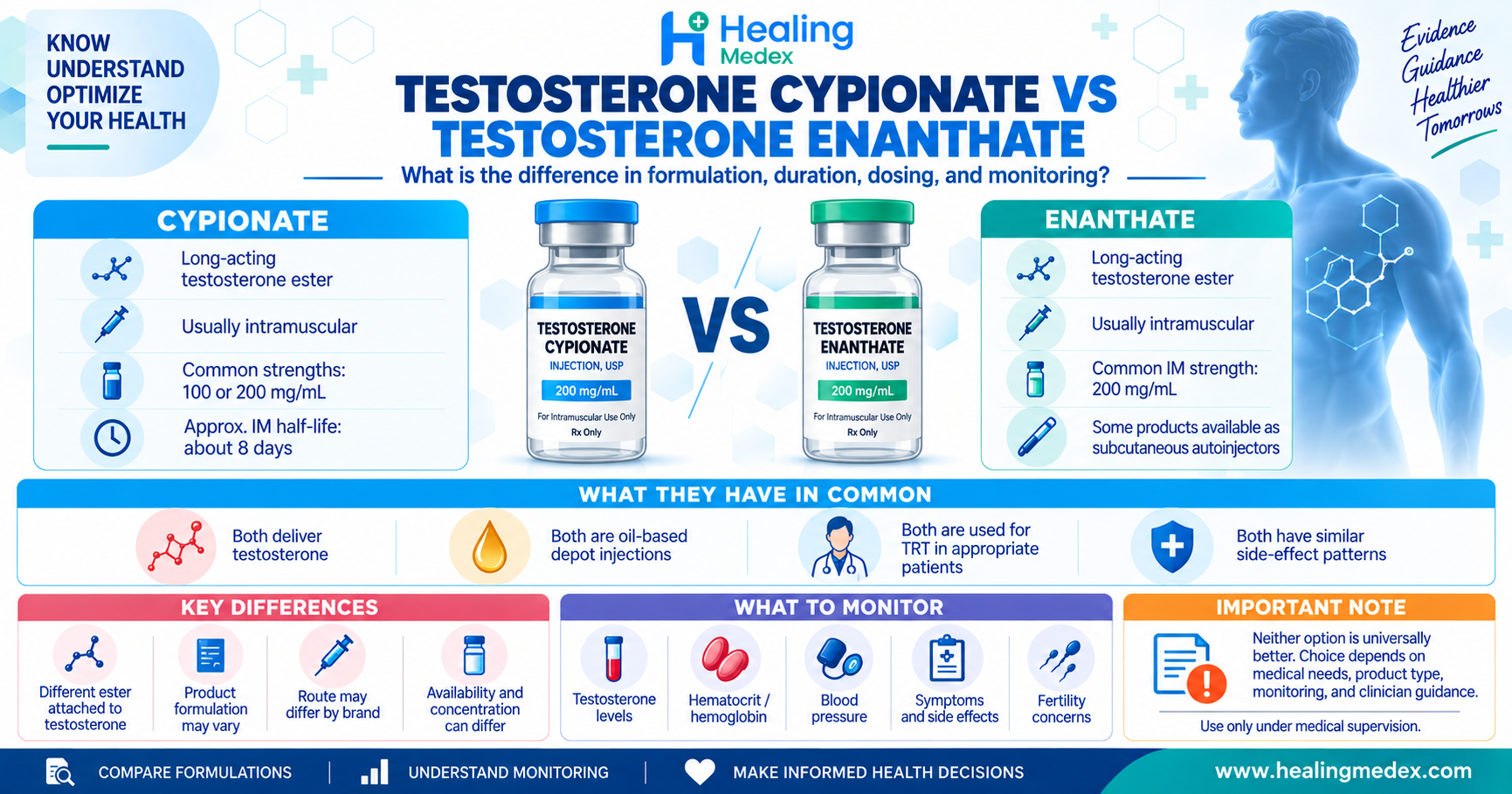
Anabolic Steriod
Testosterone Cypionate vs Testosterone Enanthate: What Is the Difference?
Testosterone cypionate and testosterone enanthate are two of the most widely used injectable forms of testosterone replacement therapy (TRT). Because both are long-acting testosterone esters, they have many similarities—and the differences between them are often smaller than people expect. Both medications ultimately deliver testosterone to the body. Their attached ester helps slow the release of testosterone after injection, allowing the medication to remain active longer than unmodified testosterone. So, is testosterone cypionate better than testosterone enanthate? Does one last longer? And are their side effects different? This article explains the key medical differences between testosterone cypionate vs testosterone enanthate , including how they work, how long they act, available formulations, potential side effects, and what patients should discuss with their healthcare provider. Important: Testosterone is a prescription medication and should be used only after appropriate medical evaluation. This article is for educational purposes and does not provide an individualized treatment or dosing plan. What Is Testosterone Replacement Therapy? Testosterone replacement therapy may be prescribed to men who have clinically confirmed testosterone deficiency caused by certain medical conditions. A diagnosis of hypogonadism should not be based on symptoms alone. The Endocrine Society recommends confirming testosterone deficiency in men who have compatible symptoms together with consistently low testosterone concentrations , typically using repeated morning testosterone measurements. Testosterone replacement can be administered through several formulations, including: Intramuscular injections Subcutaneous injections Gels Patches Nasal preparations Other approved testosterone formulations Testosterone cypionate and testosterone enanthate are among the commonly used injectable options. What Is Testosterone Cypionate? Testosterone cypionate is a long-acting ester of testosterone formulated in an oil-based injectable solution. After an intramuscular injection, the medication forms a depot from which testosterone cypionate is gradually absorbed. The ester is subsequently separated from the molecule, releasing active testosterone into the circulation. Current U.S. labeling describes testosterone cypionate as an oil-soluble testosterone ester intended for intramuscular administration. Its estimated intramuscular half-life is approximately eight days . Depending on the manufacturer, testosterone cypionate products may be supplied in concentrations such as 100 mg/mL or 200 mg/mL . What Is Testosterone Enanthate? Testosterone enanthate is another esterified, long-acting form of testosterone. Like cypionate, esterification slows testosterone release after injection. Standard testosterone enanthate injection products are oil-based and may be administered intramuscularly. For example, current U.S. testosterone enanthate labeling includes a 200 mg/mL intramuscular formulation containing testosterone enanthate in sesame oil. There is also an FDA-approved testosterone enanthate product called XYOSTED that uses a subcutaneous autoinjector , showing that the route of administration can depend on the specific product rather than simply the testosterone ester itself. Testosterone Cypionate vs Enanthate: Quick Comparison Feature Testosterone Cypionate Testosterone Enanthate Active hormone Testosterone Testosterone Ester Cypionate Enanthate Duration Long acting Long acting Common formulation Oil-based injection Oil-based injection Common route Intramuscular Intramuscular; some products are subcutaneous Typical concentration Often 100 or 200 mg/mL Commonly 200 mg/mL for IM products Release pattern Gradual Gradual Main medical purpose Testosterone replacement in appropriately diagnosed patients Testosterone replacement in appropriately diagnosed patients Side-effect profile Very similar Very similar Controlled medication in U.S. Schedule III Schedule III Both intramuscular testosterone cypionate and testosterone enanthate labels describe dosing intervals extending into the two-to-four-week range , although actual treatment schedules must be individualized according to the product, blood tests, clinical response, and prescriber instructions. 1. The Main Difference Is the Ester The primary chemical difference is the ester attached to the testosterone molecule. Testosterone cypionate contains a cypionate ester , while testosterone enanthate contains an enanthate ester . The ester itself is not responsible for testosterone's main androgenic effects. Instead, it changes characteristics such as how slowly the injected medication leaves the oil depot and becomes available. Once the ester is removed inside the body, both ultimately provide active testosterone. For most patients receiving medically supervised TRT, this means their overall physiological actions are highly similar. 2. Does Testosterone Cypionate Last Longer Than Enanthate? Testosterone cypionate and testosterone enanthate are both considered long-acting testosterone preparations. U.S. labeling for testosterone cypionate reports an intramuscular half-life of approximately eight days. Standard testosterone enanthate labeling similarly describes slow absorption from an intramuscular oil depot and states that the medication can be administered at extended intervals. Although pharmacokinetic differences between the two esters exist, they are generally more similar than different in routine clinical use . Individual testosterone levels can also vary considerably depending on: Dose Injection interval Route of administration Metabolism SHBG levels Age Body composition Timing of blood tests For this reason, treatment decisions should be guided by laboratory monitoring and symptoms rather than assuming one ester will automatically provide better or more stable testosterone levels. 3. Are Their Injection Schedules Different? Not necessarily. Current U.S. prescribing information for both traditional intramuscular testosterone cypionate and testosterone enanthate includes replacement-therapy dosing ranges administered at intervals of approximately two to four weeks . However, these label ranges should not be interpreted as a personal treatment schedule. A clinician may adjust treatment based on factors such as: Testosterone blood levels Clinical response Hematocrit Adverse effects Age Underlying cause of hypogonadism Specific testosterone product being used Patients should not independently increase doses, shorten injection intervals, or switch testosterone preparations. 4. Is One More Effective for Low Testosterone? Both cypionate and enanthate supply testosterone, so their therapeutic goal is essentially the same: restoring testosterone exposure in an appropriately diagnosed patient. When testosterone concentrations are maintained within an appropriate physiological range, either formulation may help improve symptoms related to genuine testosterone deficiency. Potential improvements in appropriately selected patients may include changes in: Sexual function Libido Energy Lean body mass Bone health Certain symptoms associated with testosterone deficiency There is no simple medical rule stating that testosterone cypionate is universally more effective than testosterone enanthate or vice versa. Treatment response depends substantially more on appropriate diagnosis, dose selection, monitoring, and individual physiology . 5. Do They Produce Different Testosterone Levels? Both preparations can produce rises and falls in testosterone after an injection. Injectable testosterone is absorbed gradually from the injection site, but serum concentrations can still fluctuate between doses. How significant those fluctuations become depends on the formulation and treatment schedule. A patient experiencing symptoms before the next scheduled injection should discuss them with their clinician rather than changing the schedule without medical supervision. Blood testing can help determine whether testosterone exposure is appropriate. 6. Do Cypionate and Enanthate Have Different Side Effects? Their side-effect profiles overlap substantially because the active hormone produced by both formulations is testosterone. Potential effects associated with testosterone therapy can include: Acne or oily skin Increased red blood cell production Increased hematocrit Fluid retention Gynecomastia Changes in libido Changes in cholesterol Injection-site discomfort Suppression of natural testosterone production Reduced sperm production Potential worsening of sleep apnea in susceptible individuals Testosterone products have also been associated with venous thromboembolic events, including deep-vein thrombosis and pulmonary embolism. The exact risk profile varies by patient and formulation. 7. Can Testosterone Raise Hematocrit? Yes. Testosterone stimulates red blood cell production. In some people, this can cause hematocrit to rise excessively—a condition sometimes described as testosterone-associated erythrocytosis or polycythemia. For this reason, hematocrit is an important laboratory value during testosterone therapy. Current testosterone labeling recommends checking hematocrit before treatment and monitoring it during therapy. Very high hematocrit may require adjustment or interruption of treatment by the prescribing clinician. 8. Can Testosterone Affect Blood Pressure? Testosterone products can increase blood pressure in some patients. Current testosterone prescribing information advises periodic blood-pressure monitoring, particularly in patients who already have hypertension. People with cardiovascular risk factors should discuss them with their healthcare provider before beginning testosterone replacement. 9. Can Testosterone Cypionate or Enanthate Affect Fertility? Yes. An important but sometimes overlooked effect of testosterone replacement therapy is suppression of the body's reproductive hormone signaling. External testosterone can reduce secretion of luteinizing hormone and follicle-stimulating hormone, which may reduce testosterone production inside the testes and impair sperm production. Testosterone therapy can therefore cause: Reduced sperm count Oligospermia Azoospermia Reduced fertility Current testosterone enanthate labeling specifically warns that exogenous androgens may negatively affect spermatogenesis. The Endocrine Society recommends against beginning testosterone therapy in men who are planning fertility in the near future. Anyone hoping to conceive should tell their clinician before starting TRT. 10. What Monitoring Is Needed During TRT? Testosterone replacement should not be treated as a medication that can simply be started and forgotten. Monitoring may include evaluation of: Testosterone Levels Blood testing helps determine whether testosterone concentrations are in an appropriate therapeutic range. Hematocrit and Hemoglobin These tests help identify excessive red blood cell production. Blood Pressure Testosterone can increase blood pressure in some individuals. Prostate Health Depending on age and individual risk factors, prostate-related evaluation may be appropriate. Treatment Response Clinicians should assess whether symptoms are actually improving. Adverse Effects Acne, edema, urinary symptoms, sleep apnea symptoms, fertility concerns, and other adverse effects should be reviewed. The Endocrine Society recommends evaluating patients after starting therapy to determine clinical response, adverse effects, and adherence. Testosterone Cypionate vs Enanthate: Which Is Better? There is no universally superior option. For medically supervised testosterone replacement, cypionate and enanthate are closely related medications that ultimately provide the same active hormone. The most suitable preparation may depend on: Product availability Route of administration Formulation ingredients Cost Insurance coverage Injection preferences Previous response Adverse effects Clinician experience Local regulatory approval Someone who responds well to one formulation may have little reason to switch simply because another ester is promoted as being “better.” Is Testosterone Enanthate Available as a Subcutaneous Injection? Yes, depending on the specific product. Traditional testosterone enanthate preparations are administered intramuscularly. However, XYOSTED is an FDA-approved testosterone enanthate autoinjector designed for subcutaneous administration . It is available in 50 mg, 75 mg, and 100 mg single-dose autoinjectors in the United States. Patients should therefore follow the instructions for their exact medication rather than assuming all testosterone enanthate products are injected the same way. What About Testosterone Use for Bodybuilding? Prescription testosterone is intended for specific medical conditions, not unsupervised bodybuilding or performance enhancement. Taking testosterone at higher-than-prescribed doses or combining it with other anabolic-androgenic steroids may substantially increase health risks. Reported complications associated with anabolic-androgenic steroid misuse include cardiovascular problems, fertility impairment, abnormal cholesterol, testicular atrophy, psychiatric effects, and other serious adverse outcomes. Both testosterone cypionate and testosterone enanthate are Schedule III controlled substances in the United States . Frequently Asked Questions 1. Is testosterone cypionate stronger than testosterone enanthate? Not in a meaningful general sense. Both are esterified forms of testosterone that release active testosterone after administration. Treatment effectiveness depends more on achieving appropriate testosterone exposure than simply choosing one ester over another. 2. Which lasts longer: testosterone cypionate or enanthate? Both are long-acting injectable testosterone esters. Testosterone cypionate has an approximately eight-day intramuscular half-life according to prescribing information, while testosterone enanthate is also slowly absorbed from its oil depot. Their practical duration of action is broadly similar. 3. Can you switch from testosterone enanthate to cypionate? A healthcare professional can switch testosterone formulations when appropriate, but patients should not perform a milligram-for-milligram substitution themselves. Concentration, route, dosing schedule, blood levels, and the characteristics of the specific product need to be considered. 4. Do both forms suppress natural testosterone? Yes. External testosterone can suppress the hypothalamic-pituitary-gonadal axis, reducing the body's own testosterone and sperm production. 5. Can testosterone injections cause infertility? They can significantly reduce sperm production in some men. Testosterone therapy is therefore generally inappropriate for men actively trying to conceive unless their reproductive specialist recommends another approach. 6. Can testosterone increase red blood cells? Yes. Increased hematocrit is a recognized effect of testosterone treatment and requires monitoring. 7. Is testosterone cypionate safer than testosterone enanthate? Neither is inherently risk-free. Because both ultimately deliver testosterone, many of their important risks overlap. Safety depends on appropriate patient selection, dosing, monitoring, underlying health conditions, and correct use. The Bottom Line Testosterone cypionate and testosterone enanthate are much more alike than they are different. Both are long-acting testosterone esters designed to provide sustained testosterone exposure. Their main difference is the chemical ester attached to testosterone, along with product-specific differences such as formulation, concentration, carrier oil, injection route, and availability. For patients with confirmed testosterone deficiency, either formulation may be appropriate when prescribed and monitored by a qualified healthcare professional. Choosing between them should not be based on bodybuilding claims or assumptions that one ester is automatically stronger. The more important factors are obtaining an accurate diagnosis, selecting an appropriate formulation, monitoring testosterone and hematocrit, evaluating blood pressure and other risk factors, and adjusting treatment according to clinical response. Anyone considering testosterone therapy—especially someone who wants to preserve fertility or has cardiovascular, prostate, sleep-apnea, or blood-pressure concerns—should discuss those issues with a healthcare professional before treatment.
Dr. Marcus Vance, PharmD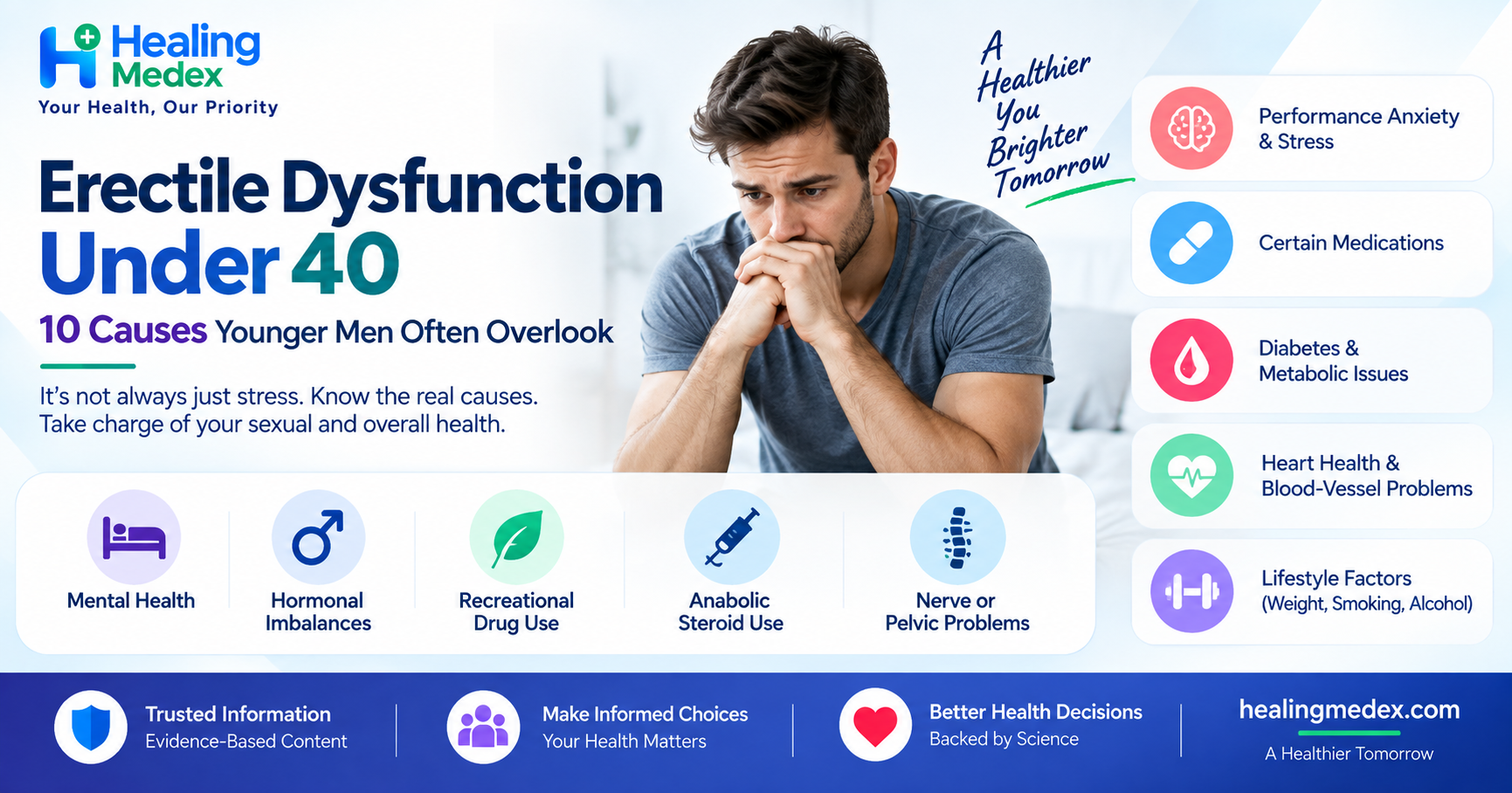
Erectile Dysfunction
Erectile Dysfunction Under 40: 10 Causes Younger Men Often Overlook
Erectile dysfunction (ED) is often associated with older age, but erection problems can also affect men in their 20s and 30s. Being young does not automatically mean that erectile dysfunction is “just psychological.” ED means having persistent or recurring difficulty getting an erection or keeping one firm enough for satisfactory sexual activity. Psychological factors such as stress and performance anxiety are important in younger men, but physical causes—including diabetes, cardiovascular risk factors, hormonal disorders, medications and substance use—also need to be considered. For men under 40, erectile dysfunction can sometimes be an early clue that something else is affecting physical or emotional health. Here are 10 commonly overlooked causes of erectile dysfunction in younger men . 1. Performance Anxiety One of the most common problems in younger men is worrying about whether they will be able to get or maintain an erection. A single episode of difficulty can sometimes start a cycle: Erection difficulty → worry about it happening again → increased anxiety → greater difficulty getting an erection. Stress activates the body's sympathetic nervous system—the “fight or flight” response—which can interfere with the relaxation and blood-flow changes required for an erection. Performance anxiety may be especially likely when erections are normal during sleep or masturbation but become difficult during partnered sexual activity. However, this pattern alone cannot confirm the cause. Anxiety, depression, stress, low self-esteem and negative body image are all recognized psychological factors that may contribute to ED. What to consider: Persistent anxiety, relationship stress or fear surrounding sexual performance may be worth discussing with a healthcare professional or qualified therapist. 2. Chronic Stress and Mental Health Problems It is not only sexual performance anxiety that can affect erections. Work pressure, financial stress, relationship problems, depression and generalized anxiety may reduce sexual arousal and interfere with erectile function. Chronic stress may also affect sleep, alcohol consumption, exercise and overall cardiovascular health—all factors that can influence sexual function. Depression may reduce sexual interest, while some medicines used to treat depression can themselves contribute to sexual side effects. Key point: Erectile dysfunction can have both physical and psychological components at the same time. It does not always have a single cause. 3. Medicines You Would Not Expect to Affect Erections Younger men sometimes overlook their medications when trying to understand why ED has developed. Medicines associated with erectile problems can include certain: Antidepressants Blood pressure medicines Diuretics Antihistamines Sedatives Opioid pain medicines Hormonal medicines Some other prescription and over-the-counter drugs NIDDK lists medications among the recognized causes of erectile dysfunction. If erection problems began after starting a medicine or changing its dose, tell your healthcare provider. Important: Do not stop a prescribed medicine suddenly because of sexual side effects. A clinician may be able to adjust the dose, change the medicine or investigate another cause. 4. Prediabetes or Diabetes Diabetes is not only a condition affecting older adults. Type 2 diabetes can develop in younger men, particularly when other risk factors such as excess body weight, inactivity or family history are present. Persistently elevated blood glucose can damage both the blood vessels and nerves involved in erections. Interestingly, sexual problems can occasionally be one of the health changes that encourage someone to undergo metabolic testing. Men with diabetes may also develop erectile dysfunction earlier than men without diabetes. Possible accompanying signs of diabetes include: Increased thirst Frequent urination Unexplained fatigue Blurred vision Slow-healing wounds However, diabetes can also exist for some time without obvious symptoms. What may be checked: A healthcare professional may consider fasting glucose or HbA1c depending on your history and risk factors. 5. High Cholesterol, High Blood Pressure and Early Blood-Vessel Problems An erection depends heavily on healthy blood flow. Conditions affecting the lining of blood vessels—known as the endothelium—can therefore interfere with erectile function. High cholesterol, hypertension, smoking, diabetes and obesity can contribute to vascular dysfunction even in younger adults. This is particularly important because erectile dysfunction is recognized by major urology guidelines as a potential risk marker for cardiovascular disease . Research examining young men with ED has also found evidence that metabolic and cardiovascular risk factors should not automatically be dismissed simply because someone is under 40. This does not mean that a young man with ED necessarily has heart disease. It means persistent or unexplained ED can provide a reason to review cardiovascular risk factors rather than assuming the problem is purely psychological. 6. Excess Weight and Physical Inactivity Being overweight does not automatically cause erectile dysfunction, but excess body fat and inactivity may increase several conditions associated with ED. These include: Insulin resistance Type 2 diabetes High blood pressure Abnormal cholesterol Reduced cardiovascular fitness Hormonal abnormalities Regular physical activity supports cardiovascular function and blood circulation throughout the body. NIDDK recommends lifestyle measures such as physical activity, maintaining a healthy body weight, stopping smoking and following a healthy eating pattern as part of preventing or improving erectile problems. Improving overall metabolic health may therefore benefit both long-term cardiovascular health and sexual function. 7. Smoking, Heavy Alcohol Use and Recreational Drugs Smoking can damage blood vessels and interfere with healthy circulation. Because erections depend on adequate arterial blood flow, vascular damage associated with smoking may contribute to erectile dysfunction. Excessive alcohol can also interfere with sexual arousal and the nervous-system signals involved in erections. Recreational and illicit drugs may affect sexual function in different ways depending on the substance. NIDDK identifies smoking, excessive alcohol consumption and recreational or illicit drug use among lifestyle factors associated with ED. Younger men may overlook these factors because they otherwise feel physically healthy. Occasional erection difficulty after drinking heavily is different from persistent ED , but repeated problems warrant attention. 8. Low Testosterone or Other Hormonal Problems Testosterone is important for sexual desire and normal sexual function, but ED does not automatically mean testosterone is low. In fact, many younger men presenting with erectile dysfunction have normal testosterone levels. One large study of men under 40 with ED found that the majority had a normal hormonal environment. However, hormonal conditions can contribute in some men. Possible problems include: Low testosterone Thyroid disorders Abnormal prolactin levels Pituitary disorders Other endocrine conditions Low testosterone may be more likely when ED occurs alongside symptoms such as: Reduced sex drive Fatigue Loss of muscle mass Reduced morning erections Fertility problems Hormone testing should be guided by a healthcare professional rather than relying on symptoms alone. 9. Anabolic Steroid or Non-Medical Testosterone Use This cause may be especially easy to overlook in younger men who use bodybuilding or performance-enhancing drugs. Taking anabolic-androgenic steroids can suppress the body's own hypothalamic-pituitary-gonadal hormonal system. While sexual function may appear normal—or sometimes heightened—during androgen use, stopping anabolic steroids can result in suppressed natural testosterone production. Possible symptoms after discontinuation can include: Low libido Erectile dysfunction Fatigue Depressed mood Reduced testicular function Fertility problems Research has documented prolonged hormonal suppression and impaired sexual function in some former anabolic-steroid users. Recovery varies significantly between individuals. Anyone experiencing sexual or hormonal symptoms after anabolic steroid use should discuss the history openly with an endocrinologist, urologist or other qualified healthcare professional rather than attempting unsupervised hormonal treatment. 10. Pelvic, Nerve or Penile Problems Occasionally, erectile dysfunction in younger men has a structural or neurological cause. Examples include: Pelvic or perineal injury Spinal cord or nerve injury Previous pelvic surgery Peyronie's disease Significant penile trauma Vascular injury Long periods of intense cycling have also been investigated because pressure from a bicycle saddle can compress nerves and blood vessels in the perineal region. Older clinical research in young men with organic ED identified perineal trauma and vascular abnormalities among possible causes. Peyronie's disease involves scar tissue within the penis that may cause curvature, discomfort and sometimes erectile problems. Seek medical assessment if ED is accompanied by penile pain, a new curvature, numbness, significant pelvic trauma or neurological symptoms. Is Erectile Dysfunction Under 40 Usually Psychological? Not necessarily. Psychological causes are important in younger men, but assuming all ED under 40 results from anxiety can cause physical conditions to be overlooked. Research has shown that younger men may have psychological, organic or mixed causes of erectile dysfunction. A young man might, for example, have mild vascular dysfunction that creates occasional erection difficulty. Worrying about the problem can then create performance anxiety, making the original physical problem worse. Therefore, psychological and physical ED are not always separate conditions. When Should a Young Man See a Doctor About ED? One unsuccessful sexual experience is not necessarily erectile dysfunction. Temporary erection difficulties can happen because of: Stress Fatigue Alcohol Relationship problems Anxiety Temporary illness However, medical evaluation is reasonable when erection problems: Continue for several weeks or months Happen frequently Are becoming progressively worse Occur during both partnered sex and masturbation Are associated with reduced libido Begin after starting a medication Follow anabolic steroid use Occur alongside diabetes or cardiovascular risk factors Are associated with penile curvature or pain ED can sometimes provide an opportunity to identify another health condition earlier. Both American and European urology guidance recognize the relationship between ED and cardiovascular risk. How Is Erectile Dysfunction in Younger Men Evaluated? A doctor will usually begin with a medical, sexual and mental-health history. Evaluation may include: Blood pressure Weight and waist assessment Cardiovascular risk factors Medication and supplement review Smoking, alcohol and recreational drug history Sexual history Mental health and relationship factors Physical examination Depending on the individual, laboratory tests may include blood glucose, cholesterol and testosterone. Additional hormone or specialist testing may be recommended when symptoms suggest a particular problem. Specialized testing such as penile Doppler ultrasound is usually reserved for selected patients rather than being necessary for every case. Can Erectile Dysfunction Under 40 Be Treated? In many cases, yes. Treatment depends on the underlying cause and may include: Managing diabetes, cholesterol or blood pressure Stopping smoking Reducing excessive alcohol Increasing physical activity Weight management Addressing anxiety or depression Counseling or sex therapy Reviewing medicines contributing to ED Treating confirmed hormonal disorders Prescription ED medications when appropriate PDE5 inhibitors such as sildenafil or tadalafil increase blood flow to the penis and are commonly used treatments for ED, but they do not identify or correct every underlying cause. A medical assessment is particularly valuable when ED develops unexpectedly in a younger person. Never use prescription ED medication obtained from an unreliable source or combine ED medicines with nitrate medicines without medical advice because potentially serious interactions can occur. Frequently Asked Questions Is erectile dysfunction normal at 25 or 30? Occasional difficulty getting an erection can happen at any age. Frequent or persistent ED at 25 or 30 should not simply be considered normal and is worth discussing with a healthcare professional. Can anxiety cause ED even if testosterone is normal? Yes. Anxiety, stress and performance pressure can interfere with the nervous-system and arousal processes required for an erection even when hormone levels are normal. Can a young man have ED because of poor blood circulation? Yes. Diabetes, smoking, hypertension, abnormal cholesterol, obesity and other vascular factors can affect blood circulation at a younger age. Does ED under 40 mean heart disease? No. ED has many possible causes, and having ED does not mean someone has cardiovascular disease. However, persistent ED can be a cardiovascular risk marker , which is why reviewing blood pressure, glucose, cholesterol and other risk factors may be appropriate. Can anabolic steroids cause erectile dysfunction? They can contribute, particularly after discontinuation. Anabolic steroids may suppress natural hormone production, and some former users develop low libido, hormonal symptoms or ED during recovery. Final Takeaway Erectile dysfunction under 40 should not automatically be dismissed as a psychological problem. Performance anxiety and stress are common contributors, but younger men can also experience ED because of medications, diabetes, vascular problems, smoking, excess weight, hormonal disorders, anabolic steroid use or neurological and structural conditions. Persistent ED can sometimes be the first reason an otherwise healthy young man discovers an underlying metabolic or cardiovascular risk factor. Rather than simply treating the erection problem, identifying why it is happening can lead to more appropriate treatment and better long-term health.
Dr. Marcus Vance, PharmD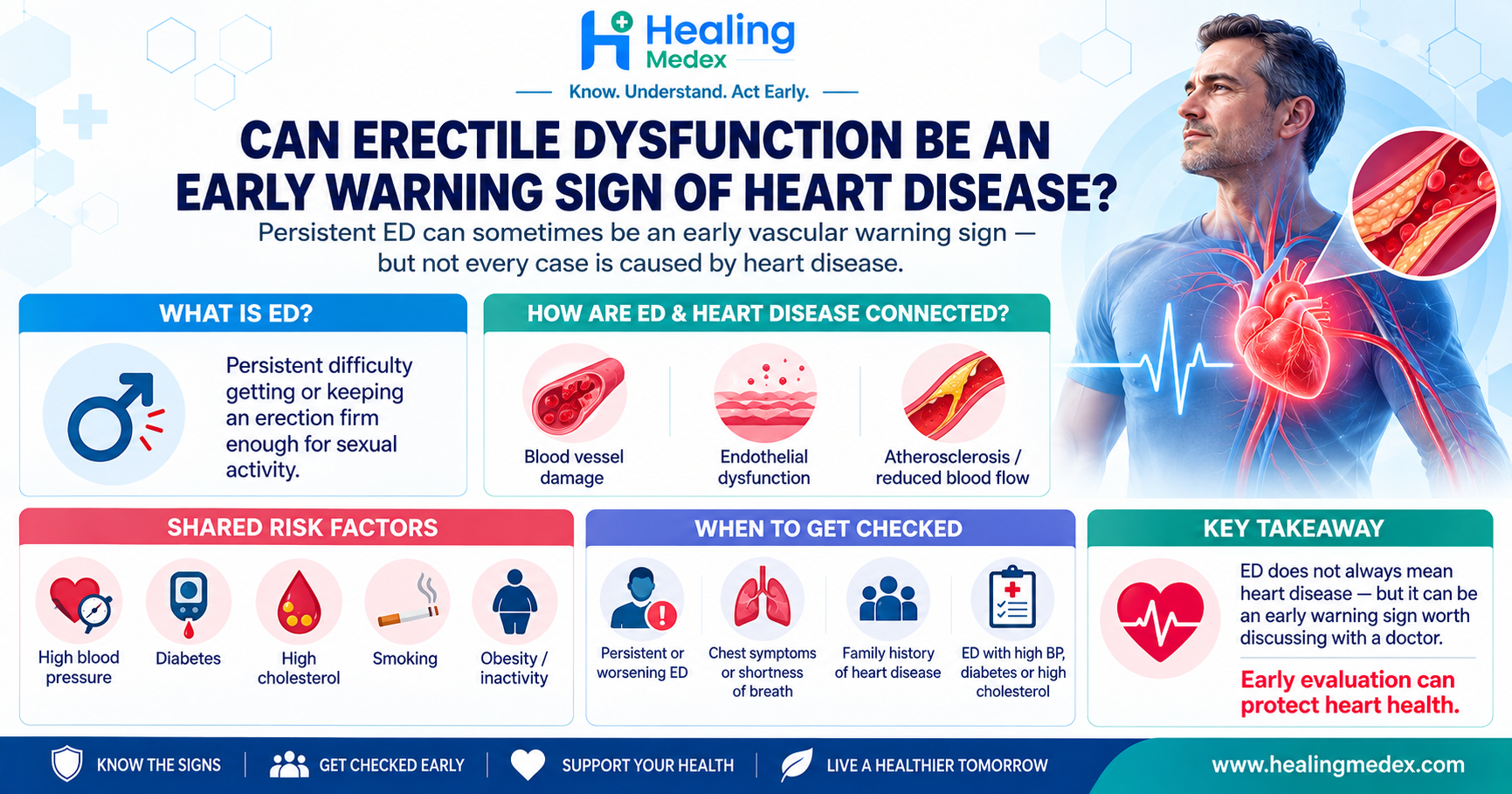
Erectile Dysfunction
Can Erectile Dysfunction Be an Early Warning Sign of Heart Disease?
Erectile dysfunction (ED) is often thought of only as a sexual health problem. However, persistent difficulty getting or maintaining an erection can sometimes provide an important clue about a man's overall cardiovascular health. The reason is simple: healthy erections depend on healthy blood vessels and good blood flow . Many of the same conditions that damage the arteries supplying the heart can also reduce blood flow to the penis. In some men, erectile dysfunction may therefore appear before more obvious symptoms of cardiovascular disease , such as chest pain. Current cardiovascular and sexual-medicine guidance recognizes ED as an important cardiovascular risk marker. The Princeton IV Consensus describes erectile dysfunction as a cardiovascular risk-enhancing factor, while European cardiovascular guidance notes that ED may precede coronary artery disease and other vascular disease by several years. So, can erectile dysfunction be an early warning sign of heart disease? Yes, it can—but not every case of ED is caused by heart disease. Understanding the connection can help men recognize when further medical evaluation may be worthwhile. What Is Erectile Dysfunction? Erectile dysfunction is the persistent difficulty getting or maintaining an erection firm enough for satisfactory sexual activity. An occasional erection problem is common and may happen because of: Stress Fatigue Anxiety Relationship problems Excess alcohol Poor sleep Temporary illness However, when erection problems happen repeatedly or persist for several months, an underlying medical condition may sometimes be involved. Possible physical causes include diabetes, high blood pressure, high cholesterol, obesity, hormonal disorders, neurological conditions, medication side effects and cardiovascular disease. How Are Erectile Dysfunction and Heart Disease Connected? The penis and heart may seem unrelated, but both depend heavily on healthy arteries. During sexual arousal, blood vessels supplying the penis must relax and widen so that enough blood can enter the erectile tissue. When blood vessels are damaged or narrowed, this process becomes more difficult. Two important mechanisms link ED and cardiovascular disease: 1. Endothelial Dysfunction The endothelium is the thin layer of cells lining the inside of blood vessels. A healthy endothelium helps arteries expand by producing substances such as nitric oxide. Conditions including: High blood pressure Diabetes Smoking High cholesterol Obesity can damage the endothelium. When endothelial function declines, arteries may not widen properly. Reduced blood flow can affect both the penis and the heart. Mayo Clinic notes that endothelial dysfunction can reduce blood supply to both organs and may eventually contribute to atherosclerosis. 2. Atherosclerosis Atherosclerosis occurs when cholesterol, fats and other substances accumulate inside artery walls and form plaque. As plaque develops, arteries can become narrower and less flexible. Reduced blood flow through penile arteries may contribute to erectile difficulties, while narrowing of coronary arteries can eventually contribute to angina, heart attack and other cardiovascular problems. Why Might ED Appear Before Heart Symptoms? One explanation is often called the artery-size hypothesis . The arteries supplying the penis are smaller than many major arteries supplying the heart. Because they are smaller, changes affecting blood-vessel function may sometimes interfere with penile blood flow before they produce obvious symptoms from larger coronary arteries. Recent Mayo Clinic guidance notes that penile arteries are approximately 1–2 mm wide and that ED can sometimes occur before clinically obvious coronary disease. That does not mean every man with ED has blocked coronary arteries. But persistent ED—particularly without an obvious psychological, hormonal or medication-related explanation—can be a reason to evaluate cardiovascular risk. How Long Before Heart Disease Can ED Appear? Research and cardiovascular guidelines suggest that erectile dysfunction can sometimes occur approximately 2–5 years before clinically apparent cardiovascular disease , with an average interval of around three years reported in European cardiovascular guidance. Mayo Clinic has similarly highlighted that ED may occur several years before cardiovascular events become apparent. This potential time gap is important because it can create an opportunity to identify and address cardiovascular risk factors earlier. Does Having Erectile Dysfunction Mean You Have Heart Disease? No. Erectile dysfunction has many possible causes, and cardiovascular disease is only one of them. Other causes include: Psychological factors Stress, anxiety, depression, performance anxiety and relationship difficulties can interfere with sexual arousal. Low testosterone or other hormonal disorders Hormonal problems may affect libido and sexual function. Diabetes Long-term high blood sugar can damage both nerves and blood vessels involved in erections. Neurological conditions Conditions affecting nerve signaling between the brain, spinal cord and penis may cause ED. Medicines Some medicines used for high blood pressure, depression and other health conditions can contribute to erection difficulties. Alcohol and recreational drugs Heavy alcohol consumption and certain drugs can interfere with erectile function. Sleep disorders Poor sleep and sleep apnea may contribute to hormonal and cardiovascular abnormalities associated with ED. Therefore, erectile dysfunction should be considered a possible health signal rather than a diagnosis of heart disease . Cardiovascular Risk Factors Shared by ED and Heart Disease ED and cardiovascular disease share many of the same risk factors. These include: High blood pressure High LDL cholesterol Diabetes Smoking Obesity Physical inactivity Metabolic syndrome Poor diet Increasing age European cardiovascular guidelines specifically identify hypertension, high cholesterol, insulin resistance or diabetes, smoking, obesity, metabolic syndrome and sedentary lifestyle among shared risk factors for ED and cardiovascular disease. The more cardiovascular risk factors a person has, the more important it may be to investigate persistent ED rather than treating the erection problem alone. When Should ED Raise More Concern About Heart Health? A cardiovascular assessment may be particularly important when ED: Appears suddenly without an obvious explanation Persists or gradually becomes worse Occurs together with high blood pressure Occurs in someone with diabetes Is accompanied by high cholesterol Develops in a smoker Occurs in someone who is overweight or physically inactive Occurs in a man with a strong family history of premature cardiovascular disease Develops despite otherwise normal sexual desire ED in younger men should not automatically be assumed to be psychological. Princeton IV guidance emphasizes considering ED as a cardiovascular risk marker, including in men who may otherwise appear healthy. What Heart Tests Might Be Recommended for Someone With ED? Not everyone with erectile dysfunction requires extensive cardiac testing. Evaluation generally begins with medical history, physical examination and cardiovascular risk assessment. A healthcare professional may consider checking: Blood pressure High blood pressure damages arteries over time and may contribute to both ED and cardiovascular disease. Cholesterol A lipid profile may identify elevated LDL cholesterol, triglycerides or other abnormalities associated with atherosclerosis. Blood glucose or HbA1c Previously undiagnosed diabetes or prediabetes may contribute to ED. Weight and waist circumference Excess body fat, particularly abdominal obesity, is associated with metabolic and cardiovascular risk. Smoking history Smoking damages blood vessels and substantially increases cardiovascular risk. Family history Premature heart disease in close relatives may increase cardiovascular risk. Depending on age, symptoms and overall risk, additional cardiovascular testing may sometimes be considered. The Princeton IV Consensus recommends considering coronary artery calcium (CAC) scoring in selected men with ED whose calculated cardiovascular risk is borderline or intermediate when additional information would help guide prevention decisions. A CAC scan is not necessary for every man with erectile dysfunction, so the decision should be individualized with a healthcare professional. Can Improving Heart Health Improve Erectile Function? In some men, yes. Measures that improve cardiovascular health may also improve blood-vessel function and erections. Helpful strategies include: Exercise Regularly Regular physical activity improves cardiovascular fitness, circulation, blood pressure, metabolic health and weight control. Stop Smoking Smoking damages the blood-vessel lining and accelerates atherosclerosis. Stopping smoking can benefit both cardiovascular and sexual health. Maintain a Healthy Weight Weight reduction may improve blood pressure, blood sugar control and vascular function. Control Blood Pressure Untreated hypertension can damage blood vessels. If ED develops after starting a blood-pressure medicine, talk to your doctor rather than stopping the medication yourself because some antihypertensive medicines are more likely than others to affect sexual function. Manage Cholesterol Reducing elevated cholesterol helps decrease the progression of atherosclerotic cardiovascular disease. Control Diabetes Maintaining appropriate blood glucose levels helps protect both blood vessels and nerves involved in erections. Eat a Heart-Healthy Diet A diet emphasizing vegetables, fruits, whole grains, legumes, nuts, fish and minimally processed foods can support cardiovascular health. European cardiovascular guidance notes that exercise, improved nutrition, weight control and smoking cessation may improve sexual function while also reducing cardiovascular risk. Can You Take ED Medicines If You Have Heart Disease? Many men with stable cardiovascular disease may be able to use PDE5 inhibitors such as: Sildenafil Tadalafil Vardenafil Avanafil However, cardiovascular status and current medications should be reviewed first. Important: PDE5 inhibitors and nitrates must not be combined. Nitrate medicines such as nitroglycerin/glyceryl trinitrate and isosorbide are commonly used for angina. Taking sildenafil or similar ED medicines together with nitrates can cause a potentially dangerous fall in blood pressure. Men with significant or unstable cardiovascular disease should therefore discuss both sexual activity and ED treatment with a healthcare professional before using these medicines. When Should You Seek Urgent Medical Attention? Erectile dysfunction itself is generally not a medical emergency. However, seek urgent medical help if you experience symptoms that may indicate a heart problem, including: Chest pain or pressure Severe shortness of breath Pain spreading to the arm, shoulder, jaw or back Fainting Sudden severe dizziness New or severe palpitations Unexplained sweating associated with chest discomfort Do not ignore these symptoms because they occur during sexual activity. Anyone who has taken an ED medicine such as sildenafil or tadalafil should also tell emergency healthcare professionals, particularly if treatment with nitrate medicines might otherwise be considered. Should Every Man With ED Get His Heart Checked? Not every occasional erection problem requires cardiac testing. But persistent or unexplained erectile dysfunction deserves medical evaluation , particularly when cardiovascular risk factors are present. A healthcare professional can evaluate both sexual health and cardiovascular risk rather than simply treating the symptom. This is especially useful because conditions such as: High blood pressure High cholesterol Prediabetes Diabetes may exist without obvious symptoms. Finding these conditions early can provide an opportunity to reduce future cardiovascular risk. The Bottom Line Erectile dysfunction can sometimes be an early warning sign of cardiovascular disease. ED and heart disease share many of the same underlying mechanisms, particularly blood-vessel dysfunction and atherosclerosis. Because penile arteries are relatively small, vascular problems may sometimes affect erectile function before obvious cardiac symptoms develop. Research and cardiovascular guidelines indicate that ED can precede clinically apparent cardiovascular disease by several years in some men. However, erectile dysfunction does not automatically mean that you have heart disease . Psychological factors, hormonal disorders, diabetes, medications, neurological problems and other conditions can also cause ED. If erectile dysfunction is persistent—particularly when combined with high blood pressure, diabetes, high cholesterol, smoking, obesity or a family history of cardiovascular disease—consider discussing both your sexual health and cardiovascular risk with a qualified healthcare professional. Treating ED should not only be about improving erections. In some cases, it may also provide an opportunity to identify and manage an important underlying health problem earlier. Frequently Asked Questions 1.Can erectile dysfunction happen before a heart attack? It can. In some men, vascular ED develops several years before clinically apparent coronary artery disease or cardiovascular events. However, ED does not mean that a heart attack is inevitable. 2.How many years before heart disease can ED appear? Clinical guidance describes an interval of roughly 2–5 years between ED and some forms of clinically apparent cardiovascular disease in certain men. 3.Does ED always mean clogged arteries? No. ED can result from psychological issues, hormonal problems, medications, diabetes, neurological disorders and many other causes. 4.Should young men with ED get their heart checked? Persistent unexplained ED in a younger man should be discussed with a healthcare professional. Cardiovascular risk assessment may be appropriate even when there are no obvious heart symptoms. 5.Can high cholesterol cause erectile dysfunction? High cholesterol may contribute to atherosclerosis and endothelial dysfunction, which can reduce blood flow to the penis and contribute to ED. 6.Can high blood pressure cause ED? Yes. Long-term hypertension can damage blood vessels and reduce circulation. Some blood-pressure medicines may also contribute to ED, although medication should never be stopped without medical advice. 7.Can improving cardiovascular health improve erections? It may. Regular exercise, smoking cessation, weight management, healthy eating and good control of blood pressure, cholesterol and diabetes can support both cardiovascular and erectile health. 8.Can I take sildenafil if I have heart disease? Some people with stable cardiovascular disease can use sildenafil, but medical assessment may be necessary. Sildenafil and other PDE5 inhibitors must not be combined with nitrate medicines used for angina because the combination can cause a dangerous drop in blood pressure.
Dr. Marcus Vance, PharmD